Average score
P1
Product 1: Sonos Beam (Gen 2)
4.2
P2
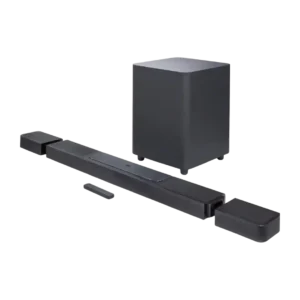
Product 2: JBL Bar 1300X Soundbar
3.9
AI Room Calibration
P1
Product 1: Sonos Beam (Gen 2)
4.2
TruePlay room calibration was often praised for improving clarity and spatial performance, but Android exclusion remained a common caveat.
P2
Product 2: JBL Bar 1300X Soundbar
4.2
Room calibration was usually seen as helpful and effective, but one reviewer felt it did not make meaningful tonal changes.
App reliability
P1
Product 1: Sonos Beam (Gen 2)
4.4
The Sonos app was mostly praised as stable, polished, and easy to use, with one reviewer noting it can feel confusing at first.
P2
Product 2: JBL Bar 1300X Soundbar
4.2
The JBL One app was usually praised as easy and useful, though one reviewer called it only good, not great.
Audio format support
P1
Product 1: Sonos Beam (Gen 2)
4.2
Audio format support was treated as a meaningful upgrade, especially for Atmos, eARC-era formats, and expanded surround decoding.
P2
Product 2: JBL Bar 1300X Soundbar
5.0
Audio format support was strong where evaluated, with reviewers highlighting Dolby Atmos and DTS:X coverage and broad decoding support.
Battery life (if portable)
P1Product 1: Sonos Beam (Gen 2)
No score yet
P2
Product 2: JBL Bar 1300X Soundbar
2.6
Battery-powered surrounds enable flexibility, but several reviewers called regular recharging a hassle or a faff.
Bluetooth connection stability
P1Product 1: Sonos Beam (Gen 2)
No score yet
P2
Product 2: JBL Bar 1300X Soundbar
3.6
Bluetooth stability was mixed: one reviewer could not pair a smartphone, while others had smooth streaming or no sync concerns.
Bluetooth connectivity
P1
Product 1: Sonos Beam (Gen 2)
2.0
Reviewers repeatedly treated the lack of Bluetooth as a real limitation, especially for users who want direct, app-free playback from varied devices.
P2Product 2: JBL Bar 1300X Soundbar
No score yetCabinet construction / bracing
P1Product 1: Sonos Beam (Gen 2)
No score yet
P2
Product 2: JBL Bar 1300X Soundbar
2.0
One reviewer criticized the subwoofer cabinet, tying plastic construction to audible rattle at very low frequencies.
Cohesive presentation
P1
Product 1: Sonos Beam (Gen 2)
4.8
One detailed review praised driver handoff and coherence, describing a seamless presentation across the soundfield.
P2
Product 2: JBL Bar 1300X Soundbar
4.5
Cohesion was usually praised, especially the seamless bubble of sound, though one reviewer found the stage somewhat constrained.
Control button responsiveness
P1
Product 1: Sonos Beam (Gen 2)
4.8
Touch controls were praised as responsive and intuitive, though most reviewers expected users to rely more on app or TV remote control.
P2Product 2: JBL Bar 1300X Soundbar
No score yetDesign and aesthetics
P1
Product 1: Sonos Beam (Gen 2)
4.6
The Beam’s compact, stylish look was a major strength, with reviewers praising its clean appearance and room-friendly footprint.
P2
Product 2: JBL Bar 1300X Soundbar
4.3
Design reactions were mostly positive for innovation and minimalism, though several comments framed the look as practical rather than striking.
Design and build quality
P1
Product 1: Sonos Beam (Gen 2)
4.4
Build quality was praised for the durable polycarbonate grille, premium feel, and improved ease of cleaning versus fabric.
P2
Product 2: JBL Bar 1300X Soundbar
4.6
Build quality was generally regarded as solid or excellent, with reviewers praising sturdy construction and premium-feeling materials.
Detail retrieval
P1
Product 1: Sonos Beam (Gen 2)
4.6
Detail retrieval was repeatedly praised, with reviewers calling out nuance, timbre, transients, and small sound effects.
P2
Product 2: JBL Bar 1300X Soundbar
4.8
Detail retrieval was a strength, with reviewers hearing subtle effects, crisp textures, and distinct elements in busy scenes.
Dialogue clarity (for TV/soundbar use)
P1
Product 1: Sonos Beam (Gen 2)
4.6
Dialogue clarity was one of the strongest points across reviews, with repeated praise for clear, accurate, and easy-to-follow speech.
P2
Product 2: JBL Bar 1300X Soundbar
4.2
Dialogue was often clear against busy soundtracks, but several reviewers found occasional difficulty, muffling, or a need for more adjustment.
Distortion at high volume
P1
Product 1: Sonos Beam (Gen 2)
4.3
Most reviewers found the Beam composed at normal-to-loud levels, with only one noting compression or distortion when pushed above roughly 80 dB.
P2
Product 2: JBL Bar 1300X Soundbar
4.2
High-volume control is mostly good, with two reviewers praising resistance to distortion, though one heard dialogue clarity soften when pushed louder.
Dolby Atmos height effects
P1
Product 1: Sonos Beam (Gen 2)
4.0
Atmos processing was usually considered impressive for the size, but reviewers also warned it is virtual and not fully convincing overhead.
P2
Product 2: JBL Bar 1300X Soundbar
4.6
Dolby Atmos effects were widely praised as spectacular, astounding, and immersive, though a few reviews wanted clearer or stronger height projection.
Dynamic headroom
P1
Product 1: Sonos Beam (Gen 2)
4.7
Dynamic headroom was strong for the size, with reviewers praising wide dynamic range, punch, and convincing jumps in intensity.
P2
Product 2: JBL Bar 1300X Soundbar
4.8
One reviewer strongly praised dynamic range, especially smooth transitions between quiet and loud moments.
EQ customization
P1
Product 1: Sonos Beam (Gen 2)
3.6
EQ customization is useful but basic; reviewers liked bass/treble adjustment while noting the absence of a full EQ.
P2
Product 2: JBL Bar 1300X Soundbar
2.6
EQ customization was one of the clearest weaknesses, with repeated complaints about limited bands, few levels, and weak preset control.
Frequency response balance
P1
Product 1: Sonos Beam (Gen 2)
4.6
Reviewers consistently described the tonal balance as clear, robust, refined, and larger than expected for the Beam’s size.
P2
Product 2: JBL Bar 1300X Soundbar
3.5
Frequency balance was mixed, ranging from balanced and non-fatiguing to shouty, flappy, muffled, or uneven with music.
Gaming HDMI passthrough
P1Product 1: Sonos Beam (Gen 2)
No score yet
P2
Product 2: JBL Bar 1300X Soundbar
2.0
Gaming passthrough was a weakness where discussed, with reviewers flagging missing HDMI 2.1 or 4K/120Hz support.
HDMI 2.1 gaming
P1Product 1: Sonos Beam (Gen 2)
No score yet
P2
Product 2: JBL Bar 1300X Soundbar
2.3
HDMI 2.1 gaming support was limited, with reviewers routing consoles directly to the TV for better high-refresh gaming.
HDMI ARC
P1
Product 1: Sonos Beam (Gen 2)
4.6
HDMI ARC/eARC was strongly praised for richer format support, easier setup, and reduced sync issues with TVs and game consoles.
P2
Product 2: JBL Bar 1300X Soundbar
4.5
Reviewers who evaluated TV audio connection favored HDMI ARC/eARC, calling it the best path for Dolby Atmos playback.
Home theater integration
P1
Product 1: Sonos Beam (Gen 2)
4.4
Home theater integration was a major Sonos advantage, especially the ability to add a Sub, surrounds, or other Sonos speakers over time.
P2
Product 2: JBL Bar 1300X Soundbar
4.6
Home theater integration was a core strength, with reviewers calling it a strong all-in-one setup and a good easy alternative to separates.
Inter-speaker connectivity
P1
Product 1: Sonos Beam (Gen 2)
4.6
Inter-speaker connectivity was a Sonos strength, with reviewers praising easy syncing, grouping, and wireless expansion.
P2
Product 2: JBL Bar 1300X Soundbar
5.0
The strongest inter-speaker connectivity evidence was positive, with one reviewer saying the surrounds worked reliably even at distance.
Latency with TV (lip sync)
P1
Product 1: Sonos Beam (Gen 2)
4.7
Lip-sync and TV latency were praised, with reviews noting minimal lag, flawless syncing, or excellent measured performance.
P2
Product 2: JBL Bar 1300X Soundbar
3.0
One reviewer noted a short one-second restart delay after pausing video, making TV latency a minor annoyance rather than a dealbreaker.
Loudness / maximum volume
P1
Product 1: Sonos Beam (Gen 2)
4.1
Maximum volume is generally strong for a compact bar and enough for smaller spaces, though it is not as powerful as larger Sonos options.
P2
Product 2: JBL Bar 1300X Soundbar
4.6
Reviewers consistently found the bar loud and room-filling, with enough output for cinematic impact; one noted it could play at full volume without becoming unbearable.
Low-volume performance
P1
Product 1: Sonos Beam (Gen 2)
4.2
Night mode was praised in one review for reducing sudden loud effects and making late-night viewing easier.
P2
Product 2: JBL Bar 1300X Soundbar
4.5
Low-volume and quiet-scene handling was praised in one review for keeping loud and quiet sounds delicately balanced.
Magnetic mounting
P1Product 1: Sonos Beam (Gen 2)
No score yet
P2
Product 2: JBL Bar 1300X Soundbar
4.0
Magnetic attachment was mostly secure and robust, though one reviewer said the detachable speakers sometimes required force to remove.
Microphone
P1
Product 1: Sonos Beam (Gen 2)
4.5
Microphone quality was praised for clarity and far-field voice use, supporting both voice assistants and Sonos control.
P2Product 2: JBL Bar 1300X Soundbar
No score yetMulti-speaker pairing reliability
P1
Product 1: Sonos Beam (Gen 2)
4.8
One review strongly praised Sonos multi-speaker syncing, describing add-on speakers as simple to connect and keep in sync.
P2
Product 2: JBL Bar 1300X Soundbar
4.9
Wireless speaker pairing was praised in the two tests that addressed it, with stable surround operation and a strong stereo Bluetooth setup.
Omnidirectional sound
P1Product 1: Sonos Beam (Gen 2)
No score yet
P2
Product 2: JBL Bar 1300X Soundbar
3.0
Off-axis or omnidirectional coverage was limited in one review, which described the experience outside the central seat as lopsided.
On-device controls
P1
Product 1: Sonos Beam (Gen 2)
4.5
On-device controls were praised in one review for working well directly on the unit.
P2
Product 2: JBL Bar 1300X Soundbar
3.0
On-device controls were split: basic buttons were liked in one review, while another criticized missing direct controls for key modes.
optical
P1
Product 1: Sonos Beam (Gen 2)
2.5
Optical input is useful for older TVs, but reviewers noted it blocks Dolby Atmos playback, making it a fallback rather than the best connection.
P2
Product 2: JBL Bar 1300X Soundbar
2.0
Optical input was treated as a fallback, with reviewers warning that it gives a lesser surround experience than eARC.
Remote control usability
P1
Product 1: Sonos Beam (Gen 2)
4.4
Remote usability was strong when using a TV or Apple TV remote, but the lack of a dedicated remote was still a minor drawback.
P2
Product 2: JBL Bar 1300X Soundbar
3.7
Remote reactions varied from easy and well-labeled to unbacklit, mediocre, or frustratingly enigmatic.
Setup simplicity
P1
Product 1: Sonos Beam (Gen 2)
4.7
Setup was one of the clearest strengths, repeatedly described as quick, painless, simple, or only a few minutes long.
P2
Product 2: JBL Bar 1300X Soundbar
4.2
Setup was mostly considered simple, quick, or plug-and-play, with one reviewer finding the first controls and guide tricky.
Smart assistant integration (Alexa
P1
Product 1: Sonos Beam (Gen 2)
4.2
Smart assistant integration was framed positively for users who want built-in Alexa or Google-style control in the soundbar.
P2
Product 2: JBL Bar 1300X Soundbar
2.8
Smart assistant integration was limited in the one opinionated assessment, with the reviewer saying there was not much in the way of smarts.
Smart features
P1
Product 1: Sonos Beam (Gen 2)
4.4
Smart features were considered broad and useful, combining ecosystem streaming, voice support, app control, and expandable home-audio options.
P2
Product 2: JBL Bar 1300X Soundbar
3.9
Smart and extra features were useful but uneven: reviewers liked streaming and portable-speaker tricks, while some wanted more modes and controls.
Soundstage height
P1
Product 1: Sonos Beam (Gen 2)
2.9
Soundstage height was the most mixed area: reviewers heard some height, but many said true overhead effects were limited or unconvincing.
P2
Product 2: JBL Bar 1300X Soundbar
4.1
Height performance was impressive in several tests, but some reviewers found vertical projection less pronounced than rival Atmos bars.
Spotify Connect reliability
P1Product 1: Sonos Beam (Gen 2)
No score yet
P2
Product 2: JBL Bar 1300X Soundbar
4.2
Spotify support was generally useful, especially for streaming, though one reviewer noted Spotify was not built into the JBL app.
Status indicators
P1Product 1: Sonos Beam (Gen 2)
No score yet
P2
Product 2: JBL Bar 1300X Soundbar
4.7
Status displays and indicators were well liked, with reviewers calling the front display helpful, easy to read, and useful for battery/status feedback.
Stereo imaging accuracy
P1
Product 1: Sonos Beam (Gen 2)
4.0
Imaging and placement were praised for width and perspective, but music stereo separation remains limited by the single-bar form factor.
P2
Product 2: JBL Bar 1300X Soundbar
2.8
Stereo performance split reviewers: one found separation present, but several heard music as a step down, constrained, or simply not right.
Subwoofer
P1
Product 1: Sonos Beam (Gen 2)
3.9
Bass is punchy and satisfying for the size, but reviewers agree deep rumble usually requires adding a Sonos Sub or choosing a larger setup.
P2
Product 2: JBL Bar 1300X Soundbar
4.1
The subwoofer drew heavy praise for huge impact and deep bass, but some reviewers found its levels hard to control or less precise with music.
Surround sound simulation
P1
Product 1: Sonos Beam (Gen 2)
4.4
Surround simulation was widely liked for width and immersion, though it still falls short of discrete rear-speaker systems.
P2
Product 2: JBL Bar 1300X Soundbar
4.7
Surround performance was a major strength, repeatedly described as immersive, precise, and competitive with strong soundbar rivals.
Sustainability
P1
Product 1: Sonos Beam (Gen 2)
4.5
One reviewer praised Sonos for using sustainable packaging without surface foam.
P2Product 2: JBL Bar 1300X Soundbar
No score yetTV connection stability
P1
Product 1: Sonos Beam (Gen 2)
4.8
TV connection stability was praised in one review, which reported no missed beats during streaming tests.
P2Product 2: JBL Bar 1300X Soundbar
No score yetUSB-C charging
P1Product 1: Sonos Beam (Gen 2)
No score yet
P2
Product 2: JBL Bar 1300X Soundbar
4.4
USB-C charging was repeatedly praised as a useful backup or major improvement for keeping the detachable speakers powered.
Value for money
P1
Product 1: Sonos Beam (Gen 2)
4.3
Most reviewers judged the Beam Gen 2 as strong value for a compact Sonos soundbar, though some disliked the upgrade cost or add-on expense.
P2
Product 2: JBL Bar 1300X Soundbar
3.8
Value opinions were positive for movie-focused users and the all-in-one package, but some reviewers questioned the cost against strong competitors.
Video passthrough support
P1
Product 1: Sonos Beam (Gen 2)
2.3
Video passthrough was a clear weakness because many reviewers criticized the absence of HDMI passthrough or spare HDMI inputs.
P2
Product 2: JBL Bar 1300X Soundbar
3.6
Video passthrough was useful thanks to multiple HDMI inputs and HDR/Dolby Vision support, but limited by 4K/120Hz shortcomings.
Voice assistant responsiveness
P1
Product 1: Sonos Beam (Gen 2)
4.4
Voice assistant responsiveness was generally praised, with reviewers saying commands worked reliably even in active listening environments.
P2Product 2: JBL Bar 1300X Soundbar
No score yetVoice clarity
P1
Product 1: Sonos Beam (Gen 2)
4.6
Vocal reproduction was praised in music and TV contexts, with reviewers noting clearer, more natural voices than expected from a compact soundbar.
P2
Product 2: JBL Bar 1300X Soundbar
4.4
Voice reproduction was generally strong, with reviewers praising vocal clarity, natural presentation, and PureVoice performance despite limited adjustment.
Voice recognition accuracy
P1
Product 1: Sonos Beam (Gen 2)
4.8
Voice recognition accuracy was praised in one review, where far-field microphones heard commands from across a large room.
P2Product 2: JBL Bar 1300X Soundbar
No score yetWeight convenience
P1Product 1: Sonos Beam (Gen 2)
No score yet
P2
Product 2: JBL Bar 1300X Soundbar
2.8
Size and placement convenience were mixed to poor: the wider bar can overhang a stand, and the large subwoofer is hard to hide.
Wi-Fi streaming reliability
P1Product 1: Sonos Beam (Gen 2)
No score yet
P2
Product 2: JBL Bar 1300X Soundbar
4.2
One reviewer reported the app connected the bar to the home network without fuss, supporting a positive Wi-Fi reliability score.
Wired input
P1
Product 1: Sonos Beam (Gen 2)
2.7
Wired input options were a recurring weakness because reviewers found the physical port selection limited, especially with only one HDMI port.
P2
Product 2: JBL Bar 1300X Soundbar
4.6
Wired connectivity was consistently praised for generous HDMI and input coverage, with multiple reviewers calling the ports ample or generous.