Average score
P1
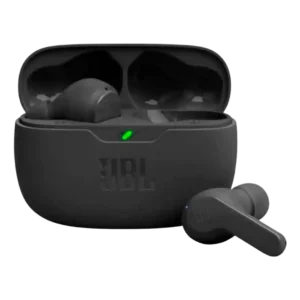
Product 1: JBL Vibe Beam
3.5
P2
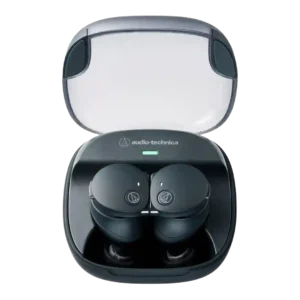
Product 2: Audio-Technica ATH-CKS50TW Earbuds
3.9
Active noise cancellation
P1
Product 1: JBL Vibe Beam
1.5
The lack of ANC is treated as a meaningful limitation for airplane or frequent travel use.
P2
Product 2: Audio-Technica ATH-CKS50TW Earbuds
3.3
ANC performance was the most divided feature: some reviewers found it strong or effective, while several called it average, mediocre, or disappointing versus leaders.
Android compatibility
P1
Product 1: JBL Vibe Beam
4.0
Android-related app support is viewed positively in the one opinionated review that discussed Google and Apple support.
P2
Product 2: Audio-Technica ATH-CKS50TW Earbuds
4.8
Android pairing was praised through Google Fast Pair and straightforward setup on Android devices.
App
P1
Product 1: JBL Vibe Beam
3.3
The app is mixed: it offers useful control and decent features, but one reviewer had recognition and setup frustrations.
P2
Product 2: Audio-Technica ATH-CKS50TW Earbuds
4.5
The Connect app was broadly praised as thorough, useful, and feature-rich, with repeated appreciation for customization, updates, and extra controls.
aptX
P1Product 1: JBL Vibe Beam
No score yet
P2
Product 2: Audio-Technica ATH-CKS50TW Earbuds
4.3
aptX support was treated as a positive for higher-quality or potentially better fidelity, especially for compatible devices.
Audio-video sync accuracy
P1
Product 1: JBL Vibe Beam
2.8
Video sync evidence is split: one review says latency is fine for casual video and gaming, while another says TV lip sync fails badly.
P2
Product 2: Audio-Technica ATH-CKS50TW Earbuds
4.8
Low-latency performance and video sync were a clear strength, with reviewers repeatedly reporting little to no perceptible delay.
Bass performance
P1
Product 1: JBL Vibe Beam
3.6
Bass earns mixed reactions, ranging from punchy and impressive to faint or weaker than expected; positive reviews like its energy, while critical reviews miss fuller low-end weight.
P2
Product 2: Audio-Technica ATH-CKS50TW Earbuds
4.3
Bass was a major strength for most reviewers, described as deep, warm, thumpy, or great, but a few noted it could obscure mids or lacked flagship-level cleanliness.
Battery
P1
Product 1: JBL Vibe Beam
4.5
Battery life is one of the clearest strengths, with many reviewers praising long playback, strong case endurance, or performance beyond expectations.
P2
Product 2: Audio-Technica ATH-CKS50TW Earbuds
5.0
Battery life was the clearest consensus strength, with reviewers repeatedly calling it epic, insane, best-in-class, or unusually long.
Bluetooth
P1
Product 1: JBL Vibe Beam
4.4
Bluetooth reliability is a strength across reviews, with fast pairing, stable connections, easy device switching, and few or no glitches reported.
P2
Product 2: Audio-Technica ATH-CKS50TW Earbuds
4.3
Bluetooth performance was generally stable and reliable, with strong connection praise, though one reviewer reported random signal drops in some multipoint use.
Build quality
P1
Product 1: JBL Vibe Beam
3.0
Build quality is polarized: one review praises durability, another calls the build sturdy, but others criticize cheap feel and fast wear.
P2
Product 2: Audio-Technica ATH-CKS50TW Earbuds
4.1
Build quality was mostly viewed positively, with reviewers praising sturdy construction or non-cheap materials, though one reviewer criticized the build as not amazing.
Button control usability
P1
Product 1: JBL Vibe Beam
4.5
One review praises button/control customization and pressing behavior as unusually good for the price.
P2
Product 2: Audio-Technica ATH-CKS50TW Earbuds
3.1
Button usability split reviewers sharply: some preferred responsive physical buttons, while others found them fiddly, hard to locate, or awkward to press.
Carry case quality
P1
Product 1: JBL Vibe Beam
3.3
Case quality is divisive: some praise its compactness, texture, or premium feel, while others call it cheap, slippery, or awkward.
P2
Product 2: Audio-Technica ATH-CKS50TW Earbuds
4.3
Case quality was generally positive for sturdiness, magnets, finish, or design, although size hurt portability rather than perceived construction.
Charging
P1
Product 1: JBL Vibe Beam
4.4
Charging earns strong praise, especially quick charging and USB-C charging speed.
P2
Product 2: Audio-Technica ATH-CKS50TW Earbuds
3.9
Charging was mixed: fast charging drew strong praise, but multiple reviewers criticized the lack of wireless charging on the original model.
Codec support
P1
Product 1: JBL Vibe Beam
2.8
Codec support is basic; reviewers note the lack of fancy codecs but also say SBC and AAC should be enough for most people.
P2
Product 2: Audio-Technica ATH-CKS50TW Earbuds
4.5
Codec support was praised as a strong spec highlight, especially around Bluetooth 5.2 and aptX Adaptive.
Comfort during long use
P1
Product 1: JBL Vibe Beam
3.0
Comfort is mixed: several reviewers find the earbuds comfortable or wearable, but longer listening and lying down can become unpleasant.
P2
Product 2: Audio-Technica ATH-CKS50TW Earbuds
4.0
Comfort was mostly positive despite the bulky housings, with several reviewers wearing them for long periods, though one TW2 review found the design less comfortable.
Design and Aesthetics
P1
Product 1: JBL Vibe Beam
3.9
Design is mostly liked for its distinct look, colors, minimalist shape, and sleek styling, despite some durability concerns elsewhere.
P2
Product 2: Audio-Technica ATH-CKS50TW Earbuds
2.9
Design impressions were mixed to negative: some liked the subdued look, but many called the buds or case bulky, plain, or not especially attractive.
Eartips fit
P1
Product 1: JBL Vibe Beam
3.9
Fit is generally positive, with several reviewers getting a decent, comfortable, or secure seal, though one notes imperfect lock-in.
P2
Product 2: Audio-Technica ATH-CKS50TW Earbuds
4.0
Fit was generally secure and comfortable for some reviewers, but fit concerns remained for smaller ears or wind-noise isolation.
Ear tip size options
P1
Product 1: JBL Vibe Beam
4.0
Ear tip sizing helps fit customization, especially for smaller ears or workout use.
P2
Product 2: Audio-Technica ATH-CKS50TW Earbuds
4.5
One review praised the four tip sizes as giving plenty of range to find a comfortable fit.
Equalizer customization
P1
Product 1: JBL Vibe Beam
3.7
EQ customization is useful for tailoring sound, but it cannot fully rescue the sound for every reviewer.
P2
Product 2: Audio-Technica ATH-CKS50TW Earbuds
4.4
EQ customization was one of the strongest software features, with reviewers praising the ability to tune sound and create more personalized profiles.
Find My
P1
Product 1: JBL Vibe Beam
4.0
Location tracking is treated as a welcome app feature that many competitors lack at this price.
P2Product 2: Audio-Technica ATH-CKS50TW Earbuds
No score yetFrequency response accuracy
P1
Product 1: JBL Vibe Beam
2.0
Frequency response accuracy is criticized for uneven tuning, especially swings across bass, low mids, and treble that do not suit sensitive listeners.
P2
Product 2: Audio-Technica ATH-CKS50TW Earbuds
4.0
Reviewers described the overall tuning as balanced or safe, with the frequency range generally represented without harshness.
Included accessories
P1
Product 1: JBL Vibe Beam
4.0
Included accessories are lightly praised because extra earbud pieces are considered useful over time.
P2Product 2: Audio-Technica ATH-CKS50TW Earbuds
No score yetInstrument separation
P1
Product 1: JBL Vibe Beam
3.8
Instrument separation is viewed as decent: reviewers could locate instruments and avoid congestion, though the presentation remains limited rather than expansive.
P2
Product 2: Audio-Technica ATH-CKS50TW Earbuds
4.0
Instrument separation was praised when reviewers heard transient details and individual elements clearly, but one reviewer found separation below audiophile rivals.
Integrated microphone
P1
Product 1: JBL Vibe Beam
4.0
The integrated microphones are judged from passable to excellent depending on the reviewer, mirroring the mixed call-quality evidence.
P2
Product 2: Audio-Technica ATH-CKS50TW Earbuds
4.5
Reviewers who evaluated the built-in microphones found them useful or strong for calls in favorable conditions, though noise handling could struggle outdoors or in busy spaces.
Interchangeable left/right bud design
P1Product 1: JBL Vibe Beam
No score yet
P2
Product 2: Audio-Technica ATH-CKS50TW Earbuds
5.0
The snap-together magnetic bud design on the TW2 was strongly praised for reducing loss and battery drain outside the case.
Maximum volume clarity
P1
Product 1: JBL Vibe Beam
2.0
High-volume performance is a weak point in critical reviews, with harsh highs and discomfort appearing when volume is pushed.
P2
Product 2: Audio-Technica ATH-CKS50TW Earbuds
3.5
One reviewer noted that dynamics could feel slightly compressed at louder volumes, making maximum-volume clarity good but not perfect.
Microphone noise reduction
P1
Product 1: JBL Vibe Beam
2.7
Microphone noise handling is mixed: one reviewer praises minimal background filtering, while others say outside noise remains a problem.
P2
Product 2: Audio-Technica ATH-CKS50TW Earbuds
2.2
Microphone noise reduction was a repeated weakness, with reviewers noting struggles against noise, exterior sounds, or wind.
Microphone quality for calls
P1
Product 1: JBL Vibe Beam
3.6
Call mic quality ranges from meh and passable to crisp or excellent, so the experience appears highly reviewer-dependent.
P2
Product 2: Audio-Technica ATH-CKS50TW Earbuds
3.9
Call quality was usually acceptable to good in quiet conditions, with some strong praise, but several reviewers found it only average outside controlled environments.
Midrange clarity
P1
Product 1: JBL Vibe Beam
4.0
Midrange is generally acceptable to good, with reviewers noting enough clarity for details, balanced mids, or clearly audible mids alongside highs and lows.
P2
Product 2: Audio-Technica ATH-CKS50TW Earbuds
3.6
Midrange clarity was mixed: some reviewers heard clear vocals and lead instruments, while others said vocals or lower mids were pushed back by the bass-forward tuning.
Multi-platform compatibility
P1
Product 1: JBL Vibe Beam
4.0
Multi-platform switching worked smoothly for one reviewer moving between iPhone and MacBook.
P2
Product 2: Audio-Technica ATH-CKS50TW Earbuds
4.3
Reviewers found phone-and-laptop use helpful, with multipoint and cross-device switching making the earbuds practical across platforms.
Multipoint connectivity reliability
P1
Product 1: JBL Vibe Beam
3.0
Multipoint is absent, but one reviewer considered the omission acceptable for this price and use case.
P2
Product 2: Audio-Technica ATH-CKS50TW Earbuds
4.5
Multipoint was consistently valued for switching between phone, laptop, computer, or other devices, with reviewers describing it as useful, seamless, or reliable.
Noise isolation (passive)
P1
Product 1: JBL Vibe Beam
4.0
Passive isolation performs better than expected when the fit is secure, with reviewers saying it blocks enough ambient sound for normal use or workouts.
P2
Product 2: Audio-Technica ATH-CKS50TW Earbuds
4.0
Passive isolation was usually strong when the seal fit well, though one review noted fit-related wind-noise leakage.
Portability/foldability
P1
Product 1: JBL Vibe Beam
4.0
Portability is good thanks to a small pocketable case, though the case is not perfect in every pocket or handling situation.
P2
Product 2: Audio-Technica ATH-CKS50TW Earbuds
2.4
Portability was a recurring weakness because the case was often described as bulky, clunky, hard to pocket, or inconvenient, despite battery-life tradeoffs.
Preset EQ profile quality
P1
Product 1: JBL Vibe Beam
3.5
Preset EQs can improve results, though the evidence suggests some presets are too strong or genre-specific.
P2
Product 2: Audio-Technica ATH-CKS50TW Earbuds
4.5
One reviewer said the Clear Vocal preset effectively fixed a vocal-detail issue, supporting a strong score for preset EQ usefulness.
Sensors
P1Product 1: JBL Vibe Beam
No score yet
P2
Product 2: Audio-Technica ATH-CKS50TW Earbuds
1.3
Sensors were a clear weakness where reviewers wanted wear detection and criticized its absence.
Sidetone adjustment quality
P1
Product 1: JBL Vibe Beam
4.5
Sidetone/VoiceAware is praised for helping the caller speak naturally without shouting.
P2
Product 2: Audio-Technica ATH-CKS50TW Earbuds
4.0
Sidetone was treated as useful for calls, helping users monitor their own voice or making the earbuds more office-friendly.
Smudge resistance
P1
Product 1: JBL Vibe Beam
1.5
Smudge and scratch resistance is poor in the one review that judged it, with the case showing wear quickly.
P2Product 2: Audio-Technica ATH-CKS50TW Earbuds
No score yetSoftware/setup simplicity
P1
Product 1: JBL Vibe Beam
2.0
Software setup is a weak point in one review because the app was confusing and did not clearly list the earbuds.
P2
Product 2: Audio-Technica ATH-CKS50TW Earbuds
5.0
One review described initial setup as simple and fast, supporting a strong software/setup score.
Sound quality
P1
Product 1: JBL Vibe Beam
3.6
Overall sound divides reviewers sharply: several praise the Vibe Beam as balanced, great for the price, or even excellent, while others call it mediocre, merely consumer-friendly, or disappointing.
P2
Product 2: Audio-Technica ATH-CKS50TW Earbuds
4.3
Reviewers mostly found the earbuds enjoyable and capable, with repeated praise for warm, detailed, or impressive sound, though one reviewer found the sound merely okay.
Soundstage depth
P1
Product 1: JBL Vibe Beam
2.2
Soundstage depth is limited, with multiple reviewers describing little depth, weak 3D space, or a confined presentation.
P2
Product 2: Audio-Technica ATH-CKS50TW Earbuds
3.8
Soundstage depth was praised by Expert Reviews but underwhelmed one YouTube reviewer who expected more depth from the large housings.
Soundstage width
P1
Product 1: JBL Vibe Beam
4.0
One review finds the stage fairly wide for the price, helping instruments spread out rather than collapse into the center.
P2
Product 2: Audio-Technica ATH-CKS50TW Earbuds
4.1
Soundstage width drew strong praise from some reviewers for wraparound or convincing staging, while one reviewer expected more width from the large earbuds.
Spatial audio
P1Product 1: JBL Vibe Beam
No score yet
P2
Product 2: Audio-Technica ATH-CKS50TW Earbuds
3.4
Spatial audio opinions were divided, ranging from disappointment or superfluousness to strong immersion and impressive 360 Reality Audio effects.
Stability
P1
Product 1: JBL Vibe Beam
3.8
Stability is mixed but often positive: some reviews report secure workouts, while one criticizes stems pulling the earbuds loose.
P2
Product 2: Audio-Technica ATH-CKS50TW Earbuds
4.2
Stability ranged from excellent in workout/head-shake testing to less reassuring on the bulkier TW2 design.
Touch control responsiveness
P1
Product 1: JBL Vibe Beam
3.4
Touch controls are highly inconsistent across reviewers, ranging from very responsive and easy to use to unreliable, confusing, or poorly customized.
P2Product 2: Audio-Technica ATH-CKS50TW Earbuds
No score yetTransparency mode quality
P1
Product 1: JBL Vibe Beam
3.8
Transparency features are useful for awareness and conversations, though evidence focuses on convenience rather than premium-quality passthrough.
P2
Product 2: Audio-Technica ATH-CKS50TW Earbuds
3.6
Transparency/hear-through mode was useful for awareness and conversation, but reviewers disagreed on quality, ranging from invaluable to merely okay.
Treble clarity
P1
Product 1: JBL Vibe Beam
3.3
Treble is polarized: some hear smooth, clear highs, while others find upper frequencies piercing or shrill at higher volumes.
P2
Product 2: Audio-Technica ATH-CKS50TW Earbuds
3.8
Treble generally stayed clear and non-harsh, but several reviewers said highs lacked some sharpness, space, or detail compared with stronger competitors.
USB-C
P1
Product 1: JBL Vibe Beam
4.5
USB-C is positively received as a modern, convenient charging choice compared with older micro USB.
P2Product 2: Audio-Technica ATH-CKS50TW Earbuds
No score yetValue for money
P1
Product 1: JBL Vibe Beam
4.0
Value is broadly positive because reviewers repeatedly cite low price, frequent sales, and strong features, though performance tradeoffs remain.
P2
Product 2: Audio-Technica ATH-CKS50TW Earbuds
4.2
Value was generally positive because of battery life, sound, and features for the price, though one reviewer argued $150 was too high.
Voice assistant integration
P1
Product 1: JBL Vibe Beam
3.5
Voice controls are seen as a useful fallback when hands are occupied, though not a central strength.
P2
Product 2: Audio-Technica ATH-CKS50TW Earbuds
1.5
One review criticized the lack of built-in voice-assistant control, making this a weak point for hands-free assistant use.
Volume output
P1
Product 1: JBL Vibe Beam
3.5
Volume output is adequate rather than exceptional; one review notes limited headroom, while another found the earbuds loud enough to demonstrate clearly.
P2
Product 2: Audio-Technica ATH-CKS50TW Earbuds
4.0
Reviewers who commented on volume found adequate headroom and loud output, without major volume complaints.
Water/sweat resistance rating
P1
Product 1: JBL Vibe Beam
4.1
Water and sweat resistance is consistently treated positively for workouts, sweat, light rain, or general active use.
P2
Product 2: Audio-Technica ATH-CKS50TW Earbuds
4.0
Water and sweat resistance was treated as useful for workouts, outdoor use, and peace of mind, though not as full waterproofing.
Weight comfort
P1
Product 1: JBL Vibe Beam
4.5
One reviewer praises the lightweight feel, saying the earbuds nearly disappear during normal wear.
P2
Product 2: Audio-Technica ATH-CKS50TW Earbuds
4.5
One review specifically described the earbuds as light and relatively inconspicuous, supporting a positive weight-comfort impression.