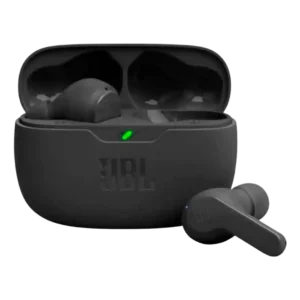
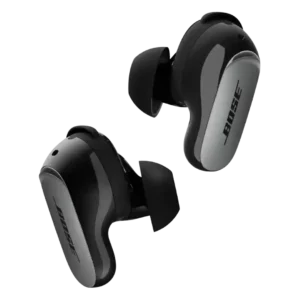
Average score
P1
Product 1: JBL Vibe Beam
3.5
P2
Product 2: Bose QuietComfort Ultra Earbuds (2nd...
3.8
Active noise cancellation
P1
Product 1: JBL Vibe Beam
1.5
The lack of ANC is treated as a meaningful limitation for airplane or frequent travel use.
P2
Product 2: Bose QuietComfort Ultra Earbuds (2nd...
4.9
Reviewers strongly agree that ANC is the standout feature: it removes airplane, subway, traffic, keyboard, cafe, and other ambient noise better than most or all earbuds they tested, with only minor caveats about hiss or sudden spikes.
Android compatibility
P1
Product 1: JBL Vibe Beam
4.0
Android-related app support is viewed positively in the one opinionated review that discussed Google and Apple support.
P2
Product 2: Bose QuietComfort Ultra Earbuds (2nd...
4.0
Android users are treated as a strong audience because the earbuds support advanced options and Snapdragon-related features, though some phone compatibility limits remain.
App
P1
Product 1: JBL Vibe Beam
3.3
The app is mixed: it offers useful control and decent features, but one reviewer had recognition and setup frustrations.
P2
Product 2: Bose QuietComfort Ultra Earbuds (2nd...
3.6
The Bose app is useful and sometimes clean, offering modes, controls, sources, EQ, and fit tools, but reviewers also found it mandatory, occasionally daunting, and not especially customizable.
aptX
P1Product 1: JBL Vibe Beam
No score yet
P2
Product 2: Bose QuietComfort Ultra Earbuds (2nd...
4.0
aptX Lossless/Snapdragon Sound support is viewed as a useful premium codec feature for compatible devices.
Audio-video sync accuracy
P1
Product 1: JBL Vibe Beam
2.8
Video sync evidence is split: one review says latency is fine for casual video and gaming, while another says TV lip sync fails badly.
P2
Product 2: Bose QuietComfort Ultra Earbuds (2nd...
3.7
Audio-video sync is praised for video editing, but gaming latency is criticized for quick-reaction games, making latency performance mixed by use case.
Bass performance
P1
Product 1: JBL Vibe Beam
3.6
Bass earns mixed reactions, ranging from punchy and impressive to faint or weaker than expected; positive reviews like its energy, while critical reviews miss fuller low-end weight.
P2
Product 2: Bose QuietComfort Ultra Earbuds (2nd...
4.1
Bass is generally rich, punchy, and deep, but some reviewers think Bose overboosts the low end or gives it too much emphasis for neutral listening.
Battery
P1
Product 1: JBL Vibe Beam
4.5
Battery life is one of the clearest strengths, with many reviewers praising long playback, strong case endurance, or performance beyond expectations.
P2
Product 2: Bose QuietComfort Ultra Earbuds (2nd...
3.0
Battery life is consistently described as adequate or average rather than class-leading, usually around six hours with ANC and less with immersive audio.
Bluetooth
P1
Product 1: JBL Vibe Beam
4.4
Bluetooth reliability is a strength across reviews, with fast pairing, stable connections, easy device switching, and few or no glitches reported.
P2
Product 2: Bose QuietComfort Ultra Earbuds (2nd...
4.2
Bluetooth reliability is mostly positive, with several reviewers reporting no dropouts, though one reviewer wished Bose had moved beyond Bluetooth 5.3.
Build quality
P1
Product 1: JBL Vibe Beam
3.0
Build quality is polarized: one review praises durability, another calls the build sturdy, but others criticize cheap feel and fast wear.
P2
Product 2: Bose QuietComfort Ultra Earbuds (2nd...
4.4
Build quality is described as premium for the earbuds themselves, even when the case does not always feel equally high-end.
Button control usability
P1
Product 1: JBL Vibe Beam
4.5
One review praises button/control customization and pressing behavior as unusually good for the price.
P2
Product 2: Bose QuietComfort Ultra Earbuds (2nd...
2.8
For running, one reviewer would prefer physical button controls because touch gestures are harder to use precisely during workouts.
Cable quality
P1Product 1: JBL Vibe Beam
No score yet
P2
Product 2: Bose QuietComfort Ultra Earbuds (2nd...
2.5
The included cable drew a minor complaint because PCMag wanted a longer USB-C-to-USB-C cable.
Carry case quality
P1
Product 1: JBL Vibe Beam
3.3
Case quality is divisive: some praise its compactness, texture, or premium feel, while others call it cheap, slippery, or awkward.
P2
Product 2: Bose QuietComfort Ultra Earbuds (2nd...
2.9
The case is functional and now charges wirelessly, but reviewers repeatedly describe it as bulky, clunky, or less premium than the earbuds.
Charging
P1
Product 1: JBL Vibe Beam
4.4
Charging earns strong praise, especially quick charging and USB-C charging speed.
P2
Product 2: Bose QuietComfort Ultra Earbuds (2nd...
4.1
Charging is a notable upgrade thanks to wireless charging and case improvements, although one running-focused review found quick charging slower than ideal.
Codec support
P1
Product 1: JBL Vibe Beam
2.8
Codec support is basic; reviewers note the lack of fancy codecs but also say SBC and AAC should be enough for most people.
P2
Product 2: Bose QuietComfort Ultra Earbuds (2nd...
4.5
Codec support is praised as premium because the earbuds support high-quality Bluetooth codecs.
Comfort during long use
P1
Product 1: JBL Vibe Beam
3.0
Comfort is mixed: several reviewers find the earbuds comfortable or wearable, but longer listening and lying down can become unpleasant.
P2
Product 2: Bose QuietComfort Ultra Earbuds (2nd...
4.4
Comfort is a major strength for many reviewers over long sessions, flights, runs, and daily use, though very small ears may struggle.
Design and Aesthetics
P1
Product 1: JBL Vibe Beam
3.9
Design is mostly liked for its distinct look, colors, minimalist shape, and sleek styling, despite some durability concerns elsewhere.
P2
Product 2: Bose QuietComfort Ultra Earbuds (2nd...
4.0
Design impressions are mixed-positive: some like the sleek, subtle, creative look, while others note the chunky or busy shape may divide people.
Earpad noise
P1Product 1: JBL Vibe Beam
No score yet
P2
Product 2: Bose QuietComfort Ultra Earbuds (2nd...
2.6
Several runners or active users noticed footstep thud or earbud movement noise, especially during runs or with sweaty ears.
Eartips fit
P1
Product 1: JBL Vibe Beam
3.9
Fit is generally positive, with several reviewers getting a decent, comfortable, or secure seal, though one notes imperfect lock-in.
P2
Product 2: Bose QuietComfort Ultra Earbuds (2nd...
4.4
Fit is generally secure and seal-friendly, helped by the ovoid nozzle, ear tips, and stability bands, though individual ear shape still matters.
Ear tip size options
P1
Product 1: JBL Vibe Beam
4.0
Ear tip sizing helps fit customization, especially for smaller ears or workout use.
P2
Product 2: Bose QuietComfort Ultra Earbuds (2nd...
2.5
Ear tip and wing options help fit, but the running-focused review wanted more than three sizes at this price.
Equalizer customization
P1
Product 1: JBL Vibe Beam
3.7
EQ customization is useful for tailoring sound, but it cannot fully rescue the sound for every reviewer.
P2
Product 2: Bose QuietComfort Ultra Earbuds (2nd...
2.1
EQ customization is the clearest software weakness: many reviewers criticize the basic three-band EQ as too limited for premium earbuds.
Find My
P1
Product 1: JBL Vibe Beam
4.0
Location tracking is treated as a welcome app feature that many competitors lack at this price.
P2Product 2: Bose QuietComfort Ultra Earbuds (2nd...
No score yetFrequency response accuracy
P1
Product 1: JBL Vibe Beam
2.0
Frequency response accuracy is criticized for uneven tuning, especially swings across bass, low mids, and treble that do not suit sensitive listeners.
P2
Product 2: Bose QuietComfort Ultra Earbuds (2nd...
2.3
Measurement-focused reviews say the frequency response is heavily shaped, with overemphasized bass and treble and recessed mids.
Included accessories
P1
Product 1: JBL Vibe Beam
4.0
Included accessories are lightly praised because extra earbud pieces are considered useful over time.
P2
Product 2: Bose QuietComfort Ultra Earbuds (2nd...
4.5
Included fit accessories are appreciated when they help tailor the fit, though other reviews still wanted more size options.
Instrument separation
P1
Product 1: JBL Vibe Beam
3.8
Instrument separation is viewed as decent: reviewers could locate instruments and avoid congestion, though the presentation remains limited rather than expansive.
P2
Product 2: Bose QuietComfort Ultra Earbuds (2nd...
4.4
Instrument separation is widely praised, with reviewers hearing open mixes, distinct sections, and easy-to-pick-out track elements.
Integrated microphone
P1
Product 1: JBL Vibe Beam
4.0
The integrated microphones are judged from passable to excellent depending on the reviewer, mirroring the mixed call-quality evidence.
P2
Product 2: Bose QuietComfort Ultra Earbuds (2nd...
4.6
Integrated microphones are praised in stronger call-focused reviews for clear voice pickup and background rejection.
Lossless audio support
P1Product 1: JBL Vibe Beam
No score yet
P2
Product 2: Bose QuietComfort Ultra Earbuds (2nd...
4.0
Lossless support through aptX Lossless/Snapdragon Sound is treated as a useful premium feature for compatible devices.
Maximum volume clarity
P1
Product 1: JBL Vibe Beam
2.0
High-volume performance is a weak point in critical reviews, with harsh highs and discomfort appearing when volume is pushed.
P2
Product 2: Bose QuietComfort Ultra Earbuds (2nd...
4.5
Maximum-volume clarity is strong in the running review, which heard clarity and no distortion even when volume was raised.
Microphone noise reduction
P1
Product 1: JBL Vibe Beam
2.7
Microphone noise handling is mixed: one reviewer praises minimal background filtering, while others say outside noise remains a problem.
P2
Product 2: Bose QuietComfort Ultra Earbuds (2nd...
3.9
Microphone noise reduction ranges from excellent SpeechClarity performance to weaker lab samples, but the overall reviewer consensus is improved and often strong.
Microphone quality for calls
P1
Product 1: JBL Vibe Beam
3.6
Call mic quality ranges from meh and passable to crisp or excellent, so the experience appears highly reviewer-dependent.
P2
Product 2: Bose QuietComfort Ultra Earbuds (2nd...
3.9
Call microphone quality is mixed: some reviewers call it exceptional or much improved, while others say it is merely fine or still affected by noise.
Midrange clarity
P1
Product 1: JBL Vibe Beam
4.0
Midrange is generally acceptable to good, with reviewers noting enough clarity for details, balanced mids, or clearly audible mids alongside highs and lows.
P2
Product 2: Bose QuietComfort Ultra Earbuds (2nd...
3.8
Midrange clarity is usually praised for warm vocals or crisp presentation, but measurement-focused reviewers complain that boosted lows and highs recess the mids.
Multi-platform compatibility
P1
Product 1: JBL Vibe Beam
4.0
Multi-platform switching worked smoothly for one reviewer moving between iPhone and MacBook.
P2
Product 2: Bose QuietComfort Ultra Earbuds (2nd...
4.5
Cross-platform use is positive, with reviewers recommending Bose for both Android and iPhone users and reporting smooth use on both platforms.
Multipoint connectivity reliability
P1
Product 1: JBL Vibe Beam
3.0
Multipoint is absent, but one reviewer considered the omission acceptable for this price and use case.
P2
Product 2: Bose QuietComfort Ultra Earbuds (2nd...
4.1
Multipoint is a welcome and often seamless upgrade, though one reviewer noted setup/custom tune trouble when audio was already playing.
Noise isolation (passive)
P1
Product 1: JBL Vibe Beam
4.0
Passive isolation performs better than expected when the fit is secure, with reviewers saying it blocks enough ambient sound for normal use or workouts.
P2
Product 2: Bose QuietComfort Ultra Earbuds (2nd...
4.4
Passive isolation benefits from a tight seal and secure nozzle shape, with reviewers noting strong sealing and little noise bleed.
Portability/foldability
P1
Product 1: JBL Vibe Beam
4.0
Portability is good thanks to a small pocketable case, though the case is not perfect in every pocket or handling situation.
P2
Product 2: Bose QuietComfort Ultra Earbuds (2nd...
3.0
Portability is mixed because the earbuds and case are pocketable, but the case is often called large or hard to carry while running.
Preset EQ profile quality
P1
Product 1: JBL Vibe Beam
3.5
Preset EQs can improve results, though the evidence suggests some presets are too strong or genre-specific.
P2
Product 2: Bose QuietComfort Ultra Earbuds (2nd...
1.8
Preset EQ profiles are poorly regarded because they are basic and do not adequately fix the tuning complaints.
Sensors
P1Product 1: JBL Vibe Beam
No score yet
P2
Product 2: Bose QuietComfort Ultra Earbuds (2nd...
2.7
Sensor behavior is a weak spot in the few comments available, with reviewers criticizing early CustomTune firing and suggesting in-ear detection be disabled.
Sidetone adjustment quality
P1
Product 1: JBL Vibe Beam
4.5
Sidetone/VoiceAware is praised for helping the caller speak naturally without shouting.
P2Product 2: Bose QuietComfort Ultra Earbuds (2nd...
No score yetSmudge resistance
P1
Product 1: JBL Vibe Beam
1.5
Smudge and scratch resistance is poor in the one review that judged it, with the case showing wear quickly.
P2Product 2: Bose QuietComfort Ultra Earbuds (2nd...
No score yetSoftware/setup simplicity
P1
Product 1: JBL Vibe Beam
2.0
Software setup is a weak point in one review because the app was confusing and did not clearly list the earbuds.
P2
Product 2: Bose QuietComfort Ultra Earbuds (2nd...
2.8
Setup simplicity is imperfect because one reviewer reported trouble with CustomTune when connecting another device during playback.
Sound leakage
P1Product 1: JBL Vibe Beam
No score yet
P2
Product 2: Bose QuietComfort Ultra Earbuds (2nd...
4.4
Sound leakage is rated positively in the one direct test, with the reviewer reporting little outside noise bleed.
Sound quality
P1
Product 1: JBL Vibe Beam
3.6
Overall sound divides reviewers sharply: several praise the Vibe Beam as balanced, great for the price, or even excellent, while others call it mediocre, merely consumer-friendly, or disappointing.
P2
Product 2: Bose QuietComfort Ultra Earbuds (2nd...
4.5
Sound quality is broadly strong, with rich, detailed, bass-forward playback praised by most reviewers, though a few disliked the stock tuning.
Soundstage depth
P1
Product 1: JBL Vibe Beam
2.2
Soundstage depth is limited, with multiple reviewers describing little depth, weak 3D space, or a confined presentation.
P2
Product 2: Bose QuietComfort Ultra Earbuds (2nd...
4.4
Soundstage depth is praised in orchestral and spacious listening comments, though evidence is less extensive than for overall sound quality.
Soundstage width
P1
Product 1: JBL Vibe Beam
4.0
One review finds the stage fairly wide for the price, helping instruments spread out rather than collapse into the center.
P2
Product 2: Bose QuietComfort Ultra Earbuds (2nd...
4.6
Soundstage width is praised for an open, wide, detailed presentation that helps mixes feel bigger than typical earbuds.
Spatial audio
P1Product 1: JBL Vibe Beam
No score yet
P2
Product 2: Bose QuietComfort Ultra Earbuds (2nd...
3.9
Spatial audio is divisive: some reviewers find it natural, cool, or useful, while others prefer standard stereo or dislike the processing.
Stability
P1
Product 1: JBL Vibe Beam
3.8
Stability is mixed but often positive: some reviews report secure workouts, while one criticizes stems pulling the earbuds loose.
P2
Product 2: Bose QuietComfort Ultra Earbuds (2nd...
4.3
Stability is mostly excellent, especially for running and workouts, but one reviewer still disliked the running feel and movement.
Touch control responsiveness
P1
Product 1: JBL Vibe Beam
3.4
Touch controls are highly inconsistent across reviewers, ranging from very responsive and easy to use to unreliable, confusing, or poorly customized.
P2
Product 2: Bose QuietComfort Ultra Earbuds (2nd...
3.7
Touch controls split reviewers: some find them responsive, intuitive, and complete, while others call them fussy or hard to use precisely during runs.
Transparency mode quality
P1
Product 1: JBL Vibe Beam
3.8
Transparency features are useful for awareness and conversations, though evidence focuses on convenience rather than premium-quality passthrough.
P2
Product 2: Bose QuietComfort Ultra Earbuds (2nd...
3.9
Transparency mode is generally good to excellent, especially Aware/ActiveSense, but several reviewers still prefer Apple or note wind, hiss, or manual-adjustment limits.
Treble clarity
P1
Product 1: JBL Vibe Beam
3.3
Treble is polarized: some hear smooth, clear highs, while others find upper frequencies piercing or shrill at higher volumes.
P2
Product 2: Bose QuietComfort Ultra Earbuds (2nd...
3.9
Treble is often described as clear, sparkly, or balanced, but measurement-focused reviews say it can be overemphasized or occasionally hard to fix with EQ.
USB-C
P1
Product 1: JBL Vibe Beam
4.5
USB-C is positively received as a modern, convenient charging choice compared with older micro USB.
P2Product 2: Bose QuietComfort Ultra Earbuds (2nd...
No score yetValue for money
P1
Product 1: JBL Vibe Beam
4.0
Value is broadly positive because reviewers repeatedly cite low price, frequent sales, and strong features, though performance tradeoffs remain.
P2
Product 2: Bose QuietComfort Ultra Earbuds (2nd...
3.4
Value depends heavily on priorities: reviewers see the premium price as justified for ANC and sound, but weak for Gen 1 owners or bargain-focused buyers.
Voice assistant integration
P1
Product 1: JBL Vibe Beam
3.5
Voice controls are seen as a useful fallback when hands are occupied, though not a central strength.
P2
Product 2: Bose QuietComfort Ultra Earbuds (2nd...
4.3
Voice assistant integration gets limited but positive evidence, with reviewers saying Google Assistant or assistant shortcuts worked without hassle.
Volume output
P1
Product 1: JBL Vibe Beam
3.5
Volume output is adequate rather than exceptional; one review notes limited headroom, while another found the earbuds loud enough to demonstrate clearly.
P2
Product 2: Bose QuietComfort Ultra Earbuds (2nd...
4.7
Volume output is strong in the one direct measurement-style review, which says Bose makes loud earbuds.
Water/sweat resistance rating
P1
Product 1: JBL Vibe Beam
4.1
Water and sweat resistance is consistently treated positively for workouts, sweat, light rain, or general active use.
P2
Product 2: Bose QuietComfort Ultra Earbuds (2nd...
4.0
Water and sweat resistance is considered sufficient for workouts and light rain, though not fully waterproof.
Weight comfort
P1
Product 1: JBL Vibe Beam
4.5
One reviewer praises the lightweight feel, saying the earbuds nearly disappear during normal wear.
P2
Product 2: Bose QuietComfort Ultra Earbuds (2nd...
4.3
Weight comfort is positive despite the buds being chunky or slightly heavier; reviewers said the weight was not annoying and still felt fine.