Average score
P1
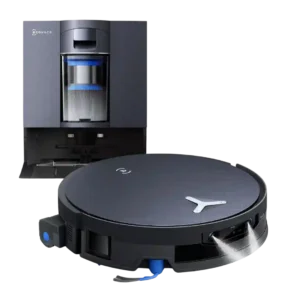
Product 1: Ecovacs Deebot X12 OmniCyclone
4.0
P2
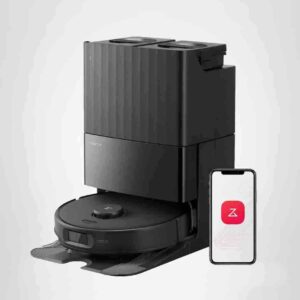
Product 2: Roborock Qrevo Edge S5A Robot...
4.3
Accessories and Tools
P1
Product 1: Ecovacs Deebot X12 OmniCyclone
4.2
Included detergents were appreciated in the Italian review because top-end robots often require buying them separately.
P2
Product 2: Roborock Qrevo Edge S5A Robot...
3.5
Box contents were adequate, but the main opinionated note was that the included quick-start literature felt unusually large.
Adaptive chassis lift
P1
Product 1: Ecovacs Deebot X12 OmniCyclone
4.4
Threshold and chassis handling are praised for avoiding carpet-edge and molding hangups and climbing modest ledges.
P2
Product 2: Roborock Qrevo Edge S5A Robot...
2.3
Adaptive chassis lift was a clear weakness because the S5A lacks it and cannot handle the same high thresholds as pricier models.
Aesthetic design and finish
P1
Product 1: Ecovacs Deebot X12 OmniCyclone
4.4
Design impressions were positive, with reviewers describing the robot and station as sleek, modern, attractive, and not visually intrusive.
P2
Product 2: Roborock Qrevo Edge S5A Robot...
3.5
Design impressions were mixed: one reviewer found the exposed dock more industrial, while another liked the S5A dock’s grooved styling.
AI, Smart, App and Automation
P1
Product 1: Ecovacs Deebot X12 OmniCyclone
3.9
AI and smart features are useful for scheduling and adaptive cleaning, but PCMag saw the AI miss suction adjustment during a dirt test.
P2
Product 2: Roborock Qrevo Edge S5A Robot...
4.8
Smart features were a standout, with praise for the Roborock app, routines, no-go zones, remopping automation, and dock controls.
Airflow blowback
P1
Product 1: Ecovacs Deebot X12 OmniCyclone
4.0
Airflow blowback or scatter control is positive in PCMag's hard-floor test because sand and rice were not flung around the room.
P2Product 2: Roborock Qrevo Edge S5A Robot...
No score yetArea Rug Handling
P1
Product 1: Ecovacs Deebot X12 OmniCyclone
4.0
Area rug and carpet transition handling is mixed: PCMag saw debris dropped near a throw rug, while other reviewers praised wet/dry separation.
P2
Product 2: Roborock Qrevo Edge S5A Robot...
4.3
Area-rug handling was mostly good on normal rugs, but high-pile carpets could still get damp in one reviewer’s home.
Assembly and Setup
P1
Product 1: Ecovacs Deebot X12 OmniCyclone
4.7
Setup earns strong praise across reviews, with app pairing and initial configuration repeatedly described as easy or straightforward.
P2
Product 2: Roborock Qrevo Edge S5A Robot...
4.3
Setup was repeatedly described as simple or straightforward, with ramp installation, charging, and tank filling as the main steps.
Automatic standby switch
P1
Product 1: Ecovacs Deebot X12 OmniCyclone
4.5
Automatic standby is part of the positive self-care routine, with the robot putting itself to sleep after cleaning tasks.
P2Product 2: Roborock Qrevo Edge S5A Robot...
No score yetBag-full indicator
P1
Product 1: Ecovacs Deebot X12 OmniCyclone
4.2
The bag/bin-full reminder system is useful because the app prompts users to empty dust and dirty water bins.
P2Product 2: Roborock Qrevo Edge S5A Robot...
No score yetBattery and Charging
P1
Product 1: Ecovacs Deebot X12 OmniCyclone
4.2
Battery and charging are mostly praised for planned top-ups and reduced downtime, but PCMag found battery performance worse than the X11.
P2
Product 2: Roborock Qrevo Edge S5A Robot...
4.5
Battery and charging impressions were positive overall, especially the advertised runtime and above-average low-suction coverage.
Bin and Bag
P1
Product 1: Ecovacs Deebot X12 OmniCyclone
4.1
The bagless bin lowers hassle and consumables for several reviewers, but PCMag and one YouTube review found damp or wedged dirt can still require manual cleaning.
P2
Product 2: Roborock Qrevo Edge S5A Robot...
4.3
The bag system was viewed as low-effort because bags can last weeks and are not changed constantly.
Build quality and durability
P1
Product 1: Ecovacs Deebot X12 OmniCyclone
4.1
Build impressions are favorable, with reviewers calling it heavy-duty or a high-end flagship design.
P2Product 2: Roborock Qrevo Edge S5A Robot...
No score yetCarpet — Medium-Pile Pickup
P1
Product 1: Ecovacs Deebot X12 OmniCyclone
3.0
Carpet pickup is mixed in PCMag's test: rice pickup was strong, but sand pickup was weak.
P2
Product 2: Roborock Qrevo Edge S5A Robot...
4.5
Carpet deep-cleaning results were stronger than expected, scoring above the reviewer’s average despite middling airflow and pressure numbers.
Child lock
P1
Product 1: Ecovacs Deebot X12 OmniCyclone
4.2
Child lock support is positively described through kid mode that disables top-button access.
P2Product 2: Roborock Qrevo Edge S5A Robot...
No score yetClogging and debris prevention
P1
Product 1: Ecovacs Deebot X12 OmniCyclone
2.2
PCMag's main debris-prevention concern is recurring dirt dropping during runs, especially around thresholds.
P2
Product 2: Roborock Qrevo Edge S5A Robot...
5.0
The self-empty system was praised for moving hair into the dock without clogging during a heavy hair test.
Comparative performance
P1
Product 1: Ecovacs Deebot X12 OmniCyclone
3.9
Comparative performance is divided: some reviewers frame the X12 as ahead of older robots, while PCMag prefers other Deebot models overall.
P2
Product 2: Roborock Qrevo Edge S5A Robot...
4.0
Compared with higher and lower models, reviewers saw the S5A as a strong mid-tier option that misses some flagship features but keeps core cleaning power.
Controls and UI
P1
Product 1: Ecovacs Deebot X12 OmniCyclone
4.0
Controls and app usability are mostly praised as intuitive and easy, though one reviewer said the app still needs refinement.
P2
Product 2: Roborock Qrevo Edge S5A Robot...
4.8
Controls and UI drew strong praise for being clean, intuitive, customizable, and granular in both app and dock settings.
Corner Cleaning (Robot)
P1
Product 1: Ecovacs Deebot X12 OmniCyclone
3.9
Corner cleaning gets good edge/corner praise from some reviewers but remains imperfect in one tested video review.
P2
Product 2: Roborock Qrevo Edge S5A Robot...
4.4
Corner cleaning was generally good thanks to extending edge tools, though some reviewers still wanted more aggressive corner coverage.
Cyclone performance
P1
Product 1: Ecovacs Deebot X12 OmniCyclone
4.2
Cyclone performance is supported by reviewer praise for maintaining suction while avoiding disposable bags.
P2Product 2: Roborock Qrevo Edge S5A Robot...
No score yetDirty water sensor
P1Product 1: Ecovacs Deebot X12 OmniCyclone
No score yet
P2
Product 2: Roborock Qrevo Edge S5A Robot...
4.4
Dirty-water detection was mixed: several tests triggered remopping successfully, while one dried-stain test failed to send the robot back automatically.
Docking and Auto-Empty Reliability (Robot)
P1
Product 1: Ecovacs Deebot X12 OmniCyclone
3.9
Docking and auto-empty reliability is mixed: most reviewers praise automated dock tasks, but PCMag found the canister needed manual cleanup.
P2
Product 2: Roborock Qrevo Edge S5A Robot...
4.5
Auto-empty reliability had limited but positive evidence from one reviewer who said the dock empties the onboard bin automatically enough that manual access is rare.
Dried-On Stain Removal
P1
Product 1: Ecovacs Deebot X12 OmniCyclone
4.0
Stain removal is a headline strength in many reviews, but PCMag found FocusJet inconsistent on jelly and stronger once it recognized soy sauce.
P2
Product 2: Roborock Qrevo Edge S5A Robot...
4.0
Dried-on stain evidence was mixed: normal grime cleaned well, but ketchup and coffee required manual repeat runs in one test.
Ease of use
P1
Product 1: Ecovacs Deebot X12 OmniCyclone
4.5
Ease of use is consistently good where reviewed, with app workflows and operation described as intuitive or easy.
P2
Product 2: Roborock Qrevo Edge S5A Robot...
4.8
Ease of use was strong where the robot reduced manual cleaning steps and freed users from babysitting the process.
Edge and Baseboard Cleaning (Hard Floors)
P1
Product 1: Ecovacs Deebot X12 OmniCyclone
4.3
Edge and baseboard cleaning is repeatedly praised as improved, close, or solid, though corner precision is not perfect.
P2
Product 2: Roborock Qrevo Edge S5A Robot...
4.9
Edge and baseboard cleaning was a major strength, helped by the extending mop and side brush reaching walls closely.
Edge‑Following Accuracy (Robot)
P1
Product 1: Ecovacs Deebot X12 OmniCyclone
4.4
Edge-following accuracy is praised where reviewed, with a YouTube reviewer saying it cleans closer and more precisely along walls and corners.
P2
Product 2: Roborock Qrevo Edge S5A Robot...
5.0
Edge-following accuracy was strong in tests where the robot stayed close to walls and reached tight edges.
Emptying and Mess Control
P1
Product 1: Ecovacs Deebot X12 OmniCyclone
3.4
Emptying and mess control is mixed: self-emptying reduces effort, but bagless dirt can wedge or stick inside.
P2
Product 2: Roborock Qrevo Edge S5A Robot...
5.0
Emptying and mess control were positive because the dust bag slid out cleanly without creating a mess.
Floor Drying Time
P1
Product 1: Ecovacs Deebot X12 OmniCyclone
4.5
Floor drying time is positive in one tested video review, which said floors were left relatively dry.
P2Product 2: Roborock Qrevo Edge S5A Robot...
No score yetFloorhead design
P1Product 1: Ecovacs Deebot X12 OmniCyclone
No score yet
P2
Product 2: Roborock Qrevo Edge S5A Robot...
5.0
The DuoDivide floorhead design was repeatedly called a standout because it helped reduce tangling and channel debris effectively.
Fresh Liquid Pickup Speed
P1
Product 1: Ecovacs Deebot X12 OmniCyclone
4.2
Fresh liquid pickup has one positive PCMag outcome: the robot mopped up soy sauce in one swoop once FocusJet recognized it.
P2
Product 2: Roborock Qrevo Edge S5A Robot...
4.5
Fresh liquid pickup was positive in the spill test, where the spinning pads effectively mopped up a large water spill.
Hair-removal channel issues
P1
Product 1: Ecovacs Deebot X12 OmniCyclone
3.0
Hair-removal channel issues appear in PCMag's review, where hair remained stuck in bottom crevices.
P2
Product 2: Roborock Qrevo Edge S5A Robot...
3.5
Hair-removal channel evidence was mixed: the design centralized hair and made it easy to remove, but did not fully suck it all in during a stress test.
Hair Pickup — Carpets
P1
Product 1: Ecovacs Deebot X12 OmniCyclone
4.5
Hair pickup on carpets is praised by reviewers dealing with dog hair and shedding pets.
P2
Product 2: Roborock Qrevo Edge S5A Robot...
4.5
Carpet hair pickup evidence was limited but positive, with one rug test describing strong suction that pulled up hair and fine debris.
Hair Pickup — Hard Floors
P1Product 1: Ecovacs Deebot X12 OmniCyclone
No score yet
P2
Product 2: Roborock Qrevo Edge S5A Robot...
5.0
Hard-floor hair pickup was excellent in both customer-style testing and dedicated hair tests with long and damp strands.
Hair‑Wrap / Tangle Resistance
P1
Product 1: Ecovacs Deebot X12 OmniCyclone
4.5
Tangle resistance is a repeated strength, with several reviews praising less hair wrap and lower maintenance.
P2
Product 2: Roborock Qrevo Edge S5A Robot...
4.8
Hair-wrap resistance was one of the strongest recurring themes, with most reviewers reporting no tangles or easy clearing.
Hard Floor — Fine Dust Pickup
P1
Product 1: Ecovacs Deebot X12 OmniCyclone
2.8
Hard-floor fine pickup is weakened by PCMag's dirt-dropping issue on hard floors.
P2
Product 2: Roborock Qrevo Edge S5A Robot...
5.0
Fine dust pickup on hard floors was positive in the chili-powder test and broader hard-floor debris cleanup.
Hard Floor — Large Debris Intake
P1
Product 1: Ecovacs Deebot X12 OmniCyclone
2.8
Hard-floor large-debris intake is limited by PCMag finding clumps of rice and sand left around obstacles and rug transitions.
P2
Product 2: Roborock Qrevo Edge S5A Robot...
4.8
Large hard-floor debris intake was strong in rice, oatmeal, and edge debris examples.
Headlight and LED lights
P1Product 1: Ecovacs Deebot X12 OmniCyclone
No score yet
P2
Product 2: Roborock Qrevo Edge S5A Robot...
2.5
The lack of LED lighting was treated as a limitation because reviewers said a light would help in dim rooms.
Heating element
P1
Product 1: Ecovacs Deebot X12 OmniCyclone
4.2
Heating gets positive support from Android Police's self-care workflow, where heated water was part of the hands-off appeal.
P2
Product 2: Roborock Qrevo Edge S5A Robot...
3.5
Hot-water washing was present, but one reviewer measured lower pad temperatures than advertised and treated the result as qualified.
Innovation compared to competitors
P1
Product 1: Ecovacs Deebot X12 OmniCyclone
4.2
Innovation is one of the most agreed-on strengths, especially the FocusJet/roller approach and bagless station concept.
P2
Product 2: Roborock Qrevo Edge S5A Robot...
4.5
Innovation was strongest in the broader robot-vacuum category and the S5A’s inherited core features, though it lacks the newest flagship systems.
Kid-friendliness
P1
Product 1: Ecovacs Deebot X12 OmniCyclone
4.3
Kid-friendliness is supported by enthusiasm for child mode and family-oriented cleaning features.
P2Product 2: Roborock Qrevo Edge S5A Robot...
No score yetLarge debris handling
P1
Product 1: Ecovacs Deebot X12 OmniCyclone
2.8
Large debris handling is limited by PCMag's finding that rice and sand clumped around obstacles and rug transitions.
P2
Product 2: Roborock Qrevo Edge S5A Robot...
4.8
Large debris handling was positive in real tests with rice, oatmeal, and even a double-A battery pickup claim.
Low-profile design
P1Product 1: Ecovacs Deebot X12 OmniCyclone
No score yet
P2
Product 2: Roborock Qrevo Edge S5A Robot...
4.5
Low-profile impressions were positive in real-home clearance tests, though one comparison noted the top LiDAR made it taller than a flagship.
Maintenance requirements
P1
Product 1: Ecovacs Deebot X12 OmniCyclone
4.4
Maintenance burden is mostly low thanks to self-cleaning and bagless design, though one reviewer cautions it is not zero-maintenance.
P2
Product 2: Roborock Qrevo Edge S5A Robot...
4.0
Maintenance was viewed as manageable because bag swaps were fast, hair clearing was easy, and the dock tray could be cleaned at the sink.
Maneuverability and Handling
P1
Product 1: Ecovacs Deebot X12 OmniCyclone
4.0
Maneuverability is generally good across floors and real homes, though angled chair legs remain a weak spot.
P2
Product 2: Roborock Qrevo Edge S5A Robot...
4.0
Threshold handling was acceptable up to about 2 cm, but higher thresholds exposed the S5A’s lack of adaptive chassis lift.
Map and Path Efficiency (Robot Vacuums)
P1
Product 1: Ecovacs Deebot X12 OmniCyclone
3.8
Mapping and path efficiency are mixed: PCMag and the Italian review praised fast or accurate mapping, while others noted navigation/app-map room to improve.
P2
Product 2: Roborock Qrevo Edge S5A Robot...
4.4
Mapping and routing were widely praised as fast, accurate, efficient, and easy to use across multiple reviews.
Mop lifting system
P1
Product 1: Ecovacs Deebot X12 OmniCyclone
4.4
Mop lifting is a strong feature because reviewers repeatedly say it prevents carpet wetting and contamination during transitions.
P2
Product 2: Roborock Qrevo Edge S5A Robot...
4.4
Mop lifting worked well on normal rugs and carpets, but high-pile carpet still created some wetness risk.
Mopping performance
P1
Product 1: Ecovacs Deebot X12 OmniCyclone
4.1
Mopping performance ranges from decent to very strong: many praise the roller/FocusJet system, while PCMag and Android Police note missed or difficult stains.
P2
Product 2: Roborock Qrevo Edge S5A Robot...
4.9
Mopping performance was the strongest consensus area, with multiple reviewers praising clean floors, mud removal, residue pickup, and edge reach.
Noise level
P1
Product 1: Ecovacs Deebot X12 OmniCyclone
3.5
Noise is context-dependent: one reviewer found higher power louder and rattly, another noted roller noise, while the Italian review praised restrained cleaning noise.
P2
Product 2: Roborock Qrevo Edge S5A Robot...
4.3
Noise was consistently treated as a strength, with measured levels below average and real-home testing noting low disruption.
Obstacle Avoidance (Robot)
P1
Product 1: Ecovacs Deebot X12 OmniCyclone
3.8
Obstacle avoidance is mixed, ranging from PCMag's small-toy miss to other reviewers calling navigation solid or easy around obstacles.
P2
Product 2: Roborock Qrevo Edge S5A Robot...
3.1
Obstacle avoidance was the most consistent weakness, especially for cables, socks, small toys, and low objects, though it sometimes avoided larger items.
Odor control
P1
Product 1: Ecovacs Deebot X12 OmniCyclone
4.5
Odor control is tied to hot-air mop drying, which reviewers said helps avoid wet-mop smells.
P2
Product 2: Roborock Qrevo Edge S5A Robot...
4.7
Odor control was positive, with hot-air drying and self-cleaning pads leaving no smells in real-home use.
Ongoing ownership costs (bags, filters, batteries)
P1
Product 1: Ecovacs Deebot X12 OmniCyclone
4.4
Bagless operation is a clear ownership-cost advantage because it reduces replacement bags, waste, and long-term consumables.
P2Product 2: Roborock Qrevo Edge S5A Robot...
No score yetOverall cleaning convenience
P1
Product 1: Ecovacs Deebot X12 OmniCyclone
4.2
Reviewers generally agree it reduces day-to-day cleaning labor, even when cleaning performance is not flawless.
P2
Product 2: Roborock Qrevo Edge S5A Robot...
4.8
Cleaning convenience was a core strength, with reviewers saying it saved time, reduced manual steps, and made cleaning more hands-off.
Overall opinion
P1
Product 1: Ecovacs Deebot X12 OmniCyclone
4.2
Overall sentiment is positive but not unanimous: several reviewers are impressed, while PCMag calls performance solid yet behind better-value predecessors.
P2
Product 2: Roborock Qrevo Edge S5A Robot...
4.6
Overall sentiment was strongly positive across reviews, with reviewers repeatedly calling it capable, useful, and easy to recommend.
Packaging quality
P1
Product 1: Ecovacs Deebot X12 OmniCyclone
4.2
Packaging receives one positive note from the Italian reviewer for being compact relative to the robot inside.
P2Product 2: Roborock Qrevo Edge S5A Robot...
No score yetPet-Ready Features
P1
Product 1: Ecovacs Deebot X12 OmniCyclone
4.4
Pet suitability is a consistent strength, with reviewers highlighting pet-hair cleanup, pet/child household fit, and long-hair readiness.
P2
Product 2: Roborock Qrevo Edge S5A Robot...
4.5
Pet-related feedback was positive: reviewers praised hair handling, anti-tangle results, and pet-area settings, though camera-based pet features belonged to higher models.
Price and Value
P1
Product 1: Ecovacs Deebot X12 OmniCyclone
3.5
Value is mixed: some reviewers see the high price justified by features or time savings, while PCMag prefers cheaper or older Deebot alternatives.
P2
Product 2: Roborock Qrevo Edge S5A Robot...
4.3
Value depended on sale pricing: reviewers praised discounted prices but still flagged the higher price point as a budget consideration.
Privacy controls
P1Product 1: Ecovacs Deebot X12 OmniCyclone
No score yet
P2
Product 2: Roborock Qrevo Edge S5A Robot...
4.5
Privacy was a clear benefit for reviewers who liked that the S5A removed camera/video features while retaining navigation sensors.
Runtime
P1
Product 1: Ecovacs Deebot X12 OmniCyclone
4.3
Runtime is generally adequate to strong, with some reviewers unconcerned about battery life, though PCMag measured a step back from X11.
P2
Product 2: Roborock Qrevo Edge S5A Robot...
4.0
Runtime was strong on low power and enough for full-level cleaning, but max suction coverage was below average in one benchmark.
Self-cleaning cycle
P1
Product 1: Ecovacs Deebot X12 OmniCyclone
4.5
The self-cleaning cycle is widely praised for washing, drying, water management, and reducing manual mop care.
P2
Product 2: Roborock Qrevo Edge S5A Robot...
4.6
Self-cleaning was a consistent strength, with reviewers praising mop washing, hot-air drying, dock wipers, and reduced manual rinsing.
Solution / Liquid system
P1
Product 1: Ecovacs Deebot X12 OmniCyclone
3.6
The liquid system is mixed, with PCMag seeing the jet work well on soy sauce after failing to spray jelly.
P2
Product 2: Roborock Qrevo Edge S5A Robot...
2.5
The liquid system was a repeated weakness because reviewers wanted automatic solution dispensing instead of manual mixing.
Storage footprint and upright-stand stability
P1
Product 1: Ecovacs Deebot X12 OmniCyclone
2.5
The dock's space requirement is a drawback, with Android Police calling out its considerable footprint.
P2
Product 2: Roborock Qrevo Edge S5A Robot...
3.5
The dock was acknowledged as large, with the size mainly justified by the clean and dirty water tanks.
Streaking / Residue
P1
Product 1: Ecovacs Deebot X12 OmniCyclone
4.1
Residue and streaking are mixed: several reviewers praise clean-water roller washing, while PCMag saw sticky residue after jelly.
P2
Product 2: Roborock Qrevo Edge S5A Robot...
5.0
Streaking and residue results were positive, with reviewers repeatedly reporting clean, streak-free hard floors.
Stuck resistance
P1
Product 1: Ecovacs Deebot X12 OmniCyclone
4.9
Stuck resistance is strong, with tested reviews saying the X12 did not need rescue and did not get stuck during runs.
P2
Product 2: Roborock Qrevo Edge S5A Robot...
3.7
Stuck resistance was mixed: some obstacle courses ended without tangles, but cable and sock tests still caused trouble.
Suction and Airflow
P1
Product 1: Ecovacs Deebot X12 OmniCyclone
4.2
Reviewers split between PCMag's suction stress-test concerns and several reviewers praising strong dog-hair, debris, and one-pass pickup.
P2
Product 2: Roborock Qrevo Edge S5A Robot...
4.1
Reviewers found suction strong in real use, with good pickup despite one airflow measurement below average and a slight spec drop versus the higher Edge.
Suitability for heavy-duty use
P1
Product 1: Ecovacs Deebot X12 OmniCyclone
4.6
Heavy-duty suitability is strong for larger homes, families, pets, and recurring real-life messes.
P2
Product 2: Roborock Qrevo Edge S5A Robot...
4.5
Heavy-duty suitability was supported by the fundamentals: strong mopping, carpet cleaning, and hair handling made it feel capable for demanding homes.
Suitability for small spaces
P1
Product 1: Ecovacs Deebot X12 OmniCyclone
2.4
Small-space suitability is weak because multiple reviewers consider the X12 overkill for small or already-clean homes.
P2
Product 2: Roborock Qrevo Edge S5A Robot...
4.3
Small-space suitability was positive where reviewers noted a slimmer/narrower body or dock and the ability to fit under tight cabinetry.
Support and Reliability
P1Product 1: Ecovacs Deebot X12 OmniCyclone
No score yet
P2
Product 2: Roborock Qrevo Edge S5A Robot...
4.0
One real-home test found connection reliability solid, with quick pairing and stable Wi-Fi during testing.
Surface safety with attachments
P1Product 1: Ecovacs Deebot X12 OmniCyclone
No score yet
P2
Product 2: Roborock Qrevo Edge S5A Robot...
4.0
Surface safety received limited but positive evidence from a reviewer who described the brush system as gentle on hardwood floors.
Under-Furniture Pickup
P1
Product 1: Ecovacs Deebot X12 OmniCyclone
4.6
Under-furniture pickup is positive in the Android Police review, where the robot reached under the couch and other hard spots.
P2
Product 2: Roborock Qrevo Edge S5A Robot...
5.0
Under-furniture pickup was a standout in homes where the S5A fit under cabinet toe kicks, couches, beds, or low furniture.
Value-for-money
P1
Product 1: Ecovacs Deebot X12 OmniCyclone
4.0
Value-for-money is supported by time savings in one review, but the overall value picture remains tied to the high price.
P2
Product 2: Roborock Qrevo Edge S5A Robot...
4.8
Value-for-money was strong when discounted, especially versus higher-priced models with similar core cleaning performance.
Versatility
P1
Product 1: Ecovacs Deebot X12 OmniCyclone
4.5
Versatility is supported by one reviewer who praised smooth movement across floor types without fuss.
P2
Product 2: Roborock Qrevo Edge S5A Robot...
4.5
Versatility was praised through broad app control, multiple cleaning modes, zones, routines, and core vacuum-mop features.
Water tank
P1
Product 1: Ecovacs Deebot X12 OmniCyclone
4.4
Water handling is positive, with reviewers noting smooth tank removal and automated clean-water management.
P2
Product 2: Roborock Qrevo Edge S5A Robot...
4.3
Water capacity was considered helpful for hands-off use, with large tanks reducing refill frequency and supporting multiple mop cycles.