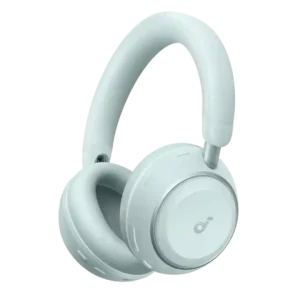
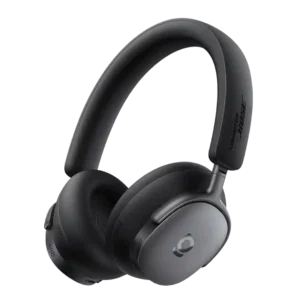
Average score
P1
Product 1: Soundcore Space 2
4.0
P2
Product 2: Baseus Inspire XH1 Headphones
3.9
3.5mm analog input availability
P1
Product 1: Soundcore Space 2
4.5
The 3.5mm analog input was praised as a welcome wired option.
P2
Product 2: Baseus Inspire XH1 Headphones
2.3
The 3.5mm analog input was useful as an emergency backup, but reviewers repeatedly said unpowered wired sound was thin or poor.
Active noise cancellation
P1
Product 1: Soundcore Space 2
4.2
ANC earned broad praise for the price, especially against low-frequency travel noise, but several reviewers said some voices or higher-frequency sounds still get through.
P2
Product 2: Baseus Inspire XH1 Headphones
3.8
ANC drew the widest split: many called it effective or impressive for the price, while others found it merely OK, poor for flights, or well behind premium models.
Advanced software features
P1
Product 1: Soundcore Space 2
3.8
Advanced software features were considered extensive and promising, though some reviewers found specific extras merely okay or not personally compelling.
P2
Product 2: Baseus Inspire XH1 Headphones
4.5
Advanced software features were well received where tested, especially volume limiting, hearing IDs, and fine-grained ANC/control options.
Aesthetics / discreet profile
P1
Product 1: Soundcore Space 2
4.3
Aesthetics were seen as clean, discreet or nicer than the price suggests, especially in muted color options.
P2
Product 2: Baseus Inspire XH1 Headphones
4.2
Aesthetics were mostly praised as premium and elegant, though one review found the look less universally appealing.
AI translation
P1
Product 1: Soundcore Space 2
3.6
AI translation and AI features were viewed as promising or useful for some, but also niche, friction-prone or not for every reviewer.
P2Product 2: Baseus Inspire XH1 Headphones
No score yetANC background noise level
P1
Product 1: Soundcore Space 2
2.9
ANC or ambient processing sometimes left background distractions, including hiss, high-frequency noise or audible conversations.
P2
Product 2: Baseus Inspire XH1 Headphones
4.0
ANC background noise control was mixed but leaned positive, with one review noting mode-dependent background noise and another praising ambient filtering.
ANC effect on sound signature
P1
Product 1: Soundcore Space 2
4.5
ANC was specifically praised for avoiding a negative effect on the sound signature.
P2
Product 2: Baseus Inspire XH1 Headphones
2.8
ANC’s effect on the sound signature was a repeated caveat, with reviewers noting veiling, DSP shifts, and changes to mids or bass.
ANC sound impact on audio
P1
Product 1: Soundcore Space 2
4.5
ANC was praised for not hurting the sound in the cited review.
P2
Product 2: Baseus Inspire XH1 Headphones
2.8
ANC’s impact on audio was mixed to negative overall: some heard veiling, nasal mids, or bass muddling, while one liked the fuller ANC-on sound.
Android compatibility
P1
Product 1: Soundcore Space 2
4.7
Android compatibility was a strength because Fast Pair and LDAC access made Android the fuller experience.
P2Product 2: Baseus Inspire XH1 Headphones
No score yetApp
P1
Product 1: Soundcore Space 2
4.3
The Soundcore app was consistently seen as useful, organized and feature-rich without being overly difficult.
P2
Product 2: Baseus Inspire XH1 Headphones
4.4
The app was generally praised as easy, useful, and optional, but one reviewer had trouble with a custom EQ crash.
Auracast support
P1
Product 1: Soundcore Space 2
2.5
Auracast was absent, and reviewers treated that as a minor limitation for a small subset rather than a broad dealbreaker.
P2
Product 2: Baseus Inspire XH1 Headphones
2.5
Auracast support scored low because the lack of Bluetooth Auracast was explicitly mentioned as a potential negative, even if not treated as a deal-breaker.
Auto-play/wear detection
P1
Product 1: Soundcore Space 2
4.5
Wear detection as an auto-play/pause feature was valued as a must-have convenience.
P2
Product 2: Baseus Inspire XH1 Headphones
2.0
Auto-play/wear detection scored low because reviewers noted the absence of wear sensors as a compromise.
Bass performance
P1
Product 1: Soundcore Space 2
4.2
Bass was usually praised as full, punchy and controlled, though one hands-on reviewer found it too bass-heavy for personal taste.
P2
Product 2: Baseus Inspire XH1 Headphones
4.5
Bass was one of the most consistent strengths: reviewers described it as deep, punchy, controlled, and powerful, with only a few notes that it could dominate or muddy some tracks.
Battery
P1
Product 1: Soundcore Space 2
4.7
Battery life was one of the strongest attributes, with reviewers calling it outstanding, spectacular, category-defining or close to claims.
P2
Product 2: Baseus Inspire XH1 Headphones
5.0
Battery life was the strongest consensus win, repeatedly described as excellent, long-lasting, and among the best in class.
Bluetooth
P1
Product 1: Soundcore Space 2
3.5
Bluetooth pairing could be quick and stable, but LDAC-mode connection strength drew a specific complaint during commuting.
P2
Product 2: Baseus Inspire XH1 Headphones
4.8
Bluetooth performance was consistently positive where judged, with easy pairing, stable connections, long range, and no reported dropouts in supporting reviews.
Bluetooth version
P1Product 1: Soundcore Space 2
No score yet
P2
Product 2: Baseus Inspire XH1 Headphones
5.0
Bluetooth version support was positively tied to fast, stable connections and lower latency in one review.
Build quality
P1
Product 1: Soundcore Space 2
3.7
Build quality was mixed: some reviewers found it solid for the price, while others said it felt cheap or wished it were more robust.
P2
Product 2: Baseus Inspire XH1 Headphones
4.1
Build quality was generally good for the price, with solid materials and premium touches, but hinge looseness and some cheaper plastic impressions kept it from unanimous praise.
Built-in DAC and hi-res playback
P1Product 1: Soundcore Space 2
No score yet
P2
Product 2: Baseus Inspire XH1 Headphones
4.0
Hi-res playback settings had limited positive evidence, with one reviewer saying the Hi-Res Audio combination delivered the needed sound improvement.
Button control usability
P1
Product 1: Soundcore Space 2
4.5
Physical buttons were praised as straightforward, tactile and easier to trust than uncertain touch gestures.
P2
Product 2: Baseus Inspire XH1 Headphones
4.3
Physical button controls were broadly liked for placement, tactility, and feedback, though one track-skipping scheme felt unintuitive.
Cable quality
P1Product 1: Soundcore Space 2
No score yet
P2
Product 2: Baseus Inspire XH1 Headphones
1.5
The included aux cable was the clearest accessory weakness, with one reviewer calling it cheap and lackluster.
Carry case quality
P1
Product 1: Soundcore Space 2
2.3
The included pouch was a recurring weakness, with multiple reviewers wanting a hard-shell case instead.
P2
Product 2: Baseus Inspire XH1 Headphones
4.7
The carry case was widely praised as protective, premium, and unusually good for the price.
Charging
P1
Product 1: Soundcore Space 2
4.5
Charging impressed reviewers because five-minute quick charge claims and USB-C charging reduced anxiety around dead headphones.
P2
Product 2: Baseus Inspire XH1 Headphones
4.9
Fast charging was strongly praised, with reviewers appreciating quick top-ups and reliable USB-C charging.
Clamping force comfort
P1
Product 1: Soundcore Space 2
4.5
Clamping force was generally described as well judged, from light-touch to snug without being too tight.
P2
Product 2: Baseus Inspire XH1 Headphones
4.4
Clamp comfort was favorable, with reviewers describing low or gentle clamp and little undue pressure.
Codec support
P1
Product 1: Soundcore Space 2
4.2
Codec support was praised in the context of high-spec audio files and LDAC availability at the price.
P2
Product 2: Baseus Inspire XH1 Headphones
4.8
Codec support was praised mainly through LDAC/high-bitrate comments, with reviewers saying it improved sound quality and detail.
Comfort during long use
P1
Product 1: Soundcore Space 2
4.7
Comfort during long sessions was one of the strongest themes, with reviewers reporting hours of use, no fatigue and a light, disappearing fit.
P2
Product 2: Baseus Inspire XH1 Headphones
4.4
Long-use comfort was strongly positive overall, with many reviewers wearing the XH1 for hours; caveats included heat, glasses pressure, and one comfort comparison loss.
Connectivity options
P1
Product 1: Soundcore Space 2
4.5
Connectivity options benefited from the welcome wired fallback in addition to Bluetooth features.
P2
Product 2: Baseus Inspire XH1 Headphones
4.5
Connectivity options had limited positive evidence, mainly for the included cable providing a zero-latency wired option.
Design and Aesthetics
P1
Product 1: Soundcore Space 2
4.2
Design reactions were positive overall, with praise for clean looks, attractive colors and a sturdy, good-looking shape.
P2
Product 2: Baseus Inspire XH1 Headphones
4.4
Design impressions were mostly positive, with reviewers calling the XH1 premium, clean, stylish, and Bose-inspired; one found the look taste-dependent.
Detachable cable convenience
P1Product 1: Soundcore Space 2
No score yet
P2
Product 2: Baseus Inspire XH1 Headphones
3.0
The detachable cable was useful as a dead-battery backup, but wired listening was not treated as the best way to use the headphones.
Dolby Atmos with head tracking
P1Product 1: Soundcore Space 2
No score yet
P2
Product 2: Baseus Inspire XH1 Headphones
2.0
Dolby Atmos with head tracking scored low because a review specifically noted the lack of advanced head-tracking spatial audio.
Durability over time
P1
Product 1: Soundcore Space 2
3.4
Durability evidence was mixed, with concern about bag abuse in one review but a more positive hands-on durability impression in another.
P2
Product 2: Baseus Inspire XH1 Headphones
4.5
Durability over time had limited but positive evidence from stable endurance after charging cycles.
Ear cup padding quality
P1
Product 1: Soundcore Space 2
4.4
Ear cup padding was widely praised as plush, cushy, deep and soft, contributing strongly to comfort.
P2
Product 2: Baseus Inspire XH1 Headphones
4.4
Ear cup padding was usually praised as plush, soft, and roomy, though one reviewer experienced pressure from internal microphone placement.
Ear cup swivel/rotation range
P1
Product 1: Soundcore Space 2
4.2
The flat-swiveling and folding ear cups were viewed positively for making the headphones easier to pack or travel with.
P2
Product 2: Baseus Inspire XH1 Headphones
3.8
Ear cup rotation was useful for fit and folding, but some reviewers were uneasy about very loose swivel behavior.
Ecosystem integration
P1
Product 1: Soundcore Space 2
3.2
Ecosystem integration was limited by Apple devices missing the full LDAC experience, even though iOS still retained app access.
P2Product 2: Baseus Inspire XH1 Headphones
No score yetEqualizer customization
P1
Product 1: Soundcore Space 2
4.3
EQ customization was a major strength, with reviewers praising the broad EQ, HearID personalization and ability to tune sound.
P2
Product 2: Baseus Inspire XH1 Headphones
4.1
EQ customization was a major strength thanks to the eight-band EQ and flexible presets, with the main caveat being one app freeze issue.
Features at launch
P1
Product 1: Soundcore Space 2
4.5
The launch feature set was viewed as unusually comprehensive for the money.
P2
Product 2: Baseus Inspire XH1 Headphones
4.8
Features at launch were praised as broad and unusually modern, sometimes exceeding expectations for the price class.
Find My
P1Product 1: Soundcore Space 2
No score yet
P2
Product 2: Baseus Inspire XH1 Headphones
4.0
Find My support was limited but positive, framed as practical for locating the headphones or tracking last known location.
Firmware update roadmap
P1Product 1: Soundcore Space 2
No score yet
P2
Product 2: Baseus Inspire XH1 Headphones
4.0
Firmware update prospects had limited positive support, with one review expecting updates and new features to improve the product over time.
Frequency response accuracy
P1
Product 1: Soundcore Space 2
3.2
Frequency response was considered consumer-friendly rather than flat, with one reviewer wishing the tuning were closer to neutral.
P2Product 2: Baseus Inspire XH1 Headphones
No score yetHeadband adjustability
P1Product 1: Soundcore Space 2
No score yet
P2
Product 2: Baseus Inspire XH1 Headphones
5.0
Headband adjustability had limited but very positive support, with smooth sliding and secure hold on a small-head fit.
Headband padding quality
P1
Product 1: Soundcore Space 2
4.4
Headband padding and weight distribution were praised for reducing pressure and keeping the headphones comfortable.
P2
Product 2: Baseus Inspire XH1 Headphones
4.3
Headband padding was mostly praised for comfort and softness, with minor caveats about hair tugging in some use.
Hinge durability
P1
Product 1: Soundcore Space 2
4.5
Hinges were viewed positively where discussed, with reviewers describing them as solid or built to last.
P2
Product 2: Baseus Inspire XH1 Headphones
3.5
Hinge durability was mixed: one review praised controlled resistance, while others worried about loose or wobbly hinges.
Immersive audio quality
P1
Product 1: Soundcore Space 2
4.2
Immersive media use was positive in one review, which said the headphones worked well for games and movies.
P2
Product 2: Baseus Inspire XH1 Headphones
3.2
Immersive audio quality was mixed, with several reviewers disliking Dolby/spatial modes while others found them immersive.
Included accessories
P1
Product 1: Soundcore Space 2
2.2
Included accessories were a drawback where reviewed because the package lacked the hard-shell case some reviewers wanted.
P2
Product 2: Baseus Inspire XH1 Headphones
4.0
Included accessories were positively covered in one review, which said the package included all necessary cables.
Instrument separation
P1
Product 1: Soundcore Space 2
4.5
Instrument separation was a notable strength, with reviewers saying instruments were easy to place or pick apart in the mix.
P2
Product 2: Baseus Inspire XH1 Headphones
3.7
Instrument separation was decent to good in many reviews, but it did not consistently match higher-end headphones and could sound cluttered in some listening.
Integrated microphone
P1
Product 1: Soundcore Space 2
3.8
The integrated microphone system produced solid voice clarity in typical environments, though call quality was not uniformly premium elsewhere.
P2
Product 2: Baseus Inspire XH1 Headphones
4.8
Integrated microphone performance was positive where scored, especially for calls and AI clear-call handling.
LDAC
P1
Product 1: Soundcore Space 2
4.4
LDAC support was well received, especially for Android users and for remaining available during multipoint use.
P2
Product 2: Baseus Inspire XH1 Headphones
4.6
LDAC was treated as a meaningful sound-quality upgrade by several reviewers, especially for detail, reduced compression, and higher-resolution Bluetooth listening.
Maximum volume clarity
P1Product 1: Soundcore Space 2
No score yet
P2
Product 2: Baseus Inspire XH1 Headphones
5.0
Maximum-volume clarity was praised in the reviews that discussed it, with reviewers saying the XH1 stayed balanced and low-distortion when turned up.
Microphone noise reduction
P1
Product 1: Soundcore Space 2
4.3
Microphone noise reduction was a relative strength, with reviewers praising its ability to reduce background noise and separate speech.
P2
Product 2: Baseus Inspire XH1 Headphones
4.3
Microphone noise reduction was a strength overall, especially against background noise, though wind and harsh street noise could reduce nuance or voice stability.
Microphone quality for calls
P1
Product 1: Soundcore Space 2
3.4
Call microphone quality was usable but not premium, with voices described as solid or audible yet sometimes thin, tinny or altered.
P2
Product 2: Baseus Inspire XH1 Headphones
3.9
Call microphone quality was generally serviceable to strong, with reviewers praising clarity in some conditions while noting wired mics or premium call setups still do better.
Midrange clarity
P1
Product 1: Soundcore Space 2
3.9
Midrange feedback was mixed: some reviewers heard rich or forward vocals, while others found vocals recessed, distant or slightly claustrophobic.
P2
Product 2: Baseus Inspire XH1 Headphones
4.4
Midrange and vocals were generally judged clear and detailed, although a few reviews noted recessed mids or ANC-related thinning.
Multi-platform compatibility
P1
Product 1: Soundcore Space 2
3.5
Multi-platform support was mixed because iPhone users still get AAC and app features but miss LDAC.
P2
Product 2: Baseus Inspire XH1 Headphones
4.5
Multi-platform compatibility had limited positive support through easy switching between a phone and laptop.
Multipoint connectivity reliability
P1
Product 1: Soundcore Space 2
4.2
Multipoint was positively noted because LDAC remained available with dual-device use rather than forcing a lower-quality codec.
P2
Product 2: Baseus Inspire XH1 Headphones
4.5
Multipoint reliability had limited but positive support, with one reviewer saying phone-to-laptop switching was easy.
Noise isolation (passive)
P1
Product 1: Soundcore Space 2
4.4
Passive isolation was helped by a strong seal and was explicitly called excellent in one lab-style review.
P2
Product 2: Baseus Inspire XH1 Headphones
3.8
Passive isolation was mixed: several reviewers credited the seal for blocking sound, while one found almost no passive isolation.
Offline playback and onboard storage
P1
Product 1: Soundcore Space 2
4.0
Offline onboard soundscapes were useful for travel because one reviewer noted they worked in airplane mode without data.
P2Product 2: Baseus Inspire XH1 Headphones
No score yetOverall recommendation
P1
Product 1: Soundcore Space 2
4.5
Overall recommendations were strongly positive, with many reviewers calling the Space 2 easy to recommend, a winner or a bargain.
P2
Product 2: Baseus Inspire XH1 Headphones
4.5
Overall recommendations were strongly positive across most reviews, with only one clearly more reserved review focused on ANC shortcomings.
Portability/foldability
P1
Product 1: Soundcore Space 2
4.2
Foldability and portability were received positively, though some reviewers noted they do not fold as compactly as certain rivals.
P2
Product 2: Baseus Inspire XH1 Headphones
4.0
Foldability and portability were mostly positive thanks to folding designs, though one review said the folding did not save as much space as rival designs.
Premium feel
P1
Product 1: Soundcore Space 2
3.9
Premium feel varied by reviewer: several said materials or finish felt premium, while one noted cheap-feeling build quality.
P2
Product 2: Baseus Inspire XH1 Headphones
4.8
Premium feel was a standout, with reviewers saying the XH1 felt equivalent to more expensive mainstream models or costlier than it was.
Preset EQ profile quality
P1
Product 1: Soundcore Space 2
4.1
Preset EQ profiles were generally useful, with Soundcore Signature and Acoustic singled out as safe or favored options.
P2
Product 2: Baseus Inspire XH1 Headphones
4.5
Preset EQ quality was positive overall, especially the Sound by Bose and Clear Treble options.
Sensors
P1
Product 1: Soundcore Space 2
4.5
The sensor-driven wear detection was viewed as a quality-of-life feature likely to become taken for granted.
P2
Product 2: Baseus Inspire XH1 Headphones
2.0
Sensors scored low because the most relevant review cited the lack of wear sensors as a compromise.
Smart listening features
P1
Product 1: Soundcore Space 2
4.2
Smart listening extras such as Nap Mode, Safe Volume and Soundscape were viewed as useful, especially for flights, relaxation or white noise.
P2
Product 2: Baseus Inspire XH1 Headphones
4.1
Smart listening features were mostly useful, especially personalization and hearing-profile tools, while sleep sounds drew a loop-quality caveat.
Smart Pause performance
P1
Product 1: Soundcore Space 2
4.8
Smart Pause performance was praised as reliable and quick when the wearer removed or replaced the headphones.
P2
Product 2: Baseus Inspire XH1 Headphones
2.0
Smart Pause performance scored low because the relevant review framed the lack of wear-sensor auto-pause as a compromise.
Smudge resistance
P1
Product 1: Soundcore Space 2
2.5
Smudge resistance was a weakness on the black finish, which was described as more susceptible to marks and smudges.
P2
Product 2: Baseus Inspire XH1 Headphones
4.3
Smudge resistance was positive, with reviewers noting the matte finish hid fingerprints or resisted slipperiness.
Software/setup simplicity
P1
Product 1: Soundcore Space 2
4.4
Setup and software were praised as easy and controllable without overwhelming complexity.
P2
Product 2: Baseus Inspire XH1 Headphones
4.8
Software setup was consistently easy, with reviewers praising guest access, clean controls, and seamless pairing/customization.
Sound leakage
P1Product 1: Soundcore Space 2
No score yet
P2
Product 2: Baseus Inspire XH1 Headphones
4.0
Sound leakage had limited but positive evidence from one review saying the design blocked sound leaking out.
Sound quality
P1
Product 1: Soundcore Space 2
4.4
Reviewers consistently described the Space 2 as strong-sounding for the money, ranging from great and dreamy to merely fine in one brief hands-on impression.
P2
Product 2: Baseus Inspire XH1 Headphones
4.5
Reviewers broadly praised the XH1’s sound as rich, smooth, and unusually strong for the price, though one review found the bassy tuning more noticeable than preferred.
Soundstage width
P1
Product 1: Soundcore Space 2
4.2
Reviewers repeatedly heard a wide or spacious presentation, with praise for width, depth and a roomy soundstage at the price.
P2
Product 2: Baseus Inspire XH1 Headphones
3.7
Soundstage was considered respectable for the price, but several reviewers said it was not especially wide or as expansive as premium models.
Spatial audio
P1
Product 1: Soundcore Space 2
2.7
Spatial or 3D audio was mixed to weak: one reviewer found it fine, another better than expected, and another said it did little.
P2
Product 2: Baseus Inspire XH1 Headphones
3.2
Spatial audio was highly mixed, ranging from terrible or disappointing in several reviews to immersive and impressive in others.
Stability
P1
Product 1: Soundcore Space 2
4.5
Fit stability was praised, with one reviewer saying the clamping sweet spot kept the headphones stable without undue pressure.
P2
Product 2: Baseus Inspire XH1 Headphones
3.8
Fit stability was mixed: gentle clamp helped comfort but reduced workout security for one reviewer, while another found the headphones secure while running.
Transparency mode quality
P1
Product 1: Soundcore Space 2
3.4
Transparency mode drew mixed reactions: some found it good or useful, while others noted hiss, artificial tone or weak naturalness.
P2
Product 2: Baseus Inspire XH1 Headphones
3.2
Transparency mode was polarized, ranging from excellent and natural to merely usable, amplified, hissy, or unnatural.
Travel friendliness
P1
Product 1: Soundcore Space 2
4.4
Travel friendliness was a major use case because reviewers connected comfort, battery, ANC and white-noise/offline features to flights and commuting.
P2
Product 2: Baseus Inspire XH1 Headphones
3.9
Travel friendliness was mixed: long battery, case, and traffic filtering helped, but some reviewers found ANC insufficient for flights.
Treble clarity
P1
Product 1: Soundcore Space 2
4.3
Treble was generally viewed as clean, crisp and non-fatiguing, with several reviewers noting solid detail and sparkle.
P2
Product 2: Baseus Inspire XH1 Headphones
3.7
Treble impressions were mixed: some heard natural, crisp highs, while others wanted more sparkle, extension, or brilliance.
USB-C
P1
Product 1: Soundcore Space 2
4.2
USB-C use for charging was described as straightforward, supporting the overall convenience of charging.
P2
Product 2: Baseus Inspire XH1 Headphones
2.3
USB-C was a limitation where USB audio was discussed, because reviewers specifically noted the lack of USB-C audio despite USB-C charging.
Value for money
P1
Product 1: Soundcore Space 2
4.6
Value for money was one of the clearest strengths, with reviewers repeatedly saying the performance and features exceed the price.
P2
Product 2: Baseus Inspire XH1 Headphones
4.8
Value for money was one of the strongest areas, with reviewers repeatedly calling the XH1 a bargain, exceptional value, or strong price-performance choice.
Voice assistant integration
P1
Product 1: Soundcore Space 2
3.0
Voice assistant integration was not a major draw; one reviewer suggested Soundcore's assistant would not replace a preferred existing assistant.
P2Product 2: Baseus Inspire XH1 Headphones
No score yetVolume output
P1Product 1: Soundcore Space 2
No score yet
P2
Product 2: Baseus Inspire XH1 Headphones
3.7
Volume output split reviewers: one found headroom limited and another disliked the big adjustment steps, while another said volume was very good.
Water/sweat resistance rating
P1
Product 1: Soundcore Space 2
1.5
Water and sweat suitability was weak because one reviewer explicitly warned against gym or rain use.
P2
Product 2: Baseus Inspire XH1 Headphones
4.5
Water and dust resistance was praised as unusually strong for wireless headphones at this level.
Wear detection auto-pause
P1
Product 1: Soundcore Space 2
4.8
Wear detection auto-pause was strongly liked, with reviewers praising automatic pause/resume and its value at the price.
P2
Product 2: Baseus Inspire XH1 Headphones
2.0
Wear-detection auto-pause scored low because the headphones were criticized for lacking ear-detection sensors.
Wear detection performance
P1
Product 1: Soundcore Space 2
4.8
Wear detection performance was praised where tested, especially the quick pause/resume behavior.
P2Product 2: Baseus Inspire XH1 Headphones
No score yetWeight comfort
P1
Product 1: Soundcore Space 2
4.6
The Space 2's low weight was repeatedly praised for making the headphones feel light or nearly weightless during wear.
P2
Product 2: Baseus Inspire XH1 Headphones
4.3
Weight comfort was mostly positive, with several reviewers calling the XH1 light or lighter than expected, though one found it slightly heavier than mainstream rivals.
Wind noise handling
P1
Product 1: Soundcore Space 2
1.5
Wind noise handling was a clear weakness, with one reviewer saying the headphones could not handle blustery conditions.
P2
Product 2: Baseus Inspire XH1 Headphones
3.5
Wind handling was mixed, with one review praising wind-noise reduction as useful and another noting lost nuance in strong winds.