
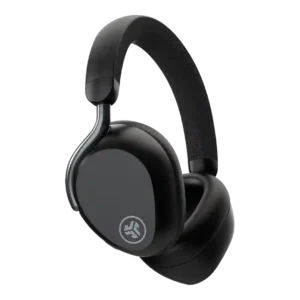
Multiple reviews confirm a 3.5mm analog input or included cable for wired listening, giving the headphones a useful backup connection.
A wired 3.5mm-style analog listening option is included and appreciated, giving the headphones useful passive flexibility beyond Bluetooth.
ANC is one of the strongest recurring positives: reviewers say it handles low-frequency rumble especially well and performs far above typical budget expectations, even if it does not match top Sony or Bose models.
ANC is consistently one of the headphone’s strongest traits, with most reviewers calling it effective to excellent on planes, buses, offices, and general commuting, though one reviewer found it merely average. Noise control is easy to adjust, with multiple modes and app-level customization for ANC and awareness behavior.
Software features go well beyond basics, with repeated mentions of AI translation, Anka, HearID, decibel monitoring, and other app-driven extras.
The software stack is unusually feature-rich for the price, with control remapping, safe-hearing limits, firmware updates, spatial audio toggles, and detailed noise-control settings.
Styling is generally understated rather than flashy, which some reviewers treat as a plus for a clean or discreet everyday look.
Reviewers repeatedly describe the look as sleek, minimalist, classy, and more expensive-looking than typical JLab products.
One review notes audible hiss in processed listening modes, so background self-noise is present even if the ANC itself is strong for the price.
Direct evidence suggests the ANC can cut noise without obviously altering the headphones’ sound signature.
Several reviewers report that switching ANC modes changes the tuning, with some hearing bass inflation or tonal shifts that make the sound less consistent.
At least one review specifically says the ANC does not noticeably harm the way the headphones sound.
ANC mode can affect audio balance, with positive listeners tolerating it but negative reviewers hearing muddier bass or changed clarity when noise control is toggled.
Android support is a selling point because reviews repeatedly tie Android devices to LDAC access and Fast Pair convenience.
Android support is strong thanks to quick pairing with Pixel and other Android devices, LDAC support, and generally smooth app behavior.
The Soundcore app is consistently treated as an important part of the package, with reviewers calling it full-featured, polished, or especially useful.
The companion app is broadly praised for depth and flexibility, though one reviewer found parts of it a little clunky.
Latency is generally good enough for video and casual media use, with several reviewers noting low-lag behavior, though this is not positioned as a gaming specialist.
Automatic play-pause behavior is supported, though one review notes you may need to enable or calibrate it in the app first.
Auto-play and wear detection exist as expected on a premium-style model, but the feature is often finicky enough that several reviewers preferred disabling it.
Coverage includes major praise such as Best of CES mentions and an AndroidGuys Smart Pick, indicating unusually strong early recognition for the model.
Bass is repeatedly described as full, punchy, or weighty without getting excessively muddy, though a few reviews note a slightly bass-forward consumer tuning.
Bass performance is generally strong and punchy, with good depth for the class, though not every reviewer found it as deep or controlled as pricier rivals.
Battery life is one of the standout features, with most reviews treating the real-world stamina as excellent even when one tester fell short of the top claim in LDAC mode.
Battery life is a standout feature, with repeated praise for exceptional endurance and real-world runtimes that remain strong even when some testers fell short of the top ANC-on claim.
The one direct connectivity judgment calls Bluetooth pairing quick and stable in normal use.
Bluetooth stability is consistently excellent, with reviewers reporting instant pairing, stable long-range performance, and no meaningful dropout issues.
The Space 2’s Bluetooth 6.1 spec is explicitly highlighted in multiple reviews as part of its strong feature sheet.
Bluetooth version support is treated as a premium strength, with reviewers specifically praising the modern Bluetooth 5.4 platform for stable pairing and feature depth.
Build quality lands in a good-for-the-price middle ground: most reviews call it solid enough, though a few still say it feels cheaper than premium competitors.
Build quality is mostly viewed positively, with metal elements and premium touches, but a few reviewers worry about delicacy or note minor creaking.
Hi-res playback support is a real strength through LDAC and wired hi-res listening, even if reviewers do not deeply evaluate any internal DAC architecture.
Physical controls are widely praised for being straightforward, tactile, and easier to trust than budget touch controls.
The physical-button layout is simple but well thought out, and reviewers generally found the press actions easy to learn and customize.
Included cables are repeatedly described as good quality, with braided or generously sized USB-C and analog options adding value.
Case protection is a recurring weak spot because the box includes only a soft pouch rather than a hard shell case.
The included hard case is widely seen as a genuinely useful accessory and better than expected for the price class.
Fast charging is repeatedly highlighted: several reviews cite about four hours of playback from only five minutes of charging.
Charging is unusually flexible, combining USB-C, fast top-ups, and a magnetic wireless charging puck that many reviewers highlighted as a differentiator.
Clamp is usually described as balanced or comfortable, though one review notes it is on the stronger side to improve isolation.
Clamp force is generally comfortable and secure, avoiding the overly tight feel that can ruin long sessions.
Codec coverage is broad for the price, with repeated mentions of SBC, AAC, LDAC, and even LC3 in one review.
Codec support is strong for the segment thanks to SBC, AAC, and LDAC, though there is no evidence of aptX.
Comfort is one of the most consistent strengths in the entire review set, with many reviewers saying the Space 2 stays easy to wear for hours at a time.
Long-session comfort is one of the clearest positives, with repeated praise for plush pads, good balance, and low fatigue over extended wear.
Connectivity is flexible for the class, combining wireless listening with USB-C charging and a wired 3.5mm option.
Connectivity options are versatile, covering wireless, wired, multipoint, and easy switching across phones, laptops, and other sources.
Design feedback is positive overall, with reviewers calling the headphones clean, attractive, good-looking, or premium-looking despite a simple silhouette.
Industrial design earns strong marks for its premium look, distinctive earcup shape, and polished finish.
The wired 3.5mm fallback is explicitly welcomed as a practical convenience when battery is low or you want a simple cable connection.
The removable wired cable adds practical flexibility for passive or wired listening and is appreciated as a premium-style extra.
One review raises a cautious question about how well the build will hold up to repeated travel abuse, so long-term durability remains less proven than comfort or battery life.
Short-term durability impressions are decent, with several reviewers saying the headphones held up well in regular use, but soft pads and limited long-term data keep this from scoring higher.
The earpads are repeatedly described as plush, cushy, soft, or memory-foam lined, helping the headphones feel more comfortable than their price suggests.
Earcup padding is repeatedly called plush, soft, and comfortable, making it one of the model’s most praised physical traits.
The earcups can swivel flat, and at least one review explicitly notes that fold-and-swivel behavior for easier packing.
Cup rotation and articulation are strong, helping with neck comfort, storage, and general fit adjustment.
Ecosystem integration is solid on the Android side through Google Fast Pair, Find My Device, assistant support, and multipoint convenience.
EQ control is unusually strong for the price, thanks to the recurring eight-band custom EQ and app-based tuning tools.
EQ customization is a major strength, with both presets and custom tuning available, though one recurring complaint is reduced output in custom EQ.
The launch feature set is repeatedly framed as unusually comprehensive for the money, combining ANC, LDAC, wear detection, multipoint, and app extras.
At launch, the feature set looked unusually aggressive for the price, combining ANC, LDAC, spatial audio, multipoint, long battery life, and wireless charging.
Find My Device support adds useful convenience for Android users and helps the product feel more feature-complete.
Tonal accuracy is decent but not reference grade, with several listeners hearing a consumer-friendly tuning and others noting scratchiness or uneven balance.
Headband adjustment is smooth and offers enough range to fit different head sizes comfortably.
Headband padding is described as cushioned, plush, or ultra-soft, helping spread weight evenly during longer wear.
Headband padding gets frequent praise for softness, mesh or fabric comfort, and reduced hotspot pressure.
Where hinges are mentioned, they are described as solid or built to last rather than flimsy.
Hinge and frame durability look respectable thanks to metal support and stronger-than-expected construction, even if some materials do not feel truly rugged.
Only one review speaks directly to immersion and describes some added depth, but it also stops short of calling the effect natural or essential.
Immersion is mixed: some reviewers enjoyed the spacious, head-tracked presentation, while others felt the effect was gimmicky or actively harmed the sound.
Included extras are basic but functional: reviewers mention a pouch plus charging and analog cables rather than a more premium accessory bundle.
Accessories are excellent for the class, especially the hard case, wireless charger, and dual cable bundle.
Multiple reviews say instruments are easy to place and distinguish, pointing to above-average separation for this price class.
Instrument separation is above average for the price, with reviewers noticing small details, clear bass notes, and distinct placement in familiar tracks.
The integrated mic system is a standard part of the package and is consistently referenced in reviews that discuss calling features.
The integrated mic system is a real selling point, with repeated notes that voice pickup is clear enough for calls, Teams, and everyday chats.
LDAC support is a clear headline feature here, appearing across reviews as one of the Space 2’s strongest value-adds for higher-quality wireless audio.
LDAC support is consistently highlighted as a premium feature and a major advantage over several same-price competitors.
One review lists LC3 support alongside the standard codecs, which suggests some degree of readiness for newer Bluetooth audio workflows.
Clarity at higher volume is inconsistent, with some reviewers finding strong output and others reporting volume limits or strain depending on EQ mode.
The call system’s AI/background-noise reduction is generally seen as effective at separating speech from surrounding noise, though wind and very loud settings still challenge it.
Noise reduction for calls is generally good thanks to beamforming and ENC, but windy conditions still expose some weakness.
Call quality is serviceable to solid rather than class-leading, with voices staying audible but not especially natural or full-bodied in tougher environments.
Call quality is one of the more reliable wins, with most reviewers saying voices stay clear for both sides of the conversation.
Midrange performance is generally clear enough for vocals, but several reviewers note the mids sit a little behind the mix or could sound more natural.
Midrange performance is usually described as clear and present, though not perfectly natural in every listening mode.
At least one review explicitly says the app feature set is available on both iOS and Android, even though codec support differs.
Platform support is broad, with evidence of good behavior across Android phones, iPhones, Macs, laptops, consoles, Teams, and wired sources.
Dual-device use is treated as a real strength, with reviews confirming multipoint support and seamless switching between paired devices.
Multipoint works well in practice and is repeatedly described as seamless and reliable when switching between two devices.
Passive isolation gets help from the clamp and deep ear cushions, so the headphones block a useful amount of noise even before ANC is factored in.
Passive isolation is decent thanks to the plush over-ear seal, but glasses and imperfect sealing can reduce bass and outside-noise blocking.
One review specifically notes that built-in soundscapes are stored on the headphones, giving the Space 2 a limited form of offline onboard playback.
The overall recommendation trend is strongly positive: reviewers repeatedly say the Space 2 is easy to recommend, shortlist, or outright endorse at its price.
Overall recommendation is positive in the majority of reviews because of comfort, ANC, battery life, and value, but a vocal minority rejects it over sound quality.
The Space 2 folds flat or inward for easier storage, making it more travel-friendly than many bulkier over-ear rivals.
Portability is serviceable rather than exceptional: the case helps, but foldability reports conflict and several reviewers note the headphones take up space.
Several design notes say the finish and detailing help the Space 2 feel more premium than many rivals around this price.
The finish and materials often create a premium first impression that exceeds what buyers may expect from JLab. A second premium-feel signal appears in multiple reviews that describe the product as luxe, upscale, or more expensive-looking than it is.
Preset options are broad and useful, with recurring mentions of Soundcore Signature and multiple alternate sound profiles.
Preset EQ quality is useful but uneven, with Signature often preferred, Balanced sometimes criticized, and Bass Boost or custom EQ used to get the best result.
Replaceable earpads are a weak point at launch because reviewers could not find official or third-party replacements.
Repair-friendly replacement options for pads or headband parts are limited, with reviewers explicitly noting the lack of available replacements.
Sensor-based features are present, with reviews directly mentioning on-head or wear-detection hardware inside the earcup.
Wear-related sensors add modern convenience, but the actual implementation is inconsistent enough that some reviewers turned the feature off.
Sidetone quality is effectively absent because one detailed reviewer explicitly notes there is no sidetone mode for calls.
Smart extras are plentiful, including HearID, Nap Mode, Soundscape or white-noise features, and related personalization tools that add value beyond basic playback.
Smart listening features are plentiful, including wear detection, safe-hearing limits, spatial audio, transparency, and control customization.
Smart pause behavior is described as quick and reliable where tested, reducing friction when taking the headphones on and off.
Smart pause is one of the shakiest features, with multiple reports of inconsistent or over-sensitive automatic pausing.
Smudge resistance is not a strength on darker finishes: at least two reviews mention marks, smudges, dust, or fingerprints.
Setup and software use appear straightforward overall, with reviewers saying the controls and app are easy to understand without much friction.
Setup is usually simple and painless, with quick pairing and a mostly straightforward app experience.
Across the listening tests, reviewers consistently describe the Space 2 as good-sounding for the money, with only modest caveats about refinement versus pricier models.
Sound quality splits opinion sharply: many reviewers hear rich, enjoyable, high-value audio, while a smaller but important group finds it distant, metallic, or underwhelming. Wired listening is a meaningful plus, with reviewers appreciating dead-battery compatibility and solid sound quality over cable.
Reviews regularly mention a solid sense of width and space, with the presentation sounding wider than expected for a closed-back budget model.
Soundstage is often described as wide and open for the class, helping the headphones sound bigger than many budget-focused rivals.
Spatial or 3D audio is present, but reactions are mixed: some reviewers call it fine or better than expected, while others found it artificial or not especially useful.
Spatial audio is one of the most divisive features, praised by some for head tracking and immersion but criticized by others as gimmicky, scratchy, or unnatural.
Fit stability gets a positive note in one review that says the clamp kept the headphones secure without excess pressure.
On-head stability is fine for normal use but less convincing for workouts or bigger movements, where some shifting is reported.
Touch controls are widely praised for responsiveness, large gesture area, and low error rates.
Transparency mode is usable and sometimes clear enough for awareness, but reviews frequently mention hiss, artificiality, or otherwise middling pass-through quality.
Transparency or Be Aware mode is usually considered useful and competent, though not truly class-leading or fully natural.
Travel use is a natural fit thanks to the foldable design, long battery life, effective ANC, and repeated travel-focused recommendations.
Travel use is a strong fit thanks to long battery life, ANC, included case, and flexible charging, even if the size is not the most compact.
Treble is usually called clear, crisp, or clean, with enough detail to avoid sounding dull while staying short of the sharpest premium-headphone highs.
Treble is generally clear but can turn scratchy, metallic, or slightly sibilant depending on track selection, mode, or EQ.
USB-C is available for charging, but one review specifically notes that the port does not carry audio.
USB-C support is fully integrated for charging and wired playback accessories, which adds everyday convenience.
Value for money is arguably the Space 2’s biggest theme, with many reviewers saying the feature set, comfort, and performance over-deliver at about $130.
Value for money is one of the clearest strengths because buyers get flagship-style features and strong daily usability for about $200.
Voice-assistant access is present through button customization, giving users a direct way to trigger their preferred assistant from the headphones.
Voice assistant support is present and works well enough in real use with Siri, Google Assistant, and standard button access.
Voice prompts and spoken feedback are useful but not a central selling point; reviewers mainly mention clear battery or power-status announcements.
Overall volume output is adequate for many users but not universally satisfying, especially when custom EQ reduces loudness.
Only direct evidence here is negative: one review explicitly notes there is no IP rating, so water or sweat protection is not a selling point.
There is no meaningful water or sweat protection story here, and at least one reviewer explicitly notes the lack of sweat resistance or IP rating.
Auto-pause and resume is confirmed across several reviews and is generally treated as a dependable quality-of-life feature.
Auto-pause behavior tied to wear detection is inconsistent, and multiple reviewers found it sensitive enough to interrupt listening unintentionally.
Where wear detection is judged directly, reviewers call it quick, accurate, or calibration-ready rather than flaky.
Wear detection performance is one of the headphone’s clearest weak spots, with repeated reports of false pauses or unreliable behavior when repositioning the headphones.
Low weight is a big contributor to comfort, with several reviews highlighting the roughly 261-265g build as light enough for long sessions.
Weight comfort is good despite the roughly 300g build, with most reviewers saying the headphones feel balanced rather than burdensome.
Wind performance is a clear weakness in the one direct test, which says the microphones struggle in blustery conditions.
Wind handling is serviceable rather than outstanding, with reviewers saying the microphones remain usable outdoors but still pick up some wind in exposed conditions.