
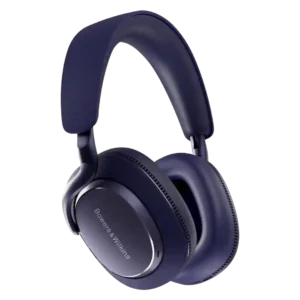
Multiple reviews confirm a 3.5mm analog input or included cable for wired listening, giving the headphones a useful backup connection.
ANC is one of the strongest recurring positives: reviewers say it handles low-frequency rumble especially well and performs far above typical budget expectations, even if it does not match top Sony or Bose models.
ANC is repeatedly described as a meaningful improvement for B&W and effective for commuting and travel, but many reviews still place it behind Sony and Bose at the top end. Wind and higher-frequency voices can be weak spots in some scenarios. ANC mode control is straightforward (on, off, pass-through) and can be mapped to a quick-action button in some setups. Reviewers note fewer adjustment options than Sony-style multi-mode systems.
Software features go well beyond basics, with repeated mentions of AI translation, Anka, HearID, decibel monitoring, and other app-driven extras.
Styling is generally understated rather than flashy, which some reviewers treat as a plus for a clean or discreet everyday look.
One review notes audible hiss in processed listening modes, so background self-noise is present even if the ANC itself is strong for the price.
Direct evidence suggests the ANC can cut noise without obviously altering the headphones’ sound signature.
At least one review specifically says the ANC does not noticeably harm the way the headphones sound.
Android support is a selling point because reviews repeatedly tie Android devices to LDAC access and Fast Pair convenience.
Android compatibility is strong, especially thanks to codec breadth and aptX options. Several reviews contrast this with iOS being limited to AAC.
The Soundcore app is consistently treated as an important part of the package, with reviewers calling it full-featured, polished, or especially useful.
The companion app is generally considered clean and functional, offering key controls and some ecosystem integration. Multiple reviewers still call it simpler than Sony-style apps and note missing power-user features.
aptX support is repeatedly highlighted, including higher-end variants such as Adaptive and Lossless, making it particularly attractive for compatible Android and Snapdragon Sound devices.
Reviewers generally report good sync for video use, with latency described as not an issue for typical phone or laptop watching.
Automatic play-pause behavior is supported, though one review notes you may need to enable or calibrate it in the app first.
Bass is repeatedly described as full, punchy, or weighty without getting excessively muddy, though a few reviews note a slightly bass-forward consumer tuning.
Bass is consistently described as impactful and controlled rather than boomy, with strong definition. Some listeners find it bass-forward at higher volumes, while others want a bit more sub-bass weight.
Battery life is one of the standout features, with most reviews treating the real-world stamina as excellent even when one tester fell short of the top claim in LDAC mode.
Battery life is consistently cited around 30 hours with ANC on, which is solid but not a class leader versus marathon models. Real-world tests generally align with the rating. Multiple reviews note the battery is not user-replaceable, which limits long-term serviceability compared to fully repair-friendly designs.
The one direct connectivity judgment calls Bluetooth pairing quick and stable in normal use.
Bluetooth performance is described as stable and reliable in most reviews, including in congested environments. A small number of users report occasional skipping or hiccups, suggesting rare environment or device-specific issues.
The Space 2’s Bluetooth 6.1 spec is explicitly highlighted in multiple reviews as part of its strong feature sheet.
Build quality lands in a good-for-the-price middle ground: most reviews call it solid enough, though a few still say it feels cheaper than premium competitors.
Build quality is consistently described as top-tier for the price, with premium materials, refined finish, and sturdy mechanisms.
Physical controls are widely praised for being straightforward, tactile, and easier to trust than budget touch controls.
Physical buttons are a plus for many, with tactile, clicky controls that work with gloves. A few reviews call the buttons small or the control layout limited compared to feature-heavy rivals.
Included cables (USB-C to USB-C and USB-C to 3.5mm) are generally seen as premium and practical. A couple of reviewers suggest buying longer cables for desk or airplane use.
Case protection is a recurring weak spot because the box includes only a soft pouch rather than a hard shell case.
The hard case is repeatedly called excellent, with premium materials, good protection, and a useful magnetic compartment for cables.
Fast charging is repeatedly highlighted: several reviews cite about four hours of playback from only five minutes of charging.
Fast charging is a standout, with many references to short top-ups delivering multiple hours of playback.
Clamp is usually described as balanced or comfortable, though one review notes it is on the stronger side to improve isolation.
Clamp is commonly described as moderate-to-firm, helping stability when walking. For some heads it can create pressure points, while others find it secure and comfortable after break-in.
Codec coverage is broad for the price, with repeated mentions of SBC, AAC, LDAC, and even LC3 in one review.
Codec support is a major strength, with broad compatibility (including aptX variants) plus wired USB-C audio options. Several reviews also mention upcoming firmware features like LE Audio, Auracast, and spatial audio depending on region and timing.
Comfort is one of the most consistent strengths in the entire review set, with many reviewers saying the Space 2 stays easy to wear for hours at a time.
Comfort is a consistent highlight, with many reviewers wearing them for hours without fatigue. However, some report firm clamp, earcup heat, or fit variability, especially for glasses wearers or outdoor use.
Connectivity is flexible for the class, combining wireless listening with USB-C charging and a wired 3.5mm option.
Design feedback is positive overall, with reviewers calling the headphones clean, attractive, good-looking, or premium-looking despite a simple silhouette.
Design is frequently praised as sleek, understated, and premium, with a slimmer profile than prior generations and strong pride-of-ownership appeal.
The wired 3.5mm fallback is explicitly welcomed as a practical convenience when battery is low or you want a simple cable connection.
Detachable cables and USB-C audio add flexibility for laptops and in-flight systems, even without a native 3.5mm jack on the earcup. Most reviews note the headphones typically need to be powered on for wired listening.
One review raises a cautious question about how well the build will hold up to repeated travel abuse, so long-term durability remains less proven than comfort or battery life.
The earpads are repeatedly described as plush, cushy, soft, or memory-foam lined, helping the headphones feel more comfortable than their price suggests.
Earpads are usually described as plush and premium with good sealing. A few reviews suggest padding feels slightly less supportive than prior models and can get warm over time.
The earcups can swivel flat, and at least one review explicitly notes that fold-and-swivel behavior for easier packing.
Swivel and rotation range are frequently noted as generous, helping the cups seal and sit flatter against the head for comfort and stability.
EQ control is unusually strong for the price, thanks to the recurring eight-band custom EQ and app-based tuning tools.
The 5-band EQ is widely welcomed as a major improvement over earlier B&W EQ options and is enough to correct stock tuning. Several reviews still consider it limited versus more granular 10-band systems.
The launch feature set is repeatedly framed as unusually comprehensive for the money, combining ANC, LDAC, wear detection, multipoint, and app extras.
Tonal balance is described as neutral-with-warmth by several outlets, while others report noticeable swings and a more consumer-friendly curve. Overall, it is closer to balanced than purely V-shaped, but not a strict reference-flat tuning.
Headband adjustment is smooth and easy to dial in, and padding is generally praised. Some users note mild top-of-head pressure depending on head shape and fit.
Headband padding is described as cushioned, plush, or ultra-soft, helping spread weight evenly during longer wear.
Where hinges are mentioned, they are described as solid or built to last rather than flimsy.
Arms and hinge mechanisms are described as sturdy, with premium-feeling movement and good resistance. Long-term durability is generally expected to be strong based on materials.
Only one review speaks directly to immersion and describes some added depth, but it also stops short of calling the effect natural or essential.
Included extras are basic but functional: reviewers mention a pouch plus charging and analog cables rather than a more premium accessory bundle.
Included accessories are viewed as generous for the segment, typically including a premium case and multiple cables for charging and wired playback.
Multiple reviews say instruments are easy to place and distinguish, pointing to above-average separation for this price class.
Instrument separation and layering are a standout, with reviewers repeatedly noting strong clarity in busy mixes and easy-to-track placement of vocals and instruments.
The integrated mic system is a standard part of the package and is consistently referenced in reviews that discuss calling features.
LDAC support is a clear headline feature here, appearing across reviews as one of the Space 2’s strongest value-adds for higher-quality wireless audio.
Multiple reviews point out LDAC is not supported, so LDAC-first Android users may need to choose a different model or use wired playback.
One review lists LC3 support alongside the standard codecs, which suggests some degree of readiness for newer Bluetooth audio workflows.
Even at higher volumes, the presentation stays largely clean and controlled, with low distortion noted in multiple reviews. The main caveat is that bass and treble emphasis can become more prominent if you listen loud.
The call system’s AI/background-noise reduction is generally seen as effective at separating speech from surrounding noise, though wind and very loud settings still challenge it.
Noise reduction on calls is effective at suppressing background noise, especially wind and street ambience in some demos. The tradeoff is occasional aggressive gating that can alter vocal tone.
Call quality is serviceable to solid rather than class-leading, with voices staying audible but not especially natural or full-bodied in tougher environments.
Call quality is generally solid, with clear voice pickup and good intelligibility. In very noisy or windy conditions, some tests report the voice can sound a bit muffled or less natural than top performers like Sony or AirPods Max.
Midrange performance is generally clear enough for vocals, but several reviewers note the mids sit a little behind the mix or could sound more natural.
Midrange is generally clean and detailed, but multiple reviewers describe it as slightly recessed in the stock tuning; EQ can bring vocals forward. Others highlight the mids as a core strength for clarity and realism.
At least one review explicitly says the app feature set is available on both iOS and Android, even though codec support differs.
Dual-device use is treated as a real strength, with reviews confirming multipoint support and seamless switching between paired devices.
Multipoint is frequently praised as quick and seamless, with fast take-over when switching between phone and computer playback.
Passive isolation gets help from the clamp and deep ear cushions, so the headphones block a useful amount of noise even before ANC is factored in.
Passive isolation benefits from an easy-to-achieve seal and helps overall noise reduction. A few notes suggest fit, glasses, or positioning can change results noticeably.
One review specifically notes that built-in soundscapes are stored on the headphones, giving the Space 2 a limited form of offline onboard playback.
The overall recommendation trend is strongly positive: reviewers repeatedly say the Space 2 is easy to recommend, shortlist, or outright endorse at its price.
The Space 2 folds flat or inward for easier storage, making it more travel-friendly than many bulkier over-ear rivals.
Portability is mixed: the headphones lie flat and the case is slimmer than before, but they do not fully fold and can take more bag space than foldable rivals.
Several design notes say the finish and detailing help the Space 2 feel more premium than many rivals around this price.
Preset options are broad and useful, with recurring mentions of Soundcore Signature and multiple alternate sound profiles.
True Sound and other presets are appreciated for a quick, consistent baseline, but reviewers note the preset lineup is not extensive and serious tuning relies on the manual EQ.
Replaceable earpads are a notable plus for longevity, though some reviewers note replacement may require service or specific procedures.
Sensor-based features are present, with reviews directly mentioning on-head or wear-detection hardware inside the earcup.
Wear-detect and related sensors are commonly mentioned, with adjustability in the app and improved reliability versus older generations in some reports.
Smart extras are plentiful, including HearID, Nap Mode, Soundscape or white-noise features, and related personalization tools that add value beyond basic playback.
Smart pause behavior is described as quick and reliable where tested, reducing friction when taking the headphones on and off.
Smudge resistance is not a strength on darker finishes: at least two reviews mention marks, smudges, dust, or fingerprints.
Setup and software use appear straightforward overall, with reviewers saying the controls and app are easy to understand without much friction.
Setup is generally easy, with quick pairing and a straightforward app experience. Firmware updates and feature rollouts are occasionally cited as timing-dependent.
Across the listening tests, reviewers consistently describe the Space 2 as good-sounding for the money, with only modest caveats about refinement versus pricier models.
Across reviews, the PX7 S3 is praised as one of the best-sounding wireless ANC over-ears in its price range, with an engaging, high-end presentation. A minority note the tuning can feel unconventional until you EQ it. Wired listening via USB-C is supported and often described as clearer or more detailed than Bluetooth, though some reviewers hear only modest gains. A few notes mention wired operation may require power and can be finicky depending on source and cable.
Reviews regularly mention a solid sense of width and space, with the presentation sounding wider than expected for a closed-back budget model.
Soundstage is described as spacious and well-layered for a closed-back ANC headphone, though not the widest in class. Several reviews frame it as more focused or intimate than some rivals, with strong depth and imaging.
Spatial or 3D audio is present, but reactions are mixed: some reviewers call it fine or better than expected, while others found it artificial or not especially useful.
Spatial audio is mentioned as a planned or coming-soon feature in several reviews, but availability at launch is inconsistent. In current form, it is not a primary reason to buy.
Fit stability gets a positive note in one review that says the clamp kept the headphones secure without excess pressure.
Materials and serviceable parts (like pads and headband components) are positioned as more sustainable than fully disposable designs. Some reviews also emphasize vegan or leatherette options and longer-term repairability.
Transparency mode is usable and sometimes clear enough for awareness, but reviews frequently mention hiss, artificiality, or otherwise middling pass-through quality.
Transparency mode is often called natural and usable for announcements and quick conversations. Several comparisons say it is not the most open or bright in class, with some upper-frequency muffling.
Travel use is a natural fit thanks to the foldable design, long battery life, effective ANC, and repeated travel-focused recommendations.
Treble is usually called clear, crisp, or clean, with enough detail to avoid sounding dull while staying short of the sharpest premium-headphone highs.
Treble is widely called airy and detailed with good sparkle. At louder listening levels, a few reviews mention sibilance or sharpness, so treble-sensitive listeners may prefer a mild EQ cut.
USB-C is available for charging, but one review specifically notes that the port does not carry audio.
USB-C implementation is strong, covering charging and audio, and enabling high-resolution wired playback with compatible sources.
Value for money is arguably the Space 2’s biggest theme, with many reviewers saying the feature set, comfort, and performance over-deliver at about $130.
Voice-assistant access is present through button customization, giving users a direct way to trigger their preferred assistant from the headphones.
Volume output is strong, with several comparisons calling it louder than key competitors at the same device volume settings.
Only direct evidence here is negative: one review explicitly notes there is no IP rating, so water or sweat protection is not a selling point.
Auto-pause and resume is confirmed across several reviews and is generally treated as a dependable quality-of-life feature.
Where wear detection is judged directly, reviewers call it quick, accurate, or calibration-ready rather than flaky.
Low weight is a big contributor to comfort, with several reviews highlighting the roughly 261-265g build as light enough for long sessions.
At roughly 300g, weight is acceptable for the materials and feels lighter than some heavy flagships, but heavier than the lightest Sony/Bose options. A few reviewers notice shifting while moving.
Wind performance is a clear weakness in the one direct test, which says the microphones struggle in blustery conditions.