Evidence points to strong accessibility support, including challenge tailoring, hue-shifted projectiles, visual recoloring, and an override for modifier balance.
Pragmata offers grouped accessibility presets for visuals, audio, and motion comfort, though colorblind support is explicitly missing.
Reviews consistently describe IDUS as a rogue or hostile AI that drives the central conflict on the moon base.
The available evidence points to generous tracking and aiming support, making the arcade shooter feel easier to read and manage during fast combat.
Combat rewards careful aiming at weak points rather than spraying shots, reinforcing deliberate precision during fights.
Animation quality is mixed. Performance capture receives praise, but character animation outside cutscenes is described as stiff.
Reviewers call out polished character handling and detailed weapon animations, including the care put into equipping and stowing gear.
Art direction is consistently strong, with praise for biomechanical architecture, alien environments, cosmic-horror imagery, and visually distinct biomes.
The visual direction stands out through sterile sci-fi design, fractured AI-made spaces, and strikingly stylized environmental presentation.
Atmosphere is a major strength, with reviews describing unnerving dread, cosmic horror, and a hostile alien world that supports the mystery.
The moon-base setting carries a strong sense of isolation and tension, giving the action a distinctive sci-fi mood.
Bosses are repeatedly described as memorable, challenging, visually striking, and a highlight. Some caveats mention long bosses, weaker early fights, or boss-run friction, but the overall evidence is highly positive.
Bosses are regularly praised as highlights, testing mechanics well and delivering memorable, well-staged encounters.
Across reviewed builds, critics report very few bugs and describe the game as notably stable.
Camera behavior has limited evidence but is positive, with one review saying camera controls rotate quickly enough without becoming disorienting.
One review directly praises Arjun’s character development as captivating across the game, supporting a strong score with limited but clear evidence.
The Hugh and Diana relationship develops meaningfully, though some reviews note that parts of that growth happen faster than ideal.
Checkpoints and run structure are praised for shorter sessions, biome portals, teleportation shortcuts, and more generous run management.
Checkpoints and return points help structure progression and let players regroup from stages without major friction.
The combat is the most consistently praised area, with reviewers calling out bullet-hell intensity, aggressive shield play, precise dodging, parrying, and flow-state shooting. The few caveats focus on repetition or demanding difficulty rather than the core feel.
The dual shooting-and-hacking combat loop is widely regarded as the game’s defining strength and one of its best ideas.
Diana is not passive support; her hacking is essential to both combat flow and overall progression.
The scored evidence supports good variety through weapon types, artifacts, roguelite sections, and different hand-crafted areas, though this is more about action content than modes.
Beyond combat, the game mixes platforming, puzzles, exploration, upgrades, and side activities to keep the experience varied.
Reviewers generally describe control feel as excellent, citing flawless movement, hyper-responsive inputs, strong tactile feedback, and precise shooting. One review notes minor control snafus elsewhere, but the scored evidence is strongly positive overall.
Moment-to-moment control is widely praised, with combat feeling responsive even when multitasking becomes intense.
The repeated run structure, death-and-rebirth cycle, and steady return to combat are presented as highly engaging. Reviews connect the loop to satisfying action, momentum, and the constant pull to try another run.
Alternating between shooting, hacking, movement, and traversal creates a loop that reviewers found easy to get invested in.
Reviewed versions are reported to run without crashes, supporting a strong overall stability profile.
Dialogue evidence is mixed: one review praises story delivery through dialogue and logs, while another says optional dialogue can feel unnatural when backlogged.
Dialogue lands with enough sincerity to support the central relationship, even when the broader plot stays familiar.
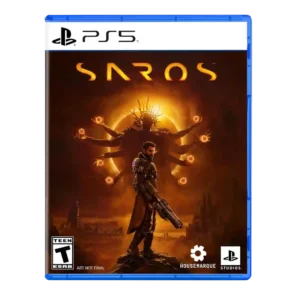
Most reviews describe Saros as challenging but fair, with useful modifiers and accessibility-minded tuning. The main criticism is that progression and modifiers can make the challenge easier to overcorrect.
Standard difficulty is usually described as demanding but fair, challenging players without becoming frustrating.
Resource balance is mostly positive because reviews praise permanent resources and death carryover, but one review says currency can become abundant enough to weaken challenge.
Ammo pressure and multiple currencies create tension and choice, though some reviewers felt the resource layers were slightly overengineered.
Emotional response is mixed to limited. Reviews mention thoughtful story material, but also note that the narrative did not fully create emotional investment.
The father-daughter dynamic lands hard emotionally, with several reviews describing the story as genuinely moving or tearful.
Endgame-specific evidence is limited and cautious, with one review wishing for a dedicated post-game activity after finishing the main story.
Post-game support is meaningful, with New Game+, challenge content, and extra objectives giving players more to do after credits.
Reviewers cite varied enemy types, evolving biome threats, and changing enemy behavior across biomes. The evidence supports strong enemy variety in combat contexts.
Enemy variety is generally good and supports tactical decision-making, though a few reviewers wanted more robot types overall.
Evidence supports strong environmental detail through trepidation-filled biomes, visual contrast, and carefully designed spaces that support readability.
Environment work is repeatedly praised for its intricacy, scale, and dense sci-fi detail.
Evidence highlights hidden paths, treasures, and backtracking incentives tied to newly unlocked traversal abilities.
Exploration is rewarding thanks to secrets, side paths, collectibles, and optional returns to earlier areas.
Facial animation is a notable caveat, with reviews saying in-game faces or conversation models sometimes fail to match the emotional strength of the performances.
Fast travel is strongly praised. Reviews note that players can return to unlocked biomes, skip earlier areas, and keep later runs from becoming too long.
Fast-travel options are helpful and frequent enough to keep backtracking manageable.
Thruster-assisted dashing and hovering add useful mobility and help support both combat and traversal.
Most performance evidence is positive, with several reviews reporting near-locked or solid 60fps. Caveats include minor drops or occasional performance hits in specific situations.
Performance is described as steady during normal play, including action-heavy encounters on console.
Fun-factor evidence is narrow but very positive, with one preview describing a regular dopamine hit from the gameplay and upgrades.
Even critics with caveats still describe Pragmata as broadly fun and easy to enjoy.
Multiple reviews describe the shield, projectile absorption, power weapons, parry, modifiers, and bullet-hell structure as the major mechanical additions. The mechanics are consistently framed as deepening the action rather than replacing the familiar Housemarque foundation.
The layered combat systems have real depth, combining puzzle elements, strategy, and shooting in a way that feels fresh.
Visual quality is praised across several reviews, especially the UE5 presentation, audiovisual spectacle, landscapes, and overall PS5/PS5 Pro image quality.
Visual fidelity is a major strength, with multiple reviewers highlighting the game’s beauty and technical presentation.
Grind and repetition are notable caveats. Two reviews specifically say repetition can wear the player down or begin to settle in.
Optional progression and reward chasing can involve some grind, especially around Cabin Coins and completionist unlocks.
One review says the game looked and played beautifully on PlayStation Portal, giving limited but positive support for handheld-style play.
Handheld play is viable, but image quality takes a noticeable hit and looks softer than docked or stronger hardware versions.
DualSense integration is one of the clearest technical strengths, with praise for haptics, adaptive triggers, half-pull firing, and tactile combat feedback.
DualSense trigger feedback adds extra tactile punch to combat on supported PlayStation hardware.
Horror tension is strong, with evidence centered on dread, madness, terrifying wildlife, and anxiety rather than cheap scares.
HUD and combat readability are strong, with reviewers praising color-coded attacks, clear projectiles, intuitive readability, and manageable visual communication during chaos.
HUD readability is mixed; collectible prompts can clutter the screen enough to create distracting visual noise.
Immersion is strong in the available evidence, with 3D audio, sound optimization, and uneasy music helping draw players into Carcosa.
The interplay between Hugh and Diana helps players feel like they are actively inhabiting two characters at once.
Innovation evidence centers on the Soltari Shield, DualSense/haptic implementation, and added mechanical complexity that build on Returnal rather than merely copy it.
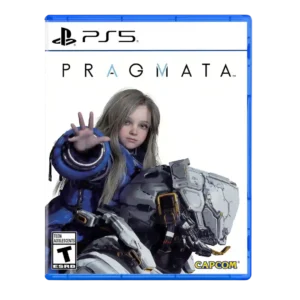
Reviewers repeatedly frame Pragmata as an inventive shooter that pushes a fresh hack-and-shoot idea well beyond gimmick status.
The learning curve is presented as approachable but skill-based, with mechanics taught through trial, error, and getting comfortable with systems like the shield.
The multitasking combat has a learning curve, but the game teaches it gradually enough that most reviewers adjusted well.
Reviewers praise the balance of hand-crafted sections, random arrangement, biome flow, exploration beats, and strong bullet-hell level layouts. One review notes occasional structural issues around boss-run length.
Levels are praised for strong structure, shortcuts, rewards, and semi-linear layouts that support exploration.
Load time evidence is narrow but very positive, with one technical review describing transitions as close to instant.
Artifacts and loot receive mixed reactions. Reviews describe corrupted artifacts and item choices as interesting, but also mention artifact droughts and limited synergy impact.
Loot and reward structures are overtly gamey, with chests, currencies, collectibles, and challenge rewards feeding progression.
Readable logs, creepy collectibles, and data entries provide meaningful lore texture. The evidence suggests the lore is stronger than some of the main-story delivery.
Optional notes, logs, and holograms add meaningful background detail and deepen understanding of the setting.
Navigation is a weakness in the available evidence, with one review saying the game does not point players clearly enough to exact destinations.
Navigation tools are one of the weaker areas; maps can be vague and not always helpful for tracking position or collectibles.
Menu usability receives a modest score because one review says menu button presses are not snappy despite having a satisfying feel.
Menus are easy to use and keep key information accessible without forcing too much friction between encounters.
Mission setups are serviceable overall, but some objectives are criticized as repetitive or overly gamey.
Chapters regularly introduce new twists, helping objectives and encounters avoid feeling too samey.
Movement is repeatedly described as fluid, nimble, smooth, and responsive. Reviews emphasize jumping, dashing, and evasion as central to surviving the bullet-heavy encounters.
Hugh’s movement feels agile and mobile despite the bulky suit, especially once traversal upgrades come online.
Narrative reactions are mixed. Some reviews praise the mystery, themes, and mechanics-story connection, while others criticize underdeveloped threads, opaque answers, weak side characters, or the story being outpaced by action.
Storytelling is effective around Hugh and Diana, but several reviews say the broader narrative ideas are safer or thinner than the premise suggests.
One review says the game teaches its mechanics quickly through trial and error, supporting a positive but narrowly evidenced onboarding score.
The opening hours get players into the flow quickly instead of dragging out the initial setup.
Originality is mixed. Saros is praised for improving on its predecessor, but one review also describes it as a familiar retreading of Returnal.
Even when it echoes older shooters, reviewers still see Pragmata as unusually original for a big-budget action game.
One review argues the streamlined run design improves pacing compared with a typical roguelike, especially by reducing lull time and unexpected spikes.
The campaign keeps momentum well, maintaining a brisk rhythm of fights, upgrades, and new wrinkles.
One technical review highlights a strong balance between image quality, visual features, and performance, especially around the 60fps target.
Optimization is strong across major platforms, with reviewers noting smooth performance and few technical issues.
Platform-specific support is strong, especially around PS5 showcase features such as DualSense haptics, spatial audio, and hardware-driven spectacle.
Platform support appears thoughtful enough to extend beyond flagship hardware, with reviewers specifically testing portable play scenarios.
One review specifically praises the consistency of jumping and dashing arcs, supporting a positive score for platforming-related movement precision.
Platforming is mostly workable but somewhat uneven; some reviews praise it, while others found movement inconsistencies frustrating.
Polish is generally praised through refined movement, streamlined structure, and an approachable successor design. One review notes pre-release balance concerns, keeping the summary from being flawless.
The game is consistently described as polished, confident, and carefully put together.
Permanent progression is broadly praised for making deaths feel useful, making Arjun stronger over time, and keeping runs engaging. A minority view argues the meta progression can reduce the roguelike’s sense of skill-driven growth.
Upgrades, unlocks, and player choice create a satisfying sense of growth throughout the campaign.
Reviewers generally find Arjun compelling, layered, and well performed, though one review frames him as a flawed and unpleasant figure. The appeal is strongest when tied to Rahul Kohli’s performance and Arjun’s personal drive.
Hugh and especially Diana are consistently praised as likable leads who carry the experience.
Puzzle evidence is limited but positive, with one review noting light puzzle spaces built around switches and reward gates.
The hacking grids add fast, readable puzzle solving inside combat and give the game its signature texture.
Several reviews describe wanting to return after credits, trying again after losses, and treating Saros as an easy pickup for Returnal fans. Replay appeal is tied to both combat and unresolved discovery.
Strong post-game hooks, mastery-driven combat, and New Game+ give the game clear replay appeal.
Save-related evidence is limited to suspend-run functionality, but that feature is praised as making Saros more respectful of time.
Side character depth is a consistent weakness. Reviews describe supporting characters as underdeveloped, sacrificial, stock, or mostly serving Arjun’s story.
Reviews describe the Armor Matrix or skill tree as useful and sometimes exhaustive, though one calls it simple and another frames it as a meta-progression layer rather than deep buildcrafting.
Sound design is repeatedly praised, including 3D audio, haunting effects, spatial sound, and overall audio presentation that adds intensity and immersion.
Weapons, station ambience, and combat feedback make the audio design feel punchy and richly textured.
The soundtrack is praised for pounding, oppressive, drone-metal, and atmospheric qualities that support combat and dread. The evidence is strongly positive across reviews.
The soundtrack supports both action and quieter scenes well, with several reviews praising its emotional and electronic cues.
Tutorial quality is supported by evidence that encounters and trial-and-error teaching prepare players for boss patterns and core mechanics.
The early tutorialization is effective enough to establish the basics without overstaying its welcome.
The upgrade evidence is positive overall, with reviewers praising permanent upgrades, proficiency improvements, and Armor Matrix growth as meaningful ways to return stronger.
Shelter-based upgrading is rewarding and easy to understand, giving players meaningful ways to shape combat and traversal.
UI evidence is mixed to weak, with one review saying the UI is good enough while also noting some navigation and equipment-screen clarity issues.
The UI is streamlined and friction-light, helping players check resources and options quickly during play.
Value evidence is limited but positive, with one review explicitly matching the price they would pay to the listed MSRP.
Reviews indicate good value thanks to the campaign length, post-game content, and extra challenges included at launch.
Particle effects and combat VFX are a major strength, with reviews highlighting colorful blasts, fireworks-like battles, and technically impressive particle handling.
Combat effects, sparks, and other visual flourishes add extra juice to firefights without overwhelming readability.
Voice acting is strongly praised, especially Rahul Kohli’s lead performance and the broader cast’s ability to bring the story to life.
Voice performances are repeatedly praised, especially for how they sell the sincerity of Hugh and Diana’s bond.
Weapon balance is generally positive because many weapons feel powerful or viable, but several reviews note exceptions such as disliked shotguns, no-auto-aim variants, or limited build choice.
The arsenal feels varied and useful, with weapons serving distinct roles even if a few individual options land softer than others.
The world-building is praised through Carcosa’s mystery, Echelon history, and environmental/story details. Reviews frame the setting and mystery as worth unraveling even when narrative clarity varies.
The lunafilament setting, AI-made spaces, and speculative sci-fi backdrop are all strong contributors to the game’s world-building.
The scored reviews point to interactive eclipse triggers and traversal-gated hidden paths as meaningful interactions with Carcosa’s world.
Hacking extends beyond enemies to blocked paths and environmental interactions, giving the world some functional reactivity.
The available writing-specific evidence is mixed, noting that the story leaves much for players to interpret rather than clearly resolving every idea.
Writing is heartfelt and effective with the leads, but broader plotting and trope use draw some criticism.