Power-related evidence centers on the small full-range driver, passive radiators, and amplifier specifications, showing capable engineering for the size rather than large-speaker power.
The Marshall app is treated as functional but basic, mainly covering firmware, battery information, presets, and limited controls rather than deep customization.
The Marshall app is generally viewed as useful for EQ, placement compensation, and battery features, but there are reports of occasional pairing/setup friction and some early-stage quirks around broadcast features.
Audio format support is limited, with reviews noting a lack of high-resolution support and a generally modest feature set.
Backwards compatibility evidence is mixed around the upgrade path: the Willen II is a minor upgrade, not a must-have for original Willen owners, and some older pairing behavior changed.
Battery life is one of the strongest supported areas, with nearly every review pointing to 17-hour claims, 14-17 hour real-world results, or long use between charges.
Battery life is consistently described as class-leading around 50 hours, with several reviewers noting it lasts days to over a week in normal use and dramatically outclasses many rivals in this size.
Bluetooth codec and high-resolution support are weakly supported, with reviews explicitly noting no high-resolution audio support for a speaker of this size.
Codec support is repeatedly called basic, commonly described as SBC/AAC (and LC3 in some coverage), with reviewers noting the absence of higher-end options like LDAC or aptX Adaptive.
Connection stability is generally positive, with reviews citing Bluetooth 5.3, stable connections, connection strength, quick pairing, and no cutouts when the phone stayed nearby.
Bluetooth stability is largely reported as solid and reliable, with few dropouts mentioned during typical use, though broadcast-style features are not always seamless depending on devices.
Bluetooth range is presented positively where measured or specified, with one review citing a very long range and another citing a 100 m range.
Reported range aligns with typical expectations for the class, with at least one review noting it can exceed the stated 10m in real home use.
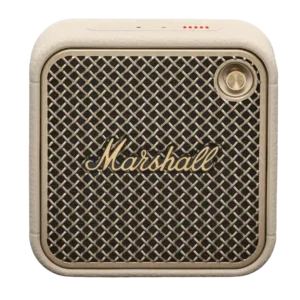
Build quality is a major strength, with reviewers describing the speaker as premium, rugged, robust, sturdy, well made, and durable for outdoor use.
Charging performance is a repeated strength, especially the 20-minute quick charge that provides about five to five and a half hours of playback.
Charging is often cited as around three hours with an appropriate USB-C PD charger and includes quick-charge style benefits, but several notes warn slower chargers can dramatically extend charge time.
The overall presentation is praised as balanced, clean, warm, controlled, and cohesive, though it prioritizes refinement over huge bass or maximum output.
Overall presentation is consistently described as cohesive and engaging, with strong room-filling character and a tuning that works across many genres without falling apart at higher volumes.
Control responsiveness is a clear strength: the joystick is repeatedly described as intuitive, simple, solid, and easier than common multi-press button systems.
Button and control responsiveness is consistently described as satisfying and tactile, with several reviews calling out the premium feel of toggles, knobs, and playback controls.
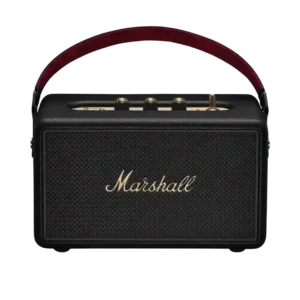
Design is one of the most consistent strengths, with the Marshall amp-inspired look, premium materials, brass grille, rubber texture, and retro styling praised throughout.
Nearly every review highlights the signature Marshall amp-inspired look, premium materials, and tactile hardware controls as a major reason to buy, often calling it a statement piece for the home.
Detail retrieval is a strength for the size, with reviews praising excellent detail, clear highs, complex instrument detail, and balanced clear music.
Detail is widely considered strong for a portable speaker, with good separation and clarity across genres, though some commentary suggests top-end nuance and precision can trail the very best competitors in ideal listening positions.
Dialogue-related evidence comes from app voice modes and crystal-clear dialogue for spoken content, but the reviews do not specifically test TV or soundbar use.
Most supporting reviews describe respectable control at higher volume, with clarity or fidelity holding up, but one review reports noticeable distortion and a tinny character when the volume is cranked.
Reviews frequently praise how well it controls distortion at higher volumes, with dynamic loudness and tuning keeping the sound from getting harsh or breaking up when pushed.
Drop durability has limited direct evidence, with one reviewer saying both speakers survived being dropped, while also warning that the Marshall's gold accents deserve care.
Build is often described as tank-like and sturdy, with reviewers suggesting it should handle everyday knocks and occasional falls better than many plastic-bodied competitors.
Dust resistance is strongly supported through repeated IP67 or dustproof references, making outdoor use a recurring strength across the reviews.
Dust resistance is tied to the IP54 rating and is framed as adequate for everyday outdoor use (patios, parks), but not a fully rugged, sand-and-submersion type rating.
Dynamic headroom is mixed: the speaker keeps sound controlled, but several reviews note limited output, low maximum loudness, or sacrificed volume compared with louder rivals.
Dynamic headroom is repeatedly credited for keeping the sound energetic and controlled as volume changes, helping preserve detail and balance at both moderate and loud listening levels.
Energy efficiency is supported through Bluetooth 5.3 comments, with reviewers tying the update to lower battery use, longer runtime, and stronger connection behavior.
One detailed review highlights major efficiency gains enabling very long playtime from only modest battery capacity growth, suggesting strong power management for the class.
EQ customization is limited: reviews repeatedly mention only presets or a basic app, and several specifically wish for a fuller adjustable EQ.
EQ flexibility is frequently praised: users can tweak bass/treble with physical knobs and use app-based presets plus a multi-band EQ, with shortcuts like an M button for quick switching.
Everyday usability is strong thanks to the compact body, standing design, strap, durability, travel-friendly size, and simple controls.
The speaker is consistently described as balanced, flat, warm, or well controlled, with clear mids and usable low end; critical notes focus more on muted output or limited punch than tonal imbalance.
Most coverage describes a lively, warm-leaning balance with strong bass and clear mids, though a few notes mention it can sound a bit bass-forward or have occasional mid/treble character that some listeners may want to EQ.
The built-in rear strap is widely praised for attaching the speaker to bags, bikes, poles, or gear, though a few reviewers find it less confidence-inspiring than the rest of the build.
The carry strap/handle is frequently praised for comfort and security, making the speaker easier to move around than some similarly heavy rivals.
Inter-speaker connectivity is mostly future-facing, with Auracast mentioned across reviews, but current activation or practical reliability is not consistently confirmed.
Latency evidence is positive but limited to Bluetooth 5.3 claims and reviewer language about minimal latency, not direct TV lip-sync testing.
Output is useful for desks, small rooms, small gatherings, and casual outdoor use, but the evidence is mixed because several reviewers say it is not the loudest option and some cheaper rivals play louder.
The Kilburn III is repeatedly described as very loud for its class and capable of powering outdoor hangs or parties, with enough headroom to feel big in larger rooms.
Low-volume and personal listening evidence is positive, especially for desk, small-room, and mid-volume use where the speaker sounds accurate and remains battery-efficient.
Low-volume listening is reported to stay rich and satisfying, helped by dynamic loudness behavior that avoids losing bass and body when playing quietly.
The built-in microphone is repeatedly confirmed as a useful feature for calls, especially compared with some compact speakers that lack it.
Multi-speaker evidence is cautious: Auracast is presented as promising or future-facing, while one review warns not to count on pairing features and another notes the feature was not active.
A frequent downside is the lack of native stereo pairing or a built-in multi-speaker ecosystem; Auracast is discussed as a workaround, but it depends on compatible sources and is not universally smooth yet.
The only direct multipoint-style evidence says the speaker can be paired with up to eight devices but used with two at a time.
Multipoint capability is referenced as available in some coverage, supporting quick switching or pairing to two devices, though it is not the primary focus of most reviews.
Omnidirectional sound is a weakness based on one review noting that the listening experience changes when moving around or placing the speaker upward.
Multiple reviewers confirm the 360-style presentation works well, maintaining a full sound as you move around the speaker, though a few describe it as not perfectly wraparound like some cylindrical rivals.
On-device controls are a standout usability strength, with repeated praise for the joystick, dedicated buttons, and clear battery indicators.
On-device controls are repeatedly praised as a major strength: tactile knobs, dedicated playback control, and shortcut buttons reduce reliance on the app and are easy for anyone to use.
The only direct evidence says the Willen II does not include a portable power-bank feature.
Power bank use is a highlighted perk, letting you charge a phone from the speaker, with at least one review noting you should pay attention to charge direction behavior depending on speaker power state.
Value is mixed: several reviews call it worth the price or good value for the quality, while others find it expensive for its output or prefer cheaper, louder alternatives.
Setup evidence is limited but positive, with one reviewer saying Bluetooth pairing is quick and painless and connection issues were not experienced nearby.
Setup is typically described as straightforward with fast pairing behavior, and most reviewers report stable day-to-day use once connected.
Smart features are limited, with reviews pointing to a basic app, fewer features than some rivals, and controls that do not go much beyond presets, firmware, and battery information.
Smart features are intentionally limited: reviews repeatedly note no Wi-Fi streaming and no voice assistant, with the app focused on sound shaping, placement compensation, and battery management.
Speakerphone evidence is mostly feature-based rather than call-quality-based, with several reviews confirming a built-in mic and hands-free calling support.
Several reviews explicitly note the lack of a built-in microphone, meaning it is not a good choice if you want speakerphone or hands-free calling features.
Status indicators are a positive usability detail, with reviewers noting battery LEDs or a battery indicator that shows remaining power without relying only on a phone.
Status feedback is frequently described as strong, including battery indication and LED/indicator behavior around physical knobs that makes quick adjustments easy without looking at a phone.
Only one review directly addresses imaging, describing instrument separation as limited and the presentation as a little one-dimensional for such a small speaker.
Reviews commonly note it is stereo only in a technical sense; the footprint feels wide, but true left-right separation and pinpoint imaging are limited compared to dedicated stereo pairs.
No summary yet.
Replaceable battery access and longevity features are repeatedly framed as a sustainability win, helping extend the usable life of the speaker compared to sealed-battery designs.
USB-C charging is directly supported, though the same evidence also makes clear the port is used for charging rather than wired audio.
USB-C charging is broadly praised as convenient and modern, with some reviews noting the lack of an included high-wattage adapter as a small annoyance.
Value for money mirrors the price evidence: the speaker is praised for premium quality and sound at sale prices, but criticized when judged against louder or cheaper rivals.
Value is generally considered good for buyers prioritizing design, battery, and big sound, but some reviewers still flag the price as premium given the lack of Wi-Fi, voice features, and stereo pairing.
Vocals are a clear strength in the supporting reviews, with repeated comments about crystal-clear or clear vocal reproduction and balanced, clear music playback.
Water resistance is strongly supported by repeated IP67 and waterproof references, with reviewers framing it as suitable for pools, beaches, rain, hikes, and outdoor use.
IP54 protection is generally seen as a welcome upgrade that handles splashes and light rain, but many reviewers still call it less rugged than IP67-style competitors for serious outdoor abuse.
The speaker is repeatedly described as compact, portable, and light enough for bags or travel, though some reviewers note its 360 g weight gives it noticeable heft.
Multiple reviews call it heavy for true travel or backpack use, though the strap helps and most position it as portable around home, yard, or short trips rather than hiking gear.
Wired input is a clear weakness in the supporting reviews: the USB-C port is for charging, and AUX or wired audio is not available.
Reviews commonly note the presence of a 3.5mm AUX input as a useful fallback for wired listening and for sources that can benefit from a cable connection. Wired AUX use is generally described as a good alternative path for quality listening, with at least one review noting the signal still goes through internal processing rather than staying purely analog end-to-end.