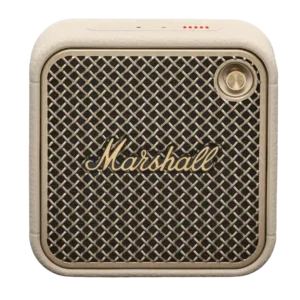
Power-related evidence centers on the small full-range driver, passive radiators, and amplifier specifications, showing capable engineering for the size rather than large-speaker power.
The Marshall app is treated as functional but basic, mainly covering firmware, battery information, presets, and limited controls rather than deep customization.
The JBL Portable app is commonly described as stable and straightforward, adding speaker grouping, firmware updates, and EQ; a few call it bare-bones but functional.
Audio format support is limited, with reviews noting a lack of high-resolution support and a generally modest feature set.
USB-C wired playback is reported to support lossless/hi-res sources in several reviews, but some hear only subtle gains versus Bluetooth and one reviewer could not get USB audio working, making it somewhat setup-dependent.
Backwards compatibility evidence is mixed around the upgrade path: the Willen II is a minor upgrade, not a must-have for original Willen owners, and some older pairing behavior changed.
Backwards compatibility is a consistent negative: many sources state Flip 7 cannot pair with older PartyBoost/Flip generations, and stereo pairing requires another Flip 7.
Battery life is one of the strongest supported areas, with nearly every review pointing to 17-hour claims, 14-17 hour real-world results, or long use between charges.
Battery claims cluster around 14 hours (up to 16 with Playtime Boost), but real results vary widely by volume/EQ: some report multi-day casual use, while one standardized test measured about 6 hours at steady 80dB.
Bluetooth codec and high-resolution support are weakly supported, with reviews explicitly noting no high-resolution audio support for a speaker of this size.
Codec support is described as limited: several reviews say SBC-only, while a few mention AAC alongside SBC; there is no consistent report of higher-end codecs like aptX.
Connection stability is generally positive, with reviews citing Bluetooth 5.3, stable connections, connection strength, quick pairing, and no cutouts when the phone stayed nearby.
Bluetooth stability is widely praised, with most reporting solid connection in typical indoor/outdoor use.
Bluetooth range is presented positively where measured or specified, with one review citing a very long range and another citing a 100 m range.
Range impressions are positive, including reports of maintaining connection across large rooms and outdoor distances (one reviewer cites about 50 meters), though real range depends on environment.
Build quality is a major strength, with reviewers describing the speaker as premium, rugged, robust, sturdy, well made, and durable for outdoor use.
Charging performance is a repeated strength, especially the 20-minute quick charge that provides about five to five and a half hours of playback.
Multiple sources cite recharge time around 2.5 hours, with notes that there is no fast-charge feature and a charger/cable may not be included.
The overall presentation is praised as balanced, clean, warm, controlled, and cohesive, though it prioritizes refinement over huge bass or maximum output.
Overall presentation is commonly described as energetic and composed for a compact portable, but dissenting takes call out midrange muddiness or less refined sound depending on genre and volume.
Control responsiveness is a clear strength: the joystick is repeatedly described as intuitive, simple, solid, and easier than common multi-press button systems.
Physical controls are generally described as tactile and responsive, with a cleaner layout and backlit buttons on some controls improving usability.
Design is one of the most consistent strengths, with the Marshall amp-inspired look, premium materials, brass grille, rubber texture, and retro styling praised throughout.
Design feedback is largely positive (rugged, fun colors, familiar Flip shape), though a few describe the styling as casual or less elegant than some rivals.
Detail retrieval is a strength for the size, with reviews praising excellent detail, clear highs, complex instrument detail, and balanced clear music.
Detail is often judged strong for a speaker this small, but several reviewers still note limited nuance and separation in busy tracks (especially orchestral/classical) compared with larger or stereo speakers.
Dialogue-related evidence comes from app voice modes and crystal-clear dialogue for spoken content, but the reviews do not specifically test TV or soundbar use.
Most supporting reviews describe respectable control at higher volume, with clarity or fidelity holding up, but one review reports noticeable distortion and a tinny character when the volume is cranked.
AI Sound Boost and the updated driver/tweeter are frequently credited with keeping distortion low, but multiple tests still note sibilance/harshness or occasional crackle when volume is pushed high.
Drop durability has limited direct evidence, with one reviewer saying both speakers survived being dropped, while also warning that the Marshall's gold accents deserve care.
Durability is a standout theme: reviewers emphasize reinforced bumpers/endcaps and commonly cite drop-proof claims around 1 meter onto hard surfaces.
Dust resistance is strongly supported through repeated IP67 or dustproof references, making outdoor use a recurring strength across the reviews.
Dust resistance is consistently described as fully dustproof (often as part of IP68), positioning it as well-suited for sand, trails, and outdoor use.
Dynamic headroom is mixed: the speaker keeps sound controlled, but several reviews note limited output, low maximum loudness, or sacrificed volume compared with louder rivals.
Dynamic headroom is frequently praised, with reviewers noting it can be pushed louder than expected for the form factor, though some caution that tonality can harden at very high levels.
Energy efficiency is supported through Bluetooth 5.3 comments, with reviewers tying the update to lower battery use, longer runtime, and stronger connection behavior.
EQ customization is limited: reviews repeatedly mention only presets or a basic app, and several specifically wish for a fuller adjustable EQ.
The move to a 7-band EQ is a major usability win and is frequently praised; caveats include Playtime Boost disabling EQ adjustments and some complaints about not saving multiple custom profiles.
Everyday usability is strong thanks to the compact body, standing design, strap, durability, travel-friendly size, and simple controls.
One review claims the Flip 7 can float while playing, but this is not consistently verified across sources, so treat it as a nice-to-have rather than a core guarantee.
The speaker is consistently described as balanced, flat, warm, or well controlled, with clear mids and usable low end; critical notes focus more on muted output or limited punch than tonal imbalance.
Most reviewers hear punchy, fun tuning with good bass for the size, but some report a V-shaped balance (boosted bass/treble), midrange that can feel recessed or shouty, and thinner sound when Playtime Boost is enabled.
Android setup is described as especially easy thanks to Google Fast Pair, making initial connection quick for supported phones.
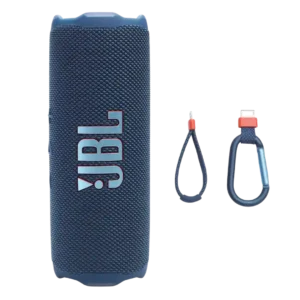
The built-in rear strap is widely praised for attaching the speaker to bags, bikes, poles, or gear, though a few reviewers find it less confidence-inspiring than the rest of the build.
The new PushLock loop/carabiner system is widely praised for portability and security, with most calling it a meaningful upgrade over the older simple loop.
Inter-speaker connectivity is mostly future-facing, with Auracast mentioned across reviews, but current activation or practical reliability is not consistently confirmed.
Auracast is widely highlighted for linking compatible speakers (and two Flip 7s for stereo), though some note Auracast is used mainly for broadcasting and cannot bridge to older PartyBoost models.
Latency evidence is positive but limited to Bluetooth 5.3 claims and reviewer language about minimal latency, not direct TV lip-sync testing.
Latency feedback is mixed: several reviewers note noticeable Bluetooth lag and no dedicated low-latency gaming mode, while others say it is fine for casual video; USB-C can reduce lag but may not eliminate it in every app.
Output is useful for desks, small rooms, small gatherings, and casual outdoor use, but the evidence is mixed because several reviewers say it is not the loudest option and some cheaper rivals play louder.
Nearly every reviewer calls the Flip 7 impressively loud for its size, often needing only mid-range volume levels for small rooms or outdoor hangs; several warn that pushing it hard can sound harsher.
Low-volume and personal listening evidence is positive, especially for desk, small-room, and mid-volume use where the speaker sounds accurate and remains battery-efficient.
Low-volume listening is generally described as enjoyable with audible bass presence, but some note separation improves at higher volumes and Playtime Boost changes the tonal balance noticeably.
The built-in microphone is repeatedly confirmed as a useful feature for calls, especially compared with some compact speakers that lack it.
Multi-speaker evidence is cautious: Auracast is presented as promising or future-facing, while one review warns not to count on pairing features and another notes the feature was not active.
Auracast/Party Together multi-speaker grouping is generally described as easy and reliable with newer compatible JBL models, though a few note the older PartyBoost ecosystem can feel more mature and stable.
The only direct multipoint-style evidence says the speaker can be paired with up to eight devices but used with two at a time.
Multipoint is often reported as fast and seamless, but at least one reviewer experienced pausing instead of clean source switching when two paired devices played at once.
Omnidirectional sound is a weakness based on one review noting that the listening experience changes when moving around or placing the speaker upward.
On-device controls are a standout usability strength, with repeated praise for the joystick, dedicated buttons, and clear battery indicators.
On-speaker controls are generally straightforward and tactile (play/pause, volume, power, Bluetooth, Auracast); some reviewers also highlight new shortcuts like track navigation and the wired-audio activation via the play button.
The only direct evidence says the Willen II does not include a portable power-bank feature.
At least one reviewer explicitly notes you cannot use the Flip 7 as a power bank to charge your phone via USB-C.
Value is mixed: several reviews call it worth the price or good value for the quality, while others find it expensive for its output or prefer cheaper, louder alternatives.
Setup evidence is limited but positive, with one reviewer saying Bluetooth pairing is quick and painless and connection issues were not experienced nearby.
Setup is repeatedly described as simple: power on, pair quickly (often aided by Fast Pair), and optionally use the app for deeper controls.
Smart features are limited, with reviews pointing to a basic app, fewer features than some rivals, and controls that do not go much beyond presets, firmware, and battery information.
Soundstage is commonly described as narrow due to mono playback; reviewers who test classical/orchestral especially note a confined presentation with instruments blending together.
Speakerphone evidence is mostly feature-based rather than call-quality-based, with several reviews confirming a built-in mic and hands-free calling support.
Multiple sources explicitly say the Flip 7 lacks a microphone, so it cannot function as a speakerphone for calls.
Status indicators are a positive usability detail, with reviewers noting battery LEDs or a battery indicator that shows remaining power without relying only on a phone.
Status feedback is generally good, including battery indicators on the speaker and in-app percentage readouts; some reviewers also mention warnings/indicators around charging when wet.
Only one review directly addresses imaging, describing instrument separation as limited and the presentation as a little one-dimensional for such a small speaker.
The Flip 7 is repeatedly described as a mono speaker with limited imaging; real stereo is possible only by pairing a second Flip 7.
One review highlights the use of recycled materials (recycled plastics and fabric), suggesting JBL is making tangible moves toward more sustainable construction.
USB-C charging is directly supported, though the same evidence also makes clear the port is used for charging rather than wired audio.
USB-C is the standard charging method and is treated as expected for the category; some reminders note you may need to let the port dry before charging after water exposure.
Value for money mirrors the price evidence: the speaker is praised for premium quality and sound at sale prices, but criticized when judged against louder or cheaper rivals.
Most reviewers see strong value at the $149 price given the durability and sound, but a few highlight cheaper rivals that add speakerphone functions or higher-res Bluetooth codecs; sale pricing materially improves the value case.
Vocals are a clear strength in the supporting reviews, with repeated comments about crystal-clear or clear vocal reproduction and balanced, clear music playback.
Water resistance is strongly supported by repeated IP67 and waterproof references, with reviewers framing it as suitable for pools, beaches, rain, hikes, and outdoor use.
Most reviews cite an IP68 rating with submersion around 1.5 meters for 30 minutes; a couple sources mention IP67, but overall consensus is that water resistance is class-leading for the size.
The speaker is repeatedly described as compact, portable, and light enough for bags or travel, though some reviewers note its 360 g weight gives it noticeable heft.
Wired input is a clear weakness in the supporting reviews: the USB-C port is for charging, and AUX or wired audio is not available.
USB-C wired audio is a headline addition and is often described as easy to activate, but at least one reviewer reported they could not get wired audio working reliably on their devices.