Average score
P1
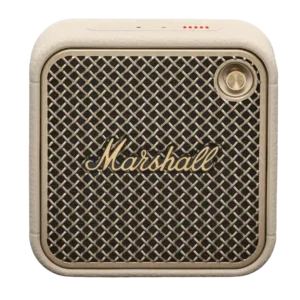
Product 1: Marshall Willen II
3.9
P2
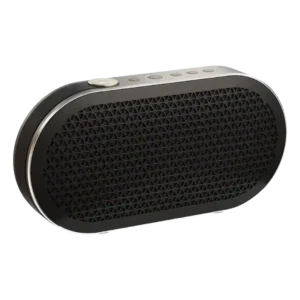
Product 2: Dali Katch G2 Portable Speaker
3.9
App reliability
P1
Product 1: Marshall Willen II
2.7
Reviewers found the Marshall app usable but bare-bones, with limited controls and few reasons to spend time in it beyond updates, battery information, and presets.
P2Product 2: Dali Katch G2 Portable Speaker
No score yetAudio format support
P1
Product 1: Marshall Willen II
3.0
Two reviews noted the lack of high-resolution audio support, while also treating it as a modest limitation for a speaker this small.
P2Product 2: Dali Katch G2 Portable Speaker
No score yetBackwards compatibility
P1
Product 1: Marshall Willen II
2.0
Backwards compatibility was weakly reviewed because the lack of wired audio makes the speaker less useful with older playback devices.
P2Product 2: Dali Katch G2 Portable Speaker
No score yetBattery life (if portable)
P1
Product 1: Marshall Willen II
4.7
Battery life was one of the strongest areas, with reviewers reporting or praising roughly 14 to 17 hours and calling it enough for trips, weekends, or long workdays.
P2
Product 2: Dali Katch G2 Portable Speaker
5.0
Battery life is a standout strength, with 30 hours described as exemplary or whopping.
Bluetooth codec support
P1Product 1: Marshall Willen II
No score yet
P2
Product 2: Dali Katch G2 Portable Speaker
4.2
Codec support is generally positive thanks to aptX HD, though reviewers note device support and that LDAC offers a higher maximum bitrate.
Bluetooth connection stability
P1
Product 1: Marshall Willen II
4.8
Connection stability drew strong praise where tested, including stable connections, no cutouts nearby, and unusually strong connectivity in one long-range review.
P2Product 2: Dali Katch G2 Portable Speaker
No score yetBluetooth connectivity
P1
Product 1: Marshall Willen II
5.0
Bluetooth pairing and connection speed were praised as quick, painless, and remarkable in the reviews that evaluated the connection experience.
P2Product 2: Dali Katch G2 Portable Speaker
No score yetBluetooth range
P1
Product 1: Marshall Willen II
4.5
Bluetooth range was praised, with one reviewer calling it the most they had encountered and another describing the rated range as very strong.
P2Product 2: Dali Katch G2 Portable Speaker
No score yetCabinet construction / bracing
P1
Product 1: Marshall Willen II
4.7
Build quality was consistently strong, with reviewers describing the speaker as robust, rugged, premium-feeling, and durable enough for everyday portable use.
P2
Product 2: Dali Katch G2 Portable Speaker
5.0
Build quality is a major strength, with reviewers praising the metal-enhanced construction and calling the construction quality superb.
Charging time
P1
Product 1: Marshall Willen II
4.8
Quick charging was repeatedly praised, especially the roughly 20-minute top-up that gives several more hours of playback.
P2
Product 2: Dali Katch G2 Portable Speaker
4.0
Charging time is treated as acceptable, with one review saying two hours is not long to wait.
Cohesive presentation
P1
Product 1: Marshall Willen II
4.5
Reviewers often characterized the sound as clean, balanced, warm, and accurate, though that balance sometimes came at the expense of raw loudness or bass punch.
P2
Product 2: Dali Katch G2 Portable Speaker
4.9
The presentation is praised as effortless, musically insightful, and capable of conveying a genuine sense of the music.
Control button responsiveness
P1
Product 1: Marshall Willen II
4.7
The joystick control was widely liked for feeling intuitive, solid, and easier than typical button combinations on small speakers.
P2
Product 2: Dali Katch G2 Portable Speaker
5.0
The physical buttons are praised as positively clicky and predictable.
Design and aesthetics
P1
Product 1: Marshall Willen II
4.8
Design was one of the most consistent strengths, with reviewers praising the retro Marshall look, premium texture, compact form, and rock-inspired styling.
P2
Product 2: Dali Katch G2 Portable Speaker
4.6
Design is a major strength across reviews, described as stunning, classy, distinctive, and attractive even by a more critical reviewer.
Detail retrieval
P1
Product 1: Marshall Willen II
4.6
Detail retrieval was praised for a speaker this size, especially in close listening, vocals, instruments, and more complex material.
P2
Product 2: Dali Katch G2 Portable Speaker
4.7
Detail retrieval is one of the strongest sound traits, with reviews praising clarity, nuance, resolution, and extra sparkle.
Distortion at high volume
P1
Product 1: Marshall Willen II
4.0
Most reviewers found distortion controlled for the size, but one noted noticeable tinny distortion when the volume was fully cranked.
P2
Product 2: Dali Katch G2 Portable Speaker
2.0
High-volume behavior is the clearest sound weakness: one reviewer hears the bass loosen and another calls near-maximum pumping unlistenable.
Drop resistance durability
P1
Product 1: Marshall Willen II
4.0
Only one review gave direct drop-related experience, reporting that a drop did not break the speaker while still advising care around the accents.
P2Product 2: Dali Katch G2 Portable Speaker
No score yetDust resistance rating
P1
Product 1: Marshall Willen II
4.4
Dust resistance was treated positively when tied to outdoor use, with reviewers describing the IP-rated design as helpful for adventures and outdoor handling.
P2
Product 2: Dali Katch G2 Portable Speaker
1.3
Dust protection is weak because reviewers point to the lack of dust or IP-rated protection rather than rugged outdoor sealing.
Dynamic headroom
P1Product 1: Marshall Willen II
No score yet
P2
Product 2: Dali Katch G2 Portable Speaker
5.0
Dynamic ability is praised in one review that calls the speaker dynamic with tremendous resolution for Bluetooth.
EQ customization
P1
Product 1: Marshall Willen II
2.8
EQ customization was a common limitation: reviewers liked having presets but criticized the lack of a full custom equalizer and found some modes less useful.
P2
Product 2: Dali Katch G2 Portable Speaker
3.0
EQ control is mixed: the on-speaker EQ is easy, but the lack of app-based customization limits adjustment beyond the presets.
Everyday usability
P1
Product 1: Marshall Willen II
4.8
Everyday usability was strong thanks to compact travel convenience, the stand-up form, ruggedness, and a clean design that works well on the move.
P2
Product 2: Dali Katch G2 Portable Speaker
4.5
Everyday usability is helped by predictable controls and stable feet, making it easy to live with indoors.
Frequency response balance
P1
Product 1: Marshall Willen II
4.6
Frequency balance was widely praised as flat, accurate, warm, and clear, though the tuning prioritizes balance more than heavy bass output.
P2
Product 2: Dali Katch G2 Portable Speaker
4.0
Most reviewers hear a refined, balanced presentation with strong mids or bass for the size, but one review finds it thin and brittle above moderate volume.
Handle or strap quality
P1
Product 1: Marshall Willen II
4.2
The rear strap was often praised for flexibility and outdoor convenience, but two reviewers felt it was flimsier or more delicate than the otherwise rugged body.
P2
Product 2: Dali Katch G2 Portable Speaker
4.3
The pull-out handle improves carrying around the house or to parties, though one reviewer finds it clever but stiff.
Inter-speaker connectivity
P1
Product 1: Marshall Willen II
2.7
Inter-speaker connectivity was mixed: Auracast was seen as promising, but some reviews emphasized that the feature was not active or should not be counted on yet.
P2
Product 2: Dali Katch G2 Portable Speaker
4.5
Stereo pairing is seen as useful enough to fill a large room when two units are used, although the cost of buying two remains a caveat elsewhere.
Latency with TV (lip sync)
P1Product 1: Marshall Willen II
No score yet
P2
Product 2: Dali Katch G2 Portable Speaker
5.0
Bluetooth latency is strongly praised in the measurement-focused review, which calls its tested latency as good as it gets.
Loudness / maximum volume
P1
Product 1: Marshall Willen II
3.5
Loudness split reviewers: some found it strong enough for small rooms, campsites, and groups, while others called it quiet or not award-worthy for volume.
P2
Product 2: Dali Katch G2 Portable Speaker
4.3
One review says the speaker can play incredibly loudly, while another finds the G2 only slightly louder than the original, so maximum-volume evidence is positive but not unanimous.
Low-volume performance
P1Product 1: Marshall Willen II
No score yet
P2
Product 2: Dali Katch G2 Portable Speaker
4.4
Low and normal-volume listening is strong, with reviewers praising normal listening levels and one saying the speaker makes more sense below 50 percent volume.
Microphone
P1
Product 1: Marshall Willen II
4.0
The built-in microphone was valued as a useful call feature on a compact speaker, though reviews did not deeply assess microphone audio quality.
P2Product 2: Dali Katch G2 Portable Speaker
No score yetMulti-speaker pairing reliability
P1
Product 1: Marshall Willen II
2.3
Multi-speaker pairing inspired low confidence because reviewers noted inactive Auracast support and warned against buying the speaker for future pairing promises.
P2Product 2: Dali Katch G2 Portable Speaker
No score yetMultipoint connectivity
P1
Product 1: Marshall Willen II
4.0
Multipoint support was treated as a nice extra where mentioned, with the speaker able to remember multiple devices and use two at a time.
P2Product 2: Dali Katch G2 Portable Speaker
No score yetOmnidirectional sound
P1
Product 1: Marshall Willen II
2.5
Omnidirectional performance was a weakness compared with 360-degree rivals, and one reviewer noted the experience changes depending on placement and listening angle.
P2
Product 2: Dali Katch G2 Portable Speaker
4.0
One review praises the sound as bigger than the enclosure with a big, open character.
On-device controls
P1
Product 1: Marshall Willen II
4.8
On-device controls were a clear strength, especially the Marshall joystick for playback, volume, and track changes.
P2
Product 2: Dali Katch G2 Portable Speaker
4.5
The top-edge controls are easy to follow, supporting straightforward on-device operation.
Power bank function
P1
Product 1: Marshall Willen II
2.0
One comparison review treated the missing power-bank function as a drawback against the Soundcore alternative.
P2Product 2: Dali Katch G2 Portable Speaker
No score yetPrice / value for money
P1
Product 1: Marshall Willen II
3.6
Price/value opinions were mixed: some reviewers called it worth the premium or an excellent value, while others felt it was expensive for the output.
P2
Product 2: Dali Katch G2 Portable Speaker
3.3
Price/value depends heavily on market: one review rejects the U.S. price, while another calls the £299 deal strong for a premium Bluetooth speaker.
Setup simplicity
P1
Product 1: Marshall Willen II
4.8
Setup and pairing were praised as straightforward, with Bluetooth pairing described as quick, painless, and self-explanatory.
P2
Product 2: Dali Katch G2 Portable Speaker
4.3
Setup and operation are simple, with reviewers describing the speaker as intentionally straightforward and easy to use.
Smart features
P1
Product 1: Marshall Willen II
3.5
Smart features were limited: reviewers acknowledged useful extras, but one summed up the package as not feature-packed.
P2
Product 2: Dali Katch G2 Portable Speaker
3.0
Smart features are intentionally minimal: the no-app approach is refreshing, but the reviewer also calls it a limitation.
Status indicators
P1
Product 1: Marshall Willen II
5.0
Status indicators were praised in one review for making remaining battery power easy to judge directly on the speaker.
P2Product 2: Dali Katch G2 Portable Speaker
No score yetStereo imaging accuracy
P1Product 1: Marshall Willen II
No score yet
P2
Product 2: Dali Katch G2 Portable Speaker
4.4
Stereo cues are praised through stable separation and a clear left-right sense, though one review still criticizes the tonal balance.
USB-C charging
P1Product 1: Marshall Willen II
No score yet
P2
Product 2: Dali Katch G2 Portable Speaker
2.0
USB-C charging is a weakness because the reviewer specifically notes the speaker does not charge over USB-C.
Value for money
P1
Product 1: Marshall Willen II
3.8
Overall value was disputed, ranging from excellent value and worth-the-money praise to concerns that cheaper rivals offer more output or stronger feature sets.
P2
Product 2: Dali Katch G2 Portable Speaker
3.2
Value evidence is split: £299 is praised as worthwhile, but one reviewer calls the speaker among the worst values he has heard.
Voice clarity
P1
Product 1: Marshall Willen II
4.4
Voice and vocal clarity were repeatedly praised, with reviewers describing vocals as crystal clear, crisp, and easy to hear.
P2
Product 2: Dali Katch G2 Portable Speaker
4.5
Vocal reproduction is supported by one review that describes the singer as smooth and instantly recognizable.
Water resistance rating
P1
Product 1: Marshall Willen II
4.6
Water resistance was strongly praised for outdoor and poolside use, with reviewers saying the IP-rated body makes the speaker easier to take anywhere.
P2
Product 2: Dali Katch G2 Portable Speaker
1.5
Water protection is a weakness across reviews: reviewers describe it as indoor-leaning, not beach-ready, and not IP/IPX rated.
Weight convenience
P1
Product 1: Marshall Willen II
4.2
Most reviewers found the weight acceptable for travel and outdoor use, though one noted the speaker has noticeable heft for its small size.
P2
Product 2: Dali Katch G2 Portable Speaker
3.0
Portability is tempered by mass: reviewers call it heavy or brick-like even while praising its premium feel.
Wired input
P1
Product 1: Marshall Willen II
2.0
Wired input was a clear weakness: reviewers noted there is no wired audio or AUX input, limiting use with older or wired-only devices.
P2
Product 2: Dali Katch G2 Portable Speaker
5.0
The AUX input is praised as a useful physical connection, especially for older or 3.5mm-equipped devices.