Average score
P1
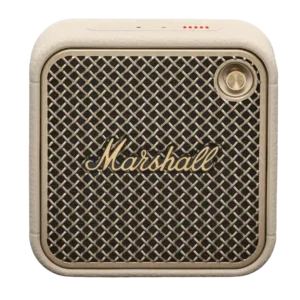
Product 1: Marshall Willen II
3.9
P2
Product 2: Sonos Move 2 Portable Speaker
3.8
AirPlay compatibility
P1Product 1: Marshall Willen II
No score yet
P2
Product 2: Sonos Move 2 Portable Speaker
4.4
AirPlay 2 was treated as a meaningful plus for Apple users and Sonos multi-room setups.
App reliability
P1
Product 1: Marshall Willen II
2.7
Reviewers found the Marshall app usable but bare-bones, with limited controls and few reasons to spend time in it beyond updates, battery information, and presets.
P2
Product 2: Sonos Move 2 Portable Speaker
3.1
App feedback was split: PCMag and some users found Sonos integration smooth, while others complained about unintuitive navigation, heavy app dependence, bugs, or setup errors.
Audio format support
P1
Product 1: Marshall Willen II
3.0
Two reviews noted the lack of high-resolution audio support, while also treating it as a modest limitation for a speaker this small.
P2Product 2: Sonos Move 2 Portable Speaker
No score yetBackwards compatibility
P1
Product 1: Marshall Willen II
2.0
Backwards compatibility was weakly reviewed because the lack of wired audio makes the speaker less useful with older playback devices.
P2
Product 2: Sonos Move 2 Portable Speaker
2.0
Backwards compatibility was criticized because a Move Gen 1 cannot stereo-pair with a Move 2.
Battery life (if portable)
P1
Product 1: Marshall Willen II
4.7
Battery life was one of the strongest areas, with reviewers reporting or praising roughly 14 to 17 hours and calling it enough for trips, weekends, or long workdays.
P2
Product 2: Sonos Move 2 Portable Speaker
4.7
Battery life received very strong agreement, with many reviewers confirming or praising the jump to roughly 24 hours.
Bluetooth codec support
P1Product 1: Marshall Willen II
No score yet
P2
Product 2: Sonos Move 2 Portable Speaker
2.7
Bluetooth codec support was a consistent limitation, with reviewers noting the lack of higher-res or Android-friendly codecs.
Bluetooth connection stability
P1
Product 1: Marshall Willen II
4.8
Connection stability drew strong praise where tested, including stable connections, no cutouts nearby, and unusually strong connectivity in one long-range review.
P2
Product 2: Sonos Move 2 Portable Speaker
4.7
Bluetooth stability was generally strong in tested use, with reviewers reporting easy pairing and no unexpected disconnects.
Bluetooth connectivity
P1
Product 1: Marshall Willen II
5.0
Bluetooth pairing and connection speed were praised as quick, painless, and remarkable in the reviews that evaluated the connection experience.
P2Product 2: Sonos Move 2 Portable Speaker
No score yetBluetooth range
P1
Product 1: Marshall Willen II
4.5
Bluetooth range was praised, with one reviewer calling it the most they had encountered and another describing the rated range as very strong.
P2Product 2: Sonos Move 2 Portable Speaker
No score yetCabinet construction / bracing
P1
Product 1: Marshall Willen II
4.7
Build quality was consistently strong, with reviewers describing the speaker as robust, rugged, premium-feeling, and durable enough for everyday portable use.
P2Product 2: Sonos Move 2 Portable Speaker
No score yetCharging time
P1
Product 1: Marshall Willen II
4.8
Quick charging was repeatedly praised, especially the roughly 20-minute top-up that gives several more hours of playback.
P2
Product 2: Sonos Move 2 Portable Speaker
4.0
Charging feedback was mixed: the dock and recharge experience were often convenient, but one reviewer complained that charging took ages.
Chromecast compatibility
P1Product 1: Marshall Willen II
No score yet
P2
Product 2: Sonos Move 2 Portable Speaker
1.5
A reviewer called out the lack of cast support as a downside for Android-oriented users.
Cohesive presentation
P1
Product 1: Marshall Willen II
4.5
Reviewers often characterized the sound as clean, balanced, warm, and accurate, though that balance sometimes came at the expense of raw loudness or bass punch.
P2
Product 2: Sonos Move 2 Portable Speaker
3.9
The overall presentation was enjoyable and balanced for several reviewers, though one found the sound somewhat boxy.
Control button responsiveness
P1
Product 1: Marshall Willen II
4.7
The joystick control was widely liked for feeling intuitive, solid, and easier than typical button combinations on small speakers.
P2
Product 2: Sonos Move 2 Portable Speaker
4.5
Control responsiveness and the revised volume slider were widely liked, with reviewers calling the controls nice, precise, and easy to use.
Design and aesthetics
P1
Product 1: Marshall Willen II
4.8
Design was one of the most consistent strengths, with reviewers praising the retro Marshall look, premium texture, compact form, and rock-inspired styling.
P2
Product 2: Sonos Move 2 Portable Speaker
4.6
Design and aesthetics were strong positives, with reviewers praising the sleek, premium, minimalist look and build quality.
Detail retrieval
P1
Product 1: Marshall Willen II
4.6
Detail retrieval was praised for a speaker this size, especially in close listening, vocals, instruments, and more complex material.
P2
Product 2: Sonos Move 2 Portable Speaker
4.5
Detail retrieval was often praised, with reviewers highlighting crisp bass notes, tighter drums, and clearer high-end details; one noted upper-register limitations.
Distortion at high volume
P1
Product 1: Marshall Willen II
4.0
Most reviewers found distortion controlled for the size, but one noted noticeable tinny distortion when the volume was fully cranked.
P2
Product 2: Sonos Move 2 Portable Speaker
3.2
High-volume behavior was mixed: reviewers reported bass clipping, reduced bass, or clipped dynamics as volume rose.
Drop resistance durability
P1
Product 1: Marshall Willen II
4.0
Only one review gave direct drop-related experience, reporting that a drop did not break the speaker while still advising care around the accents.
P2
Product 2: Sonos Move 2 Portable Speaker
4.2
Drop durability was generally positive, with reviewers describing ruggedness, surviving falls, and not feeling fragile, though cosmetic damage remained possible.
Dust resistance rating
P1
Product 1: Marshall Willen II
4.4
Dust resistance was treated positively when tied to outdoor use, with reviewers describing the IP-rated design as helpful for adventures and outdoor handling.
P2
Product 2: Sonos Move 2 Portable Speaker
3.5
Dust resistance was only lightly evaluated, with one reviewer calling the IP56 rating decent.
Dynamic headroom
P1Product 1: Marshall Willen II
No score yet
P2
Product 2: Sonos Move 2 Portable Speaker
4.5
Dynamic headroom was a strength at moderate to high listening levels, with reviewers noting solid volume headroom and maintained dynamics until limits were reached.
Energy efficiency
P1Product 1: Marshall Willen II
No score yet
P2
Product 2: Sonos Move 2 Portable Speaker
4.5
Energy efficiency was positively evaluated by one reviewer who said testing supported Sonos' efficiency claim.
EQ customization
P1
Product 1: Marshall Willen II
2.8
EQ customization was a common limitation: reviewers liked having presets but criticized the lack of a full custom equalizer and found some modes less useful.
P2
Product 2: Sonos Move 2 Portable Speaker
4.1
EQ customization was useful but limited, with reviewers praising treble/loudness adjustments while noting the EQ only covers basics.
Everyday usability
P1
Product 1: Marshall Willen II
4.8
Everyday usability was strong thanks to compact travel convenience, the stand-up form, ruggedness, and a clean design that works well on the move.
P2
Product 2: Sonos Move 2 Portable Speaker
4.7
Everyday usability was praised for flexible home, yard, and room-to-room use, especially within an existing Sonos setup.
Frequency response balance
P1
Product 1: Marshall Willen II
4.6
Frequency balance was widely praised as flat, accurate, warm, and clear, though the tuning prioritizes balance more than heavy bass output.
P2
Product 2: Sonos Move 2 Portable Speaker
4.5
Sound balance was one of the strongest themes, with reviewers praising rich bass, clear highs, and balanced tuning while a few wanted more upper-mid clarity.
Google
P1Product 1: Marshall Willen II
No score yet
P2
Product 2: Sonos Move 2 Portable Speaker
2.0
Reviewers repeatedly criticized the absence of Google Assistant or Google-style casting support.
Handle or strap quality
P1
Product 1: Marshall Willen II
4.2
The rear strap was often praised for flexibility and outdoor convenience, but two reviewers felt it was flimsier or more delicate than the otherwise rugged body.
P2
Product 2: Sonos Move 2 Portable Speaker
3.9
The integrated handle usually helped with room-to-room carrying, though some reviewers wanted a more balanced or conventional handle.
Home theater integration
P1Product 1: Marshall Willen II
No score yet
P2
Product 2: Sonos Move 2 Portable Speaker
2.7
Home theater integration was mixed: one reviewer liked sharing soundbar audio to Move 2, while others criticized the lack of rear-speaker support.
Inter-speaker connectivity
P1
Product 1: Marshall Willen II
2.7
Inter-speaker connectivity was mixed: Auracast was seen as promising, but some reviews emphasized that the feature was not active or should not be counted on yet.
P2
Product 2: Sonos Move 2 Portable Speaker
4.2
Pairing two Move 2 units was described as the route to a more convincing stereo setup.
Latency with TV (lip sync)
P1Product 1: Marshall Willen II
No score yet
P2
Product 2: Sonos Move 2 Portable Speaker
5.0
One reviewer reported line-in/Bluetooth use with no delay, supporting low latency for that tested use case.
Loudness / maximum volume
P1
Product 1: Marshall Willen II
3.5
Loudness split reviewers: some found it strong enough for small rooms, campsites, and groups, while others called it quiet or not award-worthy for volume.
P2
Product 2: Sonos Move 2 Portable Speaker
4.4
Reviewers generally found the Move 2 loud for rooms, patios, and outdoor spaces, though one noted it is not a true party-volume boombox without compromises.
Low-volume performance
P1Product 1: Marshall Willen II
No score yet
P2
Product 2: Sonos Move 2 Portable Speaker
4.4
One reviewer specifically liked the mellow default tuning for low-volume background listening.
Microphone
P1
Product 1: Marshall Willen II
4.0
The built-in microphone was valued as a useful call feature on a compact speaker, though reviews did not deeply assess microphone audio quality.
P2
Product 2: Sonos Move 2 Portable Speaker
4.5
The far-field microphone was praised for picking up sound well for voice control and Trueplay.
Multi-speaker pairing reliability
P1
Product 1: Marshall Willen II
2.3
Multi-speaker pairing inspired low confidence because reviewers noted inactive Auracast support and warned against buying the speaker for future pairing promises.
P2
Product 2: Sonos Move 2 Portable Speaker
3.5
Multi-speaker pairing was useful when it worked over Wi-Fi, but reviewers flagged limits such as no Bluetooth stereo pairing and frustrating pairing restrictions.
Multipoint connectivity
P1
Product 1: Marshall Willen II
4.0
Multipoint support was treated as a nice extra where mentioned, with the speaker able to remember multiple devices and use two at a time.
P2Product 2: Sonos Move 2 Portable Speaker
No score yetOmnidirectional sound
P1
Product 1: Marshall Willen II
2.5
Omnidirectional performance was a weakness compared with 360-degree rivals, and one reviewer noted the experience changes depending on placement and listening angle.
P2Product 2: Sonos Move 2 Portable Speaker
No score yetOn-device controls
P1
Product 1: Marshall Willen II
4.8
On-device controls were a clear strength, especially the Marshall joystick for playback, volume, and track changes.
P2
Product 2: Sonos Move 2 Portable Speaker
4.3
On-device controls were mostly praised for responsiveness and convenience, but visibility outdoors drew one criticism.
Power bank function
P1
Product 1: Marshall Willen II
2.0
One comparison review treated the missing power-bank function as a drawback against the Soundcore alternative.
P2
Product 2: Sonos Move 2 Portable Speaker
4.5
Power-bank functionality was repeatedly praised as handy for phones, camping, tailgating, and on-the-go use.
Price / value for money
P1
Product 1: Marshall Willen II
3.6
Price/value opinions were mixed: some reviewers called it worth the premium or an excellent value, while others felt it was expensive for the output.
P2
Product 2: Sonos Move 2 Portable Speaker
2.7
Price was the most repeated value concern, as reviewers liked the speaker but often called it expensive or hard to justify.
Privacy and data
P1Product 1: Marshall Willen II
No score yet
P2
Product 2: Sonos Move 2 Portable Speaker
3.5
Privacy feedback was polarized: hardware mic controls earned praise, but one reviewer strongly disliked the need to keep mics live for some features.
Setup simplicity
P1
Product 1: Marshall Willen II
4.8
Setup and pairing were praised as straightforward, with Bluetooth pairing described as quick, painless, and self-explanatory.
P2
Product 2: Sonos Move 2 Portable Speaker
4.0
Setup ranged from easy and smooth to frustrating, with one reviewer reporting a long error-filled setup process.
Smart assistant integration (Alexa
P1Product 1: Marshall Willen II
No score yet
P2
Product 2: Sonos Move 2 Portable Speaker
4.5
Alexa and Sonos Voice Control were considered useful and easy to set up by reviewers who tested them.
Smart features
P1
Product 1: Marshall Willen II
3.5
Smart features were limited: reviewers acknowledged useful extras, but one summed up the package as not feature-packed.
P2
Product 2: Sonos Move 2 Portable Speaker
4.5
Smart features were viewed as broad and useful, especially Sonos ecosystem expansion, voice control, and smart-home integration.
Spotify Connect reliability
P1Product 1: Marshall Willen II
No score yet
P2
Product 2: Sonos Move 2 Portable Speaker
4.5
Spotify Connect was praised as a favorite convenience feature by one reviewer.
Status indicators
P1
Product 1: Marshall Willen II
5.0
Status indicators were praised in one review for making remaining battery power easy to judge directly on the speaker.
P2
Product 2: Sonos Move 2 Portable Speaker
2.0
One reviewer criticized the lack of a clear on/off notification or status feedback.
Stereo imaging accuracy
P1Product 1: Marshall Willen II
No score yet
P2
Product 2: Sonos Move 2 Portable Speaker
4.0
Reviewers agreed the dual-tweeter design widens the presentation versus many single speakers, but several said the stereo effect is still limited from one enclosure.
Sustainability
P1Product 1: Marshall Willen II
No score yet
P2
Product 2: Sonos Move 2 Portable Speaker
4.3
Replaceable battery and serviceability were treated as sustainability positives and a way to extend the speaker's life.
USB-C charging
P1Product 1: Marshall Willen II
No score yet
P2
Product 2: Sonos Move 2 Portable Speaker
4.3
USB-C charging and connectivity were treated as useful additions, especially combined with power-bank support.
Value for money
P1
Product 1: Marshall Willen II
3.8
Overall value was disputed, ranging from excellent value and worth-the-money praise to concerns that cheaper rivals offer more output or stronger feature sets.
P2
Product 2: Sonos Move 2 Portable Speaker
3.1
Overall value depended heavily on portability needs; reviewers saw the premium as reasonable for flexibility but weak if the speaker stays put.
Voice assistant responsiveness
P1Product 1: Marshall Willen II
No score yet
P2
Product 2: Sonos Move 2 Portable Speaker
2.4
Voice assistant responsiveness was mixed to weak, with reviewers noting annoyances and delayed playback after commands.
Voice clarity
P1
Product 1: Marshall Willen II
4.4
Voice and vocal clarity were repeatedly praised, with reviewers describing vocals as crystal clear, crisp, and easy to hear.
P2
Product 2: Sonos Move 2 Portable Speaker
3.2
One reviewer found vocals somewhat veiled before EQ adjustment, making voice clarity acceptable but not ideal by default.
Voice recognition accuracy
P1Product 1: Marshall Willen II
No score yet
P2
Product 2: Sonos Move 2 Portable Speaker
4.5
One reviewer praised the far-field mics as working very well for voice control.
Water resistance rating
P1
Product 1: Marshall Willen II
4.6
Water resistance was strongly praised for outdoor and poolside use, with reviewers saying the IP-rated body makes the speaker easier to take anywhere.
P2
Product 2: Sonos Move 2 Portable Speaker
3.9
Water resistance was viewed as good enough for rain, splashes, showers, and outdoor use, but reviewers noted it is not fully waterproof or submersible.
Weight convenience
P1
Product 1: Marshall Willen II
4.2
Most reviewers found the weight acceptable for travel and outdoor use, though one noted the speaker has noticeable heft for its small size.
P2
Product 2: Sonos Move 2 Portable Speaker
2.6
Weight was one of the clearest drawbacks: reviewers repeatedly described it as heavy, bulky, or not backpack-portable.
Wi-Fi streaming reliability
P1Product 1: Marshall Willen II
No score yet
P2
Product 2: Sonos Move 2 Portable Speaker
4.8
Wi-Fi playback drew positive marks, with reviewers describing smooth, reliable streaming and clean handoff back to Wi-Fi.
Wired input
P1
Product 1: Marshall Willen II
2.0
Wired input was a clear weakness: reviewers noted there is no wired audio or AUX input, limiting use with older or wired-only devices.
P2
Product 2: Sonos Move 2 Portable Speaker
4.5
The USB-C line-in option was praised for adding versatility, especially for turntables and other external sources.