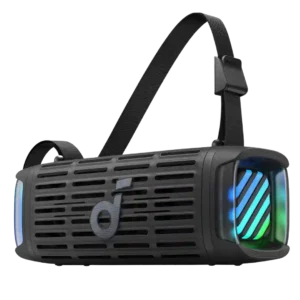
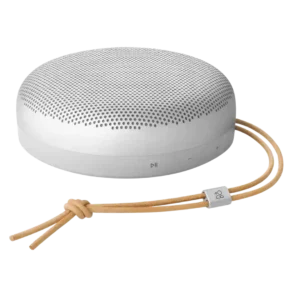
Average score
P1
Product 1: Soundcore Boom 3i
4.3
P2
Product 2: Bang & Olufsen Beosound A1...
4.3
AirPlay compatibility
P1Product 1: Soundcore Boom 3i
No score yet
P2
Product 2: Bang & Olufsen Beosound A1...
2.0
AirPlay compatibility was a clear omission in the Macworld review, which said the lack of Wi-Fi or AirPlay kept it from being perfect for Apple users.
App reliability
P1
Product 1: Soundcore Boom 3i
4.8
The Soundcore app was consistently praised as useful, thorough, quick to connect, feature-rich, and among the strongest parts of the product.
P2
Product 2: Bang & Olufsen Beosound A1...
4.6
The B&O app was repeatedly praised as responsive, simple, flexible, and among the best companion apps in the category.
Backwards compatibility
P1Product 1: Soundcore Boom 3i
No score yet
P2
Product 2: Bang & Olufsen Beosound A1...
4.6
Backwards compatibility was a clear plus because multiple reviewers valued pairing the 3rd Gen with the older A1 2nd Gen.
Battery life (if portable)
P1
Product 1: Soundcore Boom 3i
4.0
Battery life is good but feature-dependent: some reviewers verified long runtime, while others reported much shorter real-world use with lights and BassUp.
P2
Product 2: Bang & Olufsen Beosound A1...
4.7
Battery life was a consistent strength, with reviewers calling the 24-hour figure credible, impressive, and in some tests conservative.
Bluetooth codec support
P1Product 1: Soundcore Boom 3i
No score yet
P2
Product 2: Bang & Olufsen Beosound A1...
4.4
Codec support was considered solid, with aptX Adaptive repeatedly framed as a welcome or high-quality advantage.
Bluetooth connection stability
P1
Product 1: Soundcore Boom 3i
4.9
Bluetooth stability was praised, with reviewers reporting reliable operation and no connection dropouts in typical use.
P2
Product 2: Bang & Olufsen Beosound A1...
4.8
Connection stability was consistently positive, with reviewers reporting no pairing or dropout issues in normal testing.
Bluetooth connectivity
P1
Product 1: Soundcore Boom 3i
4.5
Bluetooth connectivity was described as relevant, stable, and strong, with reviewers emphasizing Bluetooth 5.3 and dependable connection behavior.
P2
Product 2: Bang & Olufsen Beosound A1...
3.8
General Bluetooth connectivity was mostly positive for quick pairing, but one reviewer criticized the lack of Auracast as a missed futureproofing opportunity.
Bluetooth range
P1
Product 1: Soundcore Boom 3i
4.8
Bluetooth range was praised by reviewers who found the connection stronger or better than typical compact-speaker expectations.
P2
Product 2: Bang & Olufsen Beosound A1...
3.7
Bluetooth range was workable but not exceptional, with one review keeping it near the same room and another noting dropouts only near the end of a garden test.
Cabinet construction / bracing
P1
Product 1: Soundcore Boom 3i
4.7
Construction quality was generally praised for tough plastic, sturdy structure, solid feel, and build quality that suited rough outdoor use.
P2
Product 2: Bang & Olufsen Beosound A1...
4.9
Construction quality was repeatedly praised for premium materials, flawless finishing, and a substantial feel.
Charging time
P1
Product 1: Soundcore Boom 3i
4.4
Charging time was viewed positively by one reviewer who called the three-hour charge process quick for this class.
P2
Product 2: Bang & Olufsen Beosound A1...
2.8
Charging time was a weak spot because reviewers described the roughly three-hour charge as leisurely or on the long side.
Cohesive presentation
P1
Product 1: Soundcore Boom 3i
4.4
Cohesion was usually positive for casual listening, with reviewers calling it balanced, lively, satisfying, or great, while not audiophile-grade.
P2
Product 2: Bang & Olufsen Beosound A1...
5.0
Cohesion was praised, with reviewers describing the presentation as unified, whole, and remarkably cohesive.
Control button responsiveness
P1
Product 1: Soundcore Boom 3i
4.8
Button responsiveness was praised for tactile feedback and reliable activation.
P2
Product 2: Bang & Olufsen Beosound A1...
4.8
Physical controls were praised for positive, responsive, clicky action.
Design and aesthetics
P1
Product 1: Soundcore Boom 3i
4.0
Design reactions were mixed: reviewers liked the unique rugged look and colors, but some called the grille polarizing or the body bomb-like.
P2
Product 2: Bang & Olufsen Beosound A1...
4.9
Design and aesthetics were one of the strongest consensus points, with nearly every reviewer praising the premium, elegant, luxurious look and feel.
Detail retrieval
P1
Product 1: Soundcore Boom 3i
4.1
Detail retrieval ranged from strong outdoor vocal/hi-hat detail to weaker orchestral separation or muffled default tuning.
P2
Product 2: Bang & Olufsen Beosound A1...
4.6
Detail retrieval was a major strength across reviews, with repeated praise for high detail, clarity, and track-level separation.
Distortion at high volume
P1
Product 1: Soundcore Boom 3i
3.2
High-volume and water playback had limits: reviewers noted splashy bass in water and crispy clarity around higher volume levels.
P2
Product 2: Bang & Olufsen Beosound A1...
4.8
High-volume behavior was praised for staying controlled, with reviewers reporting little distortion even when the speaker was pushed.
Drop resistance durability
P1
Product 1: Soundcore Boom 3i
4.6
Durability earned broad praise thanks to tough plastics, drop resistance, rubberized protection, and a build reviewers felt did not need babying.
P2
Product 2: Bang & Olufsen Beosound A1...
3.2
Durability was mixed: reviewers liked the tough build and survival in bags, but several warned the metal finish can scuff and the speaker should not be thrown around like rugged JBL models.
Dust resistance rating
P1
Product 1: Soundcore Boom 3i
4.9
Dust resistance is positively tied to the rugged IP68 build, with reviewers describing it as dustproof or fully dustproof.
P2Product 2: Bang & Olufsen Beosound A1...
No score yetDynamic headroom
P1
Product 1: Soundcore Boom 3i
4.3
Dynamic performance was above average for size, with praise for keeping bass at higher volume but some lost nuance at loud settings.
P2
Product 2: Bang & Olufsen Beosound A1...
3.8
Dynamic headroom was good but not class-leading: some reviews praised dynamism, while others wanted stronger quiet-to-loud swings.
EQ customization
P1
Product 1: Soundcore Boom 3i
4.6
EQ customization was a standout, with reviewers repeatedly praising the 9-band/custom EQ as effective, easy, and important for unlocking better sound.
P2
Product 2: Bang & Olufsen Beosound A1...
4.6
EQ customization was a standout, with reviewers praising the visual sound control as helpful, easy, and unusually gratifying.
Everyday usability
P1
Product 1: Soundcore Boom 3i
4.6
Everyday usability was strong because reviewers used it beyond outdoor trips, including cars, rooms, camping, and general daily use.
P2
Product 2: Bang & Olufsen Beosound A1...
5.0
Everyday usability was praised for simple operation and controls that were easy to use without friction.
Float capability
P1
Product 1: Soundcore Boom 3i
4.7
Float capability was the signature strength, with many reviewers praising upright floating playback and music that remains usable in water.
P2Product 2: Bang & Olufsen Beosound A1...
No score yetFrequency response balance
P1
Product 1: Soundcore Boom 3i
3.9
Sound balance is generally fun and bass-forward, but reviewers split between praising strong bass and noting dark, harsh, muffled, or bass-heavy tuning.
P2
Product 2: Bang & Olufsen Beosound A1...
4.3
The tonal balance was widely praised for rich, controlled bass, clear mids, and refined highs, with a few caveats around ultimate bass depth and one first-impression review finding it flat.
Handle or strap quality
P1
Product 1: Soundcore Boom 3i
4.4
The strap and carry hardware were mostly useful and convenient, though one reviewer warned that loose strap clamps could slide off.
P2
Product 2: Bang & Olufsen Beosound A1...
5.0
The leather strap drew praise as expertly crafted and part of the speaker’s premium look.
Home theater integration
P1
Product 1: Soundcore Boom 3i
4.5
Home theater integration had limited but positive evidence from one reviewer who paired it with a projector and said it performed admirably.
P2Product 2: Bang & Olufsen Beosound A1...
No score yetInter-speaker connectivity
P1
Product 1: Soundcore Boom 3i
4.5
Inter-speaker connectivity was useful for stereo pairing or louder playback, and reviewers liked the fuller, more open result from paired units.
P2
Product 2: Bang & Olufsen Beosound A1...
4.8
Inter-speaker connectivity was praised where tested, especially for quick stereo setup and pairing with another A1.
Latency with TV (lip sync)
P1
Product 1: Soundcore Boom 3i
4.4
Latency feedback was mostly positive for casual video use, but one reviewer still found enough lag to make mobile gaming a weak fit.
P2Product 2: Bang & Olufsen Beosound A1...
No score yetLED lighting effects
P1
Product 1: Soundcore Boom 3i
4.0
LED effects impressed several reviewers with bright, dynamic lighting, though two found the lights intense or inconsistent.
P2Product 2: Bang & Olufsen Beosound A1...
No score yetLighting effects
P1
Product 1: Soundcore Boom 3i
4.2
Lighting effects were often framed as fun, customizable, and visually distinctive, but some reviewers preferred leaving them off.
P2Product 2: Bang & Olufsen Beosound A1...
No score yetLoudness / maximum volume
P1
Product 1: Soundcore Boom 3i
4.6
Reviewers repeatedly found the Boom 3i loud for its size, with enough output for outdoor use, small gatherings, apartments, rooms, and backyard-style situations.
P2
Product 2: Bang & Olufsen Beosound A1...
3.8
Reviewers generally found the small speaker louder than expected for its size, but several cautioned that it is not built to fill bigger rooms or outmuscle larger rivals.
Low-volume performance
P1
Product 1: Soundcore Boom 3i
4.6
Low-volume performance was praised in camping use, where the speaker stayed clear and audible at minimum volume.
P2Product 2: Bang & Olufsen Beosound A1...
No score yetMicrophone
P1Product 1: Soundcore Boom 3i
No score yet
P2
Product 2: Bang & Olufsen Beosound A1...
4.0
The microphone system was tied to clearer, more transparent voice calls in review evidence.
Multi-speaker pairing reliability
P1
Product 1: Soundcore Boom 3i
4.4
Multi-speaker pairing is viewed as useful, with praise for direct pairing controls and TWS/PartyCast as convenient extras.
P2
Product 2: Bang & Olufsen Beosound A1...
5.0
One reviewer tested pairing across generations and found the stereo-pairing experience impressive and reliable.
Multipoint connectivity
P1
Product 1: Soundcore Boom 3i
4.5
Multipoint was treated as a practical social feature because two devices can stay connected so more than one person can control music.
P2
Product 2: Bang & Olufsen Beosound A1...
4.8
Multipoint was positively received, especially in hands-on switching tests where it worked easily and flawlessly.
Omnidirectional sound
P1Product 1: Soundcore Boom 3i
No score yet
P2
Product 2: Bang & Olufsen Beosound A1...
4.4
Omnidirectional sound was generally positive, though one reviewer disputed true 360-degree behavior while still finding placement easy.
On-device controls
P1
Product 1: Soundcore Boom 3i
4.9
On-device controls were praised as complete and reliable, including direct buttons and touch controls that worked perfectly.
P2
Product 2: Bang & Olufsen Beosound A1...
5.0
On-device controls were praised as nice and clicky in direct use.
Power bank function
P1
Product 1: Soundcore Boom 3i
1.9
The lack of power-bank/reverse-charging support was a downside for outdoor use, especially camping or phone top-ups.
P2Product 2: Bang & Olufsen Beosound A1...
No score yetPrice / value for money
P1
Product 1: Soundcore Boom 3i
4.9
Price/value comments were very positive when discounts were considered, with reviewers calling the deal or proposition appealing.
P2
Product 2: Bang & Olufsen Beosound A1...
3.7
Price opinion was split: many reviewers saw the speaker as expensive, but several argued its build, sound, and longevity justified the premium.
Privacy and data
P1Product 1: Soundcore Boom 3i
No score yet
P2
Product 2: Bang & Olufsen Beosound A1...
4.0
Privacy/data sentiment was lightly positive because the removal of Alexa also means Amazon’s assistant is not always listening.
Setup simplicity
P1
Product 1: Soundcore Boom 3i
4.6
Setup was described as simple, including straightforward Bluetooth pairing and less-complicated-than-expected strap assembly.
P2
Product 2: Bang & Olufsen Beosound A1...
4.5
Setup was described as quick and issue-free in one review’s pairing experience.
Smart assistant integration (Alexa
P1Product 1: Soundcore Boom 3i
No score yet
P2
Product 2: Bang & Olufsen Beosound A1...
2.6
Alexa and voice-assistant support were mixed-to-negative: some reviewers did not miss it, while others treated its removal as a lost useful feature.
Smart features
P1
Product 1: Soundcore Boom 3i
4.5
Smart extras such as Buzz Clean, emergency alarm, voice amplifier, white noise, and app controls were repeatedly praised as useful outdoor features.
P2
Product 2: Bang & Olufsen Beosound A1...
4.3
Smart features were mixed: the app content and radio features impressed one reviewer, while another found the overall package simple rather than feature-packed.
Speakerphone quality
P1Product 1: Soundcore Boom 3i
No score yet
P2
Product 2: Bang & Olufsen Beosound A1...
4.4
Speakerphone performance was praised, with reviewers describing calls as clear, successful, and even a ten-out-of-ten hands-free experience.
Status indicators
P1
Product 1: Soundcore Boom 3i
3.9
Status indicators were adequate rather than exceptional, with reviewers noting rough battery estimates and useful small button LEDs.
P2
Product 2: Bang & Olufsen Beosound A1...
3.3
Status indicators worked but drew mild criticism for size and viewing angle.
Stereo imaging accuracy
P1
Product 1: Soundcore Boom 3i
2.4
The mono presentation limits stereo accuracy, with one reviewer saying dynamics and separation suffer because of the mono design.
P2
Product 2: Bang & Olufsen Beosound A1...
4.4
Imaging and spatial organization were praised for openness and instrument separation, though one review noted limited scale compared with larger rivals.
Sustainability
P1
Product 1: Soundcore Boom 3i
4.5
Sustainability evidence was limited to positive first-impression praise for minimal, recyclable packaging.
P2
Product 2: Bang & Olufsen Beosound A1...
4.8
Sustainability stood out through repairability, replaceable battery comments, and praise for longevity-focused design.
USB-C charging
P1
Product 1: Soundcore Boom 3i
4.4
USB-C charging was practical and convenient, especially because reviewers could use a phone charger, though it is charging-only.
P2
Product 2: Bang & Olufsen Beosound A1...
5.0
USB-C charging was praised when paired with simultaneous laptop playback, making the port more useful than simple charging.
Value for money
P1
Product 1: Soundcore Boom 3i
4.6
Value for money was a major strength, especially where reviewers compared feature count, ruggedness, and sound against the price.
P2
Product 2: Bang & Olufsen Beosound A1...
3.1
Value-for-money sentiment was more divided than price alone, ranging from strong praise in one A1 review to doubts from What Hi-Fi and Expert Reviews at the current price.
Voice clarity
P1
Product 1: Soundcore Boom 3i
4.6
Vocal clarity was usually praised, especially with BassUp or EQ adjusted, and reviewers said vocals remained audible and well-defined.
P2
Product 2: Bang & Olufsen Beosound A1...
4.7
Vocal reproduction was a consistent strength, with reviewers praising intelligibility, definition, and natural-sounding voices in music.
Water resistance rating
P1
Product 1: Soundcore Boom 3i
4.9
Water resistance is one of the strongest points, with reviewers praising waterproofing, saltwater protection, and survival after pool, river, or sea exposure.
P2
Product 2: Bang & Olufsen Beosound A1...
4.9
Water resistance was strongly supported by outdoor-use praise and hands-on dunk or sink tests that reported no damage.
Weight convenience
P1
Product 1: Soundcore Boom 3i
4.6
Reviewers liked the small, light body and found it easy to carry, conceal, pack, or use as a travel companion.
P2
Product 2: Bang & Olufsen Beosound A1...
4.7
Portability was strong overall: reviewers liked the bag-friendly size and balanced heft, though it is not the lightest compact speaker.
Wi-Fi streaming reliability
P1Product 1: Soundcore Boom 3i
No score yet
P2
Product 2: Bang & Olufsen Beosound A1...
2.0
Wi-Fi streaming was a drawback for Apple-focused users because the speaker lacks Wi-Fi and AirPlay support.
Wired input
P1
Product 1: Soundcore Boom 3i
2.0
The lack of wired input was a clear drawback for reviewers who wanted aux or analog playback in addition to Bluetooth.
P2
Product 2: Bang & Olufsen Beosound A1...
4.9
USB-C wired audio was praised as a meaningful bonus, especially because reviewers heard clearer, punchier performance through a cable.