The Soundcore app is repeatedly described as useful, packed, clean, or easy to connect, giving access to EQ, lighting, alarms, voice features, firmware, and sound effects.
Audio-format evidence is limited to codec-style support, with reviews mentioning AAC and SBC rather than broader file-format playback.
Compatibility with other speakers is mixed: one review says it cannot pair with older Boom versions in that context, while another says PartyCast 2.0 works with Boom 2 models.
The auxiliary input keeps older gear in play, with reviews specifically mentioning legacy devices such as older iPods and other wired sources.
Battery feedback is mixed but serviceable. The 16-hour rating appears often, yet real-world results drop with higher volume, BassUp, and lighting, with some tests closer to 6 to 12 hours.
Battery life was one of the clearest strengths in the supplied reviews, with a 30-hour figure repeatedly called out in very positive terms.
Codec evidence is modest but positive: reviewers identify Bluetooth 5.3 and AAC/SBC support, without evidence of higher-end codecs such as LDAC or aptX.
Codec support was a clear plus, with reviews repeatedly mentioning aptX HD and related Bluetooth audio support.
Bluetooth stability is good. Reviewers reported reliable Bluetooth, stable connections, no lost connection indoors or outdoors, and strong performance through walls.
One reviewer explicitly described the Bluetooth performance as very good, though no long-range or multi-device stability testing was discussed.
Bluetooth range is specifically praised in two reviews, including a 100-foot range claim/test and strong performance through indoor walls.
Construction is rugged and solid, with repeated references to hard plastic, sturdy plastics, rubber bumpers/end caps, a brick-like exterior, and durable outdoor build.
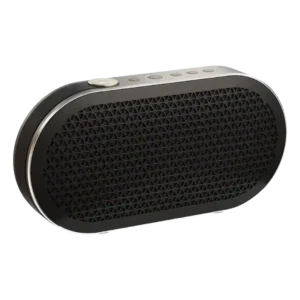
Reviews repeatedly praised the Katch G2's construction quality, emphasizing its metal-heavy build, premium finish, and sturdier feel than many rivals.
Charging time is decent but not exceptional. Direct tests cite three hours in one review and four hours in another.
One review said the battery can go from empty to full in roughly two hours, which was treated as reasonably quick even without fast-charge tricks.
The overall presentation is fun and cohesive for casual listening, with praise for balanced blending and lively sound, though PCMag found it compressed on some tracks.
Positive reviews described the presentation as controlled, easy to listen to, and musically coherent rather than aggressively hyped.
Control responsiveness is positive where directly discussed, with reviewers saying the top controls worked perfectly or had responsive, tactile button feedback.
The top-mounted controls were described as clicky and doing exactly what users would expect.
Design reactions are mixed. Reviewers liked the unique, compact, colorful build, but some found the grille polarizing or the shape less attractive.
Design was one of the strongest recurring positives. Reviewers repeatedly highlighted the speaker's classy, distinctive industrial styling.
Detail retrieval is mixed. Some reviewers praised nuance, vocal detail, and above-average clarity; PCMag found orchestral details hard to discern.
Detail and nuance were major strengths in the positive reviews, which praised the speaker's resolution, textural insight, and ability to separate musical elements clearly.
High-volume control is mixed. Some reviews heard garbling, harshness, splash-related artifacts in water, or loss of nuance at higher levels, while others said bass held up well.
High-volume behavior drew criticism. One review said the bass gets woolly and congested when really cranked, while another said the speaker can become unlistenable near maximum due to audible pumping.
Drop durability is well supported, with several reviews citing one-meter or three-foot drop resistance, hard plastic construction, and rugged outdoor use.
One reviewer described the Katch G2 as built like a tank, suggesting strong physical robustness, though no formal drop testing was discussed.
Dust protection is also strongly supported. Multiple reviews cite IP68 dustproofing, dust resistance, and cleaning features meant for sand or debris after outdoor use.
One review explicitly stated that the speaker has no dust resistance.
Dynamic headroom is decent for size but limited when pushed. Reviews cite above-average dynamic range and retained bass, but also lost dynamics in mono playback.
The Katch G2 can sound dynamic and room-filling, but one reviewer said headroom changes versus the prior model were limited and high-volume control is not perfect.
Energy efficiency evidence is narrow. One review specifically notes BassUp and lighting increase battery drain by about 5 to 10 percent each.
EQ customization is one of the strongest software features, with repeated evidence for presets, nine-band or custom EQ controls, and meaningful sound tuning.
EQ control is limited. Reviews noted that users are restricted to onboard presets rather than deeper custom tuning.
Everyday usability is strong because reviewers used or recommended it for camping, travel, poolside use, smaller rooms, casual home listening, and outdoor gatherings.
The Katch G2 was described as easy to use in daily life, with simple controls, stable footing, and a handle that makes moving it around the house easier.
Float capability is the product’s standout feature. Reviewers repeatedly emphasize upright floating playback that keeps the drivers facing upward and audible in water.
The tonal balance is generally bass-forward and fun rather than neutral. Reviewers liked the punch and clarity after EQ, but some found the default sound dark, muffled, harsh, or bass-heavy.
Some reviews praised the sound as smooth, refined, and not harsh across the range, but one critical review found it thin, bright, and brittle at higher levels.
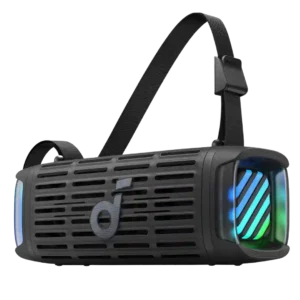
The included strap generally helps portability and mounting, with several reviewers praising it for carrying or attaching the speaker, though one noted the clamp pieces could slide off.
The hidden handle was a standout design feature, praised as clever and useful, though one reviewer noted some stiffness.
Home theater usefulness is limited. One review used it successfully with a projector, while another warned about latency and no low-latency gaming mode.
Inter-speaker connectivity is strong, with TWS stereo pairing, PartyCast, and left/right two-speaker modes mentioned across many reviews.
Stereo pairing with a second Katch G2 was mentioned across several reviews and presented as a meaningful expansion option.
Latency is mostly acceptable for casual video use, with several reviewers saying it was not an issue, though one review noted slight lag and no dedicated low-latency gaming mode.
One reviewer measured Bluetooth latency at about 50 ms and described it as about as good as it gets in testing, suggesting strong sync performance.
The LED/RGB lighting is widely noted as a fun outdoor-party extra. Reviewers liked the customization and brightness, though a few preferred to turn it off.
Lighting customization is broadly supported through app modes, color options, rhythm-sync presets, brightness control, and the ability to turn the lights off.
Reviewers consistently found the Boom 3i loud for its compact size, with repeated references to 50W output, strong outdoor volume, and room-filling or party-ready playback.
The speaker can play surprisingly loud and fill sizable rooms, though one reviewer only found a small loudness advantage over the prior generation.
Low-volume evidence is limited but positive: one review found the speaker clearly audible even at minimum volume while camping.
One review explicitly argued that the speaker makes more sense at lower listening levels, where its clarity is easier to appreciate before high-volume shortcomings dominate.
Microphone-related functionality is indirect. Reviews describe phone-based voice amplification or PA-style recording, while one says a speakerphone is missing.
Multi-speaker support is a plus, with PartyCast/TWS references and quick pairing in some tests. Stereo pairing generally requires another compatible or identical speaker depending on the mode.
Multipoint is well supported across the review set, with several reviewers noting two-device connectivity along with stereo or PartyCast options.
Drivers on both sides and 360-degree behavior were explicitly mentioned, supporting a broader sound spread than a simple front-firing design.
On-device controls are well covered, with reviewers pointing to top-mounted control groups, lighting/BassUp buttons, playback controls, and easy-to-use physical buttons.
On-speaker operation is central to the experience, with reviews noting physical buttons for power, volume, Bluetooth, and EQ selection.
Power-bank capability is absent. Reviewers explicitly say it cannot charge a phone, cannot top off a device, or is not reverse-chargeable.
The speaker can charge another device, and that power-bank behavior was explicitly mentioned in two reviews.
Price impressions are favorable, especially at discounts. Reviewers repeatedly call it a good or strong value against similar outdoor Bluetooth speakers.
Value was highly price-sensitive in the supplied reviews. One review said it was worth a look around £299, while another called it one of the worst values at its asking price.
Privacy/data evidence is limited but favorable: PCMag says creating a Soundcore account is encouraged but not required to use the app.
Remote control through the app is useful rather than essential, with support for playback, volume, power, and other settings from a phone.
Setup appears straightforward in the available evidence, including simple Bluetooth pairing and a strap that was easier to assemble than expected.
Reviews framed the speaker as straightforward to set up and operate, thanks to its simple control layout and app-free approach.
Smart/outdoor utility features are unusually rich, including Buzz Clean, emergency alarm, voice amplifier, white-noise/sound effects, app control, and lighting options.
Reviews portrayed the Katch G2 as intentionally simple rather than feature-rich, with no app and little extra smart functionality.
Speakerphone functionality is weak because one review specifically says the only missing feature is a speakerphone.
Status indicators are adequate, with app battery estimates or bars, battery percentage, button lights, and auto-power settings mentioned in several reviews.
Stereo performance is limited from one unit because reviewers describe mono playback, but the woofer/tweeter setup and optional two-speaker pairing help improve openness and separation.
Supportive reviews described stable separation and a real sense of left and right that feels bigger than the enclosure suggests.
Sustainability evidence is limited to packaging, with one review noting minimal plastic and recyclable packaging.
USB-C charging is clearly supported across reviews, though the port is generally described as charging-only rather than a wired audio or power-output port.
USB-C charging is absent. Reviews explicitly said the Katch G2 uses a barrel-style charger instead.
Value is a recurring strength. Several reviewers describe the Boom 3i as a strong buy, a steal, or better value than comparable compact outdoor speakers.
Perceived value varied sharply by reviewer and price context. At roughly £299 it was seen as worthwhile, but another review judged it very poor value overall.
Vocals and spoken content are generally clear for casual listening. Multiple reviewers mentioned audible vocals, defined voices, or midrange clarity even with stronger bass engaged.
One music-focused review highlighted clear, recognizable vocals with a smooth presentation.
Water resistance is one of the clearest strengths, with repeated IP68, waterproof, submersion, pool, river, saltwater, and beach-use evidence across the reviews.
Multiple reviews said the speaker lacks meaningful water protection or an IP rating, making it a poor fit for the beach, pool, or other wet environments.
Portability is a strength. Reviewers describe the speaker as compact, light, easy to carry, and close to travel-bottle size, though not as tiny as some rivals.
Portability is helped by the handle, but reviewers still described the speaker as heavy, brick-like, or slightly heavier than the original.
Wired input is a clear weakness. Reviewers repeatedly state there is no aux or wired audio input and that the USB-C port is only for charging.
The 3.5mm auxiliary input was consistently treated as a plus, especially for connecting older or wired source devices.