Average score
P1
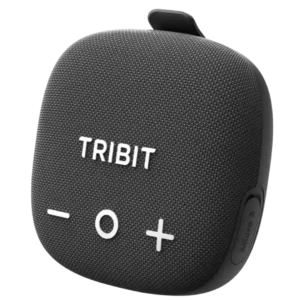
Product 1: Tribit StormBox Micro 3
4.3
P2
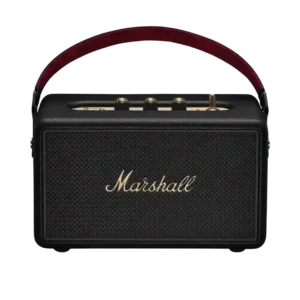
Product 2: Marshall Kilburn III Portable Bluetooth...
4.0
App reliability
P1
Product 1: Tribit StormBox Micro 3
4.5
The app experience was viewed positively overall, with instant connection and solid EQ control, though Soundcore was considered more feature-rich.
P2
Product 2: Marshall Kilburn III Portable Bluetooth...
4.0
App impressions are mostly positive when the Marshall app works, with useful EQ and firmware support, but one review had trouble finalizing the Kilburn III connection.
Audio format support
P1Product 1: Tribit StormBox Micro 3
No score yet
P2
Product 2: Marshall Kilburn III Portable Bluetooth...
2.5
Audio format support is a limitation because reviewers point to missing USB Audio and missing hi-res Bluetooth codec support.
Backwards compatibility
P1
Product 1: Tribit StormBox Micro 3
2.0
Backwards compatibility is a clear weakness because reviewers complained it cannot pair with the Micro 2 or other Tribit models.
P2Product 2: Marshall Kilburn III Portable Bluetooth...
No score yetBattery life (if portable)
P1
Product 1: Tribit StormBox Micro 3
4.6
Battery life was one of the strongest points, with reviewers calling the 24-hour claim impressive and reporting strong real-world endurance.
P2
Product 2: Marshall Kilburn III Portable Bluetooth...
4.9
Reviewers strongly agree battery life is a standout, repeatedly praising the 50-hour claim and multi-day real-world stamina, with one test reporting about 25 hours at moderate volume.
Bluetooth codec support
P1
Product 1: Tribit StormBox Micro 3
2.5
Codec support is a limitation: the review evidence specifically notes the lack of premium codecs such as LDAC or aptX Adaptive.
P2
Product 2: Marshall Kilburn III Portable Bluetooth...
2.5
Codec support is consistently treated as a limitation because reviewers note the lack of higher-resolution Bluetooth options such as LDAC or aptX Adaptive.
Bluetooth connection stability
P1
Product 1: Tribit StormBox Micro 3
4.5
Bluetooth stability was positively reviewed, with no-dropout testing and comments that the connection felt modern, reliable, and stable.
P2
Product 2: Marshall Kilburn III Portable Bluetooth...
4.8
Bluetooth setup and stability are praised in the reviews that evaluate it, including easy pairing, a solid connection, and a simple pairing process.
Bluetooth connectivity
P1
Product 1: Tribit StormBox Micro 3
4.7
Bluetooth connectivity was viewed as quick and dependable, with reviewers emphasizing fast pairing and a smoother everyday experience.
P2Product 2: Marshall Kilburn III Portable Bluetooth...
No score yetBluetooth range
P1
Product 1: Tribit StormBox Micro 3
4.2
Bluetooth range drew positive comments for keeping music going across rooms, outdoors, or across a lake without needing the phone nearby.
P2
Product 2: Marshall Kilburn III Portable Bluetooth...
5.0
The only opinionated range test is positive, with one reviewer saying the speaker exceeded the stated 10-meter range around the house.
Cabinet construction / bracing
P1
Product 1: Tribit StormBox Micro 3
4.5
Build and cabinet quality were praised as dense, premium-feeling, resistant, and helpful for bass control.
P2
Product 2: Marshall Kilburn III Portable Bluetooth...
4.9
Build quality is widely praised as solid, durable, and premium, with reviewers highlighting the substantial cabinet feel and sturdy hardware.
Charging time
P1
Product 1: Tribit StormBox Micro 3
4.5
Charging speed was consistently praised, especially the quick top-up performance and faster charging versus the prior model.
P2
Product 2: Marshall Kilburn III Portable Bluetooth...
3.4
Charging is mixed: quick-charge support is appreciated, but reviewers also note three-hour full charges, much slower charging with weak adapters, and slower charging while playing music.
Cohesive presentation
P1
Product 1: Tribit StormBox Micro 3
4.5
The overall presentation was praised as balanced, clear, full-bodied, and consistent rather than merely loud.
P2
Product 2: Marshall Kilburn III Portable Bluetooth...
4.7
Across reviews, the Kilburn III is repeatedly described as energetic, room-filling, cohesive, and able to handle a wide variety of music well.
Control button responsiveness
P1
Product 1: Tribit StormBox Micro 3
4.6
Controls were described as responsive, large, and premium-feeling, with one reviewer saying all touch controls worked perfectly.
P2
Product 2: Marshall Kilburn III Portable Bluetooth...
4.9
Physical controls are a major strength, with reviewers praising the knobs, switches, tactile buttons, and upgraded control layout.
Design and aesthetics
P1
Product 1: Tribit StormBox Micro 3
3.3
Design sentiment was mixed: the rounded look and logo were acceptable, but reviewers wanted better color options and subtler branding.
P2
Product 2: Marshall Kilburn III Portable Bluetooth...
4.9
Design is one of the strongest consensus points, with reviewers repeatedly praising the retro Marshall aesthetic, premium detailing, and statement-piece presence.
Detail retrieval
P1
Product 1: Tribit StormBox Micro 3
3.2
Detail retrieval is an area where the Micro 3 gives up ground to pricier speakers, despite otherwise good sound for its size.
P2
Product 2: Marshall Kilburn III Portable Bluetooth...
4.5
Detail retrieval is mostly praised for clarity and instrumental texture, though one review notes a small loss of upper-mid detail.
Distortion at high volume
P1
Product 1: Tribit StormBox Micro 3
3.4
High-volume behavior is mixed: reviewers reported compression or clipping with demanding bass, but one reviewer praised the speaker for maintaining consistency.
P2
Product 2: Marshall Kilburn III Portable Bluetooth...
4.9
High-volume distortion control earns strong praise, with reviewers repeatedly saying the speaker stays clean or distortion-free when pushed loud.
Drop resistance durability
P1
Product 1: Tribit StormBox Micro 3
4.6
Drop durability received strong praise, including no-damage drop experiences and repeated confidence that the speaker is built for outdoor use.
P2
Product 2: Marshall Kilburn III Portable Bluetooth...
3.5
Drop resistance receives limited support from one reviewer who did not test drops but judged the build likely to survive minor falls.
Dust resistance rating
P1
Product 1: Tribit StormBox Micro 3
4.5
Dust resistance was treated as part of the Micro 3's practical ruggedness rather than a standalone test point.
P2
Product 2: Marshall Kilburn III Portable Bluetooth...
3.9
Dust resistance is generally seen as improved and useful for sand, dirt, and outdoor use, though the IP54 rating is not framed as fully rugged.
Dynamic headroom
P1
Product 1: Tribit StormBox Micro 3
4.2
Dynamic performance received positive evidence from one reviewer who heard finesse in instrument re-entry and solid dynamics.
P2
Product 2: Marshall Kilburn III Portable Bluetooth...
5.0
Dynamic headroom is praised through reports of large-room output, energetic sound, and plenty of extra volume without losing control.
Energy efficiency
P1
Product 1: Tribit StormBox Micro 3
4.5
Energy efficiency evidence was positive, with one reviewer noting the battery barely moves after hours at moderate indoor volume.
P2
Product 2: Marshall Kilburn III Portable Bluetooth...
4.5
Energy efficiency is supported by one review's observation that the major runtime gain comes from surprisingly small battery-capacity growth.
EQ customization
P1
Product 1: Tribit StormBox Micro 3
4.6
EQ customization was one of the most consistently praised features, with reviewers valuing presets, nine-band control, and custom tuning.
P2
Product 2: Marshall Kilburn III Portable Bluetooth...
4.6
EQ customization is a clear strength, combining responsive bass/treble knobs with app presets, five-band EQ, placement compensation, and M-button customization.
Everyday usability
P1
Product 1: Tribit StormBox Micro 3
5.0
Reviewers repeatedly described the Micro 3 as practical and easy to use in daily life, travel, outdoor, and desk scenarios.
P2
Product 2: Marshall Kilburn III Portable Bluetooth...
5.0
Everyday usability is praised because the analog controls are intuitive, easy to live with, and accessible to users without a learning curve.
Frequency response balance
P1
Product 1: Tribit StormBox Micro 3
4.5
Most reviewers praised the tonal balance as fuller, punchier, and cleaner than expected from a tiny speaker, with only XBass/muffled tuning caveats.
P2
Product 2: Marshall Kilburn III Portable Bluetooth...
4.6
Frequency balance is mostly praised for tight bass, clear mids, and lively highs, though a few reviews find it somewhat bassy or middy in places.
Google
P1Product 1: Tribit StormBox Micro 3
No score yet
P2
Product 2: Marshall Kilburn III Portable Bluetooth...
4.5
Google Fast Pair receives limited but positive mention as a useful setup convenience.
Handle or strap quality
P1
Product 1: Tribit StormBox Micro 3
4.8
The strap was praised as durable, secure, and useful for bikes, backpacks, and other non-magnetic mounting situations.
P2
Product 2: Marshall Kilburn III Portable Bluetooth...
4.8
The handle and strap are repeatedly praised as comfortable, secure, stylish, and helpful for moving a relatively heavy speaker.
Home theater integration
P1Product 1: Tribit StormBox Micro 3
No score yet
P2
Product 2: Marshall Kilburn III Portable Bluetooth...
3.5
Home theater integration is speculative but positive in one review, which notes potential use as Bluetooth surround speakers with compatible Marshall soundbars.
Inter-speaker connectivity
P1
Product 1: Tribit StormBox Micro 3
5.0
Inter-speaker connectivity was praised for fast TWS connection in testing.
P2
Product 2: Marshall Kilburn III Portable Bluetooth...
1.9
Inter-speaker connectivity is a repeated weakness because reviewers criticize the lack of built-in multi-speaker systems, stereo pairing, or reliable Auracast-style pairing.
Loudness / maximum volume
P1
Product 1: Tribit StormBox Micro 3
4.1
Reviewers found the Micro 3 loud for its size, with stronger output than expected, though one comparison noted it trails the Boom Go3i for sheer volume.
P2
Product 2: Marshall Kilburn III Portable Bluetooth...
4.8
Maximum loudness is a major strength, with reviewers describing it as loud, room-filling, party-ready, and in some cases too loud for an apartment.
Low-volume performance
P1
Product 1: Tribit StormBox Micro 3
4.4
Low-volume performance was especially praised with XBass, where reviewers found it adds warmth and punch without overdriving the speaker.
P2
Product 2: Marshall Kilburn III Portable Bluetooth...
5.0
Low-volume performance is praised in the limited evidence available, especially for keeping richness, separation, and bass at modest listening levels.
Magnetic mounting
P1
Product 1: Tribit StormBox Micro 3
4.8
Magnetic mounting was the most widely praised design upgrade, with reviewers repeatedly calling it strong, versatile, clutch, and genuinely useful.
P2Product 2: Marshall Kilburn III Portable Bluetooth...
No score yetMicrophone
P1
Product 1: Tribit StormBox Micro 3
4.8
Microphone usefulness was praised for calls and conference-call scenarios, making the Micro 3 more versatile than mic-less competitors.
P2
Product 2: Marshall Kilburn III Portable Bluetooth...
2.0
Microphone support is a weakness because reviewers explicitly point out the lack of a built-in mic or speakerphone capability.
Multi-speaker pairing reliability
P1
Product 1: Tribit StormBox Micro 3
4.5
The dedicated TWS button was viewed as a meaningful improvement that makes pairing a second Micro 3 simpler.
P2
Product 2: Marshall Kilburn III Portable Bluetooth...
1.9
Multi-speaker pairing reliability is a weakness, with several reviewers criticizing missing stereo pairing, missing multi-speaker pairing, or glitchy connection behavior.
Omnidirectional sound
P1Product 1: Tribit StormBox Micro 3
No score yet
P2
Product 2: Marshall Kilburn III Portable Bluetooth...
4.8
Omnidirectional sound is widely praised, with reviewers describing clear sound at every angle, no dead spots, and useful 360-degree coverage.
On-device controls
P1
Product 1: Tribit StormBox Micro 3
4.8
On-device controls were praised for covering core playback, Bluetooth, XBass, and TWS functions without always needing the app.
P2
Product 2: Marshall Kilburn III Portable Bluetooth...
4.9
On-device controls are one of the most praised usability features, especially the tactile knobs, playback toggle, power switch, and direct adjustments without relying on the app.
Power bank function
P1
Product 1: Tribit StormBox Micro 3
4.2
Reverse charging was widely viewed as a useful backup feature, though one reviewer framed it as more emergency extra than main power bank.
P2
Product 2: Marshall Kilburn III Portable Bluetooth...
4.6
The power-bank function is treated as a useful bonus, though one reviewer warns that charge direction can be confusing when the speaker is off.
Price / value for money
P1
Product 1: Tribit StormBox Micro 3
4.7
Price/value was strongly praised across reviews, especially at sale pricing, with multiple reviewers calling it competitive or a bargain.
P2
Product 2: Marshall Kilburn III Portable Bluetooth...
4.0
Price/value is mixed-positive: reviewers call it expensive or pricier than predecessors, but many say the sound, features, and upgrades justify the cost.
Setup simplicity
P1
Product 1: Tribit StormBox Micro 3
5.0
Setup was considered very easy, with simple pairing and ready-in-seconds use mentioned in hands-on reviews.
P2
Product 2: Marshall Kilburn III Portable Bluetooth...
5.0
Setup simplicity gets limited but strong praise, mainly through Google Fast Pair and straightforward Bluetooth pairing.
Smart assistant integration (Alexa
P1Product 1: Tribit StormBox Micro 3
No score yet
P2
Product 2: Marshall Kilburn III Portable Bluetooth...
2.3
Smart assistant integration is weak because multiple reviews explicitly note the absence of voice assistants or voice control.
Smart features
P1
Product 1: Tribit StormBox Micro 3
4.3
Smart extras such as firmware updates, sleep timer, app controls, and practical additions were viewed as useful rather than gimmicky.
P2
Product 2: Marshall Kilburn III Portable Bluetooth...
2.2
Smart features are limited overall; reviewers note the lack of Wi-Fi, voice control, and broader smart-speaker functions, though the simple music-first approach appeals to some.
Speakerphone quality
P1
Product 1: Tribit StormBox Micro 3
4.8
Speakerphone quality was a standout because reviewers found calls clear and useful, especially compared with small speakers that omit a mic.
P2
Product 2: Marshall Kilburn III Portable Bluetooth...
2.0
Speakerphone quality cannot be praised because reviewers note the speaker lacks the built-in mic needed for hands-free calling.
Status indicators
P1
Product 1: Tribit StormBox Micro 3
3.4
Status indicators are mixed: illuminated controls help at night, but one reviewer wished more top buttons were lit.
P2
Product 2: Marshall Kilburn III Portable Bluetooth...
4.5
Status indicators are praised where discussed, especially the battery gauge and illuminated knob markers.
Stereo imaging accuracy
P1
Product 1: Tribit StormBox Micro 3
5.0
Stereo performance impressed reviewers when two units were paired, with both reviews describing the paired sound as strong and full-bodied.
P2
Product 2: Marshall Kilburn III Portable Bluetooth...
3.9
Stereo imaging is mixed: reviewers like the wide and immersive presentation, but some note limited true stereo separation or asymmetry.
Subwoofer
P1Product 1: Tribit StormBox Micro 3
No score yet
P2
Product 2: Marshall Kilburn III Portable Bluetooth...
4.8
Bass/subwoofer performance is strongly praised for resonance, rumble, and control, though some listeners may want to dial it down.
Surround sound simulation
P1Product 1: Tribit StormBox Micro 3
No score yet
P2
Product 2: Marshall Kilburn III Portable Bluetooth...
3.0
Surround-style presentation is limited; the speaker creates an immersive wide field, but reviewers caution it is not true surround sound.
Sustainability
P1Product 1: Tribit StormBox Micro 3
No score yet
P2
Product 2: Marshall Kilburn III Portable Bluetooth...
3.5
Sustainability has limited mixed support through the replaceable battery compartment, with uncertainty about replacement-battery availability.
USB-C charging
P1
Product 1: Tribit StormBox Micro 3
4.2
USB-C charging was viewed as practical, with reviewers liking one-cable convenience and faster USB-C charging despite plug caveats.
P2
Product 2: Marshall Kilburn III Portable Bluetooth...
4.4
USB-C support is praised for modern charging, fast-charging compatibility, and external-device charging, with some caveats around charger requirements.
Value for money
P1
Product 1: Tribit StormBox Micro 3
5.0
Value-for-money sentiment was extremely strong, with reviewers calling it one of the best values or a major win at its price.
P2
Product 2: Marshall Kilburn III Portable Bluetooth...
4.4
Value for money is mostly positive because reviewers often say the price is justified by sound, battery life, design, and upgrades, though one finds better value elsewhere.
Voice clarity
P1
Product 1: Tribit StormBox Micro 3
4.5
Vocals and mids were consistently described as clear, weighted, and not harsh, helping the speaker avoid the thin sound common to small models.
P2
Product 2: Marshall Kilburn III Portable Bluetooth...
5.0
Vocal clarity is praised in music playback, with reviewers calling vocals clear, crisp, forward, textured, and easy to hear in dense mixes.
Water resistance rating
P1
Product 1: Tribit StormBox Micro 3
4.6
Water resistance inspired confidence, with reviewers saying the IP68 upgrade adds reassurance and makes rain, splashes, and sink drops low-stress.
P2
Product 2: Marshall Kilburn III Portable Bluetooth...
3.7
Water resistance is mixed: IP54 is a meaningful improvement for splashes and rain, but reviewers repeatedly caution that it is not beach-rugged or IP67-level protection.
Weight convenience
P1
Product 1: Tribit StormBox Micro 3
4.7
Reviewers liked the compact, lightweight feel, repeatedly noting that it is easy to hold, carry, or fit into everyday use.
P2
Product 2: Marshall Kilburn III Portable Bluetooth...
3.2
Weight convenience is mixed: reviewers appreciate the strap and manageable carry feel, but repeatedly say it is hefty, backpack-unfriendly, or better for home/garden use.
Wi-Fi streaming reliability
P1Product 1: Tribit StormBox Micro 3
No score yet
P2
Product 2: Marshall Kilburn III Portable Bluetooth...
2.0
Wi-Fi streaming is a weakness because reviewers note there is no Wi-Fi connection and say its absence is a shame at this price.
Wired input
P1
Product 1: Tribit StormBox Micro 3
2.0
The only wired-input evidence was negative: one reviewer flagged the lack of aux input as something some buyers will care about.
P2
Product 2: Marshall Kilburn III Portable Bluetooth...
4.0
Wired input receives limited positive support, with one reviewer calling the aux input a good alternative to missing high-quality wireless audio options.