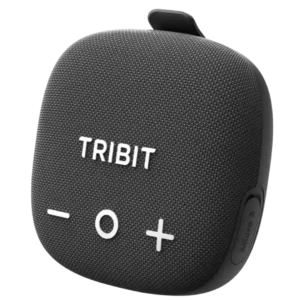
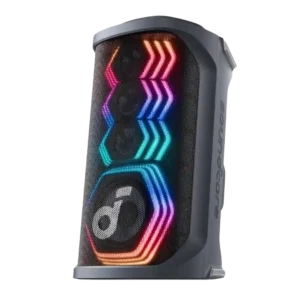
Output power is consistently cited at 13 watts, framed as strong for a very small speaker and an upgrade over the previous 10-watt model.
App reliability is supported by direct testing in one review where the app connected and stayed connected, plus another review that called the app simple and straightforward.
The Soundcore app is repeatedly called stable and genuinely useful, with fast connection, firmware updates, lighting control, and rich audio/karaoke settings that are easy to navigate.
Audio format support is basic and overlaps with codec evidence: reviewers cite SBC/AAC support while noting the lack of higher-end wireless codecs.
Backwards compatibility is mixed to weak because reviews note it is a successor to the Micro 2 but cannot pair with older or other Tribit models for TWS.
Battery life is one of the strongest supported attributes, with many reviews citing 24-hour claims and several describing real-world endurance as excellent or all-day practical.
Battery life is advertised around 12 hours, but multiple reviews call it average for the size; with lights, BassUp, and higher volume, real-world endurance is often closer to a single party session (roughly mid single-digits of hours).
Bluetooth codec support is basic: reviews cite SBC and AAC support while noting the lack of premium codecs such as LDAC or aptX Adaptive.
Bluetooth audio codec support is limited (SBC is commonly cited, with AAC also mentioned), and reviewers explicitly call out the absence of higher-resolution options like LDAC/aptX.
Bluetooth stability is consistently positive, with reviews citing Bluetooth 6.0, stable range, reliable connection, and direct testing without annoying dropouts.
Bluetooth performance is generally described as stable with low video lag; however, a few users mention occasional quirks (like multipoint handoffs or brief dropouts/behavior changes when powering mics).
Bluetooth range is repeatedly listed around 45 meters or about 140 to 148 feet, with reviewers framing it as useful for outdoor, multi-room, or ride scenarios.
Construction quality is described positively, with reviewers noting a dense cabinet, solid build, premium-feeling materials, and build quality that feels very good.
Charging time is strong for the category, with repeated two-hour full-charge claims and quick-charge evidence ranging from roughly three to four hours of playback after a short top-up.
Charging is commonly described as slow for the category, with about a 6-hour full recharge cited by multiple reviewers.
Cohesive presentation is generally strong, with reviewers describing balanced default tuning, controlled sound, clear mids and highs, and quality prioritized over raw loudness.
Controls are mostly praised for being tactile, large, and responsive, though one review wanted illuminated top playback buttons for easier use in the dark.
Design is mixed: reviewers like the compact and premium-feeling build, but some criticize the plain look, loud branding, limited colors, or similarity to the predecessor.
Build and styling are broadly praised as sturdy and modern, with a metal grille, textured housing, and thoughtful touches like mic holders and rubber rails for horizontal/spatial mode.
Detail retrieval is the main sound-quality caveat: reviews praise clarity for the price but note limited nuance, openness, high-fidelity detail, or premium edge.
High-volume behavior is mixed: some testing found compression, clipping, or XBass distortion near the upper range, while other tests described clean or consistent playback at higher levels.
Cleanliness at high volume is mixed: some reviewers report it staying composed with BassUp, while others hear high-frequency fuzz or bass/sub-bass distortion when pushed to maximum levels, especially outside.
Durability is well supported through repeated 1.2m or 1.22m drop-resistance claims and direct testing that reported no damage from a desk-height drop.
Dust resistance is supported through IP68 and dustproof references, with several reviews explicitly describing full dust sealing or dust and water resistance.
Dynamic headroom is supported by limited but positive evidence describing solid dynamics and a high volume ceiling for the speaker size.
Energy efficiency has limited but positive support, with reviews tying standard tuning and long battery behavior to efficient longer-day use.
EQ customization is a clear strength, with many reviews highlighting app presets and a nine-band custom EQ for tailoring the sound.
EQ is a strong point: reviewers highlight multiple presets, a detailed 9-band EQ, BassUp, and vocal effects controls that make it easy to tailor both music and karaoke sound.
Everyday usability is a major strength, with reviews pointing to travel, biking, hiking, desks, garages, camping, kitchens, and general outdoor use.
The tonal balance is generally praised for strong bass, clear mids, and crisp highs, though some evidence notes limits in scale and occasional muffling with certain bass settings.
Tuning favors party impact with strong bass and a forward, energetic sound; several reviewers note the deepest sub-bass and the very top end are less refined, but EQ and BassUp let you rebalance for different genres.
The built-in strap is repeatedly described as useful for handlebars, backpacks, hooks, shoulder straps, and other outdoor mounting points.
The built-in handle helps, and mic storage is integrated, but multiple reviewers wish for additional handles or wheels; a few note the single-handle carry can feel awkward depending on how far you walk.
Inter-speaker connectivity is supported through True Wireless Stereo or TWS pairing, with reviews describing connection to a second Micro 3 for stereo or richer sound.
Inter-speaker connectivity is a key feature: reviewers mention Auracast/Oracast for linking speakers and the ability to create a stereo setup with a second Rave 3S.
For video use, reviewers generally report low perceived latency over Bluetooth, and some use the speaker as a simple TV/audio source via AUX when needed.
The LED light show is frequently praised as bright and customizable, with multiple presets and app control (including dimming/off options); lights are most visible from the front and can noticeably reduce battery life.
Reviews consistently describe strong output for the size, with several noting impressive volume, louder-than-expected playback, and enough punch for rooms, outdoor use, or bike rides.
Across reviews, the Rave 3S is described as extremely loud for its size (200W class output) and easily fills small-to-medium rooms; it is still capable outdoors, though a few testers found it less dominant in open spaces versus larger, wheeled party speakers.
Low-volume performance is generally positive, especially with XBass at low to medium volume and loud, usable output around 50% volume.
The magnetic base is one of the most consistently emphasized usability upgrades, with reviews describing fridge, metal-surface, car, desk, bike, and outdoor placement uses alongside the strap.
The microphone is well supported, with reviews mentioning hands-free calling, voice control, and direct speakerphone or conference-call use.
Multi-speaker pairing is supported through TWS, with reviewers describing one-tap stereo pairing, fast connection, and paired sound that becomes much fuller.
It supports linking multiple speakers (Auracast/Oracast) and can form a stereo pair; direct long-term reliability reports are limited, but the feature is consistently present and straightforward to access in controls/app.
Multipoint is supported in several reviews, allowing two devices to stay connected; switching works most of the time, though one tester reported occasional awkward handoffs in a busy party scenario.
On-device controls are strong, with reviews noting physical controls for playback, calls, volume, Bluetooth, XBass, and TWS, though one review wanted more illumination.
The power bank function is frequently mentioned as a practical extra, useful for adding emergency charge to a phone or small device through USB-C.
The speaker does not function as a power bank; the USB-C port is for charging the speaker itself, not for charging phones or other devices.
Price and value are repeatedly praised, especially around the $65 price and early-bird discounts; one review notes it costs more than the JBL Go 4 but less than larger JBL options.
Setup is described as simple, fast, and ready within seconds, with direct notes about straightforward pairing and fast Bluetooth connection.
Setup is consistently described as easy: microphones auto-connect, on-speaker buttons mirror app controls, and most karaoke/light features can be used without deep configuration, aside from optional app tuning.
Voice assistant support is mentioned across the reviews as part of the hands-free controls, though only limited direct testing evidence is provided.
Smart features include the companion app, sleep timer, firmware updates, shutdown controls, and other settings that go beyond basic Bluetooth playback.
Smart/party features are the headline: AI vocal removal with adjustable strength (and in some cases an auto guide mode), vocal enhancement/reverb controls, and a spatial mode for wider playback; some reviewers note minor artifacts or level changes when the AI is active.
Speakerphone quality is positively supported by hands-free calling tests and conference-call use, with one review reporting clear call audio.
Multiple sources note there is no speakerphone/calling feature, which is typical for this kind of party speaker.
Status indicators are supported through battery percentage, a built-in battery indicator, illuminated buttons, and a charging light.
Several reviews appreciate the on-speaker battery/status indicators and the clear battery percentage readout inside the app.
Stereo performance depends on adding a second unit, but reviews that tested or described TWS found richer spatial sound, left/right channel options, and a fuller paired presentation.
Out of the box it is primarily a mono, front-firing party speaker; laying it on its side enables a spatial mode that widens presentation, and true left/right stereo is achieved by pairing two units.
USB-C charging is consistently supported, with reviews noting USB-C charging, USB-C reverse charging, and protected USB-C port design.
Value for money is strong overall, with reviewers calling it an absolute bargain, aggressive value, competitive for the feature set, or worth the asking price.
Value is a standout theme: the price is repeatedly justified by the included dual wireless mics, AI karaoke features, loud output, and customizable lighting, even with compromises in codecs, portability, and battery.
Voice assistant responsiveness has limited but positive direct support from one review that successfully triggered and received a weather response.
Voice and vocal reproduction is described positively, with clear mids, weighted vocals, and speakerphone speech that reviewers could hear clearly.
Vocal intelligibility for music is generally good, but karaoke mic output varies by reviewer: some praise the included mics, while others note a noise gate/limiter, proximity sensitivity, or low-level hiss/static.
Voice recognition evidence is limited to one direct assistant test where the spoken weather request was recognized and answered.
Water resistance is strongly supported by repeated IP68 references, with reviews describing waterproofing, submersion protection, and confidence around splashes or outdoor use.
Protection is splash-level only (IPX4 in multiple reviews): fine for spills or light rain, but not intended for submersion or heavy weather.
The speaker is consistently described as compact and easy to carry, with references to palm-size handling, low weight, and bag-friendly travel use.
At roughly 23 lb, most reviewers consider it manageable for short carries but not convenient for frequent transport; the lack of wheels is a recurring complaint.
Wired input is a weakness because one review explicitly notes the speaker does not include an aux input.
Connectivity is flexible for a karaoke boombox: reviewers cite a 1/4-inch mic/guitar input with gain controls plus a 3.5mm AUX input, alongside Bluetooth and USB-C charging; there are no TV-style ports like HDMI.