The 3.5mm analog option is strongly supported, with reviews repeatedly noting wired listening, an included audio cable, or AUX sharing.
The transcripts consistently state that the Major V does not include active noise cancellation, making this a major limitation for noisy travel or commuting.
ANC performance is generally rated good to very good, especially for low-frequency rumble, but usually a step behind the strongest Sony/Bose/Apple implementations. A minority of takes place it closer to the leaders, while others call it only average for the price. ANC is highly adjustable through the app, with adaptive and manual control plus optional wind-related processing, making it easy to tune for different environments.
Software and feature depth was mixed: reviews noted useful extras such as battery preservation and app features, but not a class-leading feature set.
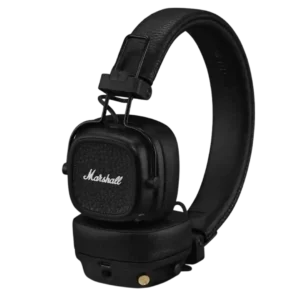
Aesthetics were praised as old-school, retro, and distinctively vintage Marshall, which is one of the clearest reasons to choose the product.
Android compatibility is present, but the Android story is weakened by missing aptX in one review and reliance on SBC in another.
The Marshall app was seen as useful for EQ, controls, firmware, and battery settings, but a few reviews reported lag, connection issues, or basic functionality.
The Smart Control Plus app is repeatedly called a standout, bundling EQ, ANC, connection management, firmware updates, and extras like sound zones and find features. A few reviewers mention occasional glitches, especially when the dongle is connected.
The supported reviews explicitly criticize the lack of aptX or aptX Adaptive, especially for Android audio performance.
aptX family support is frequently cited as a major advantage, and the included dongle helps enable higher-quality aptX links on devices that otherwise lack them.
LE Audio and hands-on use support good sync: one review cited improved video sync, and another reported no noticeable delays.
Latency varies by device and mode. With the dongle, it is often good for movies and casual gaming, but several reviews note it is not truly esports-grade and real-world results may sit closer to typical Bluetooth latency.
Auto power-off is configurable in the app, and one review also noted automatic idle or disconnected shutoff.
Bass was usually described as punchy, prominent, resonant, or rock-friendly, though a few reviews found it less emphasized or lacking compared with expectations.
Bass is typically tight and controlled rather than boosted. Some call it punchy and physical, while others describe sub-bass quantity as lean; bass boost and EQ can add weight, but pushing hard can thicken or muddy the presentation.
Battery life was the strongest and most consistent praise point, with nearly every review highlighting 100-hour-class endurance or real-world multi-day use.
Battery life is consistently excellent: many quote around 60 hours with ANC, and measured tests still land in the low-to-mid 50s. Hi-res modes and dongle use can reduce runtime but remain strong for the class.
Bluetooth support was consistently described as current, with Bluetooth 5.3 and broad device compatibility noted in the supporting reviews.
Bluetooth connectivity is mostly stable once paired, with occasional quirks around device switching and initial dongle pairing on some setups.
Bluetooth version support is strong where specified, with Bluetooth 5.3 cited in multiple reviews.
Build quality was generally strong, with reviewers describing the headphones as rugged, hardy, tough, sturdy, or damage-proof.
Build quality is generally solid, but multiple reviews note that materials feel more plastic than premium for the price, and a few mention creaks or rattle.
Physical controls were a standout strength: reviewers repeatedly praised the brass knob or joystick as intuitive, tactile, simple, and better than touch controls.
Physical controls are minimal and straightforward, with most interaction handled by touch. Some reviewers wish the lone button were mapped to a different shortcut.
Cable impressions were mixed: one review liked the retro curly lead, while another said the coiled cable added style but tangled easily.
Included cables are generally considered useful and of decent length and quality, though a few nitpick terminations or the lack of inline mic support on analog.
Carry protection was a consistent weakness because the headphones usually ship without a case, pouch, tote, or bag.
The carry case is widely praised as sturdy and well-organized with pockets for cables and the dongle; size is the primary drawback.
Charging was another major strength thanks to USB-C, quick charging, and wireless charging, although some reviews found wireless placement fiddly or full charging slow.
Charging is frequently praised for speed, with several reviews citing around 7 hours of playback from a 10-minute top-up and roughly 1.5-2 hours for a full charge.
Clamp comfort varied by reviewer, ranging from gentle or moderate to too tight or pressure-inducing after longer sessions.
Clamping force is usually described as moderate and improved versus Momentum 4, helping stability without feeling overly tight. Fit-dependent seal changes can still affect comfort and tonality.
Codec support includes SBC, AAC, and LC3, but reviews also point out missing higher-end options such as aptX Adaptive, Lossless, or LDAC.
Codec and input support are broad: Bluetooth 5.2 with modern aptX options plus wired USB-C and analog. Not every premium codec is supported everywhere, but overall flexibility is a key selling point.
Comfort was often praised because the headphones are light and padded, but some reviews noted clamp pressure, heat, glasses discomfort, or on-ear fatigue.
Long-session comfort is generally strong thanks to thick padding and moderate clamp, but people with larger ears, heat sensitivity, or shallow-pad discomfort may fatigue sooner.
Connectivity options are strong, with wired listening, audio sharing through AUX, and Bluetooth use all supported by reviews.
Design was a major strength, with many reviews praising the recognizable Marshall amp-inspired, retro, rugged, or stylish look.
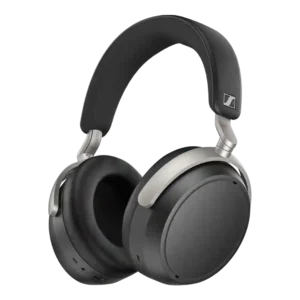
Design is understated and professional with matte black and subtle accents. Some appreciate the minimalist look, while others find it plain or less premium-looking than similarly priced rivals.
The BTD 700 dongle is valued for enabling better codecs (especially for iOS), improving perceived resolution, and offering lower-latency modes. Setup can be finicky, the protruding plug raises durability concerns for some, and calls or app behavior may worsen in dongle mode on certain devices.
Durability evidence was positive where discussed, with reviews saying the design feels durable, rugged, and able to take a beating.
Ear-pad feedback was strong overall, with repeated praise for thick, soft, plush, or generous cushioning.
Earpads are frequently described as thick, soft, and good at sealing for isolation. The tradeoff is increased heat retention during longer sessions.
One review noted that the ear cups can tilt by 90 degrees, supporting unusually flexible cup positioning.
Swivel range helps the cups lay flat for storage, but one reviewer notes the rotation can be so free that small asymmetries in fit may affect tonal balance.
EQ customization was broadly supported through presets and a custom equalizer, though one review found the changes subtle or limited.
Equalizer tools are a highlight: a five-band parametric EQ with A/B bypass enables precise tuning that can meaningfully tailor bass and treble without third-party apps.
Feature depth was mixed: some reviews mentioned useful frills, while others called the feature set limited or mediocre for the price.
Firmware support is present through the Marshall app, with reviews noting firmware updates or software updates.
The measurement-focused review found the frequency response deviated strongly from its preference curve, especially in treble.
Several reviewers highlight target-curve or reference-leaning balance and good tonal accuracy. Fit and seal still matter, with small positioning changes affecting bass and lower-mid response.
Headband adjustment was described positively, with smooth adjustment, flexible fit, and support for larger head sizes.
Headband adjustability is typically smooth and offers enough range to dial in fit, contributing to stable wear.
Headband padding was mostly adequate or soft, though one review described it as not very thick.
Immersive audio evidence was positive but limited, with reviews citing dynamic soundstage, energetic drivers, and Dolby Atmos material retaining impact.
Included accessories are basic: reviews confirm audio and USB-C cables, but the broader accessory package is limited by the missing case.
Included accessories are unusually generous for the category: the dongle, multiple cables, adapters, and a robust case are common value-add callouts.
The supported reviews praised stereo separation and placement, especially with guitars or detail visibility in the mids and highs.
Instrument separation and layering are recurring strengths, helping dense mixes stay intelligible and improving localization, especially with higher-quality sources.
The supporting reviews confirm an integrated microphone/mic array and describe voice capture as working well for calls.
One comparison notes that a competing model adds LDAC, implying the Major V lacks that higher-resolution Bluetooth option.
LE Audio readiness was frequently mentioned, with several reviews noting Bluetooth LE, LC3, or future Auracast support.
One review said the drivers could play hard at volume, supporting solid maximum-volume clarity for energetic listening.
At higher listening levels, most impressions suggest the sound stays composed and low in audible distortion. A major caveat is that hands-free call modes on some platforms can drop audio bandwidth and make music sound noticeably worse.
Noise handling for calls was praised in several reviews, especially background-noise rejection and voice capture in office or noisy conditions.
Noise reduction for calls is generally competent, keeping speech intelligible in moderate noise. Very loud environments and mode changes can still reduce clarity.
Call quality was generally favorable, with several reviews reporting usable, clear, or strong microphone performance, though one found the voice quality a little noisy.
On standard Bluetooth, most reviewers report clear voice pickup suitable for work calls. Using the dongle or triggering hands-free profiles on certain platforms can degrade call audio or music quality, so results depend heavily on device and mode.
Midrange feedback was mixed: several reviews praised clear vocals and mids, while others noted recessed, weak, or uneven midrange presentation.
Midrange performance is consistently praised for clean, realistic vocals and strong detail retrieval. A couple reviewers note a bit of forwardness around 1-2 kHz that can sound slightly shouty depending on fit and seal.
One review specifically mentioned smooth playback on both Apple and Android devices, supporting broad platform compatibility.
Multi-platform use is a core strength thanks to Bluetooth plus USB-C and analog options, with the dongle helping iOS users access higher-quality codecs.
Multipoint was reported across several reviews and generally described as available or working well, with one review noting device switching was seamless.
Multipoint use (two devices) is supported and often works well, but there are limitations when mixing the dongle with other connections and occasional reports of source confusion.
Passive isolation was mixed: padding and snug fit helped in offices or quiet chatter, but several reviews said outside noise still came through.
Passive isolation is above average thanks to thicker pads and a strong seal, helping even before ANC is engaged.
Overall recommendations were generally positive for style, battery life, portability, and controls, but more cautious for ANC, sound refinement, and feature value.
Portability was consistently praised: reviewers emphasized the compact on-ear size, folding design, and easy bag or pocket storage.
Portability is mixed: cups lay flat but the headphone does not fold inward, so it takes more space than some travel rivals. The case is protective yet can be bulky.
One review said the design looked less premium than flagship Sony headphones despite the lower price and rugged feel.
Preset EQ feedback was generally positive where discussed, including well-engineered, balanced, or useful presets alongside custom EQ.
Preset EQ profiles and quick toggles like bass boost are generally effective and easy to use. Power users still prefer the parametric EQ for more surgical control.
One review noted that the ear pads can be removed and replaced, supporting strong earpad replacement convenience.
Wear sensors add convenience (auto play/pause, auto-on), but sensitivity can cause accidental wake-ups for some; most note these features can be disabled.
Smart listening features center on the M button, which reviewers used or described for Spotify Tap, EQ toggles, and voice-assistant access.
Smudge handling is mixed: matte cups are often described as fingerprint-resistant, but some materials (notably the headband on some units) can pick up grease and grime easily.
One review described setup as minimal and ready to use out of the box, supporting very simple setup.
Setup is usually straightforward, but dongle pairing steps and occasional app quirks can add friction. Some advanced features require extra steps (like enabling specific audio modes) depending on device.
Leakage was mixed: some reviews found sound bleed negligible, while others noted more leakage from the on-ear design or at higher volumes.
Reviews were positive but not unanimous: many liked the lively, punchy Marshall sound, while others found the tuning treble-heavy, average, or less refined than expected.
Across reviews, sound quality is the headline: balanced, highly detailed, audiophile-leaning tuning that competes with top wireless flagships and scales up with the dongle or USB-C. A few reviewers find it less instantly exciting than bass-boosted rivals, but overall fidelity is widely praised. Wired playback (especially via USB-C) is often cited as the cleanest, most resolving path. Analog input works too, but the headphone typically still relies on internal DSP and battery power.
Soundstage impressions ranged from wide and spacious for an on-ear headphone to compact, intimate, or limited in imaging.
Soundstage is considered roomy for a closed-back wireless, with better depth and separation than Momentum 4; crossfeed and the dongle can change the sense of space. It still cannot match open-backs, and a few listeners describe it as more in-head than speaker-like.
One review mentioned Dolby Atmos audio retaining its kick, giving limited but positive evidence for spatial audio enjoyment.
Spatial audio as a dedicated virtualized mode is often noted as absent; instead, Sennheiser emphasizes EQ and crossfeed-style processing for older mixes.
Fit stability was mixed: one review said the headphones shifted with head movement, while others found the fit secure enough for movement.
Streaming integration is mainly Spotify-related, with the M button supporting Spotify Tap or direct Spotify launching.
Repairability was a plus in the supported reviews, especially battery replacement through Marshall’s repair program.
One review provided sustainability-material details, including recycled plastics, solvent-free artificial leather claims, recycled paper, and soya-based ink.
Touch controls are feature-rich, but experiences vary widely: some find them refined and responsive, while others report misreads or frustration with pinch-based ANC gestures.
One review explicitly noted that the headphones lack transparency modes, so transparency performance is effectively absent.
Transparency mode is typically described as usable and convenient, with adjustable levels and quick toggles. It is rarely considered best-in-class for naturalness, and some reviewers rate it merely adequate.
Travel friendliness is mixed: the compact folding build and long battery help travel, but lack of ANC makes long flights less ideal.
Treble was often clear and energetic, but multiple reviews also flagged brightness, harshness, or an exaggerated top end.
Treble is often described as detailed and generally well-controlled. Opinions diverge: some hear extra energy up top or a dip in the mid-treble that can make the presentation feel a touch closed-in, and sensitivity varies by listener and fit.
USB-C charging is directly supported in multiple reviews, with included USB-C cables and USB-C charging mentioned repeatedly.
USB-C is a versatility highlight for both charging and wired digital audio, and is frequently cited as the cleanest connection option.
Value was split: many reviews thought the price was reasonable for style, battery, and sound, while others wanted more features or cheaper alternatives.
One review reported that Google Assistant and Siri worked well, supporting solid voice-assistant integration.
Voice assistant integration is supported and typically works as expected via a dedicated button or gesture.
Voice and system feedback is brand-styled rather than spoken, with guitar-riff acknowledgments noted in the supporting reviews.
One review found normal listening volume more than enough and noted available headroom above that level.
Volume output offers solid headroom and gets loud enough to help overcome moderate ambient noise. Heavy EQ boosts can reduce available peak volume due to protective preamp behavior in the app.
Reviews repeatedly noted no IP rating or no dust/water resistance, limiting confidence for rain, sweat, or outdoor use.
No official water or sweat rating is typically noted, so these are better treated as commute and travel headphones rather than workout gear.
The light weight was one of the most consistently praised comfort traits, with multiple reviews emphasizing the roughly 165-186g build.
At roughly 311g, weight is noticeable but often well-distributed. Some still prefer lighter competitors for all-day travel comfort.
Xbox support is commonly described as limited, with at least one review noting the dongle route does not work on Xbox.