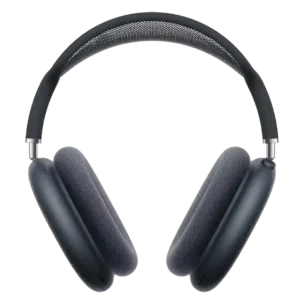
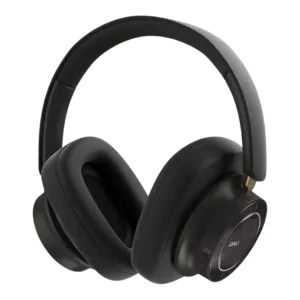
Reviewers noted that the AirPods Max 2 lack a built-in 3.5mm analog input, so analog listening requires separate cable handling rather than a native jack.
Across lab-style and real-world reviews, ANC is one of the strongest upgrades. Most reviewers heard better suppression of drones, traffic, office noise, and transit noise, though one review found the improvement more incremental.
ANC is broadly described as effective for reducing low rumbles and general ambient noise, but it is not considered class-leading compared with flagship Bose, Sony, or Apple models; some mention susceptibility to wind noise. Noise cancellation adjustability is limited to onboard mode switching in most coverage, with some sources noting multiple ANC modes, but no fine tuning via app.
The H2 chip brings a fuller feature set, including Adaptive Audio, Conversation Awareness, Voice Isolation, Live Translation, Personalized Volume, and related AirPods Pro-style software tools.
The design remains visually premium and distinct, with clean Apple styling, a recognizable silhouette, and a look that several reviewers still considered elegant or attractive.
Reviewers generally found the ANC background very quiet, with little hiss or distracting processing noise, though some midrange sounds could still leak through in difficult environments.
ANC was often described as natural or comfortable rather than oppressive, though one review noted that Adaptive Audio can shift the perceived level unexpectedly.
The reviewed ANC usually improved listening by reducing outside distractions without making music sound worse; some reviews tied better clarity to the reduced noise floor.
Android support is basic. Reviewers said Android users can listen over Bluetooth or USB-C, but lose most of the setup, adjustment, and ecosystem features.
There is no standalone companion app. Reviewers described Apple’s OS-level settings integration as convenient for Apple users but limiting outside Apple devices.
Multiple sources confirm there is no companion app for the IO-12.
The H2 chip is the central upgrade. Reviewers consistently connected it to better ANC, improved transparency, voice features, smart listening tools, and reliability improvements.
Reviews explicitly identify no aptX support for AirPods Max 2, making aptX a weakness compared with some rivals.
Multiple reviews explicitly cite aptX options, including higher-tier variants such as aptX HD and aptX Adaptive, as part of the IO-12 wireless feature set.
Latency improved through Bluetooth 5.3, Game Mode, and wired USB-C use. Reviewers found it useful for video, casual gaming, and editing, though not a dedicated gaming-headset replacement.
Wear and auto behavior are present through sensors and settings, but reviewers mentioned them mostly as part of the familiar AirPods Max feature set rather than a standout upgrade.
Auto power behavior remains mixed: the Smart Case triggers low-power mode and preserves charge, but reviewers repeatedly criticized the lack of a physical off button.
Two editorial reviews explicitly awarded Editors’ Choice recognition, reinforcing the product’s premium-category standing despite practical caveats.
Bass drew mixed but generally positive notes: several reviewers praised deeper, tighter, more controlled bass, while others found the tuning bass-heavy or slightly boomy.
Bass is typically described as tight and controlled in Hi-Fi mode with convincing weight, while Bass mode adds slam and warmth without turning into a boomy mess, though it can trade away some treble presence.
Battery life was the clearest repeated weakness. Reviewers consistently cited 20 hours with ANC as usable but behind competitors and unchanged from earlier models.
Battery life is commonly cited around 35 hours, with at least one real-world report closer to 30 hours; overall it is respectable but not exceptional relative to cheaper competitors.
Bluetooth performance is solid, with Bluetooth 5.3, quick pairing, and stable playback reported in reviews, especially inside the Apple ecosystem.
Bluetooth connectivity is commonly reported as stable, with fast pairing and few to no dropouts even in busy environments.
Bluetooth 5.3 is an upgrade over the original model’s Bluetooth 5.0, but reviewers noted it is not the newest Bluetooth generation.
Build quality remains a strength. Reviewers praised the aluminum earcups, stainless steel structure, precise parts, and premium materials.
Build quality is repeatedly described as ultra-premium, with strong materials and a luxury feel that holds up to travel use when handled with care.
Wired USB-C lossless playback up to 24-bit/48kHz is widely supported in the reviews and often described as a useful sound-quality and latency benefit.
Physical controls are a highlight. Reviewers repeatedly praised the Digital Crown and mode button for tactile, simple, reliable operation.
Buttons are often praised for responsiveness and tactile feedback, but a few reviewers mention accidental activation, especially when adjusting volume or leaning against a seat while traveling.
The included USB-C cable was noted, including braided USB-C-to-USB-C packaging, but accessories overall remained limited for the price.
Cable quality feedback is mixed: some appreciate the included cables and finish, while at least one reviewer calls the cable frustrating to use and prefers the shorter option.
The Smart Case was widely criticized. Reviewers said it offers limited protection, is not travel-friendly, and leaves the headband or canopy exposed.
The carry case is typically praised as premium and protective, with good structure and compartments, but it adds bulk and can be impractical for compact packing.
Charging is acceptable, with reviewers noting the five-minute quick-charge claim for about 1.5 hours of listening and USB-C charging convenience.
Charging is described as taking roughly 1.5 to 2 hours from flat with no fast-charge boost mentioned, and one reviewer notes behavior consistent with limiting charge to protect long-term battery health.
Clamping comfort is mixed. Some reviewers found the clamp gentle or nicely judged, while others found the force strong during long sessions.
Clamping force is usually described as secure but comfortable, ranging from light to moderately firm depending on the reviewer, without feeling unstable.
Codec support is limited. Reviews repeatedly noted AAC/SBC only, no LDAC or aptX, and no hi-res Bluetooth codec support.
Codec support is positioned as strong for a premium wireless headphone, with repeated mentions of AAC and aptX-family options that help preserve detail over Bluetooth.
Comfort depends heavily on fit tolerance. The earcups and canopy can feel comfortable, but weight and clamp make long sessions harder for some reviewers.
Long-session comfort is one of the most consistently praised aspects, with roomy earcups and plush pads that avoid pressure points for many listeners.
Connectivity is strong for Apple users through seamless pairing, automatic switching, Bluetooth, and USB-C wired listening, but less flexible for non-Apple users.
The external design remains largely unchanged and premium, which pleased reviewers who liked the original look but disappointed those wanting a redesign.
Design is widely described as premium and distinctive, but the dark chocolate color can divide opinion, and the large earcups create a bold, bulky look on some heads.
The USB-C cable can be plugged in for wired lossless listening, but reviewers did not describe a traditional detachable analog cable system.
Spatial audio with dynamic head tracking and Dolby Atmos support was described as immersive and especially useful for movies or Apple TV-style listening.
Durability evidence was mixed: premium metal parts were praised, but long-term canopy concerns and exposed case protection kept confidence from being perfect.
Ear cushions were generally praised for roominess, breathable material, support, and replaceability.
Earcup and pad materials are frequently described as plush, premium leather with generous space for larger ears, contributing to both comfort and isolation.
Swiveling earcups and pivoting fit were mentioned positively as helping the headphones conform to the head.
Earcups are commonly described as able to swivel or lay flat, aiding seal and travel storage even though the overall design does not fold compactly.
Ecosystem integration is one of the strongest reasons to buy. Reviewers repeatedly praised seamless Apple pairing, automatic device switching, native settings, and Apple-device optimization.
EQ customization is a consistent weakness. Reviewers noted no true custom EQ, only Apple’s limited presets or accessibility-style tuning options.
Without an app, EQ customization is not available beyond onboard preset modes, which limits personalization compared with mainstream flagship wireless headphones.
The feature set is much more current because of H2, but several reviewers said the launch still felt more like modernization than a full second-generation overhaul.
Firmware/software updates were cited as meaningful for USB-C lossless, latency, spatiality, and ANC improvements, though this evidence came mainly from one review.
Frequency balance was polarizing: some called it neutral or accurate, while others heard bass emphasis, rolled-off treble, or V-shaped tuning.
Hi-Fi mode is commonly described as balanced and relatively uncolored, while Bass mode shifts the tonality warmer and can slightly reduce upper-mid and treble prominence.
The telescoping or adjustable headband arms were described as sturdy, premium, and easy to adjust.
Headband adjustment is described as smooth and secure, holding its position well once set.
Headband comfort is split. The canopy can distribute weight well, but at least one reviewer found the mesh insufficient for the headphone’s weight.
Head gestures are supported through Siri interactions, letting users nod or shake to answer prompts; reviewers generally found the feature functional but not essential.
Hinges, arms, and metal hardware were praised for precision and premium construction.
Immersive audio was a strength in subjective listening, especially when reviews discussed spatial audio, depth, width, and movie listening.
Included accessories are sparse for a $549 product: reviewers noted the USB-C cable, papers, Smart Case, and lack of a charging brick or stronger case.
Included accessories are generally considered generous, with multiple cables and adapters plus a premium case, though some note the absence of a USB-C to USB-C cable.
Instrument separation improved slightly or clearly depending on the reviewer, with repeated praise for more space between instruments and layers.
Instrument separation and imaging are consistently praised, with precise placement and clear spacing between layers even in complex mixes.
The integrated microphone array is substantial and frequently tied to call quality, voice isolation, recording, and ANC.
Reviews explicitly identify no LDAC support for AirPods Max 2, so LDAC performance is unsupported rather than merely untested.
Reviews explicitly noted missing Bluetooth LE and LC3 support, so LE Audio readiness is weak based on the supplied evidence.
Maximum-volume clarity appears improved, with reviewers noting less muddiness, cleaner highs, or lower distortion at louder playback.
Reviews that discuss loud listening report strong composure and minimal distortion at higher volumes, encouraging careful use because it stays clean as you turn it up.
Microphone noise reduction improved through Voice Isolation, though results varied by environment and whether the feature was active.
Call and microphone quality are generally strong, with several reviewers reporting clear calls or improved mic performance, though some heard occasional unevenness or fuzz.
Midrange clarity is generally good, especially for vocals, though some measurements-based criticism noted upper-vocal recession.
Midrange clarity is repeatedly highlighted as a standout strength, with clean layering and realistic vocal and instrument textures that feel unusually hi-fi for Bluetooth.
Multi-platform use is possible through Bluetooth and USB-C, but reviews frame the product as much stronger for Apple users than for Android or Windows users.
Multipoint-style reliability is excellent inside Apple’s ecosystem through automatic switching, though reviewers noted true feature access is Apple-limited.
Multipoint is noted as supported and convenient for staying connected to two devices, though it is not heavily stress-tested across all sources.
Passive isolation benefits from the large earcups and seal, supporting ANC performance, though the physical isolation profile did not radically change.
Passive noise isolation is described as strong thanks to large, well-sealing earcups and design details aimed at closing gaps around the ear, providing a solid foundation before ANC is even enabled.
Most reviews recommended the AirPods Max 2 for Apple-focused buyers who can accept the price, weight, case, and battery compromises.
Portability is poor for the class because the headphones do not fold and the case is not very protective or compact.
Portability is a recurring compromise: the headphones are large, do not fold down compactly, and several reviewers mention the case is too big for many backpacks.
Premium feel remains a standout, with reviewers praising metal materials, luxury presentation, and the physical feel versus plastic competitors.
Preset tuning exists through Apple’s preset EQ curves or balance/vocal/brightness options, but reviewers considered it limited compared with Sony or Bose apps.
Preset sound modes are generally seen as well-judged: Hi-Fi is the reference setting for balance and clarity, while Bass mode adds punch and warmth, sometimes with a tradeoff in treble and mid presence.
Replaceable magnetic ear cushions are a practical plus; reviewers noted they snap off, can be replaced, and in some cases can be washed.
Replaceable earpads are explicitly mentioned as a welcome premium touch, with pads that can be removed for cleaning or replacement.
Pads are replaceable, but reviewers did not provide strong evidence that the headband/canopy is similarly user-replaceable.
Sensor evidence was limited but present through optical wear detection and H2-enabled computational features.
Some coverage notes the absence of wear sensors and similar smart conveniences found on mainstream flagships, reinforcing the IO-12 focus on audio and simplicity over automation.
Smart listening features are a major H2 benefit. Adaptive Audio, Conversation Awareness, Personalized Volume, and Loud Sound Reduction were commonly described as useful.
Setup is extremely simple on Apple devices, with near-instant pairing, native settings, and automatic account-based connection.
Day-to-day operation is described as straightforward because settings are handled on the headphones, but the lack of an app also means limited customization and some sources note manual firmware updating.
Sound quality is widely praised, with reviewers calling it cleaner, more detailed, wider, and more refined than before, though not always a major leap.
Across reviews, sound quality is the headline: a speaker-like, highly resolving presentation that many call among the best in wireless closed-backs, with strong imaging and refinement. Wired sound is often described as equal or better in resolution than wireless, with USB-C and 3.5 mm options; passive use is supported, and some recommend listening powered on to benefit from onboard DSP.
Soundstage and spatial width were commonly praised, with reviewers noting depth, width, openness, and stronger spatial presentation.
Most reviews describe an unusually open, spacious soundstage for a closed-back wireless headphone, with strong width and credible depth; one reviewer notes it is not stadium-wide but avoids feeling claustrophobic.
Spatial audio remains a strong Apple feature, especially with dynamic head tracking and Apple Music or Dolby Atmos material.
Connection stability improved or stayed strong, with reviewers reporting faster switching, fewer dropouts, and smoother transitions.
Fit stability is generally described as secure with a good seal, but the sizing and overall footprint may feel better suited to average-to-larger heads than very small ones.
Streaming integration centers on Apple Music, lossless playback, and spatial audio catalogs; some reviewers also tested Spotify or YouTube with less platform-specific benefit.
Control surfaces are generally responsive; some coverage mentions touch-style control areas, but overall interaction is described as clicky and deliberate rather than finicky.
Transparency mode is one of the most consistently praised features, often described as natural, class-leading, or like not wearing headphones.
Transparency mode is generally described as clear and practical for awareness, without strong criticism, though fewer reviews go deep on its nuance.
Travel friendliness is mixed to poor: ANC is useful for flights and commuting, but weight, non-folding design, and the case hurt travel use.
Treble is mostly clear and detailed, but reviewers split on whether it is crisp, rolled off, or occasionally sharp.
Treble is generally airy, detailed, and smooth, with occasional notes that it can approach brightness on certain recordings; Bass mode can tame the top end if needed.
USB-C is now central for charging and wired lossless playback, and multiple reviewers welcomed it over Lightning.
USB-C is highlighted as both a charging and playback option, with multiple sources noting USB audio support up to 24-bit and 96kHz.
Value is conditional. Reviewers found the price easier to justify for Apple users, but many pointed to cheaper or better-sounding alternatives.
Siri integration improves through H2, hands-free interactions, and head gestures, but it is mainly valuable inside Apple’s ecosystem.
Voice assistant support is described as available via a press or long-press action, and some sources also mention voice prompts for battery status.
Voice feedback is tied to Siri prompts and announcements, including nod/shake responses, but reviews did not treat it as a major buying reason.
Volume handling is praised mainly through the Digital Crown and improved high-volume cleanliness, not through unusually high output claims.
Volume output is commonly described as having plenty of headroom, with enough drive to get loud without feeling strained.
Water and sweat resistance remain absent. Reviews repeatedly noted no IP rating and warned against gym or wet use.
Wear detection is present through optical sensors and auto behavior settings, but reviewers did not emphasize major performance changes.
Wear detection performance evidence is limited to mentions of sensors and automatic wear settings rather than detailed testing.
Weight comfort is one of the biggest tradeoffs. The headphones feel premium but heavy, and several reviewers said long sessions reveal the 385-386g mass.
Weight is noted as present but generally not burdensome once worn, though some acknowledge the overall heft and size compared to mainstream travel headphones.
Wind handling evidence mainly comes from call and microphone tests, where voice isolation and mic processing helped but did not eliminate all artifacts.