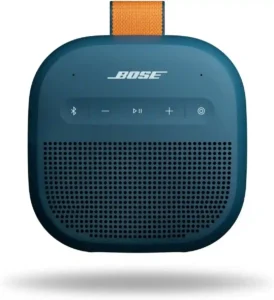
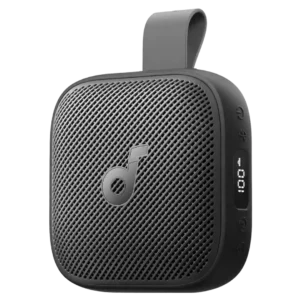
The evidence discusses internal output power rather than external amplifier requirements, repeatedly referencing 15W output or power for this compact speaker.
The Bose app was usable and organized in some reviews, though another review called it barebones.
The app experience is described as robust, loaded, thorough, and function-rich, mainly for EQ, lighting, alarms, timers, and feature control rather than crash testing.
Audio format support was criticized where tested, with one review noting no high-resolution audio support.
Audio format support is only directly supported through the same SBC and AAC codec evidence in one review.
Backward compatibility is a weakness because several reviews say Auracast does not pair with older Soundcore PartyCast speakers or some other models.
Battery life is mixed. The 12-hour rating appeared often, but real-world high-volume or 50-75% use landed closer to about 3 to 6 hours in several tests.
Battery life is a major strength, but it varies by use: demanding lights-on max-volume use is around 6 hours, while lower volume and Eco Mode can reach much longer figures.
Codec support was a bright spot, with SBC, AAC, aptX Adaptive, and Snapdragon Sound mentioned across multiple reviews.
Codec support is directly supported in one review, which lists SBC and AAC over Bluetooth.
Connection stability looked solid in the limited evidence, with no connectivity issues and confirmed range claims.
Connection evidence is generally positive for normal pairing and Bluetooth use, with easy setup, two-device connection, instant paired speaker testing, and Bluetooth 6.0 references.
Range evidence was positive but limited, with reviewers citing a 30-foot claim and one confirming it in testing.
Bluetooth range is only directly discussed in one review, which cites about a 30 m range alongside Bluetooth 6.0.
Construction is described as durable, dense, rubberized or rugged, with thick plastic or solid rubber elements supporting outdoor use.
Charging time evidence pointed to roughly three hours for a full recharge.
Charging speed evidence is limited but positive, including a reported five hours of playback from a 20-minute charge and a partial phone top-up estimate.
Cohesion varied by reviewer: many praised full, warm, crisp, or dynamic sound, while a negative review found it hollow.
The overall presentation is considered enjoyable and capable for casual use, with good sound for size rather than audiophile-level refinement.
Physical buttons were praised as tactile and pleasant, with useful front controls and an expanded button layout.
Control responsiveness is only directly scored from one hands-on review, where volume and playback controls were demonstrated and described as working.
Design was widely praised for compact shape, rugged or premium feel, USB-C modernization, standing and strap changes, and pocketable aesthetics.
Design is compact, clean, rugged, and outdoor-oriented, with some tradeoffs around premium feel and the inability to stand upright in several reviews.
Detail retrieval was mixed: some reviews heard good detail and precision, while others noted separation issues, hollowness, or sharp high frequencies.
Detail retrieval is limited by the small speaker design: the supporting reviews specifically criticize instrument separation compared with larger or more refined speakers.
High-volume behavior is inconsistent. One review heard less distortion than before, but several reported compression, sharp treble, or muddy distortion when pushed.
High-volume performance is a tradeoff: several reviews say the speaker keeps clarity, but bass becomes less noticeable at high volume and it is not framed as a party speaker.
Durability was a strength, with silicone or rubberized construction, rugged comments, drop-resistant body, and hands-on abuse tests all supporting a high score.
Drop resistance is well supported, with one-meter or roughly 3-foot protection mentioned and one reviewer reporting successful drop testing with no damage.
Dust protection was supported by IP67/IP68-style references, with multiple reviewers explicitly describing dust-resistant or dust-proof protection.
Dust resistance is strongly supported through repeated IP68 dustproof or dust-and-water-resistant references.
Dynamic headroom evidence was limited and not especially strong; one review found the violin attack not very dynamic.
Dynamic headroom is decent for size and loudness, but bass headroom drops at higher volume even when the speaker prioritizes clarity.
Energy efficiency is strong because Eco Mode and lights-off lower-volume use can greatly extend runtime compared with max-volume lights-on playback.
EQ customization exists but is limited. Reviews mentioned a three-band EQ, while several called it basic, barebones, or not very effective.
EQ customization is strongly supported: reviews repeatedly cite presets, custom EQ, BassUp control, and app-based tuning.
Everyday usability was strong for travel, showers, bikes, bags, and one-hand portability.
Everyday usability is strong for outdoor and casual use thanks to portability, strap mounting, battery display, ruggedness, and practical extras, though stand-up placement is a limitation.
Float capability is absent; two reviews explicitly said it does not float.
Float capability is weak: supporting reviews say it does not float upright or cannot be used in the pool the way the larger Boom 3i can.
Most reviews heard a compact but balanced sound with stronger-than-expected bass and clear treble, though negative tests found lackluster bass or average performance at the price.
Sound balance is generally seen as good for the size, with respectable bass and clear mids, though some comparisons found less bass than rivals or weaker treble.
Google-related evidence was limited to Google Fast Pair support for quick pairing.
The strap was a major strength: adjustable, removable, replaceable, and easy to attach to bags, bikes, shower heads, and other objects.
The strap is one of the most consistently praised physical features, with flexible, two-mode attachment options and sturdy-feeling construction.
Inter-speaker connectivity is supported through Bose speaker linking, party mode, and stereo with another Micro 2, though stereo requires matching speakers.
Inter-speaker connectivity is supported through stereo pairing, TWS, Auracast, and OrCAST references, though broader compatibility is not seamless.
Phone video latency was considered a non-issue in the YouTube reviews that tested it.
Latency evidence is limited to phone video use, where reviews say latency is not an issue; TV lip-sync is not directly tested in the transcripts.
The speaker lacks LED lighting effects; the comparison review noted the rival had lights and Bose did not.
The front RGB lighting is repeatedly praised as visible, customizable, music-synced, and unexpectedly useful for a compact speaker.
Lighting features are absent; the comparison review treated the rival's light as a feature Bose does not have.
Lighting effects are a standout feature, with beat-synced modes, ambient modes, customization, and visibility use cases described across most reviews.
Loudness is divided: some reviews said it can fill small spaces or plays louder than micro rivals, while others found max volume limited against competitors or larger speakers.
The Boom Go 3i is repeatedly described as loud for its compact size, with 15W output, a 92 dB figure, and enough output for personal outdoor use or small groups.
Low-volume or close-range use was more favorable, with reviews saying lower volumes improve battery life and close-range listening helps the speaker sound its best.
Low-volume and Eco Mode use are portrayed as practical, especially for stretching battery life or getting a usable listening level at around 50%.
Magnetic mounting is absent from the Boom Go 3i in comparison evidence; reviewers point to competing Tribit models for magnetic mounting instead.
The built-in microphone was removed, a repeated caveat across many reviews.
Microphone support is poor for calls because reviews explicitly state that the Boom Go 3i does not include a built-in microphone or speakerphone.
Pairing can work with other Bose speakers or matching units, but reviews noted limits: stereo requires two Micro 2 speakers and some wireless pairing options are restricted.
Multi-speaker pairing is mixed: supported modes include TWS or Auracast, one review paired units instantly, but others reported incompatibility with PartyCast or some non-Soundcore Auracast speakers.
Multipoint was consistently present and useful, allowing two phones or devices to connect and switch.
Multipoint-style use is supported in the evidence by two-device connection comments and 3+ device Auracast references, making shared DJ use possible.
Sound is directional rather than omnidirectional, with front-firing design and off-axis bass loss noted.
Omnidirectional sound is not a strength; the evidence describes a mono or front-firing speaker rather than a true 360-degree design.
On-device controls were generally useful, with skip and play controls, shortcut and pairing buttons, and responsive buttons mentioned.
On-device controls are useful, with mode remapping, side buttons, volume/playback controls, lighting changes, and power-button functions mentioned.
Power-bank function is absent; several reviews said the Bose cannot charge other devices or lacks power-bank operation.
The power-bank function is one of the most repeated practical extras, positioned as useful for emergency phone top-ups rather than full charging.
Price and value were the main tension. Some reviewers accepted the Bose premium for the form factor, while many considered the price high for the size or performance.
Price/value is a clear strength, with reviews highlighting sale prices around $45-$60 or retail pricing around $79.99 as strong for the feature set.
Remote-style control evidence was limited to the app letting the user view battery details and adjust volume remotely.
Setup was straightforward in the reviews that mentioned it, with easy pairing and quick connection.
Setup is described as easy or simple in the reviews that discuss pairing, with standard Bluetooth setup and automatic pairing mode mentioned.
Smart assistant integration is effectively absent because the microphone was removed and voice assistants cannot be used through the speaker.
Smart features include the shortcut button, Spotify-related shortcut, firmware/app functions, and speaker linking, but the feature set remains simple.
Smart features are unusually broad for the size, including app controls, alarms, workout timer, voice amplifier, lighting modes, sound effects, and power-bank use.
Speakerphone capability is absent because Bose removed the microphone, so calls through the speaker are not supported.
Speakerphone capability is weak because multiple reviews state that the Boom Go 3i lacks a built-in microphone for calls.
Status information evidence came from app-level battery readouts rather than extensive on-device status indicators.
Status feedback is a strength where discussed, especially the small display showing battery level, mode, Bluetooth, charging, or other status information.
The speaker is mono on its own. Stereo only comes from pairing two matching Micro 2 units, and one review said single-speaker layering made separation difficult.
Stereo playback is possible only when pairing speakers, while the single unit is treated as a small mono speaker; paired playback was described positively when it worked.
USB-C was one of the clear upgrades, replacing micro USB and appearing consistently across reviews.
USB-C is used for charging the speaker and for emergency reverse charging, but not for wired audio input.
Value for money was mixed to weak, with several reviews saying cheaper competitors outperform or undercut it, while one framed it as worthwhile if the form factor matters.
Value for money is consistently positive, especially because the speaker combines ruggedness, loud output, app control, lights, and power-bank charging at a low sale or retail price.
Voice assistant use is not supported because the integrated mic was removed; reviewers mentioned losing voice-assistant activation through the speaker.
Vocals and spoken material generally came through well, with reviews praising full-bodied vocals, clear mids, and good podcast voice reproduction.
Vocal and midrange clarity is a strength in multiple reviews, with vocals described as pronounced and mids or highs standing out, even though treble detail is not always even.
Water resistance was a consistent strength, with reviewers citing IP67/IP68-style protection, shower or rain use, and survival after water exposure.
Water resistance is strongly supported across the reviews through repeated IP68 references and outdoor, poolside, and waterproof use cases.
The compact size and light weight were repeatedly praised, with reviewers calling it pocket-size, ultra portable, and easy to carry.
Portability is a repeated strength, with the speaker described as palm-sized, lightweight around 380 g, and easy to toss in a bag or attach to gear.
Wired playback is not available; reviewers explicitly said there are no wired playback options and the USB-C port cannot be used as a wired connection.
The USB-C port is for charging only; two reviews explicitly say it cannot be used as a wired audio connection.