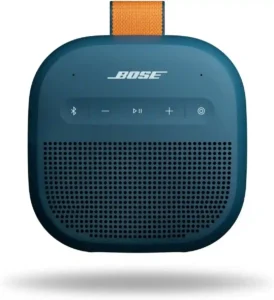
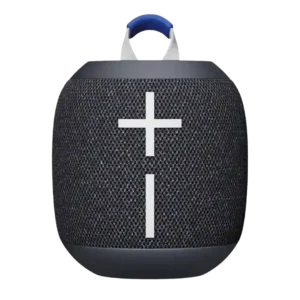
The Bose app was usable and organized in some reviews, though another review called it barebones.
Most reviews report there is no companion app support for Wonderboom 4, limiting control to on-device buttons and preset modes. One YouTube review claims UE Boom app support and more features, making app expectations inconsistent across sources.
Audio format support was criticized where tested, with one review noting no high-resolution audio support.
Backward pairing behavior is reported inconsistently: some sources state pairing with Wonderboom 3 is supported, while at least one review claims stereo pairing only works with another Wonderboom 4.
Battery life is mixed. The 12-hour rating appeared often, but real-world high-volume or 50-75% use landed closer to about 3 to 6 hours in several tests.
Battery life is consistently strong for the size, with many reviews citing about 14 hours and some reporting it can meet or slightly exceed that under typical use. One long-use test reports closer to 12 to 13 hours at moderate volume.
Codec support was a bright spot, with SBC, AAC, aptX Adaptive, and Snapdragon Sound mentioned across multiple reviews.
Codec support is characterized as basic, with at least one detailed review stating it is SBC-only and lacking higher-bitrate options typical of more premium speakers.
Connection stability looked solid in the limited evidence, with no connectivity issues and confirmed range claims.
Bluetooth stability is generally described as reliable and lag-free in several reviews, but one test reports audio cutouts on a Samsung phone, suggesting some device-dependent variability.
Range evidence was positive but limited, with reviewers citing a 30-foot claim and one confirming it in testing.
Range is repeatedly described as excellent for the size, with mentions around 40m or roughly 131 feet and general praise for long-distance stability in open spaces.
Charging time evidence pointed to roughly three hours for a full recharge.
Charge time is typically described as a few hours to full, with specific mentions around 2.5 to 2.6 hours. One review notes no fast charging and that topping up can take a while.
Cohesion varied by reviewer: many praised full, warm, crisp, or dynamic sound, while a negative review found it hollow.
Physical buttons were praised as tactile and pleasant, with useful front controls and an expanded button layout.
Physical button controls are repeatedly described as simple and easy to use, with a layout that reduces accidental presses and supports quick playback and volume adjustments.
Design was widely praised for compact shape, rugged or premium feel, USB-C modernization, standing and strap changes, and pocketable aesthetics.
Design is consistently described as fun, rugged, and compact with distinctive oversized volume buttons and multiple color options, balancing durability with a playful look.
Detail retrieval was mixed: some reviews heard good detail and precision, while others noted separation issues, hollowness, or sharp high frequencies.
Detail and separation are frequently praised at moderate volumes, especially considering the size. At louder settings, multiple reviews note reduced detail and more aggressive DSP behavior.
High-volume behavior is inconsistent. One review heard less distortion than before, but several reported compression, sharp treble, or muddy distortion when pushed.
Several reviews report quality loss at high volume, including bass roll-off, harsher upper mids or treble, and general collapse in fidelity when pushed hard. Some reviewers found it stays fairly clean for its size, but the overall trend is a sweet-spot below maximum.
Durability was a strength, with silicone or rubberized construction, rugged comments, drop-resistant body, and hands-on abuse tests all supporting a high score.
Drop durability is consistently positioned as strong, with multiple reviews referencing drop testing around 1.5m or 5 feet and an overall rugged build.
Dust protection was supported by IP67/IP68-style references, with multiple reviewers explicitly describing dust-resistant or dust-proof protection.
Dust resistance is repeatedly cited as part of the IP67 rating, making it well suited for beaches, camping, and outdoor environments.
Dynamic headroom evidence was limited and not especially strong; one review found the violin attack not very dynamic.
EQ customization exists but is limited. Reviews mentioned a three-band EQ, while several called it basic, barebones, or not very effective.
EQ control is mostly limited to preset modes such as Outdoor Boost and Podcast mode, and several reviewers found these modes of limited usefulness. A minority source claims full app-based EQ options, but the broader set of reviews does not support that experience.
Everyday usability was strong for travel, showers, bikes, bags, and one-hand portability.
Float capability is absent; two reviews explicitly said it does not float.
Float behavior is generally positive, but multiple sources mention practical caveats: audio may not play while floating, sound can change when wet, and it may tip over in the water so the sound does not project as expected.
Most reviews heard a compact but balanced sound with stronger-than-expected bass and clear treble, though negative tests found lackluster bass or average performance at the price.
Tuning is often described as balanced for the size, with punchy bass that does not overwhelm mids and highs at reasonable volumes. Several reviewers also note bass reduction or a thinner presentation when using outdoor-style EQ modes or pushing volume very high.
Google-related evidence was limited to Google Fast Pair support for quick pairing.
Google-related integration is specifically mentioned as Google Fast Pair support in at least one review, making initial setup faster on compatible Android devices.
The strap was a major strength: adjustable, removable, replaceable, and easy to attach to bags, bikes, shower heads, and other objects.
The integrated loop is useful for clipping or carrying, but multiple reviews criticize it as cheap or not very functional compared with a sturdier strap or carabiner-style solution.
Inter-speaker connectivity is supported through Bose speaker linking, party mode, and stereo with another Micro 2, though stereo requires matching speakers.
Pairing a second speaker is commonly supported for louder playback or true stereo. However, reviewers disagree on cross-generation pairing and many note a lack of broader multi-speaker party modes compared with app-driven ecosystems.
Phone video latency was considered a non-issue in the YouTube reviews that tested it.
The speaker lacks LED lighting effects; the comparison review noted the rival had lights and Bose did not.
Lighting features are absent; the comparison review treated the rival's light as a feature Bose does not have.
Loudness is divided: some reviews said it can fill small spaces or plays louder than micro rivals, while others found max volume limited against competitors or larger speakers.
Maximum volume is widely described as impressive for the speaker size and capable of filling small to medium spaces. A recurring theme is that the best listening is below max volume, where quality holds together more reliably.
Low-volume or close-range use was more favorable, with reviews saying lower volumes improve battery life and close-range listening helps the speaker sound its best.
Low-volume performance is positively noted in at least one review, highlighting that it can play quietly without losing usability, supporting flexible use in smaller indoor spaces.
The built-in microphone was removed, a repeated caveat across many reviews.
Pairing can work with other Bose speakers or matching units, but reviews noted limits: stereo requires two Micro 2 speakers and some wireless pairing options are restricted.
No summary yet.
Multipoint was consistently present and useful, allowing two phones or devices to connect and switch.
Multipoint support is mentioned as available by some reviewers, enabling easy switching between two connected devices for shared DJ duties.
Sound is directional rather than omnidirectional, with front-firing design and off-axis bass loss noted.
360-degree, omnidirectional output is a defining feature and is repeatedly praised for being consistent around the speaker and useful for small group listening.
On-device controls were generally useful, with skip and play controls, shortcut and pairing buttons, and responsive buttons mentioned.
On-device controls cover core needs such as power, pairing, play and pause, track skipping, mode switching, and often a battery check shortcut using the volume buttons.
Power-bank function is absent; several reviews said the Bose cannot charge other devices or lacks power-bank operation.
Price and value were the main tension. Some reviewers accepted the Bose premium for the form factor, while many considered the price high for the size or performance.
Remote-style control evidence was limited to the app letting the user view battery details and adjust volume remotely.
Setup was straightforward in the reviews that mentioned it, with easy pairing and quick connection.
Setup is widely reported as quick and painless, with easy Bluetooth pairing and, in one case, near-instant connection aided by Google Fast Pair.
Smart assistant integration is effectively absent because the microphone was removed and voice assistants cannot be used through the speaker.
Smart features include the shortcut button, Spotify-related shortcut, firmware/app functions, and speaker linking, but the feature set remains simple.
Speakerphone capability is absent because Bose removed the microphone, so calls through the speaker are not supported.
Multiple sources confirm there is no built-in microphone, so it cannot be used for phone calls or speakerphone use.
Status information evidence came from app-level battery readouts rather than extensive on-device status indicators.
Status indication is generally handled via indicator lights for pairing and battery-related feedback, with at least one review calling out helpful battery-level visibility.
The speaker is mono on its own. Stereo only comes from pairing two matching Micro 2 units, and one review said single-speaker layering made separation difficult.
True stereo imaging depends on using two speakers in a paired configuration; multiple reviews say this makes a meaningful difference, with better scale and clearer production details than single-speaker playback.
Sustainability efforts are noted via recycled materials and more eco-oriented construction and packaging in at least two reviews, adding a modest environmental upside for buyers who care about materials sourcing.
USB-C was one of the clear upgrades, replacing micro USB and appearing consistently across reviews.
USB-C charging is widely praised as a key quality-of-life improvement over prior generations and is consistently present across reviews.
Value for money was mixed to weak, with several reviews saying cheaper competitors outperform or undercut it, while one framed it as worthwhile if the form factor matters.
Value is generally seen as strong given the sound and ruggedness, but multiple reviews emphasize it is an iterative upgrade and that discounted Wonderboom 3 pricing can undercut Wonderboom 4 on pure value.
Voice assistant use is not supported because the integrated mic was removed; reviewers mentioned losing voice-assistant activation through the speaker.
Vocals and spoken material generally came through well, with reviews praising full-bodied vocals, clear mids, and good podcast voice reproduction.
Water resistance was a consistent strength, with reviewers citing IP67/IP68-style protection, shower or rain use, and survival after water exposure.
Water resistance is a major strength, repeatedly cited as IP67 and suitable for showers, poolside use, and accidental submersion within the rating limits.
The compact size and light weight were repeatedly praised, with reviewers calling it pocket-size, ultra portable, and easy to carry.
No summary yet.
Wired playback is not available; reviewers explicitly said there are no wired playback options and the USB-C port cannot be used as a wired connection.
Multiple reviews explicitly note there is no wired AUX input, so listening is Bluetooth-only.