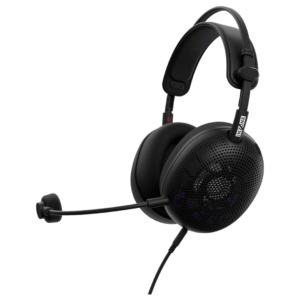
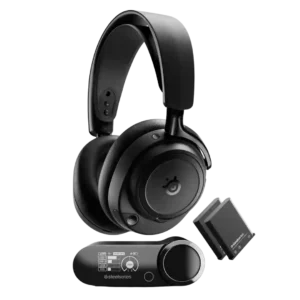
Active noise cancellation is repeatedly called best-in-gaming or near it, especially for low-frequency noise like fans and HVAC, with less hiss than older models. Multiple reviews still say it does not match the voice reduction of top consumer ANC headphones.
Android compatibility was supported by testing on Android or an Honor Magic V3, though SoundGuys noted Android lacks Inzone app support.
The Inzone app and Hub add useful software access, but reviewers repeatedly described the software experience as basic, underwhelming, or restricted.
Over the primary 2.4GHz link, reviewers typically report very low latency suitable for competitive play. Over Bluetooth, some call out higher latency on SBC for gaming unless you can use LC3 or LC3+.
Bass was generally praised as punchy, rich, or stronger than expected for an open-back headset, though SoundGuys noted some overemphasis rather than perfect neutrality.
Bass is generally praised as tight and controlled with good punch for explosions and low-end detail; several reviewers note it can be tailored further with game presets or EQ when you want more impact.
WIRED treated the absence of battery concerns as a wired-headset advantage, with no battery life anxiety during use.
The dual-battery system largely removes battery anxiety; reviews cite roughly 20–30 hours per battery depending on use and settings, plus quick charging. A few still note the per-battery runtime is not class-leading for the price. The replaceable battery approach (two swappable cells, one charging in the hub) is repeatedly highlighted as a longevity and convenience win, even though swapping may briefly interrupt power in some use cases.
The reviews describe the headset as wired-only or note that it avoids wireless connectivity, so Bluetooth support is not evidenced as present.
Build quality was mostly strong thanks to metal or aluminum parts and sturdy construction, though WIRED found some light plastic less reassuring.
Build quality is consistently framed as premium, with extensive metal parts and a sturdy feel. Some critiques focus on smaller fit-and-finish issues like fingerprint-prone surfaces or occasional base-station quirks in specific reviews.
The included DAC or USB-C audio box is useful and removes the need for a separate DAC, but the reviews do not provide hi-res playback evidence.
Physical controls are simple and generally usable, especially the mute button, but reviews also noted minimal controls, a cheap-feeling scroll, or limited feedback.
Cable feedback was mixed: two SoundGuys sources found the wire excessively long, while another review liked the roughly 6-foot-3 length.
Most reviews mention a soft case or pouch that feels premium enough, but many also argue a hard travel case should have been included at this price.
Clamping comfort was strong, with multiple reviews saying pressure was light and the headset did not rely on heavy side force to stay in place.
Clamping force trends on the tight side to maintain a strong seal for ANC; some reviewers find it fine, while others report pressure points (especially with glasses) and fatigue over time.
Codec support is described as unusually strong for a gaming headset, emphasizing Bluetooth 5.3 LE Audio with LC3 and LC3+. Some reviewers still miss more universal high-end codecs like aptX or LDAC on phones.
Comfort was one of the strongest recurring positives, with reviewers saying it stayed easy to wear over long sessions and even after many hours.
Comfort is often rated highly thanks to plush pads and a suspension headband that spreads weight well, but comfort is not universal: several reviews mention heat buildup and the need for breaks during long sessions.
Connectivity is versatile for a wired headset through 3.5mm, TRRS, USB-C, and the included audio hardware, but it still keeps users tethered.
Compatibility limitations center on app support, adapter gaps, Xbox controller use, and the fact that some competing headsets offer more versatility.
Design impressions were positive, with reviewers describing the headset as sharper, modern, minimalistic, sleek, and stylish.
CNET specifically noted the detachable 3.5mm analog cable, supporting convenience for users who value replaceable or separable wired connections.
Detachable microphone convenience is very strong, with every scored review referencing a removable or detachable boom/cardioid microphone.
The included USB-C audio box or dongle is useful for app access, settings, and device connectivity across several reviews.
Earcup padding was mostly praised for comfort and softness, though SoundGuys noted the cloth texture felt rough compared with another Inzone model.
CNET found the earcups rotate fully in either direction, which supports unusually flexible swivel behavior.
EQ support is useful through the Inzone Hub, including custom presets and 10-band adjustment, though fine control is limited in SoundGuys coverage.
EQ options are a major strength: reviews highlight deep customization (including parametric EQ on PC) and the ability to tune both playback and mic, with mobile controls available for console use.
Fit reliability was supported by reviews that said the headset stayed comfortable, held its adjustment, and avoided sliding around.
Measurement-focused coverage found the tuning close to a preference or neutral curve, while CNET also described the open-back sound as more neutral.
Game/Chat mixing is a strong point when used with the hub dial and/or Sonar, and some reviews highlight ways to achieve ChatMix with minimal software. The benefit is smaller if you only use one platform or dislike extra virtual devices.
Headband adjustment was useful and flexible, but not perfect; reviewers praised the range while noting notches or precision issues in some cases.
Included accessories were consistently practical where discussed, covering the USB audio hardware, microphone, detachable cable, stickers, or documents.
Instrument separation was a clear strength in the reviews that discussed it, with music layers and individual sounds remaining easy to distinguish.
Detail retrieval and layering are strong in many reviews, though at least one reviewer says separation can fall short for isolating specific cues like footsteps in busy scenes compared to more esports-tuned sets.
High-volume clarity was supported by SoundGuys and its video, which noted loud playback and no noticeable sibilance with the volume turned up.
The detachable boom microphone was broadly praised as clear, natural, good, or better than expected for a headset mic.
Microphone noise handling was mixed: some reviewers heard decent rejection or background suppression, while others said it picked up environmental noise easily.
AI noise rejection is a standout: reviews report strong suppression of loud background noise with voice staying intelligible, though some note increased processing artifacts at maximum settings.
Mic voice quality was generally positive, with reviewers describing it as clear, intelligible, natural, full, warm, or crystal clear despite some caveats.
The retractable boom mic is widely described as one of the clearest wireless gaming headset microphones, good enough for calls and team chat, while the built-in mics are convenient but a clear step down in fidelity.
Midrange performance came across well, with reviewers noting forward mids, clear vocals, and enough detail for dialogue, music, and game cues.
Multi-platform use is a strength, with reviews citing Windows, PlayStation, Mac, Android, iOS, Xbox, Nintendo Switch, mobile, and phone use.
Compatibility is a headline feature: reviews repeatedly emphasize broad multi-platform support (PC, PlayStation, Xbox, Switch, and mobile) and a hub designed to keep multiple systems connected at once.
Multipoint and multi-device behavior is commonly praised, with reviewers highlighting stable management of multiple Bluetooth devices and the overall reliability of switching between sources.
Passive isolation is weak because the open-back design only slightly attenuates high frequencies and lets background noise pass through.
Passive isolation benefits from a strong seal and plush pads; several reviewers say it blocks a lot even before ANC, though the tighter clamp that helps isolation can affect comfort.
Packaging evidence was positive but limited, with TrustedReviews noting mostly cardboard packaging and another review showing a straightforward unboxing.
Portability is limited but not absent: one review said it could travel in some situations, and another noted the headset folds flat for storage.
Portability is mixed: earcups can lay flat and the headset can travel, but it does not fold down and several reviewers call it bulky for commuting.
Positional audio was consistently good, with reviewers praising stereo imaging, footstep tracking, localization, and clear directional cues in games.
Preset support is a moderate strength, especially the RPG or immersive profiles, but not every spatial or software preset impressed reviewers.
Sidetone control exists but was not a highlight, with reviewers suggesting it be turned off or wishing for more mic controls beyond sidetone.
At least a couple of reviews mention finishes that pick up fingerprints easily, implying you may need to wipe the headset down more often.
Setup is generally simple because wired use avoids accounts, apps, and drivers in some cases, but software loading can still matter for settings.
Setup is usually described as straightforward via the GameHub, and the feature set is powerful across mobile and PC apps. However, multiple reviewers criticize the desktop software experience as intrusive, confusing, or buggy depending on platform and workflow.
Sound leakage is a major weakness of the open-back design, with reviewers describing audible bleed and warning against public or shared environments.
Every review characterized the H6 Air as a strong-sounding headset, with praise for clear, detailed, spacious audio across gaming and music.
Across reviews, sound quality is repeatedly described as top-tier for both gaming and music, with the biggest gains showing up on PC where the 24-bit/96kHz wireless mode can be used. A few reviewers still call the tuning a bit sterile or not night-and-day better than cheaper rivals unless you use EQ.
The open-back design repeatedly produced a wide, roomy soundstage that reviewers linked to immersion, spacious music playback, and precise gaming presentation.
Soundstage is commonly described as wide and immersive for a closed-back gaming headset, helping games feel less cramped and improving directional awareness.
Spatial audio was useful but uneven: reviewers liked natural immersion and gaming directionality, while some software spatial modes or personalization disappointed.
Spatial audio and positional effects are frequently praised as immersive and smooth, leaning more cinematic than razor-sharp esports tuning. A minority of commentary points to weaker precision in some directions, especially behind you.
Stability evidence was limited but positive, with SoundGuys and its video saying the rough earpad cloth helped prevent sliding.
TrustedReviews found no plastic in the packaging, which is the only direct sustainability-related material evidence in the reviews.
Transparency mode is present and generally treated as functional, but most reviews focus far more on ANC and isolation than on transparency performance.
Treble was described as clear or natural, but the SoundGuys review and related video noted upper-treble dips and some lack of brilliance.
Treble detail is high, but multiple reviews note elevated highs that can sound sharp or cause fatigue with certain tracks or long sessions until you dial it back with EQ.
USB-C support was well covered through the included audio box or adapter, helping connect the wired headset beyond a plain 3.5mm jack.
Value is mixed but generally defensible: reviewers noted the $200 price is high for wired gear, yet comfort, audio quality, and premium materials soften that concern.
The headset can reach very high listening levels, with the SoundGuys review noting ear-splitting levels and the related video testing clarity with volume cranked.
SoundGuys explicitly stated that the headset has no IP rating, making it unsuitable for water or sweat resistance expectations.
Weight comfort was a standout, with every scored review emphasizing the 199g-class build or describing the headset as extremely light.
At roughly 380g, many reviewers call it heavy compared to mainstream gaming headsets, though the suspension strap helps. Weight is a bigger issue for those sensitive to neck fatigue or who dislike bulky headsets.
Xbox compatibility was supported by TechRadar testing on Xbox Series X and CNET noting Xbox controller use, with some software-related caveats.