Average score
P1
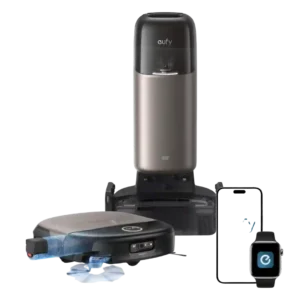
Product 1: Eufy S2 Omni
4.2
P2
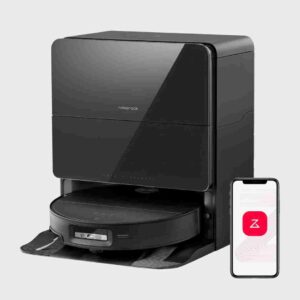
Product 2: Roborock Saros 10 Robot Vacuum...
4.2
Adaptive chassis lift
P1
Product 1: Eufy S2 Omni
4.7
Adaptive chassis lift was praised for helping the robot handle thick rugs, thresholds, and carpet transitions.
P2
Product 2: Roborock Saros 10 Robot Vacuum...
4.8
Adaptive chassis lift was one of the most praised hardware features, helping with thresholds, deep-pile carpet, and unusual obstacles.
Aesthetic design and finish
P1
Product 1: Eufy S2 Omni
4.6
Design sentiment was strongly positive, with reviewers calling the robot premium, modern, futuristic, and able to fit into home decor.
P2
Product 2: Roborock Saros 10 Robot Vacuum...
4.3
Most reviewers liked the premium, futuristic look and dock finish, although one noted the glossy base shows smudges.
AI, Smart, App and Automation
P1
Product 1: Eufy S2 Omni
3.8
AI, app, and automation feedback was mixed: reviewers liked automatic floor and obstacle handling, but smart-home functions and app customization lagged.
P2
Product 2: Roborock Saros 10 Robot Vacuum...
4.6
App, AI, and automation were standout strengths, with reviewers praising SmartPlan, mapping, camera features, voice control, and the Roborock app.
Area Rug Handling
P1
Product 1: Eufy S2 Omni
4.2
Area-rug handling was mixed but generally better than older models, with praise for not pushing rugs around and caveats about mop contact or cleaning order.
P2
Product 2: Roborock Saros 10 Robot Vacuum...
4.3
Area rug handling was mostly positive because mop removal/lifting kept rugs dry, but one reviewer warned taller rugs can still contact the mop.
Assembly and Setup
P1
Product 1: Eufy S2 Omni
4.5
Setup was consistently described as simple, straightforward, or easy across several reviews.
P2
Product 2: Roborock Saros 10 Robot Vacuum...
4.8
Setup was consistently described as quick, straightforward, or less intimidating than expected.
Bag-full indicator
P1
Product 1: Eufy S2 Omni
2.5
Bag-level monitoring was a limitation because one reviewer found no real-time dust-bag level access.
P2Product 2: Roborock Saros 10 Robot Vacuum...
No score yetBattery and Charging
P1
Product 1: Eufy S2 Omni
3.7
Battery and charging evidence was mixed: one summary praised battery life and quick charging, while another measured a long full recharge.
P2
Product 2: Roborock Saros 10 Robot Vacuum...
4.5
Battery and charging were considered sufficient to strong, with praise for real-use endurance and fast charging.
Bin and Bag
P1
Product 1: Eufy S2 Omni
4.5
The bin, bag, and self-emptying path earned positive marks for clearing hair and staying clean, though very full bins may need extra emptying.
P2
Product 2: Roborock Saros 10 Robot Vacuum...
4.0
The dock bag system was praised for clean, easy auto-emptying, but one reviewer criticized the smaller onboard dustbin.
Build quality and durability
P1
Product 1: Eufy S2 Omni
4.5
Build quality impressions were positive, including strong construction and a solid premium feel.
P2
Product 2: Roborock Saros 10 Robot Vacuum...
4.5
One reviewer praised the build quality and component fit, describing the construction as improved and solid.
Carpet — High-Pile Pickup
P1
Product 1: Eufy S2 Omni
4.2
High-pile carpet evidence was sharply mixed, ranging from strong thick-rug performance to underwhelming deep-clean scores.
P2
Product 2: Roborock Saros 10 Robot Vacuum...
5.0
High-pile carpet handling was strongly praised, with AdaptiLift helping the robot keep moving and vacuuming.
Carpet — Low-Pile Pickup
P1
Product 1: Eufy S2 Omni
3.7
Low-pile or everyday carpet pickup was mixed: some saw good carpet lines, while controlled testing found weaker agitation than expected.
P2
Product 2: Roborock Saros 10 Robot Vacuum...
3.6
Low-pile carpet pickup was mixed: one lab result was strong for rice, while another reviewer found an initial carpet debris pass disappointing.
Carpet — Medium-Pile Pickup
P1
Product 1: Eufy S2 Omni
3.5
Medium-pile carpet evidence was mixed: one review reported solid results, while another framed carpet agitation as a tradeoff.
P2
Product 2: Roborock Saros 10 Robot Vacuum...
3.9
Medium-carpet evidence ranged from below-average embedded-sand results in one comparison to strong pickup in other real-world tests.
Child lock
P1
Product 1: Eufy S2 Omni
3.0
Child-lock evidence was mixed because it protected controls but limited touchscreen usefulness.
P2Product 2: Roborock Saros 10 Robot Vacuum...
No score yetClogging and debris prevention
P1
Product 1: Eufy S2 Omni
4.8
Clog prevention and sustained airflow were a major strength, with reviewers repeatedly noting clean filters and little to no suction decline.
P2
Product 2: Roborock Saros 10 Robot Vacuum...
4.5
Clogging and debris-prevention evidence was positive where auto-emptying worked even with a hair-filled bin.
Comparative performance
P1
Product 1: Eufy S2 Omni
4.1
Comparative performance was mixed: the S2 beat some prior or lower models in experience, but one critical review favored other flagships for balance.
P2
Product 2: Roborock Saros 10 Robot Vacuum...
3.8
Comparative performance was mixed: some reviewers placed it below certain Roborock siblings for specific strengths while others saw little separating the Saros models.
Controls and UI
P1
Product 1: Eufy S2 Omni
4.2
Controls and UI were generally liked for clean maps, useful visual indicators, and easy customization, but advanced controls and smart-home depth lagged competitors.
P2
Product 2: Roborock Saros 10 Robot Vacuum...
4.6
Controls and UI were broadly praised, especially the app, remote control, voice controls, and spot-clean commands, with only minor usability caveats.
Cord management
P1Product 1: Eufy S2 Omni
No score yet
P2
Product 2: Roborock Saros 10 Robot Vacuum...
2.0
Cord management was criticized because the base-station power cord was unusually thick and harder to route neatly.
Corner Cleaning (Robot)
P1
Product 1: Eufy S2 Omni
3.8
Corner cleaning was mixed: the extending brush helped in some tests, but multiple reviews still found corners inconsistent.
P2
Product 2: Roborock Saros 10 Robot Vacuum...
4.5
Corner cleaning was generally strong thanks to side brush and side mop behavior.
Crevice / Groove Pickup (Hard Floors)
P1
Product 1: Eufy S2 Omni
3.4
Groove and grout cleaning was mixed, with roughly half the grime removed in one tile test.
P2
Product 2: Roborock Saros 10 Robot Vacuum...
2.5
Crevice and groove pickup was a limitation, with grout-line debris left behind in one test and poor grout cleaning in another.
Cyclone performance
P1
Product 1: Eufy S2 Omni
4.8
Cyclone performance was a clear strength, with reviewers emphasizing sustained power and long-lasting airflow.
P2Product 2: Roborock Saros 10 Robot Vacuum...
No score yetDebris illumination
P1Product 1: Eufy S2 Omni
No score yet
P2
Product 2: Roborock Saros 10 Robot Vacuum...
4.5
The headlight was praised for illuminating dust and debris in darker corners.
Docking and Auto-Empty Reliability (Robot)
P1
Product 1: Eufy S2 Omni
4.7
Docking and auto-empty reliability were major positives, with multiple reviewers praising the automated station and clean emptying.
P2
Product 2: Roborock Saros 10 Robot Vacuum...
4.3
Docking and auto-empty reliability was mostly positive, but one reviewer reported occasional incomplete docking that left the robots offline.
Dock noise
P1Product 1: Eufy S2 Omni
No score yet
P2
Product 2: Roborock Saros 10 Robot Vacuum...
4.8
Dock noise was praised, especially quiet drying sequences.
Dried-On Stain Removal
P1
Product 1: Eufy S2 Omni
4.5
Dried-on stain evidence was mostly positive for basic stains and sauce-like messes, though one reviewer still saw limits to true heavy scrubbing.
P2
Product 2: Roborock Saros 10 Robot Vacuum...
3.7
Dried-on stain results were split: several reviewers praised strong multi-pass stain removal, while comparative and jelly tests found weaker stain handling.
Ease of use
P1
Product 1: Eufy S2 Omni
4.7
Ease of use was praised for comfortable controls, low-effort operation, and simple daily use.
P2
Product 2: Roborock Saros 10 Robot Vacuum...
4.5
Ease of use was strong across setup, room editing, voice control, and hands-off operation.
Edge and Baseboard Cleaning (Hard Floors)
P1
Product 1: Eufy S2 Omni
4.1
Baseboard and edge cleaning was mixed: several reviewers liked the extending mop, but others saw gaps along cabinets and walls.
P2
Product 2: Roborock Saros 10 Robot Vacuum...
4.6
Edge and baseboard cleaning was usually praised, with reviewers noting strong wall and corner pickup, although one test called it decent rather than perfect.
Edge‑Following Accuracy (Robot)
P1
Product 1: Eufy S2 Omni
3.3
Edge-following accuracy was mixed to weak, with repeated criticism that the robot did not ride close enough to walls.
P2
Product 2: Roborock Saros 10 Robot Vacuum...
3.0
One reviewer found the robot sometimes avoided legs and furniture too widely, limiting close edge-following.
Emptying and Mess Control
P1
Product 1: Eufy S2 Omni
2.5
Mess control had a notable caveat where one reviewer saw mopped-up substance later reappear on the floor.
P2
Product 2: Roborock Saros 10 Robot Vacuum...
5.0
One reviewer praised mess control because the robot did not drop collected dirt or litter over thresholds.
Filter-change indicator
P1
Product 1: Eufy S2 Omni
4.2
Filter and accessory tracking was positive where the app tracked accessory wear well.
P2Product 2: Roborock Saros 10 Robot Vacuum...
No score yetFiltration / Dust Containment
P1
Product 1: Eufy S2 Omni
4.7
Filtration evidence was positive, with one reviewer noting dust was not being pushed back into the air.
P2
Product 2: Roborock Saros 10 Robot Vacuum...
4.5
Dust containment evidence was positive around the self-sealing bags and mess-free replacement.
Floor Drying Time
P1Product 1: Eufy S2 Omni
No score yet
P2
Product 2: Roborock Saros 10 Robot Vacuum...
5.0
One reviewer praised the light mopping mode for leaving the floor nearly dry by the end of cleaning.
Floorhead design
P1
Product 1: Eufy S2 Omni
4.4
The floorhead changes were viewed as meaningful improvements over earlier models.
P2
Product 2: Roborock Saros 10 Robot Vacuum...
4.5
Floorhead design received positive feedback for the side brush and anti-tangle brush concepts improving pickup and hair handling.
Floor shine after cleaning
P1
Product 1: Eufy S2 Omni
4.6
Reviewers who discussed floor finish described floors as shiny, clean, or looking new after use.
P2
Product 2: Roborock Saros 10 Robot Vacuum...
4.5
One reviewer linked the cleaning result to sparkling-looking floors after regular use.
Fresh Liquid Pickup Speed
P1
Product 1: Eufy S2 Omni
4.6
Fresh liquid pickup performed well in the tomato-sauce test, where the mess was picked up without smearing.
P2
Product 2: Roborock Saros 10 Robot Vacuum...
2.0
Fresh spill handling was weak in one home test, where porridge, sauce, and milk were spread rather than cleaned up.
Hair-removal channel issues
P1
Product 1: Eufy S2 Omni
4.7
The hair-removal channel was praised for reducing wrap, though it contributed to the carpet-agitation tradeoff.
P2
Product 2: Roborock Saros 10 Robot Vacuum...
4.5
One reviewer praised the hair-removal channel design for drawing hair off the rollers and into the bin.
Hair Pickup — Carpets
P1
Product 1: Eufy S2 Omni
4.6
Pet-hair pickup on carpets was praised in one test-panel summary.
P2
Product 2: Roborock Saros 10 Robot Vacuum...
4.2
Carpet hair pickup was strong in direct dog-hair and long-hair tests, though one comparative review said another robot scored much better.
Hair Pickup — Hard Floors
P1
Product 1: Eufy S2 Omni
4.8
Hair pickup on hard floors was strong in long-hair households.
P2
Product 2: Roborock Saros 10 Robot Vacuum...
4.5
Hard-floor hair pickup was positive in one home with pet hair.
Hair‑Wrap / Tangle Resistance
P1
Product 1: Eufy S2 Omni
4.8
Tangle resistance was one of the strongest areas, with reviewers repeatedly reporting little to no hair wrap.
P2
Product 2: Roborock Saros 10 Robot Vacuum...
4.8
Hair-wrap resistance was one of the clearest strengths, with reviewers repeatedly reporting little to no tangling.
Hard Floor — Fine Dust Pickup
P1
Product 1: Eufy S2 Omni
4.8
Hard-floor dust and residue pickup was praised, with reviewers seeing exceptional or residue-free hard-floor results.
P2
Product 2: Roborock Saros 10 Robot Vacuum...
4.6
Hard-floor fine-dust pickup was consistently strong, with reviewers noting excellent or near-complete pickup.
Hard Floor — Large Debris Intake
P1
Product 1: Eufy S2 Omni
4.8
Large hard-floor debris intake was praised for pulling debris in quickly instead of scattering it.
P2
Product 2: Roborock Saros 10 Robot Vacuum...
4.4
Large hard-floor debris pickup was strong overall, although some scattering remained in isolated tests.
Headlight and LED lights
P1
Product 1: Eufy S2 Omni
4.0
Low-light operation was acceptable in one review, which reported rare issues running without lights.
P2
Product 2: Roborock Saros 10 Robot Vacuum...
4.5
One reviewer praised the LED headlight as a useful touch for darker corners.
Heating element
P1
Product 1: Eufy S2 Omni
4.5
The heating element was praised for keeping the mop cleaner longer through hot-water washing.
P2
Product 2: Roborock Saros 10 Robot Vacuum...
4.5
The heating element was viewed as useful for freshening and washing the mop with very hot water.
Innovation compared to competitors
P1
Product 1: Eufy S2 Omni
4.6
Innovation sentiment was positive, especially for the unique fragrance feature, cyclone system, and eufy’s broader experimentation.
P2
Product 2: Roborock Saros 10 Robot Vacuum...
4.5
Reviewers treated the Saros 10 as an advanced, innovation-forward robot, especially because of its retractable navigation, adaptive lift, and hands-off dock.
Kid-friendliness
P1
Product 1: Eufy S2 Omni
4.7
Kid-friendliness sentiment was positive where reviewers valued sanitation and non-toxic cleaning around children.
P2Product 2: Roborock Saros 10 Robot Vacuum...
No score yetLarge debris handling
P1
Product 1: Eufy S2 Omni
4.4
Large debris handling was generally positive, with reviewers reporting strong pickup of heavier or everyday debris.
P2
Product 2: Roborock Saros 10 Robot Vacuum...
3.5
Large debris handling was adequate but not perfect in one hard-floor test, where some grains were scattered beyond the starting area.
Low-profile design
P1
Product 1: Eufy S2 Omni
4.4
Low-profile design helped the robot fit under furniture and in tight spaces.
P2
Product 2: Roborock Saros 10 Robot Vacuum...
4.8
The low-profile retractable LiDAR design was repeatedly praised for reaching under furniture and low-clearance areas.
Maintenance requirements
P1
Product 1: Eufy S2 Omni
4.7
Maintenance requirements were generally low thanks to clean filters, self-emptying, and set-it-and-forget-it behavior.
P2
Product 2: Roborock Saros 10 Robot Vacuum...
4.5
Maintenance requirements were viewed favorably because the dock and self-maintenance features handled most routine tasks.
Maneuverability and Handling
P1
Product 1: Eufy S2 Omni
4.5
Handling was praised in one review for smooth movement without jerky behavior.
P2
Product 2: Roborock Saros 10 Robot Vacuum...
5.0
Maneuverability was praised where the robot crossed thresholds, moved under furniture, and handled difficult floor transitions with ease.
Map and Path Efficiency (Robot Vacuums)
P1
Product 1: Eufy S2 Omni
4.3
Mapping and pathing were generally strong, especially for fast mapping and 3D navigation, though one obstacle-course run looked less streamlined.
P2
Product 2: Roborock Saros 10 Robot Vacuum...
4.1
Mapping and pathing were generally accurate and efficient, but one reviewer saw room-label mistakes and another reported skipped areas.
Mop lifting system
P1
Product 1: Eufy S2 Omni
4.3
Mop lifting was generally useful for carpet avoidance, though some reviewers noted possible light contact and wanted a cover.
P2
Product 2: Roborock Saros 10 Robot Vacuum...
4.9
The mop lifting and automatic mop detachment system was widely praised for protecting carpets and reducing manual intervention.
Mopping performance
P1
Product 1: Eufy S2 Omni
4.7
Mopping performance was the S2’s most consistent strength, especially on hard floors, streak control, and daily messes.
P2
Product 2: Roborock Saros 10 Robot Vacuum...
4.3
Mopping performance was polarized: many reviewers praised daily maintenance and advanced stain modes, while others found spills, jelly, or standard-mode scrubbing weak.
Noise level
P1
Product 1: Eufy S2 Omni
3.0
Noise was a recurring caveat: reviewers did not call it unusable, but several noted it was louder than average or reached a high 81 dB on max suction.
P2
Product 2: Roborock Saros 10 Robot Vacuum...
5.0
One reviewer measured the robot as extremely quiet at maximum setting, giving noise a very positive showing.
Obstacle Avoidance (Robot)
P1
Product 1: Eufy S2 Omni
4.4
Obstacle avoidance was broadly good but not perfect, with praise for pet waste, cords, and objects alongside misses on everyday clutter.
P2
Product 2: Roborock Saros 10 Robot Vacuum...
3.5
Obstacle avoidance was the most mixed major feature, ranging from excellent cable and pet-mess avoidance to failures with toys, cables, socks, and small objects.
Odor control
P1
Product 1: Eufy S2 Omni
3.9
Odor control was the most split feature: some reviewers loved the scent system, while others barely noticed it during cleaning.
P2
Product 2: Roborock Saros 10 Robot Vacuum...
4.5
Dock drying and washing were credited with helping prevent odor and bacterial growth.
Ongoing ownership costs (bags, filters, batteries)
P1
Product 1: Eufy S2 Omni
2.5
Ownership-cost sentiment was negative around fragrance refills, which one reviewer said were not worth buying.
P2
Product 2: Roborock Saros 10 Robot Vacuum...
2.0
Ongoing costs were a concern in one review because the recommended Roborock detergent was described as very expensive.
Overall cleaning convenience
P1
Product 1: Eufy S2 Omni
4.7
Overall cleaning convenience was a major strength, with reviewers emphasizing reduced hands-on work and set-it-and-forget-it use.
P2
Product 2: Roborock Saros 10 Robot Vacuum...
4.9
Cleaning convenience was a major strength, with reviewers emphasizing hands-off operation and set-it-and-forget-it use.
Overall durability/longevity
P1
Product 1: Eufy S2 Omni
4.7
Longevity sentiment centered on sustained performance over time rather than just day-one cleaning.
P2Product 2: Roborock Saros 10 Robot Vacuum...
No score yetOverall opinion
P1
Product 1: Eufy S2 Omni
4.5
Overall opinion was positive but not universal: most reviewers called it excellent or flagship-level, while one framed it as strong but specialized.
P2
Product 2: Roborock Saros 10 Robot Vacuum...
4.5
Overall sentiment was strongly positive, but tempered by repeated tradeoffs around price, mopping consistency, and obstacle avoidance.
Packaging quality
P1
Product 1: Eufy S2 Omni
4.4
Packaging and unboxing sentiment was positive in one review, which described the unboxing experience as unusually enjoyable.
P2Product 2: Roborock Saros 10 Robot Vacuum...
No score yetPet-Ready Features
P1
Product 1: Eufy S2 Omni
4.1
Pet-focused evidence was mostly positive for hair handling and pet-waste avoidance, with one reviewer flagging a fake-poop obstacle miss before later passes avoided it.
P2
Product 2: Roborock Saros 10 Robot Vacuum...
4.8
Pet-focused evidence was positive: reviewers reported effective cleaning after cats and dogs and described the robot as suited to busy pet homes.
Price and Value
P1
Product 1: Eufy S2 Omni
3.8
Value sentiment was mixed: one reviewer found the price justified but higher than hoped, while another considered it in line with flagship models.
P2
Product 2: Roborock Saros 10 Robot Vacuum...
2.6
Price drew the most consistent criticism: reviewers called it expensive or hard to justify, even when some felt the performance or investment case was strong.
Privacy controls
P1
Product 1: Eufy S2 Omni
4.2
Privacy sentiment was positive for users who prefer no video monitoring.
P2
Product 2: Roborock Saros 10 Robot Vacuum...
4.3
Privacy-related camera controls were viewed positively because the robot announces remote viewing and keeps photo/video features off by default.
Runtime
P1
Product 1: Eufy S2 Omni
3.0
Runtime was mixed because coverage varied widely and max suction reduced efficiency.
P2
Product 2: Roborock Saros 10 Robot Vacuum...
4.5
Runtime was considered sufficient to strong in real use, with reviewers reporting enough battery for most homes or impressive single-charge cleaning.
Sanitizing performance
P1
Product 1: Eufy S2 Omni
4.7
Sanitizing sentiment was positive, especially around electrolyzed water and cleaner-feeling floors for homes with kids or pets.
P2Product 2: Roborock Saros 10 Robot Vacuum...
No score yetSelf-cleaning cycle
P1
Product 1: Eufy S2 Omni
4.8
The self-cleaning cycle was repeatedly praised for keeping the roller clean and reducing dirty-water smearing.
P2
Product 2: Roborock Saros 10 Robot Vacuum...
4.0
Self-cleaning was mostly praised for reducing maintenance, though one jelly test found the mop was not fully cleaned afterward.
Software-update support / feature longevity
P1
Product 1: Eufy S2 Omni
4.5
Software support was viewed positively where reviewers saw frequent firmware updates and no observed suction decline, though some issues were still being fixed.
P2Product 2: Roborock Saros 10 Robot Vacuum...
No score yetSolution / Liquid system
P1
Product 1: Eufy S2 Omni
4.3
The liquid system was praised for cleaner floors and efficient water use.
P2
Product 2: Roborock Saros 10 Robot Vacuum...
4.3
The detergent and liquid system was viewed positively, especially compared with manually mixing solution into clean water.
Stair Cleaning
P1
Product 1: Eufy S2 Omni
4.7
Stair safety evidence was positive, with the robot navigating a stair edge without going over.
P2Product 2: Roborock Saros 10 Robot Vacuum...
No score yetStorage footprint and upright-stand stability
P1
Product 1: Eufy S2 Omni
4.1
The station’s footprint drew mixed but mostly positive comments: reviewers liked the narrow/tower design, while one noted the taller dock uses more wall space.
P2
Product 2: Roborock Saros 10 Robot Vacuum...
4.5
Storage footprint feedback was positive, with one reviewer saying the unit was designed to take up as little space as possible.
Streaking / Residue
P1
Product 1: Eufy S2 Omni
4.8
Streaking and residue results were strong across several reviews, with repeated mentions of no visible streaks or residue.
P2
Product 2: Roborock Saros 10 Robot Vacuum...
2.3
Streaking and residue were concerns in tough mopping tests and when the flat mop became saturated.
Stuck resistance
P1
Product 1: Eufy S2 Omni
4.1
Stuck resistance was mostly positive for thresholds and rugs, though one reviewer found custom threshold decisions slow and clunky.
P2
Product 2: Roborock Saros 10 Robot Vacuum...
3.9
Stuck resistance was often excellent, with several reviewers saying it never got stuck, but low furniture and thresholds caused trouble in some homes.
Suction and Airflow
P1
Product 1: Eufy S2 Omni
4.8
Reviewers repeatedly praised the S2’s suction and airflow for strong pickup, sustained power, and confidence on debris-heavy cleaning, though not every carpet result matched the raw suction rating.
P2
Product 2: Roborock Saros 10 Robot Vacuum...
4.3
Reviewers generally found suction powerful and vacuuming strong on hard floors and carpets, though a few tests said the headline Pa rating did not always translate into flawless pickup.
Suitability for heavy-duty use
P1
Product 1: Eufy S2 Omni
4.4
Heavy-use suitability was supported by evidence of more than 20,000 square feet cleaned in testing.
P2
Product 2: Roborock Saros 10 Robot Vacuum...
5.0
Heavy-duty suitability was strong in tests that pushed tough stains, high-pile carpet, and demanding cleaning jobs.
Suitability for small spaces
P1
Product 1: Eufy S2 Omni
4.5
Small-space suitability was praised for reaching tight spaces and fitting into narrower areas.
P2
Product 2: Roborock Saros 10 Robot Vacuum...
4.8
Small-space suitability was positive because reviewers found the low-profile robot and compact dock easier to place.
Support and Reliability
P1
Product 1: Eufy S2 Omni
3.7
Reliability evidence was mixed, balancing app disconnections against praise for active firmware fixes.
P2
Product 2: Roborock Saros 10 Robot Vacuum...
4.5
Reliability evidence was positive in one longer test where the dock performed as stated, though other reviews noted navigation and docking caveats under separate attributes.
Tool-change simplicity
P1Product 1: Eufy S2 Omni
No score yet
P2
Product 2: Roborock Saros 10 Robot Vacuum...
5.0
Tool-change simplicity was praised through the automatic mop pad removal and reattachment system.
Under-Furniture Pickup
P1
Product 1: Eufy S2 Omni
4.7
Under-furniture pickup was praised where the lower profile let the robot slide under a bed.
P2
Product 2: Roborock Saros 10 Robot Vacuum...
4.8
Under-furniture cleaning was a standout strength when clearances matched the retractable sensor design.
Value-for-money
P1
Product 1: Eufy S2 Omni
2.8
Value-for-money was a weak spot in one critical review, which found better value in a lower-priced eufy option.
P2
Product 2: Roborock Saros 10 Robot Vacuum...
3.5
Value was mixed: some reviewers saw weak value versus cheaper competitors, while others called it strong for a flagship with broad capabilities.
Versatility
P1
Product 1: Eufy S2 Omni
4.6
Versatility evidence was positive for combining vacuuming and mopping into one more consistent system.
P2
Product 2: Roborock Saros 10 Robot Vacuum...
5.0
Versatility was praised because users could deeply customize features or leave the robot to run simply and automatically.
Water tank
P1
Product 1: Eufy S2 Omni
3.3
Water-tank feedback was mixed: large tanks reduced attention, but dirty-water odor still required rinsing.
P2
Product 2: Roborock Saros 10 Robot Vacuum...
3.3
Water-tank feedback was mixed: one reviewer found frequent refilling bothersome, while another framed occasional filling and emptying as simple.
Weight
P1Product 1: Eufy S2 Omni
No score yet
P2
Product 2: Roborock Saros 10 Robot Vacuum...
4.0
Weight feedback was positive for moving the base station, which one reviewer found light enough to carry.