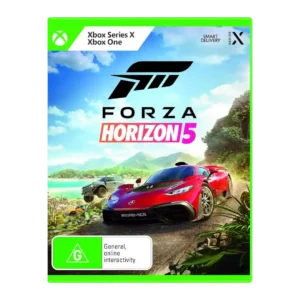
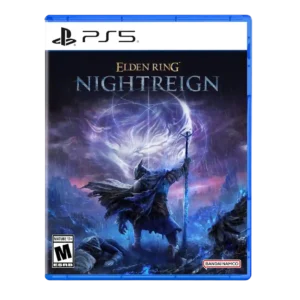
Reviewers consistently describe Forza Horizon 5 as approachable, with flexible assists, difficulty options, accessibility settings, and inclusive avatar options that help casual players and newcomers enjoy the racing without heavy simulation pressure.
The reviews describe very little objectionable content, though the radio can include suggestive lyrics and censored profanity, making it broadly family-appropriate with minor content cautions.
AI feedback is mixed: reviewers praise the overall racing, but call out hard-spiking opponents, occasional rubber-banding, and the familiar issue of a single AI car pulling far ahead on higher difficulties.
One review says enemy AI can break down under three-player pressure, making some encounters feel messy.
Animation evidence centers on mixed presentation quality rather than core racing: some reviewers note impressive cinematic flow, while others mention limited or awkward character animation outside the cars.
One review says the animations, along with the broader presentation, can look absolutely stunning.
The visual style earns praise for a bright, pristine, colorful interpretation of Mexico that favors spectacle and variety over strict realism.
One review says the fantasy art direction remains striking even within a heavily reused asset base.
The Mexico setting creates a strong atmosphere through vibrant biomes, cultural touches, weather, music, and a festival tone, though a few reviewers say the overall vibe is less distinctive after years of updates.
One review says the run-based structure sacrifices some of Elden Ring's melancholy scenic presence.
Boss design is one of the clearest strengths, though some reviews say the health pools can make those fights drag.
Technical bugs are usually described as minor rather than game-breaking, with reviewers mentioning glitches, audio issues, server connection hiccups, repeated dialogue, and odd replay behavior.
One review describes the game as having minimum bugs alongside decent performance.
One review says the lock-on camera can feel like it is fighting the player in crowded battles.
One review says the character-specific storylines are surprisingly well done and help the Nightfarers stand out.
The Nightfarers are usually described as distinct, useful, and broadly well balanced.
Co-op is well supported through Horizon Arcade and shared activities, with reviewers highlighting group goals, minigames, and easy online participation rather than deep split-screen or couch co-op.
Co-op is one of Nightreign's biggest strengths, especially when the team is coordinated and communicating well.
Combat is often described as excellent and energized by the new format, though one review finds it uneven in practice.
Community features are strong through custom event building, EventLab sharing, user-generated races, and tools that let players create and distribute their own challenges.
Competitive balance is mostly inferred from PvP restructuring and reduced pressure, but reviewers still mention AI and difficulty spikes, so the balance is positive but not perfect.
Content variety is one of the strongest areas: reviews repeatedly cite races, PR stunts, stories, showcases, expansions, online modes, event types, and a dense activity map.
Class and run variation help, but repeated points of interest and repeated encounters keep variety from feeling fully convincing.
Controls are praised as slick, intuitive, responsive, and easy to learn, with handling options that support both casual arcade driving and more serious control setups.
The core loop is consistently described as rewarding: drive, race, explore, earn accolades, unlock cars and events, and keep progressing even through casual open-world play.
The core loop is compelling and fast to click with, but one review says repetition eventually wears the format down.
Crash stability is viewed positively overall because reviewers repeatedly mention rare technical issues, no game-breaking bugs, and no crashes, even when some minor bugs remain.
The PS5 release supports cross-play, letting PlayStation players race with PC and Xbox players across the shared Mexico map.
The lack of cross-play is a repeated and unanimous negative across the supporting reviews.
Cross-save support is weak because one PS5 review says existing Xbox or PC saves cannot be transferred, requiring a fresh start.
Dialogue evidence is mixed and overlaps with writing: several reviewers find the tone friendly and harmless, while others call some dialogue cringey, repeated, or overly peppy.
Difficulty is flexible and approachable, with assists and adjustable challenge levels, but a few reviewers criticize overly easy driving, hard-spiking AI, or uneven gaps between difficulty presets.
Difficulty is a major pain point, especially in solo play, with several reviews calling the balance harsh or overtuned.
DLC value is strongest on PS5 packages that include or offer Rally Adventure and Hot Wheels, though value depends heavily on which digital edition or sale price buyers choose.
Driving mechanics are one of the clearest strengths, with reviewers praising handling, vehicle variety, arcade-sim balance, responsive feel, and the distinct behavior of different cars.
Economy and rewards are generous, with frequent cars, wheelspins, credits, accolades, and unlocks; some reviewers note that the generosity can reduce the thrill of earning better vehicles.
The emotional pull is modest but present in personal car stories, name recognition, a sense of place, and the joy of simply existing in the world rather than in heavy drama.
One review highlights strong emotional swings, with co-op runs creating wonder, frustration, and euphoria.
Endgame content is supported by expansions, playlists, car collecting, EventLab, online modes, and years of updates, though recent reviews note the festival playlist is being retired or recycled.
One review says there is still plenty to finish and collect even after a long time with the game.
One review says rotating mini-bosses help encounters stay fresher than pure reuse would suggest.
Environmental detail receives strong praise for Mexico’s beaches, jungles, towns, ruins, volcanoes, weather, draw distance, foliage, lighting, and dense visual texture.
One review says the terrain and environmental variety feel careful, purposeful, and visually striking.
Exploration is a major strength: reviewers repeatedly say the map encourages wandering, discovery, scenic driving, hidden activities, and enjoyable free-roam movement between events.
Exploration has real appeal when teams learn the map, but the timer can sharply limit how much wandering feels viable.
Reviews frame Horizon 5 as faithful to the series, retaining the festival structure, playful tone, open-world freedom, showcase events, car collecting, and approachable arcade-sim blend.
The spin-off still preserves Elden Ring and FromSoftware combat DNA strongly enough to satisfy series fans.
The game is largely family-friendly by racing game standards, though music lyrics and censored language mean it is not completely free of mild content concerns.
Fast travel and map movement are useful through outposts, homes, and quick bouncing around the map, though some reviews focus more on driving than fast travel convenience.
Frame-rate feedback is mostly strong, especially on current consoles and performance modes, though several reviewers mention tradeoffs, pop-in, or occasional dips in demanding scenes.
Frame-rate stability varies by setup, with some reviewers seeing slowdown and others reporting mostly smooth performance.
Fun factor is exceptionally high, with reviews repeatedly calling the game glorious, a blast, relaxing, joyful, and appealing even to players who do not usually love racing games.
When the conditions are right, the game is consistently described as exciting and very fun.
Gameplay mechanics are broad and polished, combining racing, rewinding, tuning, open-world exploration, challenges, weather, and arcade-sim driving into a coherent racing sandbox.
Reviews praise the underlying systems for balancing speed, routing, and streamlined build rules, though one review says the structure can still feel restrictive.
Graphics quality is one of the most praised traits, with reviewers calling the game stunning, gorgeous, technically impressive, and among the best-looking racers available.
Visual presentation is broadly praised, ranging from perfectly fine to gorgeous, even when reuse is obvious.
The reviews generally suggest a low-pressure grind because progression is generous and rewarding, although the sheer amount of content can feel overwhelming to some players.
One review says the repeated setup before Nightlords turns the experience into a grind.
Haptic feedback is a PS5 strength: reviewers say DualSense haptics and adaptive triggers add tactile feel, even if the implementation is not always groundbreaking.
One review says the game throws varied locations and unexplained icons at players, hurting immediate clarity.
Immersion is strong thanks to detailed landscapes, authentic accents, believable weather, engine audio, draw distance, and tactile driving feedback, with a few caveats around lifeless cities.
Innovation is moderate: reviewers praise thoughtful refinements, EventLab, and accessibility additions, but several also say it is more evolution than reinvention.
The learning curve is friendly for new players because assists, rewind, auto-upgrades, and flexible difficulty reduce friction, while deeper tuning and harder settings remain available.
The learning curve is steep because the game expects fast system knowledge and a lot of failure-driven learning.
Level and race layout benefit from varied biomes, outposts, showcases, routes, EventLab, and strong cross-country design, though user-created events can lack guidance.
Live-service support has been substantial over the years with playlists, updates, cars, and expansions, but recent reviews indicate new playlist content may be winding down or recycled.
Load-time feedback is mixed: one PS5 review criticizes frequent loading screens, while others focus more on smooth open-world traversal and quick event access.
Loot can meaningfully shape builds and often feels purposeful, though randomness sometimes withholds the tools players want.
Lore depth is light but present through Mexican cultural references, car history, Vocho storytelling, local history, and the franchise’s car-culture legacy.
Lore is lighter than base Elden Ring, but one review still finds enough mystery to fuel speculation.
Map and navigation design is excellent in scale and diversity but can feel overloaded, with some reviewers praising freedom and others saying the map gives too much information without enough decision help.
One review says the map can feel cluttered and unintuitive even if it still gives teams enough guidance to move.
Matchmaking is inconsistent across reviews, ranging from quick and painless to unreliable.
Menu usability is one of the weaker areas, with reviewers calling menus bloated, information-heavy, or insufficiently instructive in tools like EventLab.
Menus and information tools are usable but not especially welcoming or clear to parse quickly.
Microtransactions and paid content are a caveat rather than a core complaint, with one review specifically objecting to car-pass promotion and the broader MTX-heavy reality around the package.
Mission design is varied and often fun through Expeditions, stories, showcases, and racing objectives, but some later reviews mention repetition in missions and races.
Mission variety is strong thanks to race disciplines, story missions, showcases, PR stunts, Expeditions, Arcade events, and expansions.
Mod support is not traditional modding, but EventLab and custom event rules give players unusually strong creation tools for a console racing game.
Monetization fairness is mixed: the game offers enormous content, but PS5 pricing, multiple digital editions, car pass upsells, and DLC tiers make value dependent on edition and sale timing.
One review explicitly notes that the game is not expected to add microtransactions later.
Movement feel is excellent when treated as vehicle feel: reviewers praise snappy handling, speed, tactile controls, drifting, and distinct surfaces, while 30fps or difficulty quirks can affect feel.
One review says movement is noticeably faster and more agile, which fits the run-based format well.
Multiplayer design is broad and improved, with Horizon Open, Arcade, Tour, convoys, cross-play, EventLab sharing, PvP restructuring, and easier jump-in social play.
The trio-first multiplayer structure is clear, but repeated complaints about missing duos and limited comms drag the design down.
Narrative quality is secondary and mixed: some reviews appreciate the more personal campaign and Vocho story, while others say the story is thin, juvenile, or barely present.
Most reviews that discuss the story treat it as light scaffolding rather than a major strength.
Onboarding is strong, with a cinematic opening, quick access to varied cars and biomes, and a gentle introduction to the world before the map opens up.
Basic class pickup is approachable, but newcomers can still feel overwhelmed once the run starts moving.
Online stability is mixed: reviewers like the modes but mention flaky launch behavior, disconnect messages, Horizon Life connection problems, and server hiccups.
Online stability is uneven, with some reports of lag or netcode issues and others seeing only occasional disconnects.
Open-world design is exceptional overall, with a large, diverse Mexico map that supports exploration, racing, scenery, event density, and a strong sense of place.
The semi-randomized map structure and shifting conditions help the world feel dynamic despite the fixed overall space.
Originality is moderate because the formula is familiar, but the Mexico setting, arcade-sim blend, EventLab, and scale still give it a distinct open-world racing identity.
Reviewers see real invention in the co-op roguelike pivot, even if the game also leans heavily on reused assets.
Pacing is mostly relaxed and player-led, but reviews disagree on whether the flood of activities feels freeing or occasionally scattered, repetitive, and overwhelming.
The pace is intentionally frantic and fast, which some reviewers find thrilling and others find exhausting.
Performance optimization is mostly strong across platforms and modes, though older hardware, performance mode pop-in, and occasional technical dips appear in several reviews.
One review reports acceptable overall performance but still flags frame drops and uneven smoothness.
Platform-specific support is a clear PS5 strength, with reviewers praising DualSense features, PS5 Pro enhancements, cross-play, and a generally solid port.
Polish is very high, with reviewers describing the game as highly polished, close to flawless, and cohesive despite some minor bugs and UI complaints.
One review describes the overall package as quite well polished despite its rough edges.
Progression is generous and flexible through accolades, unlocks, cars, wheelspins, outposts, festival chapters, and rewards for nearly everything the player does.
Run-to-run progression has strong momentum, but the relic layer is often described as thin, random, or inconsistent.
Protagonist appeal is limited by avatar customization complaints, though the game does give the player more voice, pronoun options, and a superstar identity.
Remembrance and objective-based questing adds direction, but one review says some steps can be frustrating to parse.
Replay value is very high because of car collecting, updates, expansions, EventLab, online modes, seasonal content, and the simple pleasure of free-roam driving.
Randomness and the one-more-run pull give Nightreign strong replay hooks, even if some reviewers say the cadence turns rote.
Sandbox freedom is one of the game’s biggest strengths: players can race, explore, tune, collect, create, chase boards, or ignore events and still make progress.
Seasonal content quality is mixed: reviewers appreciate weather and regional season effects, but later commentary says recycled playlists and limited seasonal impact reduce excitement.
Server reliability is a caveat because reviews mention Horizon Life connection issues, disconnect messages, and occasional flaky online behavior, especially around launch.
Skill tree depth is mixed because car-specific skill trees add progression but one reviewer criticizes skills being locked to individual cars.
Social features are strong through convoys, gifting cars, shared events, online races, Horizon Arcade, and systems that make it easier to play with others.
Social tooling is weak overall, with repeated complaints about missing voice or text chat and limited in-game communication.
Sound design is strongly praised, especially engine sounds, car-specific audio, environmental sound, audio detail, and the way vehicle upgrades affect sound.
Sound design and audio impact are broadly praised across the reviews that discuss them.
Soundtrack quality is positive, with reviewers praising radio stations, licensed music, Mexican musical flavor, and music that complements racing energy.
The soundtrack is a consistent strength, with boss and overall musical presentation repeatedly singled out.
Upgrade system is deep and flexible, with tuning, performance mods, cosmetic options, auto-upgrade, custom tunes, and detailed adjustments for enthusiasts.
User interface design is mixed: driving aids are clear and intuitive, but broader menus, maps, and information flow can feel cluttered or under-explained.
Interface readability needs work, with cluttered maps and weak completion signaling drawing criticism.
Value for money is strong through Game Pass, massive content, and PS5 completeness, but PS5 pricing and edition structure make full-price purchases less straightforward.
The lower asking price is repeatedly framed as fair or strong value for the package on offer.
Vehicle roster is a major strength, with reviews repeatedly emphasizing the huge car lineup, broad vehicle variety, and cars that look, sound, and feel distinct.
Visual effects quality is excellent, especially lighting, tire smoke, dust, water splashes, storms, reflections, and weather effects.
One review praises the Nightlord spectacle for delivering especially strong visual flair.
Voice acting is acceptable but uneven, with some reviewers calling it memorable or reasonable and others criticizing peppy delivery or thin characters.
Voice acting gets some praise, but another review says it does not reach the standard of earlier Souls titles.
Weapon and build choices can feel flexible and meaningful, though some classes or loadouts come off weaker than others.
World-building is stronger than the series norm through Mexico’s cultural references, car stories, festival expansion, local history, and place-based missions.
One review says the borrowed Elden Ring world still does a lot of heavy lifting for curiosity and appeal.
World interactivity is strong for destructible foliage, fences, guardrails, water, boards, barn finds, roads, and reactive radio, though lifeless NPC areas weaken the illusion.
Writing quality is mixed: the campaign can be more personal and culturally flavored, but reviewers also call dialogue cringey, juvenile, or typical Forza fare.
One review says the character writing in Remembrances is especially poignant for a FromSoftware game.