
Reviewers consistently describe Forza Horizon 5 as approachable, with flexible assists, difficulty options, accessibility settings, and inclusive avatar options that help casual players and newcomers enjoy the racing without heavy simulation pressure.
Accessibility and difficulty customization are a real strength overall. Reviews mention hints, exploration assists, corruption and energy toggles, color-blind modes, subtitle options, and other granular settings, though text size remains a concern.
The reviews describe very little objectionable content, though the radio can include suggestive lyrics and censored profanity, making it broadly family-appropriate with minor content cautions.
AI feedback is mixed: reviewers praise the overall racing, but call out hard-spiking opponents, occasional rubber-banding, and the familiar issue of a single AI car pulling far ahead on higher difficulties.
Key is introduced as Noah's AI assistant and functions as a guide, analytical tool, and source of support. The evidence supports useful behavior more than autonomous enemy-like AI.
Animation evidence centers on mixed presentation quality rather than core racing: some reviewers note impressive cinematic flow, while others mention limited or awkward character animation outside the cars.
Animation quality is inconsistent. One review praises strong cutscene animation, while others cite flipping models or poor facial animation that break the mood.
The visual style earns praise for a bright, pristine, colorful interpretation of Mexico that favors spectacle and variety over strict realism.
Art direction is generally praised for lighting, shadows, and atmosphere, though one review reports lighting inconsistencies that hurt underwater and indoor readability.
The Mexico setting creates a strong atmosphere through vibrant biomes, cultural touches, weather, music, and a festival tone, though a few reviewers say the overall vibe is less distinctive after years of updates.
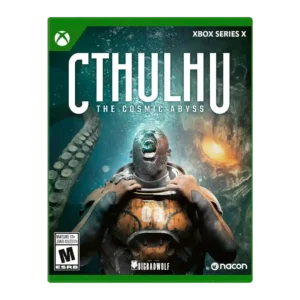
Atmosphere is one of the strongest elements. Reviews repeatedly praise dread, isolation, thalassophobia, sinister settings, and unsettling spaces, even when other systems frustrate.
Boss-like threat design is weak in the available evidence. One review says the late-game big bad was more frustrating than frightening because related mechanics failed.
Technical bugs are usually described as minor rather than game-breaking, with reviewers mentioning glitches, audio issues, server connection hiccups, repeated dialogue, and odd replay behavior.
Bug reports recur across reviews. Some describe only minor or patched bugs, while others mention major progression problems, audio issues, frequent bugs, or crashes.
Character development is a weak point in the evidence. Reviews say Noah and the NPCs lack enough development, with one review specifically saying there is not much NPC character growth.
Checkpoint support is mixed. One review notes the ability to reload the final checkpoint, but other save-related evidence points to limited manual control.
Co-op is well supported through Horizon Arcade and shared activities, with reviewers highlighting group goals, minigames, and easy online participation rather than deep split-screen or couch co-op.
The game is largely defined by its lack of traditional combat. Some reviews treat that as appropriate for a puzzle-horror investigation game, while one review that encountered combat found it clunky and infrequent.
Community features are strong through custom event building, EventLab sharing, user-generated races, and tools that let players create and distribute their own challenges.
Key is one of the most consistently praised elements. Reviews describe her as helpful, warm, useful for sonar and deductions, and sometimes the best mechanic in the game.
Competitive balance is mostly inferred from PvP restructuring and reduced pressure, but reviewers still mention AI and difficulty spikes, so the balance is positive but not perfect.
Content variety is one of the strongest areas: reviews repeatedly cite races, PR stunts, stories, showcases, expansions, online modes, event types, and a dense activity map.
Chapter and location variety are praised. Reviews note that the game rarely repeats the same trick and moves through distinct settings, from bases and temples to otherworldly spaces.
Controls are praised as slick, intuitive, responsive, and easy to learn, with handling options that support both casual arcade driving and more serious control setups.
Controls and interactions are a recurring frustration. Reviews cite fiddly object handling, confusing inputs, heavy controls, and keybinding issues, even when the underlying investigation systems work.
The core loop is consistently described as rewarding: drive, race, explore, earn accolades, unlock cars and events, and keep progressing even through casual open-world play.
The strongest loop is slow investigation: gathering clues, scanning materials, reading evidence, and connecting deductions. Positive reviews say this makes the game brainy and engaging rather than action-driven.
Crash stability is viewed positively overall because reviewers repeatedly mention rare technical issues, no game-breaking bugs, and no crashes, even when some minor bugs remain.
Crash stability is weak. Several reviews report crashes, including PS5 instability, late-game crashes, and Spanish-language comments about frequent crash issues.
The PS5 release supports cross-play, letting PlayStation players race with PC and Xbox players across the shared Mexico map.
Cross-save support is weak because one PS5 review says existing Xbox or PC saves cannot be transferred, requiring a fresh start.
Dialogue evidence is mixed and overlaps with writing: several reviewers find the tone friendly and harmless, while others call some dialogue cringey, repeated, or overly peppy.
Dialogue has limited but positive support from one review, which pairs great dialogue with clever puzzles and decent storytelling.
Difficulty is flexible and approachable, with assists and adjustable challenge levels, but a few reviewers criticize overly easy driving, hard-spiking AI, or uneven gaps between difficulty presets.
Difficulty is divisive. The game offers modes and hints, but reviewers still describe confusing objectives, hard puzzles, and moments where missing one clue can stall progress.
DLC value is strongest on PS5 packages that include or offer Rally Adventure and Hot Wheels, though value depends heavily on which digital edition or sale price buyers choose.
Driving mechanics are one of the clearest strengths, with reviewers praising handling, vehicle variety, arcade-sim balance, responsive feel, and the distinct behavior of different cars.
Economy and rewards are generous, with frequent cars, wheelspins, credits, accolades, and unlocks; some reviewers note that the generosity can reduce the thrill of earning better vehicles.
The energy resource is often seen as underdeveloped. Reviews say analyzing items costs energy, but plentiful recharge sources or toggles can make the limitation feel unnecessary.
The emotional pull is modest but present in personal car stories, name recognition, a sense of place, and the joy of simply existing in the world rather than in heavy drama.
Emotional impact has narrow but positive support from one review that says the game stayed with them outside play, driven by its dread and cosmic themes.
Endgame content is supported by expansions, playlists, car collecting, EventLab, online modes, and years of updates, though recent reviews note the festival playlist is being retired or recycled.
Enemy variety is only lightly supported, but one review notes Deep Ones and other tentacled, eye-covered beings that add nervous tension to the setting.
Environmental detail receives strong praise for Mexico’s beaches, jungles, towns, ruins, volcanoes, weather, draw distance, foliage, lighting, and dense visual texture.
Environmental detail is a clear strength. Reviews praise R’lyeh, undersea spaces, dense environments, and environmental storytelling that feeds the mystery.
Exploration is a major strength: reviewers repeatedly say the map encourages wandering, discovery, scenic driving, hidden activities, and enjoyable free-roam movement between events.
Exploration is built around scanning, clue hunting, and investigating dense spaces. It is praised for rewarding attention, though one review says exhaustive searching sometimes became tedious.
Facial animation receives limited positive support from one review that praises the motion capture, though other broader animation comments are less favorable.
Reviews frame Horizon 5 as faithful to the series, retaining the festival structure, playful tone, open-world freedom, showcase events, car collecting, and approachable arcade-sim blend.
Faithfulness is a strength for Lovecraft fans. Reviews praise the respectful source-material handling, mythos use, and restrained horror approach.
The game is largely family-friendly by racing game standards, though music lyrics and censored language mean it is not completely free of mild content concerns.
Fast travel and map movement are useful through outposts, homes, and quick bouncing around the map, though some reviews focus more on driving than fast travel convenience.
Frame-rate feedback is mostly strong, especially on current consoles and performance modes, though several reviewers mention tradeoffs, pop-in, or occasional dips in demanding scenes.
Frame rate stability is inconsistent. Sonar-heavy scenes and Xbox or PC sections are reported to cause hard drops, though one reviewer saw only rare dips.
Fun factor is exceptionally high, with reviews repeatedly calling the game glorious, a blast, relaxing, joyful, and appealing even to players who do not usually love racing games.
Fun factor is strongest for players who enjoy slow investigative play. One positive review describes the deep investigative mechanics as addictive and engaging.
Gameplay mechanics are broad and polished, combining racing, rewinding, tuning, open-world exploration, challenges, weather, and arcade-sim driving into a coherent racing sandbox.
The core systems center on investigation, sonar scanning, evidence linking, and deduction. Many reviews found those mechanics clever or engaging, while several also called them clunky, obtuse, or uneven in execution.
Graphics quality is one of the most praised traits, with reviewers calling the game stunning, gorgeous, technically impressive, and among the best-looking racers available.
Graphics are one of the most consistent strengths. Reviews praise the Unreal Engine 5 presentation, lighting, realistic environments, underwater scenes, and grotesque creature design.
The reviews generally suggest a low-pressure grind because progression is generous and rewarding, although the sheer amount of content can feel overwhelming to some players.
Handheld suitability has limited support from one Steam Deck comment. It is playable, but small text and frame drops may make it less comfortable.
Haptic feedback is a PS5 strength: reviewers say DualSense haptics and adaptive triggers add tactile feel, even if the implementation is not always groundbreaking.
Horror tension is divided. Some reviews praise subtle dread and Lovecraftian unease, but many say the game is tame, not scary, or lacks enough danger.
HUD clarity is positively supported by a clean interface that keeps basic actions visible and allows useful pinning and quality-of-life features.
Immersion is strong thanks to detailed landscapes, authentic accents, believable weather, engine audio, draw distance, and tactile driving feedback, with a few caveats around lifeless cities.
Immersion is positively supported where the game connects players deeply to puzzle spaces and environments, although technical issues can break that immersion elsewhere.
Innovation is moderate: reviewers praise thoughtful refinements, EventLab, and accessibility additions, but several also say it is more evolution than reinvention.
Innovation is supported by the sonar and clue systems, especially the way material frequencies encourage experimentation rather than simply highlighting every key item.
The learning curve is friendly for new players because assists, rewind, auto-upgrades, and flexible difficulty reduce friction, while deeper tuning and harder settings remain available.
The learning curve is notable. Reviews say the scanner and Mind Palace can feel overwhelming at first, but become clearer once players understand what to search for and how to organize clues.
Level and race layout benefit from varied biomes, outposts, showcases, routes, EventLab, and strong cross-country design, though user-created events can lack guidance.
Level design is generally positive when the sonar, clue placement, and strange spaces guide discovery. Some reviews praise intuitive spaces, while one notes static environments that lessen the sense of danger.
Live-service support has been substantial over the years with playlists, updates, cars, and expansions, but recent reviews indicate new playlist content may be winding down or recycled.
Load-time feedback is mixed: one PS5 review criticizes frequent loading screens, while others focus more on smooth open-world traversal and quick event access.
Load times are one bright technical point in the GamingBolt text and video, which describe the game as smooth with almost instantaneous loading when running well.
Lore depth is light but present through Mexican cultural references, car history, Vocho storytelling, local history, and the franchise’s car-culture legacy.
Lore depth is a strength in the positive reviews. The game is described as full of Easter eggs and mythos references that reward players familiar with Lovecraft.
Map and navigation design is excellent in scale and diversity but can feel overloaded, with some reviewers praising freedom and others saying the map gives too much information without enough decision help.
Navigation is weakly supported and negative. One review specifically notes the lack of an in-game map and moments of feeling lost or unsure what to do.
Menu usability is one of the weaker areas, with reviewers calling menus bloated, information-heavy, or insufficiently instructive in tools like EventLab.
Menu usability is limited by Vault clutter in later chapters, where minor and major clues can occupy the same space and become hard to manage.
Microtransactions and paid content are a caveat rather than a core complaint, with one review specifically objecting to car-pass promotion and the broader MTX-heavy reality around the package.
Mission design is varied and often fun through Expeditions, stories, showcases, and racing objectives, but some later reviews mention repetition in missions and races.
Mission design peaks in the late-game set pieces for at least one reviewer, who singled out the final puzzle as one of the best they had encountered.
Mission variety is strong thanks to race disciplines, story missions, showcases, PR stunts, Expeditions, Arcade events, and expansions.
Mission variety is supported by chapters that introduce different tricks or puzzle structures, keeping the run from feeling like the same task repeated.
Mod support is not traditional modding, but EventLab and custom event rules give players unusually strong creation tools for a console racing game.
Monetization fairness is mixed: the game offers enormous content, but PS5 pricing, multiple digital editions, car pass upsells, and DLC tiers make value dependent on edition and sale timing.
Movement feel is excellent when treated as vehicle feel: reviewers praise snappy handling, speed, tactile controls, drifting, and distinct surfaces, while 30fps or difficulty quirks can affect feel.
Movement is mixed to weak. Reviews mention awkward water traversal, sluggish underwater movement, confusing swimming orientation, and heavy character control in sections that need more precision.
Multiplayer design is broad and improved, with Horizon Open, Arcade, Tour, convoys, cross-play, EventLab sharing, PvP restructuring, and easier jump-in social play.
Narrative quality is secondary and mixed: some reviews appreciate the more personal campaign and Vocho story, while others say the story is thin, juvenile, or barely present.
The story receives mixed reactions. Some reviews praise the Lovecraftian mystery and near-future framing, while others call it underdeveloped, predictable, or less compelling than the puzzle systems.
Onboarding is strong, with a cinematic opening, quick access to varied cars and biomes, and a gentle introduction to the world before the map opens up.
Onboarding receives limited positive support from one review, which says the slow opening is purposeful because it teaches the systems before the game expands.
Online stability is mixed: reviewers like the modes but mention flaky launch behavior, disconnect messages, Horizon Life connection problems, and server hiccups.
Open-world design is exceptional overall, with a large, diverse Mexico map that supports exploration, racing, scenery, event density, and a strong sense of place.
Originality is moderate because the formula is familiar, but the Mexico setting, arcade-sim blend, EventLab, and scale still give it a distinct open-world racing identity.
Originality is strong. Reviews praise the near-future Lovecraft setup, sci-fi contrast, fresh investigative focus, and the way it stands apart from many Cthulhu games.
Pacing is mostly relaxed and player-led, but reviews disagree on whether the flood of activities feels freeing or occasionally scattered, repetitive, and overwhelming.
The pacing is intentionally slow and thoughtful. Some reviews value that meditative rhythm for discovery, while others say repeated searching and trial-and-error navigation can drag.
Performance optimization is mostly strong across platforms and modes, though older hardware, performance mode pop-in, and occasional technical dips appear in several reviews.
Performance is one of the biggest weaknesses. Reviews cite slowdown, memory leaks, stuttering, unstable console performance, and crashes, though one review found performance acceptable.
Platform-specific support is a clear PS5 strength, with reviewers praising DualSense features, PS5 Pro enhancements, cross-play, and a generally solid port.
Platform support is mixed but playable on Steam Deck according to one review, with the main caveat being text size and occasional performance drops.
Platforming precision is weak where it appears. One review says repeated platforming failures and hidden-surface issues made a late section frustrating.
Polish is very high, with reviewers describing the game as highly polished, close to flawless, and cohesive despite some minor bugs and UI complaints.
Polish is a significant concern. Reviews explicitly call out lack of polish, rough edges, and technical issues that interrupt otherwise promising systems.
Progression is generous and flexible through accolades, unlocks, cars, wheelspins, outposts, festival chapters, and rewards for nearly everything the player does.
Progression works best when new clues and deductions unlock the next step. The video review describes a satisfying sense of advancement as clues accumulate.
Protagonist appeal is limited by avatar customization complaints, though the game does give the player more voice, pronoun options, and a superstar identity.
Noah divides reviewers. Some found him likeable, but multiple reviews say he lacks a clear personality, objective, or interesting emotional presence.
Puzzles are the most discussed feature. Many reviews praise their ambition, multiple solutions, and rewarding deduction, but others say they can become obtuse, fiddly, or dependent on hidden information.
Replay value is very high because of car collecting, updates, expansions, EventLab, online modes, seasonal content, and the simple pleasure of free-roam driving.
Replay value is supported by multiple endings, corruption paths, and alternate solutions. Several reviews say knowing puzzle answers limits surprise, but the branching approaches still encourage another run.
Sandbox freedom is one of the game’s biggest strengths: players can race, explore, tune, collect, create, chase boards, or ignore events and still make progress.
Save reliability is a recurring problem. Reviews mention unclear save points, no manual saves, inconsistent autosaves, and autosave bugs that cost progress.
Seasonal content quality is mixed: reviewers appreciate weather and regional season effects, but later commentary says recycled playlists and limited seasonal impact reduce excitement.
Server reliability is a caveat because reviews mention Horizon Life connection issues, disconnect messages, and occasional flaky online behavior, especially around launch.
Skill tree depth is mixed because car-specific skill trees add progression but one reviewer criticizes skills being locked to individual cars.
Skill tree depth is modest but present through evolutions and passive abilities. Reviews mention unlockable mental upgrades, though several say the system is not essential.
Social features are strong through convoys, gifting cars, shared events, online races, Horizon Arcade, and systems that make it easier to play with others.
Sound design is strongly praised, especially engine sounds, car-specific audio, environmental sound, audio detail, and the way vehicle upgrades affect sound.
Sound design is a major atmosphere builder. Reviews mention strong music, eerie soundscapes, unsettling noises, and audio that keeps players anxious or immersed.
Soundtrack quality is positive, with reviewers praising radio stations, licensed music, Mexican musical flavor, and music that complements racing energy.
The soundtrack is strongly praised where discussed. Reviews call it excellent, tension-building, and effective at reinforcing dread and unease.
Stealth receives limited but negative support. One review says stealth and scanning did not work correctly in a late-game threat section, turning tension into frustration.
The prologue is credited with introducing core controls, tone, and mechanics, giving players an early foundation before the deeper underwater investigations begin.
Upgrade system is deep and flexible, with tuning, performance mods, cosmetic options, auto-upgrade, custom tunes, and detailed adjustments for enthusiasts.
Upgrades and evolutions are a mixed layer. Some reviews like the added sonar, energy, or corruption tools, while others say the systems feel optional, superfluous, or easy to ignore.
User interface design is mixed: driving aids are clear and intuitive, but broader menus, maps, and information flow can feel cluttered or under-explained.
The interface is mixed. The Vault, Mental Map, and internal UI can be helpful, but several reviews call them cluttered, clumsy, or poorly explained.
Value for money is strong through Game Pass, massive content, and PS5 completeness, but PS5 pricing and edition structure make full-price purchases less straightforward.
Value is mixed and price-sensitive. One review says the game is likely for the right audience, while another argues the launch price is too high and recommends a sale.
Vehicle roster is a major strength, with reviews repeatedly emphasizing the huge car lineup, broad vehicle variety, and cars that look, sound, and feel distinct.
Visual effects quality is excellent, especially lighting, tire smoke, dust, water splashes, storms, reflections, and weather effects.
Visual effects and set pieces are positively supported by a review that highlights large, awe-inspiring cosmic scenes and musical set pieces.
Voice acting is acceptable but uneven, with some reviewers calling it memorable or reasonable and others criticizing peppy delivery or thin characters.
Voice acting is mostly positive but not uniformly so. Reviews praise Key, Noah, and the general cast, while one review calls the voice work uneven and another notes mixed performances.
World-building is stronger than the series norm through Mexico’s cultural references, car stories, festival expansion, local history, and place-based missions.
World-building is substantial but can be divisive. Reviews note many Lovecraft nods and detailed mythos material, though one critic felt the story could get lost in those details.
World interactivity is strong for destructible foliage, fences, guardrails, water, boards, barn finds, roads, and reactive radio, though lifeless NPC areas weaken the illusion.
Reviews support strong object interaction: items can be picked up, examined, stored, placed, and analyzed, making environmental inspection central to progression.
Writing quality is mixed: the campaign can be more personal and culturally flavored, but reviewers also call dialogue cringey, juvenile, or typical Forza fare.
Writing is uneven. One review praises the excellent writing behind the concepts and atmosphere, while another says exposition and dialogue often leave something to be desired.