2.4GHz connectivity
P1
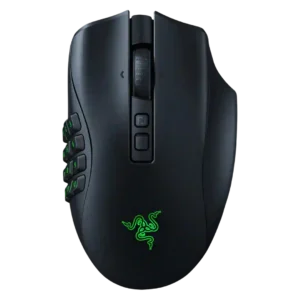
Product 1: Razer Naga V2 Pro
5.0
Reviewers found the 2.4GHz HyperSpeed connection essentially wired-like, with strong responsiveness and no meaningful connection complaints.
P2
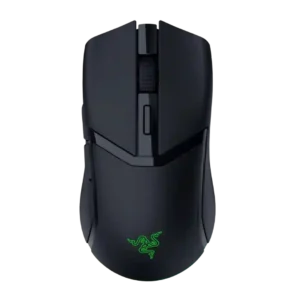
Product 2: Razer Cobra HyperSpeed
5.0
2.4GHz connectivity was praised as reliable and ideal for high-speed gaming.
Accuracy and tracking precision
P1
Product 1: Razer Naga V2 Pro
4.9
Tracking accuracy was repeatedly praised as precise, flawless, or consistently smooth across gaming and desktop use.
P2
Product 2: Razer Cobra HyperSpeed
4.7
Reviewers consistently described tracking as precise, accurate, snappy, and reliable, with only budget-focused criticism questioning whether the sensor is truly better than competitors.
balance and weight distribution
P1Product 1: Razer Naga V2 Pro
No score yet
P2
Product 2: Razer Cobra HyperSpeed
3.9
Weight balance was mixed, with some reviewers praising predictable or comfortable balance and another criticizing rear-heavy distribution.
battery life
P1
Product 1: Razer Naga V2 Pro
4.6
Battery life was broadly praised, especially with RGB reduced or disabled, though one reviewer saw faster drain with lighting on.
P2
Product 2: Razer Cobra HyperSpeed
4.9
Battery life was a major strength, repeatedly described as stellar, impressive, remarkable, or easily near the claimed endurance.
Bluetooth support
P1
Product 1: Razer Naga V2 Pro
2.7
Bluetooth was viewed as useful for battery life or fallback use, but several reviewers warned it felt slower or worse than 2.4GHz for gaming.
P2
Product 2: Razer Cobra HyperSpeed
4.6
Bluetooth support was valued for work and everyday use, especially switching between devices, though one reviewer called it merely serviceable.
build quality
P1
Product 1: Razer Naga V2 Pro
5.0
Build quality was consistently described as sturdy, solid, premium, and reassuring despite the modular side-plate design.
P2
Product 2: Razer Cobra HyperSpeed
4.6
Build quality was consistently positive, described as solid, durable, excellent, premium, and buttoned up.
button customization
P1
Product 1: Razer Naga V2 Pro
4.7
Customization was one of the clearest strengths, with swappable plates and extensive button options praised across nearly every review.
P2
Product 2: Razer Cobra HyperSpeed
4.8
Button customization was viewed positively, especially through Razer Synapse remapping and broad command assignment.
button responsiveness
P1
Product 1: Razer Naga V2 Pro
4.9
Button response was rated highly, with clicks described as tactile, responsive, satisfying, and free of noticeable delay.
P2
Product 2: Razer Cobra HyperSpeed
4.6
Button responsiveness was widely praised as snappy, tactile, quick, and satisfying across reviews.
charging convenience
P1
Product 1: Razer Naga V2 Pro
4.1
Charging was mostly convenient, especially through the flexible cable or optional dock, though one user disliked unplugging the cable and others questioned dock value.
P2
Product 2: Razer Cobra HyperSpeed
4.0
Charging convenience was split: wireless charging accessories impressed reviewers, but the need to buy extras and slower charging drew criticism.
claw grip comfort
P1
Product 1: Razer Naga V2 Pro
3.8
Claw grip comfort was acceptable for some users, though the 12-button side plate could make claw grip harder.
P2
Product 2: Razer Cobra HyperSpeed
4.6
Claw grip comfort was generally positive where discussed, with reviewers saying the shape works across grip styles.
click latency
P1
Product 1: Razer Naga V2 Pro
5.0
Click latency drew strong praise, with reviewers reporting no noticeable delay in button registration.
P2
Product 2: Razer Cobra HyperSpeed
4.8
Click latency received clear praise in testing, with the reviewer reporting barely any latency from click response.
click noise
P1Product 1: Razer Naga V2 Pro
No score yet
P2
Product 2: Razer Cobra HyperSpeed
2.1
Click noise was the most repeated complaint, with multiple reviewers calling the Gen-4 switches loud, hollow, pingy, or distracting.
connection stability
P1
Product 1: Razer Naga V2 Pro
5.0
Connection stability was praised for lag-free, dropout-free wireless performance during games.
P2
Product 2: Razer Cobra HyperSpeed
4.8
Connection stability was strong, with reviewers noting quick recognition, no stuttering, and hassle-free receiver pairing.
cross-platform compatibility
P1
Product 1: Razer Naga V2 Pro
3.5
Platform support was mixed: connectivity options widened device use, but Synapse being Windows-only limited full customization.
P2
Product 2: Razer Cobra HyperSpeed
4.5
Cross-platform compatibility was supported by positive switching between a MacBook and gaming PC.
dock compatibility
P1
Product 1: Razer Naga V2 Pro
3.8
Dock support was useful and convenient for some reviewers, but others noted it added cost or was unnecessary if the cable worked well.
P2
Product 2: Razer Cobra HyperSpeed
4.0
Dock compatibility was useful and sometimes excellent, but reviewers repeatedly noted that the best dock or wireless charging experience costs extra.
DPI range
P1
Product 1: Razer Naga V2 Pro
4.7
The high DPI range and DPI configuration options were praised as part of the mouse's high-performance sensor package.
P2
Product 2: Razer Cobra HyperSpeed
4.2
DPI range was viewed as sufficient for most gamers and competitive enough for premium use, despite one review noting rivals can reach higher DPI.
durability over time
P1
Product 1: Razer Naga V2 Pro
4.0
Durability evidence was positive but limited, centered on confidence from sturdy build quality and long-lasting switches.
P2
Product 2: Razer Cobra HyperSpeed
4.5
Durability over time received positive support from the simple, robust build expected to handle daily use.
ecosystem integration
P1
Product 1: Razer Naga V2 Pro
4.0
Ecosystem integration was useful for users already in Razer's Chroma/Synapse setup, especially RGB syncing.
P2
Product 2: Razer Cobra HyperSpeed
4.7
Ecosystem integration was praised through Synapse, HyperFlux, and Razer receiver pairing, especially plug-and-play accessory behavior.
ergonomic design
P1
Product 1: Razer Naga V2 Pro
4.7
Ergonomics were widely praised, especially for medium-to-large right-handed users and long MMO sessions.
P2
Product 2: Razer Cobra HyperSpeed
4.8
The ergonomic design was praised for comfort, thumb support, and balanced handling.
fingertip grip comfort
P1
Product 1: Razer Naga V2 Pro
4.0
Fingertip grip was mentioned as usable, but support was limited and less central than palm or claw grip.
P2
Product 2: Razer Cobra HyperSpeed
4.2
Fingertip grip comfort was mostly strong, though one reviewer preferred the original Viper Mini for fingertip use.
FPS gaming suitability
P1
Product 1: Razer Naga V2 Pro
3.3
FPS suitability was the most mixed gaming use case: performance was strong, but the heavy body hurt fast-flick shooter appeal.
P2
Product 2: Razer Cobra HyperSpeed
4.3
FPS suitability was generally good for shooters and gaming, but one reviewer said it would not be a top Fortnite recommendation.
glide smoothness
P1
Product 1: Razer Naga V2 Pro
4.8
Glide was praised as smooth, with quality PTFE feet helping the heavy mouse move cleanly across mouse mats.
P2
Product 2: Razer Cobra HyperSpeed
4.0
Glide smoothness was mostly positive, especially on pads, but one reviewer found the stock skates too controlled.
grip texture
P1
Product 1: Razer Naga V2 Pro
4.3
Grip texture was praised for improving control and comfort, particularly on the right side and two-/six-button plates.
P2
Product 2: Razer Cobra HyperSpeed
4.2
Grip texture was generally acceptable to strong, with praise for secure grip and only mild criticism of the smooth coating.
left and right click quality
P1
Product 1: Razer Naga V2 Pro
4.5
Main click quality was praised as satisfying, with a good amount of give.
P2
Product 2: Razer Cobra HyperSpeed
3.5
Primary click quality was split: one reviewer praised the tight clickfeel, while another complained the buttons sounded hollow and cheap.
long-session comfort
P1
Product 1: Razer Naga V2 Pro
4.5
Long-session comfort was generally strong, with reviewers noting comfortable grip and use over extended play or work.
P2
Product 2: Razer Cobra HyperSpeed
5.0
Long-session comfort was praised directly for gaming sessions and everyday use.
macro support
P1
Product 1: Razer Naga V2 Pro
5.0
Macro support was praised as easy and useful, especially for MMOs and complex workflows.
P2
Product 2: Razer Cobra HyperSpeed
4.5
Macro support was praised through Synapse, with one reviewer noting easy custom macro setup across the buttons.
materials quality
P1
Product 1: Razer Naga V2 Pro
4.5
Materials were generally viewed positively, with matte plastic and textured surfaces described as good-feeling and premium enough.
P2
Product 2: Razer Cobra HyperSpeed
4.3
Materials quality received praise for premium matte or plastic feel and a comfortable mild texture.
motion consistency
P1
Product 1: Razer Naga V2 Pro
5.0
Motion consistency was praised, with reviewers describing the sensor and movement as smooth, consistent, and accurate.
P2
Product 2: Razer Cobra HyperSpeed
4.5
Motion consistency was praised for predictable twitch reactions during gaming.
palm grip comfort
P1
Product 1: Razer Naga V2 Pro
4.5
Palm grip comfort was strong for reviewers who use that grip, though the mouse favors larger or average hands.
P2
Product 2: Razer Cobra HyperSpeed
3.9
Palm grip comfort was mixed, with broad grip support in some reviews but concerns that large-hand palm users may find it too small.
polling rate
P1
Product 1: Razer Naga V2 Pro
3.9
The 1,000Hz polling rate was usually seen as enough for most users, though lack of higher polling disappointed some.
P2
Product 2: Razer Cobra HyperSpeed
3.6
The default 1,000 Hz polling rate was generally considered good enough, but reviewers criticized the need for extra hardware to unlock higher polling.
premium feel
P1
Product 1: Razer Naga V2 Pro
4.8
The mouse was often described as premium or substantial, with a solid feel matching its high-end positioning.
P2
Product 2: Razer Cobra HyperSpeed
4.6
Premium feel was praised through the refined aesthetic, premium look, and premium user experience.
profile switching
P1
Product 1: Razer Naga V2 Pro
3.8
Profile switching was powerful when it worked, but one user had unstable automatic switching and awkward manual access.
P2
Product 2: Razer Cobra HyperSpeed
4.5
Profile switching received positive mention as a way to tailor settings for different game genres.
programmable buttons
P1
Product 1: Razer Naga V2 Pro
4.9
Programmable buttons were a core strength, with reviewers praising the sheer number and flexibility of assignable controls.
P2
Product 2: Razer Cobra HyperSpeed
4.8
Programmable controls were praised for opening strong customization options and adapting to individual player needs.
RGB features
P1
Product 1: Razer Naga V2 Pro
3.2
RGB reactions were mixed: some liked the lighting and Chroma control, while others disliked limited zones or battery waste.
P2
Product 2: Razer Cobra HyperSpeed
3.8
RGB opinions were mixed: some liked the tasteful underglow and accurate colors, while others found the lighting limited or dull.
scroll wheel quality
P1
Product 1: Razer Naga V2 Pro
4.4
The HyperScroll Pro wheel drew frequent praise for deep customization, though some reviewers found presets stiff or overkill.
P2
Product 2: Razer Cobra HyperSpeed
4.9
The optical scroll wheel was one of the strongest points, repeatedly praised for precise, tactile, responsive, and defined scrolling.
sensor performance
P1
Product 1: Razer Naga V2 Pro
5.0
Sensor performance was consistently praised, with the Focus Pro sensor described as excellent, accurate, and responsive.
P2
Product 2: Razer Cobra HyperSpeed
4.3
Most reviewers found the Focus X 26K sensor strong enough for real gaming use, though several noted it is not Razer's top-tier sensor.
shape comfort
P1
Product 1: Razer Naga V2 Pro
4.4
Shape comfort was broadly positive, though the bulky body works better for larger hands and MMO-style use than ultralight FPS play.
P2
Product 2: Razer Cobra HyperSpeed
4.3
Shape comfort was broadly praised, especially by users with smaller or adaptable grips, but some reviewers found the compact shape uncomfortable.
side button quality
P1
Product 1: Razer Naga V2 Pro
4.5
Side button quality was usually praised for tactile feel and secure panels, though the dense 12-button layout challenged some users.
P2
Product 2: Razer Cobra HyperSpeed
4.1
Side button feedback was polarized, with strong praise from some reviewers and a budget-feeling complaint from another.
software stability
P1
Product 1: Razer Naga V2 Pro
2.4
Software stability was a notable concern, with reports of Synapse bugs, profile problems, and lighting glitches.
P2
Product 2: Razer Cobra HyperSpeed
3.0
Software stability was only criticized once, with Synapse described as finicky at times.
software usability
P1
Product 1: Razer Naga V2 Pro
4.2
Software usability was powerful and often easy for basic setup, but the depth of options could feel overwhelming or clunky.
P2
Product 2: Razer Cobra HyperSpeed
4.3
Software usability was broadly positive thanks to clear controls and deep settings, though Synapse could be finicky.
surface compatibility
P1
Product 1: Razer Naga V2 Pro
5.0
Surface compatibility was praised in the reviews that tested it, with tracking and glide working well across desks or mouse mats.
P2
Product 2: Razer Cobra HyperSpeed
5.0
Surface compatibility was excellent in the one direct test, where the mouse handled multiple surfaces equally well.
switch durability
P1
Product 1: Razer Naga V2 Pro
4.8
Switch durability inspired confidence, with reviewers citing long-rated optical switches and peace of mind.
P2
Product 2: Razer Cobra HyperSpeed
4.4
Switch durability was judged positively where discussed, with reviewers framing the newer switches as a refinement over the prior generation.
switch feel
P1
Product 1: Razer Naga V2 Pro
4.6
Switch feel was praised as crisp, tactile, responsive, and satisfying.
P2
Product 2: Razer Cobra HyperSpeed
4.4
Switch feel was mostly positive thanks to crisp Gen-4 optical switches, but one reviewer felt the improvement was not dramatic.
value for money
P1
Product 1: Razer Naga V2 Pro
3.3
Value was mixed: reviewers praised the feature set but repeatedly noted the high price and overkill factor.
P2
Product 2: Razer Cobra HyperSpeed
3.7
Value was mixed: reviewers liked the mid-range package and lower price than flagships, but several criticized optional add-ons and competing alternatives.
weight
P1
Product 1: Razer Naga V2 Pro
2.9
Weight was the most repeated drawback, with many reviewers calling the mouse heavy or less ideal for fast FPS movement.
P2
Product 2: Razer Cobra HyperSpeed
4.2
Most reviewers liked the lighter 62 g weight, though a few still wanted it lighter for a small performance mouse.
wireless latency
P1
Product 1: Razer Naga V2 Pro
5.0
Wireless latency was praised as effectively wired-like, with reviewers reporting no lag or very low latency.
P2
Product 2: Razer Cobra HyperSpeed
4.8
Wireless latency was praised in the one direct test, with no interruptions reported beyond 10 feet.
wireless performance
P1
Product 1: Razer Naga V2 Pro
4.9
Wireless performance was consistently strong over 2.4GHz, with reviewers describing it as seamless, reliable, and hiccup-free.
P2
Product 2: Razer Cobra HyperSpeed
4.7
Wireless performance was reviewed positively, with strong notes on tri-mode versatility, responsiveness, and day-to-day reliability.