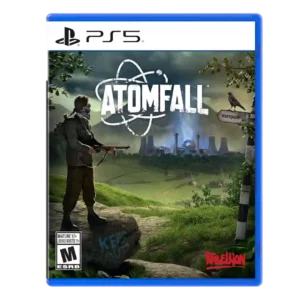
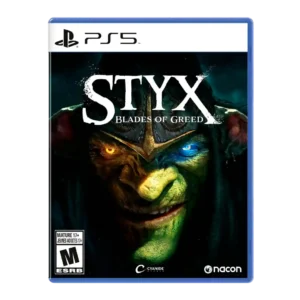
Average score
Styx: Blades of Greed
3.1
frame rate stability
Atomfall
5.0
Frame rate stability had limited but very positive evidence from a PS5 Pro review citing smooth 60 fps play.
Styx: Blades of Greed
2.4
Frame-rate stability is unreliable across several setups, with stutters and drops appearing often enough to distract from a game built around precise, deliberate movement.
writing quality
Atomfall
4.5
Writing quality had limited but positive evidence, with one reviewer calling the writing very good.
Styx: Blades of Greed
2.0
Writing outside Styx’s strongest one-liners often falls flat, with awkward jokes and conversations that can feel forced instead of naturally building character or tension.
accessibility options
Atomfall
4.5
Accessibility options were widely praised, especially customizable difficulty and comfort features, although one review criticized missing visual options for eye strain.
Styx: Blades of Greed
2.0
Accessibility support is limited. Colorblind and subtitle options help, but missing visual feedback, subtitle inconsistencies, and restricted control remapping leave meaningful gaps.
voice acting
Atomfall
4.5
Voice acting was a consistent positive, especially regional accents and standout performances that made NPCs more memorable.
Styx: Blades of Greed
2.3
Voice acting is uneven. Styx himself is often the highlight, while supporting characters are repeatedly described as flat, stiff, miscast, or lacking the intensity of the scene.
quest design
Atomfall
4.0
The leads and quest structure were a standout for many reviewers because it encouraged investigation and choice, though others found some objectives basic or unclear.
Styx: Blades of Greed
2.0
Side and fetch-style quests can be vague or fiddly, with objectives that sometimes feel like busywork instead of meaningful additions to the stealth sandbox.
emotional impact
Atomfall
4.0
Emotional impact had limited positive evidence from decisions that could weigh on the player.
Styx: Blades of Greed
2.0
The story rarely lands emotionally for critics who struggled to stay invested, connect with the cast, or feel much impact from its dramatic beats.
performance optimization
Atomfall
4.5
Performance optimization was generally strong across PC, PS5 Pro, and Steam Deck, though one preview noted some issues.
Styx: Blades of Greed
2.6
Performance is one of the biggest technical concerns, especially on PC where demanding requirements, stuttering, and heavy reliance on upscaling are repeatedly criticized.
dialogue quality
Atomfall
3.8
Dialogue was usually praised for wit, Britishisms, tone choices, and memorable conversations, despite a few complaints about dialogue presentation.
Styx: Blades of Greed
2.0
Dialogue is frequently criticized for awkward phrasing and delivery, and subtitle mismatches further weaken scenes that already struggle to feel natural.
crash stability
Atomfall
3.5
Crash stability had limited mixed evidence, with one reviewer noting crashes tied mainly to recording software.
Styx: Blades of Greed
1.7
Crash stability is a serious concern in the harshest reports, including repeated crashes, a corrupted save after many hours, and other failures severe enough to halt progress.
progression system
Atomfall
2.2
Progression system evidence was limited and negative, with one reviewer calling the overall progression very slim.
Styx: Blades of Greed
4.0
Progression is meaningful because new traversal tools and Quartz powers change how older spaces can be approached, making upgrades feel tied to exploration rather than simple stat growth.
world interactivity
Atomfall
2.2
World interactivity received a low score from one reviewer who felt NPCs and systems failed to react properly to player actions.
Styx: Blades of Greed
4.0
Environmental tricks are consistently satisfying, especially poisoning food, dropping chandeliers or crates, and using the surroundings to remove guards without direct fights.
protagonist appeal
Atomfall
2.0
Protagonist appeal was criticized by one reviewer who felt the amnesiac lead lacked personality traits.
Styx: Blades of Greed
3.8
Styx remains a divisive but memorable lead. His sarcasm and nasty humor are a major source of personality for many players, while others still find him grating.
stealth mechanics
Atomfall
2.6
Stealth was repeatedly criticized as inconsistent, shallow, or unreliable, though a few reviewers found methodical sneaking viable on the right settings.
Styx: Blades of Greed
4.2
Pure stealth is the game’s defining strength. Planning routes, using shadows, and improvising with tools repeatedly produces the kind of satisfying infiltration that genre fans rarely get.
immersion
Atomfall
4.0
Immersion was usually strong due to exploration, setting, and atmosphere, though a few systems and empty-world moments broke the illusion.
Styx: Blades of Greed
2.3
Immersion is vulnerable to technical roughness: pop-in, bugs, uniform environments, awkward cutscenes, and audio problems can pull attention away from otherwise convincing stealth spaces.
economy and resource balance
Atomfall
3.5
Resource balance and barter drew mixed-to-positive notes for scarcity and trade tension, offset by complaints about inventory limits and unrewarding combat loot.
Styx: Blades of Greed
2.0
Resource scarcity is a recurring frustration. Amber, potions, bolts, traps, and crafting materials often compete for the same limited supplies, restricting how freely Styx’s toolkit can be used.
learning curve
Atomfall
4.2
Learning curve evidence was positive, especially around the recommended Survivor setting feeling steep but satisfying.
Styx: Blades of Greed
2.8
There is a real learning curve built around patience, observation, and route reading. Once the systems click, the sandbox freedom makes the difficulty easier to manage.
HUD clarity
Atomfall
3.4
HUD clarity was mixed: one review praised the immersive minimal ammo check, while another wanted clearer ammo information when swapping weapons.
Styx: Blades of Greed
2.0
HUD feedback has gaps, with some important information either unclear or missing, including situations where damage or objective guidance is harder to read than it should be.
content variety
Atomfall
4.2
One review praised the map's variety of locations and dangers, supporting a positive but limited content-variety score.
Styx: Blades of Greed
2.9
New tools and changing areas add variety, but the repeated Quartz structure and revisits can make the broader campaign feel familiar before the stealth mechanics themselves wear out.
originality
Atomfall
3.8
Originality was mixed-to-positive: reviewers liked the unusual British setting and fresh lead system, while several felt the mechanics borrowed too much.
Styx: Blades of Greed
2.5
The game feels fresh mainly because dedicated stealth is rare, not because every idea is new; several reviewers call the structure and story familiar or conservative rather than groundbreaking.
side character depth
Atomfall
3.3
Side character depth was mixed: several reviewers liked memorable NPCs, while others thought factions and personalities stayed too surface-level.
Styx: Blades of Greed
2.1
The crew is usually seen as underdeveloped and short on memorable screen time, though one review felt they were fleshed out enough to function beyond set dressing.
narrative quality
Atomfall
3.7
Narrative quality split reviewers: many enjoyed the mystery, branching endings, and investigative structure, while others found the plot thin, vague, or underwhelming at the end.
Styx: Blades of Greed
2.6
The story is one of the least consistent elements: some enjoy the lore connections and Great War setup, but many find it forgettable, thin, confusing for newcomers, or less compelling than the gameplay.
atmosphere
Atomfall
4.5
Atmosphere was a consistent strength, especially the eerie Interchange, folk horror, sci-fi mystery, and British post-apocalyptic mood.
Styx: Blades of Greed
3.3
The dark-fantasy atmosphere often works well through lighting, sound, vertical architecture, and a grim sense of place, although uneven performances and presentation can weaken it.
combat system
Atomfall
3.1
Combat drew the widest split: some praised its desperate, weighty firefights and satisfying weapons, while many called melee clunky, bland, janky, or underdeveloped.
Styx: Blades of Greed
1.9
Direct combat is widely viewed as a weak last resort, with clunky lock-on fighting and poor responsiveness reinforcing that staying hidden is the better option.
fast travel convenience
Atomfall
2.9
Fast travel convenience was polarizing, with many complaints about backtracking and no fast travel, while a few reviewers felt walking supported immersion.
Styx: Blades of Greed
4.0
Unlockable travel points make revisiting the three large regions much easier, helping reduce the cost of backtracking as the campaign opens new routes.
level design
Atomfall
3.0
Level design was mixed: some linear interiors were interesting to explore, but others felt empty, shallow, or short on curated encounters.
Styx: Blades of Greed
4.1
Large, layered, highly vertical levels are one of the clearest strengths, giving players many routes through dense spaces and turning infiltration into spatial problem-solving.
replay value
Atomfall
4.6
Replay value was strong where reviewers wanted to revisit saves, chase endings, or see alternate routes and consequences.
Styx: Blades of Greed
3.5
Replay value varies sharply: some reviewers see huge potential in alternate routes and builds, while others feel repeat runs need self-imposed challenges to stay interesting.
animation quality
Atomfall
2.8
Animation quality had limited evidence and was criticized through character model presentation that looked last-gen.
Styx: Blades of Greed
1.8
Animation quality is a recurring weak point, especially in cutscenes where stiff movement, awkward transitions, clipping, and rough presentation are easy to notice.
art direction
Atomfall
5.0
Art direction was praised for melding lush countryside, decay, color, and atmosphere into a distinctive look.
Styx: Blades of Greed
4.0
Art direction is often stronger than raw technical presentation, especially in distinct biomes and dramatic lighting, though some players find the image dated, washed out, or visually uneven.
skill tree depth
Atomfall
3.0
The skill tree was usually considered streamlined but shallow, with several reviewers calling perks boring, generic, hard to discover, or unnecessary.
Styx: Blades of Greed
2.0
The skill-tree depth is less convincing for players who settle on a narrow stealth style, because branches tied to unused powers can feel largely pointless.
difficulty balance
Atomfall
3.9
Difficulty balance was highly adjustable and often praised for modular settings, but default challenge spikes felt unfair or punishing to some reviewers.
Styx: Blades of Greed
2.9
The challenge suits patient stealth players, and a few reviewers praise its tuning, but early harshness, spikes, and occasional unfair-feeling situations can make the learning process discouraging.
mission design
Atomfall
3.9
Mission design was split between admiration for naturalistic quest feel and criticism that many leads still became point-to-point errands.
Styx: Blades of Greed
3.0
The spaces are stronger than the objectives inside them. Several missions boil down to small errands or Quartz collection, leaving the heists less memorable than the routes used to reach them.
map and navigation design
Atomfall
3.2
Map and navigation design was divisive: organic clue-based navigation impressed some, but vague objectives and missing area maps frustrated others.
Styx: Blades of Greed
2.4
Navigation is a frequent frustration. The lack of a full map and vague guidance can make large vertical spaces hard to read, even though freeform pathfinding is part of the intended challenge.
core gameplay loop
Atomfall
2.0
Core gameplay loop evidence was negative where discussed directly, criticizing the basic cycle of roaming and avoiding hostiles when stealth was weak.
Styx: Blades of Greed
2.8
The stealth loop can be deeply engaging, but repeated trips to collect Quartz make the larger structure feel repetitive for some players.
exploration quality
Atomfall
4.4
Exploration was the clearest strength across reviews, with praise for curiosity-driven discovery, meaningful leads, and rewarding secrets.
Styx: Blades of Greed
3.6
Exploration benefits from vertical routes and traversal upgrades that reveal new paths, though weak navigation and repeated backtracking can make roaming feel less rewarding at times.
innovation
Atomfall
4.2
Innovation evidence centered on the Lead system and accessibility options, which one review explicitly praised as innovative.
Styx: Blades of Greed
3.5
The larger hubs, faster mobility, Metroidvania-style tools, and Quartz powers modernize the formula, but the sequel is generally seen as an evolution rather than a reinvention.
graphics quality
Atomfall
4.4
Graphics quality was broadly positive, especially environments and countryside vistas, though some reviews noted rough character models.
Styx: Blades of Greed
3.7
The game can look striking, with dense environments and strong lighting, but dated textures, haze, pop-in, and inconsistent image quality keep the visuals from feeling uniformly polished.
upgrade system
Atomfall
4.0
Upgrade system evidence was limited but positive, with weapon improvement through crafting described as helpful.
Styx: Blades of Greed
3.3
Upgrades add creative stealth options and stronger tools, though some of the most enjoyable abilities arrive later than players would like.
menu usability
Atomfall
2.7
Menu usability was criticized for small issues adding up and for leads or clues not being organized well.
Styx: Blades of Greed
2.0
Managing abilities through the wheel can be annoying, particularly when extra slots are tied to side objectives and players must keep rearranging the limited loadout.
sandbox freedom
Atomfall
4.5
Sandbox freedom was praised strongly for player agency, kill-anyone flexibility, faction choices, and nonlinear routes through the story.
Styx: Blades of Greed
3.9
Freedom is a major draw: objectives usually support several routes and tactics, letting players improvise from rooftops, vents, crawlspaces, hidden paths, or gadget-assisted approaches.
movement feel
Atomfall
3.2
Movement feel had limited mixed evidence, with one reviewer finding heart-rate traversal restrictions occasionally annoying but not enjoyment-breaking.
Styx: Blades of Greed
3.8
Traversal can feel fast and fluid once Styx opens up his toolkit, but a few players describe movement as loose or janky in precision-heavy moments.
onboarding experience
Atomfall
3.0
Onboarding divided reviewers: one struggled through a poor first two hours, while another felt the opening quickly communicated the game's freedom.
Styx: Blades of Greed
2.5
Onboarding is uneven because the game begins as a direct sequel and often assumes familiarity with earlier characters and events, even though the tutorial explains the mechanics well.
boss design
Atomfall
1.5
Boss design was criticized in one review for lacking meaningful boss fights beyond generic enemies.
Styx: Blades of Greed
1.0
The final boss drew especially harsh criticism, with one reviewer calling it the worst boss fight in a stealth game.
handheld play suitability
Atomfall
4.5
Handheld play suitability had limited but positive evidence from Steam Deck testing.
Styx: Blades of Greed
4.0
Handheld impressions are mixed but promising on stronger hardware: one handheld PC still looked good on low settings, while weaker portable hardware was flagged as a poor fit for the game’s demanding performance.
user interface design
Atomfall
2.5
User interface design had limited negative evidence, with one reviewer saying full-screen menus broke immersion.
Styx: Blades of Greed
2.0
The quick-access interface can become cumbersome as more powers unlock, forcing repeated pausing and reshuffling instead of keeping the growing toolkit immediately available.
world-building
Atomfall
4.7
World-building was one of the strongest attributes, especially the British quarantine-zone identity, folk horror, and distinctive alternate-history setting.
Styx: Blades of Greed
4.3
The setting often feels lived-in and distinctive, with environmental detail and small narrative touches giving the dark-fantasy world more texture than the main plot alone provides.
gameplay mechanics
Atomfall
3.7
Reviewers saw the core systems as streamlined and approachable, with survival-lite mechanics supporting exploration, though several felt the suite was shallow or only functional.
Styx: Blades of Greed
4.2
The basic gameplay systems are a strong foundation: sneaking, stealing, takedowns, movement, and tools generally work together in a satisfying way.
polish
Atomfall
2.7
Polish was mixed-to-negative overall, with repeated complaints about rough edges, design omissions, and undercooked systems despite one bug-free PC report.
Styx: Blades of Greed
2.3
Rough edges are part of the overall experience. Even reviewers who love the stealth repeatedly mention jank, awkward presentation, bugs, or missing polish that stop the game feeling fully finished.
crafting system
Atomfall
3.4
Crafting was seen as straightforward and useful, especially for weapons and supplies, but several reviewers found it basic or underwhelming.
Styx: Blades of Greed
3.0
Crafting adds tactical preparation, but shared and scarce materials can make players hoard resources instead of experimenting freely with the most interesting gadgets.
lore depth
Atomfall
3.3
Lore depth was mixed, with compelling mysteries and notes offset by underused premise and surface-level faction development.
Styx: Blades of Greed
3.7
Returning fans get rewarding lore connections, callbacks, and links to the wider Styx timeline, though a couple of critics still found some areas thin on meaningful context.
pacing
Atomfall
3.3
Pacing opinions were mixed: some liked the short, focused runtime, while others complained about trudging, busywork, repetition, or inconsistent momentum.
Styx: Blades of Greed
3.7
Pacing improves as more tools arrive and the maps open up, but the early hours can feel slow or front-loaded and later Quartz runs can sap momentum.
open-world design
Atomfall
3.6
Open-world design was praised when reviewers liked its compact less-is-more structure, but criticized when the world felt static or underbaked.
Styx: Blades of Greed
4.0
The semi-open structure is mostly a successful evolution, widening player choice without turning the game into a checklist-heavy full open world.
grind level
Atomfall
2.8
Grind level had limited mixed evidence, with default difficulty feeling grindy to some players before customization helped.
Styx: Blades of Greed
2.4
Repeated Quartz hunts, backtracking, and fetch-style objectives can feel like padding, especially when the mission structure asks players to revisit familiar areas without enough new narrative momentum.
bug frequency
Atomfall
2.2
Bug frequency was criticized in one review for game-breaking audio bugs and technical issues.
Styx: Blades of Greed
1.9
Bugs are common enough to matter, ranging from geometry problems and broken patrols to invisible characters, failed interactions, and occasional progress-blocking issues.
mission variety
Atomfall
2.7
Mission variety was a recurring weakness when leads devolved into similar errands or repetitive objective chains.
Styx: Blades of Greed
2.3
Mission variety is a weak spot, with several reviewers calling out repeated fetch-style goals and objectives that do not evolve as much as the player’s toolkit.
aiming precision
Atomfall
3.7
Aiming and shooting ranged from satisfying bows and headshots to criticism that some firearms lacked punch or precision.
Styx: Blades of Greed
4.0
Tool aiming is one of the cleaner control improvements, with the revised aiming described as more intuitive.
controls responsiveness
Atomfall
2.9
Controls were praised for responsive shooting and trigger feel in a few places, but complaints about weightless melee and hit feedback kept the assessment mixed.
Styx: Blades of Greed
2.6
Controls divide opinion. Some find them tight and responsive, while others struggle with fiddly cover inputs, awkward combat commands, and actions that do not always register as expected.
enemy variety
Atomfall
2.9
Enemy variety was mixed: one review liked unique enemies, but others wanted more variety beyond humans and a few creatures.
Styx: Blades of Greed
2.7
Enemy variety is mixed. Early encounters can feel dominated by familiar guards, while later areas introduce more unusual creatures and tougher enemy types that demand different tactics.
visual effects quality
Atomfall
4.2
Visual effects evidence was limited but positive, with praise for striking interior lighting such as shafts of light through windows.
Styx: Blades of Greed
4.0
Lighting and visual effects help distinguish safe shadows and give interiors atmosphere, although presentation quality is not consistently clean enough to stand out on its own.
camera behavior
Atomfall
1.8
Camera behavior received one strongly negative score tied to fisheye-like movement and eye strain.
Styx: Blades of Greed
2.0
The camera can fight the player in tight spaces, obscuring exits or climbing routes and making already finicky traversal harder to judge.
AI behavior
Atomfall
2.5
AI behavior was a major concern, with many complaints about dumb, inconsistent, or exploitable enemies, balanced by a few positive notes on warning behavior and faction reactions.
Styx: Blades of Greed
2.4
Enemy AI is inconsistent. Guards can search aggressively and react cleverly, but unpredictable detection, implausible awareness, and occasional oblivious behavior undermine trust in the stealth rules.
soundtrack quality
Atomfall
4.0
Soundtrack evidence was limited but positive, praising lean music that suited the quiet survival atmosphere.
Styx: Blades of Greed
3.9
The score generally supports the stealth mood well and earns praise for richer orchestration and atmosphere, even if it is not always memorable.
environmental detail
Atomfall
4.1
Environmental detail was often praised for dense spaces, crafted locations, landmarks, and striking scenery, with one review noting visual variety could grow stale.
Styx: Blades of Greed
4.0
Environmental detail is a strength, with dense, deliberate, lived-in spaces that make the major locations feel constructed for both stealth play and believable occupation.
sound design
Atomfall
3.3
Sound design was mixed, with one complaint about off-putting audio and another positive note on environmental sound.
Styx: Blades of Greed
3.3
Sound is useful as a stealth tool, with footsteps and ambient cues helping track danger, although positional audio can occasionally become muddled.
fun factor
Atomfall
4.2
Fun factor was broadly positive even in mixed reviews, with many reviewers saying they enjoyed the world, systems, or playthrough despite flaws.
Styx: Blades of Greed
4.2
Fun is the strongest point of agreement. Even critical reviewers repeatedly describe sneaking, experimenting, traversing, and pulling off elaborate kills as addictive or deeply satisfying.
puzzle design
Atomfall
4.0
Puzzle evidence was limited but positive, focused on the Interchange and its light energy-routing puzzles that kept exploration engaged.
Styx: Blades of Greed
4.0
Levels often work like puzzle boxes, with multiple entrances, environmental solutions, and small Quartz obstacles that reward observation rather than a single prescribed route.
load times
Atomfall
4.0
Load times had limited positive evidence, with one review noting quick loading screens despite their frequency.
Styx: Blades of Greed
4.0
Load times were praised in the one detailed assessment, with movement between maps described as quick and the longest first-visit shader wait measured only in seconds.
platforming precision
Atomfall
2.0
One reviewer specifically criticized platforming as lacklustre, saying basic maneuvers could take multiple tries.
Styx: Blades of Greed
2.0
Platforming is one of the rougher edges: missed ledge grabs, awkward jumps, and finicky grapple attempts can turn the game’s vertical spaces into accidental falls.
character development
AtomfallNo score yet
Styx: Blades of Greed
3.0
Character development is mixed: some material gives Styx more depth, but the broader crew can feel underdeveloped and short on meaningful conflict or growth.
checkpoint system
AtomfallNo score yet
Styx: Blades of Greed
3.0
The instant quick-save idea is widely appreciated because it encourages experimentation, but unreliable saves and less generous checkpoint behavior create exceptions to that strength.
DLC value
AtomfallNo score yet
Styx: Blades of Greed
2.0
The paid cosmetic extras drew weak value sentiment in the one direct assessment, which questioned whether purely cosmetic content was worth the extra $10.
endgame content
AtomfallNo score yet
Styx: Blades of Greed
1.0
Post-campaign options are thin; one reviewer strongly criticizes the lack of New Game+ or another endgame mode.
facial animations
Atomfall
2.0
Facial animations drew a negative review for rubbery, distorted faces during expression.
Styx: Blades of GreedNo score yet
faithfulness to franchise
AtomfallNo score yet
Styx: Blades of Greed
4.0
Longtime fans are well served by the sequel’s continuity, returning mechanics, callbacks, and familiar world, with multiple reviewers saying experienced Styx players should feel immediately at home.
flying mechanics
AtomfallNo score yet
Styx: Blades of Greed
3.8
The glider generally strengthens traversal by smoothing movement, reducing backtracking, and opening vertical routes, though one review found its descent less graceful than expected.
haptic feedback integration
Atomfall
4.5
Haptic feedback evidence was limited but positive, with DualSense adaptive triggers improving weapon feel.
Styx: Blades of GreedNo score yet
horror tension
Atomfall
4.1
Horror tension was positively supported by unsettling facilities and an unnerving underground atmosphere.
Styx: Blades of GreedNo score yet
loot system
Atomfall
2.2
Loot and inventory value were criticized when rewards felt like filler or items became burdens rather than meaningful discoveries.
Styx: Blades of GreedNo score yet
platform-specific feature support
Atomfall
4.5
Platform-specific support was positive where mentioned, especially DualSense adaptive triggers and Steam Deck suitability.
Styx: Blades of GreedNo score yet
save system reliability
AtomfallNo score yet
Styx: Blades of Greed
2.0
Saving is not consistently dependable: missing autosaves, unreliable quick saves, and even save corruption can turn a failed attempt into substantial lost progress.
tutorial quality
AtomfallNo score yet
Styx: Blades of Greed
4.0
The tutorial is generally helpful and detailed, giving new players a structured way to learn darkness, movement, distractions, and the rest of Styx’s stealth toolkit.
value for money
Atomfall
3.7
Value was mixed: Game Pass and quality hours helped, while full-price or short-runtime concerns lowered some scores.
Styx: Blades of GreedNo score yet
weapon balance
Atomfall
3.4
Weapon balance was mixed: some praised weapon variety or gun feel, while others disliked uninteresting weapons and scarcity tradeoffs.
Styx: Blades of GreedNo score yet