P1
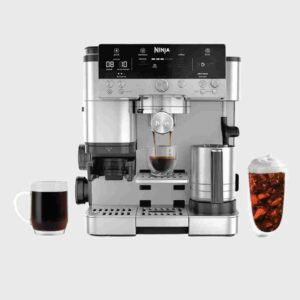
Ninja Luxe Café Premier Espresso, Drip Coffee and Cold Brew Machine
P2
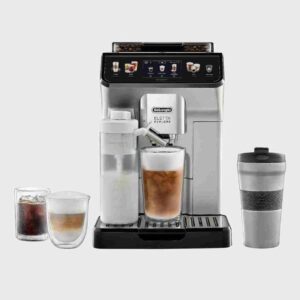
DeLonghi Eletta Explore Espresso Machine
Average score
P1
Product 1: Ninja Luxe Café Premier Espresso,...
3.8
P2
Product 2: DeLonghi Eletta Explore Espresso Machine
4.2
Accessories
P1
Product 1: Ninja Luxe Café Premier Espresso,...
4.5
Reviewers generally liked the included kit, especially the unpressurized baskets, portafilter, tamper, cleaning items, and guide; one review highlighted the accessories as above budget standard.
P2
Product 2: DeLonghi Eletta Explore Espresso Machine
4.8
Accessories were repeatedly praised, with reviewers noting two milk carafes, travel mug, ice tray, cleaning items and other included pieces.
Accuracy of marketing claims
P1
Product 1: Ninja Luxe Café Premier Espresso,...
4.6
Reviewers felt Ninja largely delivered on its core claims around ease, versatility, barista assistance, and cold drink capability rather than merely overpromising.
P2
Product 2: DeLonghi Eletta Explore Espresso Machine
3.5
Marketing-claim accuracy was mixed: one reviewer said the cold foam promise is met, but also felt the execution was awkward.
App, connectivity and smart control
P1Product 1: Ninja Luxe Café Premier Espresso,...
No score yet
P2
Product 2: DeLonghi Eletta Explore Espresso Machine
3.0
Connectivity was the most mixed area: some reviewers liked app control and support, while many complained about bugs, slowness, US availability or limited usefulness.
Assembly and Setup
P1
Product 1: Ninja Luxe Café Premier Espresso,...
4.3
Setup was described as painless or well documented, with useful quick-start guidance, though first-time use can still take around 20 minutes.
P2
Product 2: DeLonghi Eletta Explore Espresso Machine
4.8
Setup was described as easy and guided, with the machine or instructions helping users through the process rather than leaving setup intimidating.
Automation and sensors
P1
Product 1: Ninja Luxe Café Premier Espresso,...
4.2
Automation and sensors were praised for reducing guesswork, guarding against wrong setup, and guiding grind changes, but a few reviewers found the assist logic finicky or prone to chasing corrections.
P2
Product 2: DeLonghi Eletta Explore Espresso Machine
4.5
Automation was praised through Bean Adapt, profile support and machine-guided operation, though one reviewer noted the app-dependent Bean Adapt setup as a limitation.
Brewing performance and consistency
P1
Product 1: Ninja Luxe Café Premier Espresso,...
4.0
Most reviews found espresso and coffee output consistent and capable, especially after dialing in, while a minority reported shot-ratio inconsistency or long programmed yields.
P2
Product 2: DeLonghi Eletta Explore Espresso Machine
4.6
Brewing performance was described as consistent, rich and capable, with several reviewers saying the machine produced good crema, balanced shots and reliable results.
Build quality and durability
P1
Product 1: Ninja Luxe Café Premier Espresso,...
3.7
Build impressions ranged from sturdy and above-budget to concerns about plastic parts, chipping accessories, and uncertain long-term durability.
P2
Product 2: DeLonghi Eletta Explore Espresso Machine
4.1
Build quality was generally positive, with reviewers saying the plastics felt solid, the machine did not feel cheap and durability held up during daily use.
Cable management convenience
P1
Product 1: Ninja Luxe Café Premier Espresso,...
3.8
Only one reviewer judged the cord length directly, calling it good for most kitchens while noting some users may find it short.
P2Product 2: DeLonghi Eletta Explore Espresso Machine
No score yetCapacity
P1
Product 1: Ninja Luxe Café Premier Espresso,...
4.1
Capacity drew praise for the large reservoir, hopper, travel-mug clearance, and flexible cup sizes, but the machine remains better for individual servings than batch brewing.
P2
Product 2: DeLonghi Eletta Explore Espresso Machine
4.5
Capacity was praised as generous, with reviewers highlighting large water, bean and grounds capacities that reduce refilling in daily use.
Cup, tray and carafe handling
P1
Product 1: Ninja Luxe Café Premier Espresso,...
2.9
Cup and tray handling was mixed: reviewers liked adjustable trays and travel-mug clearance, but repeatedly criticized the two-spout design, tight fit, basket handling, and drip-tray hassles.
P2
Product 2: DeLonghi Eletta Explore Espresso Machine
3.7
Cup, tray and carafe handling was mixed: reviewers loved the plug-in carafe system but criticized switching carafes and the need to clean them regularly.
Design, ergonomics and footprint
P1
Product 1: Ninja Luxe Café Premier Espresso,...
3.7
Design opinions were polarized: several reviewers liked the stylish or appealing look, while others found it bulky, space-hungry, plasticky, or unattractive.
P2
Product 2: DeLonghi Eletta Explore Espresso Machine
4.1
Design and ergonomics were mostly praised for a modern look, usable interface and manageable width, but some reviewers found the machine bulky or counter-space hungry.
Design flaws
P1
Product 1: Ninja Luxe Café Premier Espresso,...
2.7
Design flaws centered on missing hot water in some markets, awkward dual spouts, ratio quirks, bean switching, non-abortable workflows, and cramped ergonomics.
P2
Product 2: DeLonghi Eletta Explore Espresso Machine
2.9
Design flaws centered on practical annoyances such as the water tank, cold drink execution, appearance, capacitive controls and two-carafe setup.
Environmental packaging sustainability
P1
Product 1: Ninja Luxe Café Premier Espresso,...
1.4
Packaging sustainability was a clear negative in CoffeeGeek reviews because the machine used too much styrofoam or polystyrene.
P2Product 2: DeLonghi Eletta Explore Espresso Machine
No score yetEspresso and beverage quality
P1
Product 1: Ninja Luxe Café Premier Espresso,...
4.4
Espresso and drinks were usually praised as good to excellent for the price, with rich crema, strong milk-drink performance, and some caveats around acidity or ultimate enthusiast quality.
P2
Product 2: DeLonghi Eletta Explore Espresso Machine
4.8
Reviewers consistently praised the Eletta Explore for rich espresso and strong beverage quality, with repeated notes of crema, sweetness, balance and cafe-style results.
Filter
P1
Product 1: Ninja Luxe Café Premier Espresso,...
4.5
Filter baskets were viewed positively because they are real, traditional, non-pressurized baskets rather than pressurized beginner baskets.
P2Product 2: DeLonghi Eletta Explore Espresso Machine
No score yetGrinder, hopper and dosing system
P1
Product 1: Ninja Luxe Café Premier Espresso,...
4.5
The grinder, hopper, and dosing system were among the strongest features, especially weight-based dosing, scale integration, quietness, and helpful guidance, though some assist recommendations were imperfect.
P2
Product 2: DeLonghi Eletta Explore Espresso Machine
3.8
The grinder and dosing system drew strong praise for fine grinding and sizable doses, but multiple reviewers warned that the grinder can be loud or screechy.
Guided tamper convenience
P1
Product 1: Ninja Luxe Café Premier Espresso,...
4.2
Tamper feedback was mostly positive for level, low-mess puck prep, but the 601's separate dosing ring and tamper workflow was called fiddly by some reviewers.
P2Product 2: DeLonghi Eletta Explore Espresso Machine
No score yetHeating-element power
P1
Product 1: Ninja Luxe Café Premier Espresso,...
4.4
Heating performance was praised for fast warm-up, hot early shots, and minimal preheating, with thermoblock/grouphead behavior seen as effective for the category.
P2Product 2: DeLonghi Eletta Explore Espresso Machine
No score yetHot water dispenser
P1
Product 1: Ninja Luxe Café Premier Espresso,...
1.2
The absent hot-water dispenser on the US/Canada Premier was one of the most consistent complaints, especially for americanos, tea, and cup preheating.
P2
Product 2: DeLonghi Eletta Explore Espresso Machine
4.5
Hot-water evidence was positive where tested, with reviewers noting consistent high tea temperatures and useful tea-temperature settings.
Iced / cold-brew function quality
P1
Product 1: Ninja Luxe Café Premier Espresso,...
3.8
Cold drink performance was divided: cold foam and some cold brew modes impressed many reviewers, but others found cold brew less deep, bitter, warm, or underwhelming.
P2
Product 2: DeLonghi Eletta Explore Espresso Machine
4.4
Cold and iced drink performance was a major strength, especially cold brew and cold foam, though some reviewers found certain cold espresso or cold coffee modes odd or ice-dependent.
Mess-free used-puck disposal
P1
Product 1: Ninja Luxe Café Premier Espresso,...
3.6
Used-puck cleanup split by mode: espresso pucks often knocked out cleanly, while filter-style coffee could leave soupy, messy pucks or require rinsing.
P2
Product 2: DeLonghi Eletta Explore Espresso Machine
4.5
Used-puck disposal received a positive maintenance note from one reviewer who found the spent pucks bone dry, reducing moisture concerns.
Milk, steam and frothing
P1
Product 1: Ninja Luxe Café Premier Espresso,...
4.3
Milk frothing was broadly liked for hands-free foam, cold foam, and beginner ease, but some reviewers disliked auto texture, plant-milk results, pitcher shape, noise, or wand cleaning demands.
P2
Product 2: DeLonghi Eletta Explore Espresso Machine
4.6
Milk performance was one of the strongest areas, with reviewers repeatedly praising hot foam, cold foam, texture and cappuccino/latte results.
Overall user experience
P1
Product 1: Ninja Luxe Café Premier Espresso,...
4.6
Overall user experience was strongly positive for beginners and café-style drink variety, with repeated praise for ease, versatility, and fun despite quirks.
P2
Product 2: DeLonghi Eletta Explore Espresso Machine
4.7
Overall user experience was strongly positive across reviews, especially for ease of use, guided menus, profiles, broad drink variety and polished day-to-day operation.
Popularity
P1
Product 1: Ninja Luxe Café Premier Espresso,...
4.5
Reviewers described strong attention and status for the machine, calling it top-rated or one of the most asked-about mainstream coffee launches.
P2
Product 2: DeLonghi Eletta Explore Espresso Machine
4.0
Popularity evidence was limited to one reviewer’s opinion that the machine is popular because it handles both hot and cold drinks.
Portability and travel-friendliness
P1
Product 1: Ninja Luxe Café Premier Espresso,...
2.0
Portability was weak: the machine was described as big, bulky, and heavy, making it unsuitable for tight spaces or frequent moving.
P2
Product 2: DeLonghi Eletta Explore Espresso Machine
4.5
Travel use was a clear strength, with reviewers praising tumbler filling, travel mug clearance, to-go menus and compatibility with larger mugs.
Pot function
P1
Product 1: Ninja Luxe Café Premier Espresso,...
1.9
Pot or batch-coffee capability was weak because reviewers emphasized individual cups, limited 18-ounce brews, and flawed filter-style coffee rather than carafe use.
P2
Product 2: DeLonghi Eletta Explore Espresso Machine
3.0
Pot-function evidence was limited and mixed, with one reviewer personally dismissing it while acknowledging some users may appreciate it.
Pump pressure consistency
P1
Product 1: Ninja Luxe Café Premier Espresso,...
4.3
Pump pressure was only directly judged once, where the reviewer felt pressure regulation worked well and avoided stalling or spraying.
P2
Product 2: DeLonghi Eletta Explore Espresso Machine
4.5
Pressure-related evidence was positive: reviewers noted the machine could reach espresso-like extraction pressure and produce pressure-supported crema.
Recognition and certifications
P1
Product 1: Ninja Luxe Café Premier Espresso,...
4.6
Recognition evidence was positive, with CoffeeGeek considering it for Espresso Machine of the Year and later calling it a market disruptor.
P2Product 2: DeLonghi Eletta Explore Espresso Machine
No score yetScoop-storage convenience
P1
Product 1: Ninja Luxe Café Premier Espresso,...
4.7
Accessory storage was a clear convenience win, with reviewers praising integrated side storage and organized accessory compartments.
P2Product 2: DeLonghi Eletta Explore Espresso Machine
No score yetSpeed and time-to-cup
P1
Product 1: Ninja Luxe Café Premier Espresso,...
4.4
Speed was a frequent positive, with fast heat-up, quick grinding, sub-minute espresso pulls, and reasonably quick coffee or cold drink workflows.
P2
Product 2: DeLonghi Eletta Explore Espresso Machine
4.7
Time-to-cup was a strength, with reviewers citing quick heat-up, fast pouring and notably rapid cold brew compared with traditional steeping.
Value and Price
P1
Product 1: Ninja Luxe Café Premier Espresso,...
4.7
Value was one of the strongest consensus points: reviewers repeatedly called it excellent, disruptive, or unusually capable for the price.
P2
Product 2: DeLonghi Eletta Explore Espresso Machine
3.6
Value opinions were mixed by region and use case: reviewers called it expensive, especially in the US, but worthwhile when its cold and to-go features are used.
Warranty and Customer support
P1
Product 1: Ninja Luxe Café Premier Espresso,...
3.6
Warranty and support evidence was limited but mildly positive, noting a one-year warranty, extension options, and affordable spare parts.
P2
Product 2: DeLonghi Eletta Explore Espresso Machine
4.7
Warranty comments were positive, with reviewers treating DeLonghi’s two-year warranty plus registration extension as useful reassurance on an expensive machine.
Water system, maintenance and descaling
P1
Product 1: Ninja Luxe Café Premier Espresso,...
3.4
Water and maintenance feedback was mixed: reviewers liked water-hardness setup, cleaning prompts, and simple cleanup, but criticized no filter, hard reservoir access, high purge water use, and frequent drip-tray emptying.
P2
Product 2: DeLonghi Eletta Explore Espresso Machine
4.3
Maintenance was generally viewed as easy and well-guided, though reviewers still noted the need to manage descaling, tank alignment and regular milk-carafe cleaning.