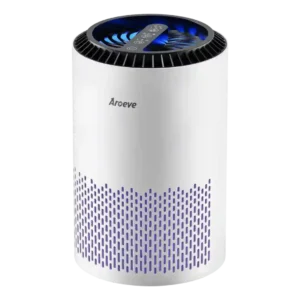
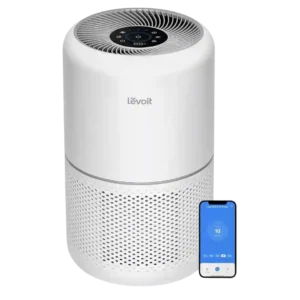
Aroeve MK01
Where It Has the Edge
- air changes per hour is rated 4.0 while the other product has no score yet. The scored air-change evidence is positive only for the recommended small room size, where one reviewer calculated 4.8...
The activated carbon filter receives mostly weak marks because reviewers describe it as thin, fibrous, foam-based, or poor for odors, though one review says it works adequately for light odor control.
The activated carbon layer was praised for odor, gas, and smoke support, especially where reviewers highlighted higher-carbon or pellet-based filter options.
The scored air-change evidence is positive only for the recommended small room size, where one reviewer calculated 4.8 air changes per hour.
Reviewer evidence is split by testing style: lab-style sources call performance slow or poor outside very small rooms, while owner-style and budget-focused reviews credit it with basic air cleaning when used continuously in tiny spaces.
Reviewers generally found the Core 300S effective for small to medium rooms, with several measured tests showing strong improvement, though a few noted slower cleaning or only reasonable power.
Sensor accuracy was mixed: some reviewers praised its accuracy and sensitivity, while others saw delayed responses, missed dust, or thresholds they considered too lenient.
Allergen reduction has limited but positive evidence: one owner reported fewer allergy issues while another review said it can reduce allergens in very small spaces.
Allergen reduction evidence was positive but limited, with reviewers saying the unit can reduce airborne triggers and banish allergens during everyday use.
App connectivity scores poorly because reviews explicitly state there is no smart app or app control, leaving users with built-in controls only.
App connectivity was mostly praised as intuitive and useful, but one review reported serious app problems and another framed phone monitoring as a practical convenience.
The aromatherapy feature is liked as a pleasant bonus, especially by owner-style reviews, but expert reviews describe it as subtle or not especially innovative.
Auto mode drew divided reactions: several reviewers called it useful or genuinely smart, while others criticized delays, threshold choices, or confusing speed decisions.
Build quality is mixed-to-negative, with multiple reviewers calling it unsatisfying, cheap, or below premium brands, though budget-friendly reviews find it acceptable for the price.
Build quality evidence was positive, with reviewers describing the plastic, assembly, and overall build as excellent or solid.
CADR and airflow are usually criticized as very low, despite one direct MK06 comparison favoring the MK01 on airflow.
CADR-related comments were positive overall, especially versus the older Core 300, although the numbers still positioned the unit as a compact-room purifier.
Child lock has limited but positive evidence from one review describing it as useful for preventing unintended changes.
Child/display lock evidence was positive, with reviewers calling it helpful or handy for preventing accidental changes by children or pets.
Design opinions are mixed: some reviewers find it cheap or basic, while others say it blends into rooms, looks nice, or fits most decor.
Design and appearance were consistently praised as clean, subtle, compact, and easy to fit into home decor.
Display readability and controls were widely praised as intuitive, clear, responsive, and easy to use.
Durability evidence is limited and mixed: one review expects years of service with care, while another estimates a shorter typical service life.
Durability had limited support, with one review describing the body as robust and durable.
Owner reviews report visible dust buildup on the filter after long use, treating that as evidence the purifier is removing dust from the room.
Dust removal was mostly positive, with reviewers noting dust capture and slower dust settling, although one test found the sensor failed to register a dust dump.
Energy efficiency is mixed: some reviewers praise low operating costs and good efficiency, while others criticize the power-to-CADR ratio.
Energy efficiency was strongly praised, with reviewers repeatedly calling the unit efficient, low-cost to run, or improved over the Core 300.
Fan speed options are seen as simple and flexible by several reviewers, but one source criticizes the limited speed range.
Fan speed options were mixed: reviewers appreciated quick high-speed clearing, but some found high speed loud or not clearly faster in tests.
Filter availability and replacement options were positive, with reviewers saying filters are easy to find, reasonably priced, or cheaper when bought in bulk.
Filter life receives negative evidence from one reviewer who found the small filter gets dirty quickly.
Filter life evidence was positive, with reviewers describing the 6-8 month span as decent or long and one long-term test suggesting it could go longer.
Filter cost opinions are mixed: some reviewers call replacements affordable or very cheap, while others say the cost is high relative to the purifier’s cleaning power or purchase price.
Filter replacement cost was generally manageable but still a recurring caveat; reviewers praised low running costs while warning buyers to budget for filters.
Reviewers generally accept the three-stage setup as useful on paper and reasonably effective for particles, but they also tie its real-world value to limited airflow and filter size.
Reviewers consistently liked the three-stage filtration, saying it contributed to strong performance and was notable for an inexpensive or compact purifier.
Handle design was a recurring minor weakness: reviewers liked the light body but wished for a built-in carry handle or easier grip.
HEPA filtration is contested: some reviewers see legitimate or useful HEPA media, while another criticizes the particle filter as low quality versus recommended HEPA units.
HEPA filtration was generally praised for removing harmful particles and supporting the unit’s performance, though one review framed HEPA as part of a broader filtration debate.
Indicator-light evidence is mixed: one reviewer criticizes poorly arranged lights, while another appreciates the maintenance reminder function.
Indicator lights were valued as an easy visual air-quality cue, with reviewers praising color-coded rings and quick readability.
Maintenance is consistently positive, with multiple reviewers calling filter setup or replacement straightforward, easy, or helpful due to reminders.
Maintenance ease was a consistent strength, with reviewers calling filter changes straightforward, controls easy, and reminders helpful.
Mold spore reduction had limited support, with one review judging the HEPA filter able to scrub mould spores along with other pollutants.
Noise feedback is mixed but often favorable at low speeds: several reviews praise quiet bedroom use, while others note higher speeds are too loud or that quiet modes reduce airflow.
Noise level was a major strength at sleep and lower settings, though several reviewers noted max speed could be loud or merely average.
Odor reduction is a weak point overall, with several reviewers criticizing poor odor neutralization and only one source describing light odor control as adequate or meaningful.
Odor reduction was mixed-positive: reviewers saw improvements with cooking and household odors, but several noted lingering smells or weaker instant smell detection.
Ozone-free operation is mostly positive through CARB and safety evidence, but one reviewer adds a UV-related caveat about a small amount of ozone below allowed limits.
Ozone-free operation was praised as safe and especially important for sensitive users, with reviewers noting the absence of ionizer/anions.
Particle removal is the strongest purification area, with visible dust/particle capture and some positive timed tests, but reviewers note the weak motor and small filter keep it from matching stronger purifiers.
Particle removal evidence was positive overall: measured tests described outstanding or solid results, with caveats that performance is better for everyday loads than extreme demands.
Pet dander evidence was positive where mentioned, with reviewers crediting the unit with capturing fur and handling pet dander.
PM2.5 detection was useful overall, especially for visibility and response, but some reviewers found the presentation unclear or delayed.
Pollen removal was supported by one review that judged the HEPA filter capable of scrubbing pollen from the air.
Portability is consistently praised because the purifier is light, small, and easy to move between rooms.
Portability was mostly positive because the unit is light and compact, though the smooth cylinder can require two hands.
Power consumption is generally viewed positively because monthly or ongoing electricity costs are low, even when reviewers question efficiency relative to CADR.
Power consumption evidence was strongly positive, with measured wattage and comparative comments showing low draw at sleep and maximum speeds.
The only opinionated pre-filter evidence is negative, with one reviewer calling the mesh pre-filter low quality compared with recommended units.
Pre-filter quality had limited but positive evidence, with the pre-filter described as the first defense against harmful particles.
Real-time monitoring is a weakness because reviewers describe the unit as lacking detailed particle readings or an air quality sensor.
Real-time monitoring was widely valued because it made air quality visible through the unit or app and helped guide automatic or remote control.
Reliability is mixed: one owner says the unit is still working after about a year, while another review questions reliability compared with premium brands.
Reliability was mixed: day-to-day performance was described as consistent, but app outages and some reported motor squealing lowered confidence.
Room coverage is the most repeated limitation: several reviews recommend only very small spaces, while budget-positive coverage claims apply mainly to small bedrooms or offices.
Room coverage was context-dependent: reviewers liked it for bedrooms, offices, and small spaces, but warned it is not ideal for big or open-plan rooms.
Safety certification evidence is positive, centered on CARB/ozone-related safety claims and certification-based reassurance.
Safety certification evidence was limited but positive, with one review citing CARB certification and lack of ionizer use.
Scheduling is useful and flexible for auto-off timing, but one owner notes the timer only turns the unit off and cannot schedule startup.
Scheduling options were useful in most reviews, especially through the app, but one reviewer could not get the app timer system working.
Size and footprint are consistently strong, with reviewers describing the MK01 as very small, compact, and well suited to desks, nightstands, dorms, and small rooms.
Size and footprint were strong positives, with reviewers calling the unit compact, easy to place, and well suited to small rooms or worktops.
Sleep mode is useful for bedrooms and quiet operation, but reviewers also note that its low airflow can reduce cleaning effectiveness.
Sleep mode was praised for dimming lights, lowering fan noise, and making the purifier suitable for bedrooms or overnight use.
Smart features are limited, with reviewers noting the device is basic and lacks app-connected intelligence beyond simple onboard features.
Smart features were a key appeal, including app control, sensors, timers, scheduling, voice support, and Auto mode, though one review criticized app reliability.
Smoke removal is inconsistent: one comparison found the MK01 faster than the MK06, but a dedicated test called it one of the worst smoke performers.
Smoke-removal tests were mostly positive, including fast smoke-box results and practical smoke-odor reduction, though some evidence focused on remaining smell rather than complete removal.
True HEPA evidence is mixed, with one reviewer calling the H13 media capable, another viewing H13 as marketing on such a small unit, and another questioning the particle-filter quality.
True HEPA evidence was mixed-positive: some reviewers praised the H13 True HEPA stage, while one cited Levoit’s later removal of True HEPA wording.
Value for money is polarized: several reviews praise the very low purchase price and cheap filters, while testing-focused sources recommend spending slightly more for stronger performance.
Value for money was strong overall because reviewers liked the performance, smart features, and low running costs, though some newer rivals were said to offer better value.
VOC reduction is generally rated poorly, with reviewers warning that the small carbon layer is not suited to heavy VOC, gas, smoke, or odor loads.
VOC reduction evidence was cautiously positive because reviewers reported filtration or deodorant-test improvements, while also noting that VOC readings are not directly displayed.
VOC sensor accuracy was a weakness because reviewers repeatedly noted there is no dedicated VOC reading or sensor detail, even when VOC filtration was discussed.
Voice assistant compatibility was viewed positively for convenience, with multiple reviewers using or praising Alexa/Google control.
Wi-Fi reliability was mixed: one reviewer reported near-constant disconnections, one had a fixable setup issue, and another found app connection reliable.