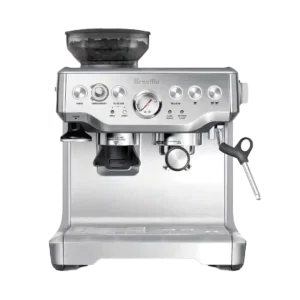
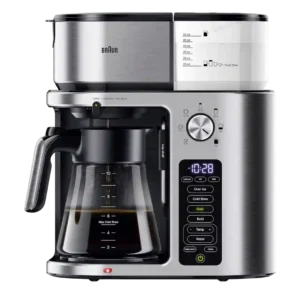
Breville Barista Express Espresso Machine
Where It Has the Edge
- Accuracy of marketing claims is 3.5 vs 3.0. Most reviewers feel the machine largely performs as advertised for its class, though marketing numbers like 15-bar pump...
Reviews like the included portafilter, baskets, tamper, razor/leveling tool, milk pitcher, and cleaning tools, but many still budget for common upgrades like a better tamper, a scale, a bottomless portafilter, or a knock box.
The product is consistently shown with practical included accessories such as filters, scoop, lid, and manuals, though the used unboxing unit was missing the charcoal filter.
Most reviewers feel the machine largely performs as advertised for its class, though marketing numbers like 15-bar pump pressure are often framed as less important than dialing in grind, dose, and tamp for good results.
Marketing accuracy is mixed because the independent review says the cold-brew cycle took longer than the brand's sub-13-minute claim.
No built-in app, Wi-Fi, or smart control is described; operation is manual via buttons, dials, and the pressure gauge.
Out-of-box setup is generally straightforward, but getting great espresso takes a short learning period of dialing in grind size, dose, and tamp pressure.
Setup appears straightforward in the unboxing review, especially basic clock setup and default altitude settings.
It offers programmable shot buttons and simple, repeatable controls, but it is not a one-touch superautomatic and relies on hands-on technique.
The SCA transcript supports the ExactBrew automation claim, describing automatic water-flow, temperature, and speed calculation.
The single-boiler/thermocoil-style design heats quickly but requires switching between brewing and steaming, so you cannot pull a shot and steam milk at the same time.
Once dialed in, reviewers describe solid repeatability from shot to shot, with the pressure gauge and clear workflow helping consistency; early results can vary until you learn the machine.
Hot-coffee brewing receives strong support from the independent review, and the SCA transcript reinforces consistent optimal performance.
Build quality is commonly described as sturdy for the price, though a minority mention wear, leaks, or service needs after heavy use or over long ownership.
The hands-on review describes the machine as solid overall, while also noting it uses mostly black plastic with stainless accents.
Cable handling gets only limited, mildly negative support from the unboxing review because the power cord was difficult to unravel.
Water tank and bean hopper capacity are described as adequate for daily use, but frequent drinks can mean refilling water and emptying the drip tray more often.
Capacity is a clear strength: reviews mention a 50-ounce reservoir, seven brew sizes, and options from small cups to a full carafe.
This is a beans-and-grounds workflow rather than a capsule system; reviewers frequently cite pod machines like Nespresso as the convenience alternative.
The evidence repeatedly frames the machine as pod-free, making it useful for buyers who want single-cup flexibility without capsules.
Cup warming and general cup clearance are seen as practical, while the drip tray is a common pain point because it can fill quickly and collects water and stray grounds.
Cup handling is helped by the flip-down mug platform and smooth pouring, but carafe cleaning limits the overall handling score.
The stainless-steel look and overall footprint fit most home counters, though it is wider and heavier than compact starter machines and benefits from dedicated space.
The machine is wide and takes counter space, but evidence supports an accessible reservoir and adaptable stainless-steel design.
The main design flaw is the narrow carafe opening, and the review also wanted more carafe-size control.
Espresso quality is a highlight once settings are tuned, with many describing rich flavor and crema; the main limiter is technique (grind, dose, tamp) rather than raw machine capability.
The supplied reviews support drip beverage quality rather than espresso, with hot coffee described as rich and not bitter.
The included water filter is seen as helpful for taste and scale management, but it requires periodic replacement and does not eliminate the need for descaling.
Filter flexibility is well supported through cone paper filters, a reusable gold-tone or mesh filter, and water-reservoir charcoal filtration.
The integrated grinder is a major value add and can produce strong results, but stepped adjustment, retention/clumping, and a bit of mess are recurring critiques as users become more advanced.
The included tamper and leveling/razor tool help beginners get a repeatable puck, but several reviewers still upgrade their tamping and dosing tools for better feel and consistency.
Warm-up for espresso is generally quick and stable enough for home use; steam output is capable but not as forceful or fast as higher-end prosumer machines.
Heating performance is supported by hot measured brew temperature and SCA copy claiming a full pot under eight minutes.
The hot-water feature is directly supported by SCA copy and the unboxing transcript, including temperature control for hot water.
Over-ice brewing receives good support, while cold brew is mixed because it is marketed as fast but the independent reviewer found the taste bitter.
Used-puck knock-out is typical for a semi-auto setup; cleanup is manageable with a knock box and quick rinse, but it is not a mess-free system.
The steam wand can make good microfoam and supports latte art with practice, though steaming can be slower or less powerful than higher-end equipment.
Owners describe the experience as rewarding and fun if you like hands-on coffee, with a learning curve that pays off once you establish a consistent routine.
The overall experience is positive across the evidence, with simple controls, good coffee, and broad convenience repeatedly emphasized.
Reviews repeatedly call it a long-running best seller and a default recommendation for learning real espresso at home.
Pot brewing is useful for half or full carafes, although the independent review wanted more multi-serving carafe-size options.
Pump behavior is generally described as consistent for home use, and the pressure gauge helps dialing in toward typical espresso targets, but puck prep still strongly influences results.
The machine is cited more for reputation and community support than formal certifications, and it is frequently recommended by reviewers and coffee hobbyists.
Certification is strongly supported through SCA Golden Cup/Home Brewer certification references.
Hidden tool storage in the drip tray is appreciated for keeping small accessories together, though it is easy to overlook during day-to-day use.
When shipping is discussed, experiences are mostly retailer-dependent; buyers emphasize purchasing from reputable or authorized sellers for smoother returns and service handling.
Time-to-first-shot is described as quick, and drink-making is fast once your workflow is set; switching over to steam and back adds time compared with dual-boiler setups.
Speed is generally strong for hot and over-ice brewing, though cold brew was slower than the claim in the hands-on review.
Value is a consistent theme because it combines grinder plus espresso capability in one unit; price feels justified if you will actually use the manual workflow and keep up with maintenance.
Value evidence is favorable because the product is pod-free and cost-effective, and a more adjustable GE alternative is described as more expensive.
Warranty is commonly cited as one year, and customer support feedback is mixed, ranging from smooth service to delays or repair inconvenience depending on the case.
Backflushing, steam-wand cleaning, and periodic descaling are recurring expectations; reviewers who stay on top of maintenance report better reliability and better-tasting drinks.
The water system has charcoal filtration, cleaning/descale controls, and accessible filling, but carafe cleaning requires a bottle brush.