Average score
P1
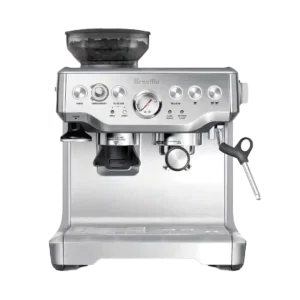
Product 1: Breville Barista Express Espresso Machine
4.1
P2
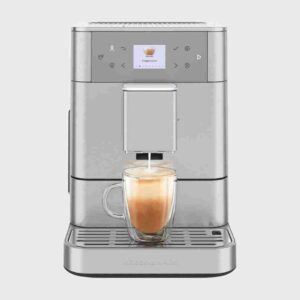
Product 2: KitchenAid KF6 Fully Automatic Espresso...
4.2
Accessories
P1
Product 1: Breville Barista Express Espresso Machine
4.6
Accessory coverage was consistently praised, with reviewers noting useful baskets, cleaning tools, milk pitchers, tampers, filters, and included setup extras.
P2
Product 2: KitchenAid KF6 Fully Automatic Espresso...
2.8
Accessory sentiment centers on the missing milk container: reviewers liked optional add-ons such as hoppers, but several felt the milk tube-only setup or separate container purchase was disappointing.
Accuracy of marketing claims
P1
Product 1: Breville Barista Express Espresso Machine
4.3
Marketing accuracy was mixed-positive: one lab-style review confirmed the under-a-minute claim, while another cautioned that 15-bar marketing sounds better than it is.
P2
Product 2: KitchenAid KF6 Fully Automatic Espresso...
2.0
One reviewer criticized the stated 15-drink marketing as inflated because it counts shot variants, hot water, and warm milk rather than 15 distinct coffee styles.
App, connectivity and smart control
P1
Product 1: Breville Barista Express Espresso Machine
4.0
App evidence was limited to setup help, where the BILT/visual setup guidance was described as straightforward and useful.
P2Product 2: KitchenAid KF6 Fully Automatic Espresso...
No score yetAssembly and Setup
P1
Product 1: Breville Barista Express Espresso Machine
4.1
Setup ranged from very easy out of the box to straightforward but time-consuming; beginner reviewers emphasized priming, flushing, and learning the workflow.
P2
Product 2: KitchenAid KF6 Fully Automatic Espresso...
3.8
Setup is mostly straightforward, but dialing in grind, strength, body, and length can take time before the espresso reaches its best results.
Automation and sensors
P1
Product 1: Breville Barista Express Espresso Machine
4.4
Pressure gauges, cleaning indicators, dosing behavior, and purge features were useful aids, especially for beginners learning extraction and maintenance.
P2
Product 2: KitchenAid KF6 Fully Automatic Espresso...
4.9
Automation is a major strength, with auto-purge, saved profiles, one-touch brewing, automatic rinsing, and repeatable smart dosing reducing day-to-day effort.
Boiler type (single vs dual)
P1
Product 1: Breville Barista Express Espresso Machine
3.5
Single thermocoil design was accepted as normal at the price, but reviewers consistently noted it cannot brew and steam at the same time.
P2Product 2: KitchenAid KF6 Fully Automatic Espresso...
No score yetBrewing performance and consistency
P1
Product 1: Breville Barista Express Espresso Machine
4.5
Evidence praised pre-infusion, PID control, extraction yield, and forgiving shot behavior, with most comments pointing to reliable brewing when the user dials in grind and dose.
P2
Product 2: KitchenAid KF6 Fully Automatic Espresso...
4.8
Reviewers strongly praised brewing results and consistency, especially repeatable espresso extraction and saved drink settings that reproduce the same cup.
Build quality and durability
P1
Product 1: Breville Barista Express Espresso Machine
4.6
Build quality was a clear strength, with repeated praise for stainless-steel feel, heft, durability, and long-term reliability.
P2
Product 2: KitchenAid KF6 Fully Automatic Espresso...
4.7
Build quality is consistently praised, with metal construction, sturdy parts, premium feel, and durability confidence appearing across several reviews.
Capacity
P1
Product 1: Breville Barista Express Espresso Machine
4.4
Capacity was praised for the 2-liter water tank, large drip tray, and workable hopper size, with only minor refill-handling caveats.
P2
Product 2: KitchenAid KF6 Fully Automatic Espresso...
4.8
Capacity feedback is positive where discussed, especially the large water tank and healthy drip-tray capacity for an entry-level model.
Cup, tray and carafe handling
P1
Product 1: Breville Barista Express Espresso Machine
4.1
The drip tray and cup handling were generally praised for capacity and design, though one reviewer disliked base nodules that block taller cup workarounds.
P2
Product 2: KitchenAid KF6 Fully Automatic Espresso...
4.1
Cup and tray handling is good overall thanks to smooth spout adjustment and tall-cup fit, though milk drinks are limited by the single central milk spout.
Design, ergonomics and footprint
P1
Product 1: Breville Barista Express Espresso Machine
4.4
The machine was widely seen as attractive, professional-looking, and space-efficient for an all-in-one, though not tiny.
P2
Product 2: KitchenAid KF6 Fully Automatic Espresso...
4.6
Design and ergonomics are widely liked for the sleek look, metal finish, compact width, wheels, and easy side-access water tank, though one review found the styling bland.
Design flaws
P1
Product 1: Breville Barista Express Espresso Machine
2.7
Design drawbacks centered on mess, lack of a front water-level indicator, grinder compromise, high-pressure sensitivity, and beginner intimidation.
P2
Product 2: KitchenAid KF6 Fully Automatic Espresso...
2.8
The main design flaws are minor scratches on the drip tray, a dated non-touch display, no included milk container, and an odd cappuccino milk-first sequence.
Environmental packaging sustainability
P1
Product 1: Breville Barista Express Espresso Machine
1.5
Packaging sustainability was only discussed once, and the reviewer criticized the use of environmentally unfriendly styrofoam.
P2Product 2: KitchenAid KF6 Fully Automatic Espresso...
No score yetEspresso and beverage quality
P1
Product 1: Breville Barista Express Espresso Machine
4.4
Reviewers repeatedly found the machine capable of rich, café-style espresso and milk drinks once dialed in, though one beginner-focused review showed poor early shots before technique improved.
P2
Product 2: KitchenAid KF6 Fully Automatic Espresso...
4.7
Espresso quality is the clearest strength, with reviewers praising rich flavor, thick crema, smooth shots, and strong café-style results from an automatic machine.
Filter
P1
Product 1: Breville Barista Express Espresso Machine
4.2
Water-filter sentiment was positive because reviewers saw it as useful for taste, scale control, and protecting the machine.
P2
Product 2: KitchenAid KF6 Fully Automatic Espresso...
4.5
Filter comments are positive because reviewers say filtered water improves taste and reduces descaling demands.
Grinder, hopper and dosing system
P1
Product 1: Breville Barista Express Espresso Machine
3.9
The built-in grinder is convenient and good enough for many beginners, but multiple reviewers called it the main compromise because adjustment precision and mess can limit growth.
P2
Product 2: KitchenAid KF6 Fully Automatic Espresso...
4.8
The grinder, hopper, and dosing system are standout features, especially the removable bean hopper, purge function, high dose potential, and practical switching between beans.
Guided tamper convenience
P1
Product 1: Breville Barista Express Espresso Machine
3.9
The magnetic tamper was convenient and usable, but several reviewers said it is basic, light, or less comfortable than an upgraded tamper.
P2Product 2: KitchenAid KF6 Fully Automatic Espresso...
No score yetHeating-element power
P1
Product 1: Breville Barista Express Espresso Machine
4.4
Fast thermocoil heat-up and quick readiness were praised, especially compared with slower boiler machines, though steam power is not class-leading.
P2
Product 2: KitchenAid KF6 Fully Automatic Espresso...
4.0
Heating performance is viewed positively because the thermal system can produce coffee in about 40 seconds, though the reviewer did not treat speed as the main reason to buy.
Hot water dispenser
P1
Product 1: Breville Barista Express Espresso Machine
4.1
The hot-water outlet was viewed as a useful extra for Americanos, tea, rinsing, and broader drink flexibility.
P2
Product 2: KitchenAid KF6 Fully Automatic Espresso...
4.8
Hot water dispensing is praised for true one-touch Americano convenience, with coffee and water coming from the front without moving the cup.
Mess-free used-puck disposal
P1
Product 1: Breville Barista Express Espresso Machine
4.4
Reviewers liked dry, intact pucks and easier puck removal when the process was dialed in, with the dry-puck feature called smart.
P2
Product 2: KitchenAid KF6 Fully Automatic Espresso...
4.5
Used-puck disposal is viewed positively in the one detailed review that praised the removable bin and drip-tray shape for reducing mess.
Milk, steam and frothing
P1
Product 1: Breville Barista Express Espresso Machine
4.2
Milk steaming drew strong praise for microfoam quality and latte-art potential, while slower steam pressure and warm-up were the most common caveats.
P2
Product 2: KitchenAid KF6 Fully Automatic Espresso...
3.9
Milk performance is mixed: reviewers liked lattes and silky texture, but cappuccino and macchiato foam density, plant-milk support, and the missing container drew criticism.
Overall user experience
P1
Product 1: Breville Barista Express Espresso Machine
4.3
Overall experience was positive for hands-on learners and home baristas, but less so for users who expected push-button simplicity.
P2
Product 2: KitchenAid KF6 Fully Automatic Espresso...
4.6
Overall user experience is very strong because reviewers found the KF6 simple, quiet, repeatable, customizable, and capable of café-quality drinks with little effort.
Popularity
P1
Product 1: Breville Barista Express Espresso Machine
5.0
Popularity evidence was very strong, with multiple reviewers calling it a leading or best-selling all-in-one home espresso machine.
P2
Product 2: KitchenAid KF6 Fully Automatic Espresso...
4.0
Popularity evidence is limited but positive, with one reviewer citing a 4.3-star Amazon average and generally favorable customer impressions.
Portability and travel-friendliness
P1
Product 1: Breville Barista Express Espresso Machine
4.2
Portability was rarely discussed, but reviewers who did mention it said the machine is movable and even practical for car trips or camping.
P2
Product 2: KitchenAid KF6 Fully Automatic Espresso...
4.1
Portability is good for countertop repositioning because rear wheels make the heavy machine easier to move, but no review treats it as travel-friendly.
Pump pressure consistency
P1
Product 1: Breville Barista Express Espresso Machine
4.0
Pressure feedback and newer nine-bar OPV support were valued, but several reviews warned that high pressure or puck flaws can still cause channeling.
P2Product 2: KitchenAid KF6 Fully Automatic Espresso...
No score yetRecognition and certifications
P1
Product 1: Breville Barista Express Espresso Machine
5.0
Recognition evidence came from editorial awards and top-ranked review positioning, supporting strong external validation.
P2
Product 2: KitchenAid KF6 Fully Automatic Espresso...
4.4
Recognition evidence is positive, including Red Dot design recognition and Quiet Mark-related comments that reinforce the machine's design and quiet-operation strengths.
Scoop-storage convenience
P1
Product 1: Breville Barista Express Espresso Machine
4.2
Only one review gave opinionated evidence for internal storage, calling the small behind-tray space a smart way to keep tools at hand.
P2Product 2: KitchenAid KF6 Fully Automatic Espresso...
No score yetSpeed and time-to-cup
P1
Product 1: Breville Barista Express Espresso Machine
3.8
Heat-up and shot speed were often praised, but milk-drink workflow slows because grinding, tamping, steam warm-up, and single-boiler sequencing take time.
P2
Product 2: KitchenAid KF6 Fully Automatic Espresso...
4.0
Speed feedback is positive but limited, with one reviewer calling the roughly 40-second coffee delivery fast while emphasizing espresso quality more.
Value and Price
P1
Product 1: Breville Barista Express Espresso Machine
4.7
Value sentiment was very strong: reviewers repeatedly said the all-in-one package gives serious espresso capability for far less than higher-end setups.
P2
Product 2: KitchenAid KF6 Fully Automatic Espresso...
4.7
Reviewers generally see the KF6 as strong value for a super-automatic machine, especially versus higher-end models, despite its premium absolute price.
Warranty and Customer support
P1
Product 1: Breville Barista Express Espresso Machine
3.2
Warranty and support evidence was mixed: reviewers appreciated basic coverage and repairability, but the one-year warranty was repeatedly flagged as short.
P2
Product 2: KitchenAid KF6 Fully Automatic Espresso...
4.1
Warranty and support sentiment is positive where discussed, with reviewers treating the two-year warranty and available support as confidence-building for a major purchase.
Water system, maintenance and descaling
P1
Product 1: Breville Barista Express Espresso Machine
3.9
Maintenance is manageable and sometimes improved by indicators, filters, and faster descale cycles, but reviewers still described cleaning as routine work or a hassle.
P2
Product 2: KitchenAid KF6 Fully Automatic Espresso...
4.8
Maintenance is one of the strongest areas: reviewers repeatedly praised automatic rinsing, guided cleaning, removable parts, filter support, and low-effort upkeep.