activated carbon filter
P1
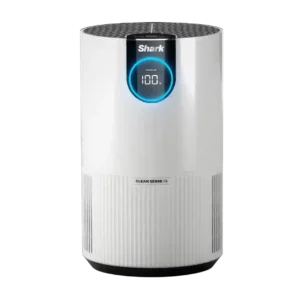
Product 1: Shark HP102
3.9
Reviewers split on the carbon filter: some praised pellet carbon and odor handling, while one criticized the fibrous carbon design.
P2
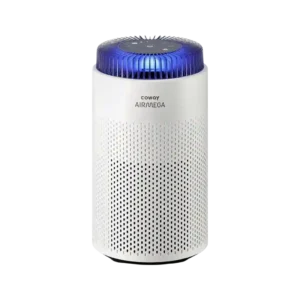
Product 2: Coway Airmega 50
2.1
The carbon layer is a weak point. It is thin and better suited to light everyday smells than serious odor control.
air circulation
P1
Product 1: Shark HP102
5.0
One customer praised improved air circulation and cooling.
P2
Product 2: Coway Airmega 50
4.2
Air movement is good for a tiny purifier, especially on higher speed in tight spaces. It is useful for local circulation, not whole-home airflow.
air purification performance
P1
Product 1: Shark HP102
4.7
Most reviews said the HP102 cleans small-room air effectively, with many customers noticing better air, breathing, or smell.
P2
Product 2: Coway Airmega 50
4.0
The Airmega 50 is strongest as a compact small-room purifier, with many experiences describing cleaner, fresher air. A few poor units were reported as barely helping or not filtering properly.
air quality sensor accuracy
P1
Product 1: Shark HP102
3.4
Sensor feedback was praised by experts and many users, but several customers reported false clean-air or stuck readings.
P2
Product 2: Coway Airmega 50
2.3
Sensor accuracy is one of the biggest mixed points. Some units react quickly to cooking or aerosol pollution, while others miss smoke or dust, stick on one color, or fail after a few months.
allergen reduction
P1
Product 1: Shark HP102
4.9
Customers repeatedly reported allergy, sinus, pollen, or breathing improvements, especially in bedrooms and pet homes.
P2
Product 2: Coway Airmega 50
4.5
Allergy relief is one of the more encouraging real-world themes, especially for sneezing and room-level irritants. It works best as targeted support in bedrooms or small rooms.
app connectivity
P1
Product 1: Shark HP102
2.0
Experts consistently treated the lack of app or Wi-Fi control as a drawback.
P2
Product 2: Coway Airmega 50
3.3
No app support is a tradeoff. The upside is quick setup with no pairing or account, while the downside is having to adjust everything on the unit or use a separate smart plug.
auto mode performance
P1
Product 1: Shark HP102
4.5
Auto mode was often praised for reacting to air changes, though a few users distrusted it when sensors missed dust or got stuck.
P2
Product 2: Coway Airmega 50
4.4
Auto mode is convenient when the sensor catches cooking fumes or dirty air, ramping up and settling down without much fuss. Its usefulness drops when the sensor misses a problem.
build quality
P1
Product 1: Shark HP102
4.8
Experts generally found the body and materials premium for a compact purifier, with a few customers echoing Shark quality.
P2
Product 2: Coway Airmega 50
3.7
Build quality is mostly solid for the price and does not feel cheap out of the box. The main concern is fan-related noise or clicking on some units.
CADR rating
P1
Product 1: Shark HP102
2.7
Experts viewed CADR and airflow as modest, limiting coverage despite good small-room performance.
P2
Product 2: Coway Airmega 50
3.8
CADR is modest but respectable for a purifier this small. It competes in the mini category, while larger purifiers still offer more cleaning headroom.
child lock
P1
Product 1: Shark HP102
4.3
Experts and video reviewers liked the child lock as a practical control feature.
P2
Product 2: Coway Airmega 50
4.2
The child lock is a practical plus for homes with children or pets. It helps prevent accidental setting changes on the top control panel.
condition on arrival
P1
Product 1: Shark HP102
1.3
A few customers reported crushed packaging, scratches, or used/repackaged condition on arrival.
P2
Product 2: Coway Airmega 50
4.5
Arrival condition was positive in the unboxing experience, with the unit neatly packed and secured. The main packaging complaint was excess plastic, not damage.
customer support
P1
Product 1: Shark HP102
5.0
One customer said Shark support solved an older-model problem quickly.
P2
Product 2: Coway Airmega 50
2.0
Support experiences are uneven. Warranty and service access may sound reassuring on paper, but some buyers describe poor help when the product failed.
design and appearance
P1
Product 1: Shark HP102
4.7
Reviewers liked the modern, compact look and display-forward design.
P2
Product 2: Coway Airmega 50
4.2
The design is compact, clean, and easy to place in everyday rooms. It can blend in reasonably well, though it still looks like a small air purifier.
display readability
P1
Product 1: Shark HP102
4.9
The percentage, color ring, particle readouts, and filter-life display were repeatedly praised as useful and easy to read.
P2
Product 2: Coway Airmega 50
4.2
The display makes active settings easy to see. The only recurring confusion is Coway's color system, which does not match the familiar U.S. AQI colors exactly.
durability
P1
Product 1: Shark HP102
1.0
Durability evidence was limited but negative where reported, including a unit that stopped working after about a year.
P2
Product 2: Coway Airmega 50
3.2
Durability is mixed. Some Coway units have lasted years without trouble, but this model also has reports of sensor or fan problems within months.
dust removal
P1
Product 1: Shark HP102
4.8
Many customers saw dust collection or less dust, but one reported the auto sensor failed to detect ordinary dust.
P2
Product 2: Coway Airmega 50
4.1
Dust reduction is generally positive, with noticeable dust decreases and strong fine-particle filtration. Dust sensing is less convincing, since one dust test did not trigger a clear response.
ease of use
P1
Product 1: Shark HP102
4.7
Controls and UI were usually described as easy, though setup requires removing filter packaging first.
P2
Product 2: Coway Airmega 50
4.8
Ease of use is a major strength. Setup is quick, controls are straightforward, and there is no required app pairing.
energy efficiency
P1
Product 1: Shark HP102
4.9
Experts and customers praised low power use and efficient operation.
P2
Product 2: Coway Airmega 50
4.8
Energy efficiency is a clear strength. The purifier is cheap to run and low-wattage enough for overnight or workday use.
fan speed options
P1
Product 1: Shark HP102
4.3
Reviewers liked the four fan speeds and manual control range.
P2
Product 2: Coway Airmega 50
4.2
The speed options are simple and practical, with manual speeds, sleep mode, and automatic adjustment. The range is enough for everyday small-room use.
filter availability
P1
Product 1: Shark HP102
2.7
Filter availability was inconsistent, with some finding replacements easily and others unable to get them promptly.
P2
Product 2: Coway Airmega 50
2.5
Replacement filter access can be frustrating. The limited filter choice and difficulty buying through Amazon make long-term ownership less convenient for some buyers.
filter life
P1
Product 1: Shark HP102
4.5
Filter life was often considered decent, commonly around 6-12 months, though some warnings or reminders misbehaved.
P2
Product 2: Coway Airmega 50
3.6
Filter life may vary a lot by use and dust level. The expected life is around eight months, but some buyers saw replacement lights after roughly two-and-a-half to three months.
filter replacement cost
P1
Product 1: Shark HP102
2.5
Filter cost was the most repeated ownership concern, though a few customers found affordable replacements.
P2
Product 2: Coway Airmega 50
3.6
Replacement filter cost is not universally viewed the same way. Some pricing looks fair for the category, while heavier users may feel the cost sooner if filters need early replacement.
filter stages
P1
Product 1: Shark HP102
4.5
Experts liked the three-stage filter stack and several customers praised filter quality.
P2
Product 2: Coway Airmega 50
4.0
The three-stage filter setup is simple and appropriate for a budget cylindrical purifier. The all-in-one design is convenient, but the deodorizing stage is basic.
handle design
P1
Product 1: Shark HP102
2.5
Experts noted the lack of a carry handle, though the unit is still light.
P2
Product 2: Coway Airmega 50
3.2
The lack of a real handle is noticeable but not a major obstacle. The unit is light enough to move by size alone, though a grip would make carrying easier.
HEPA filtration
P1
Product 1: Shark HP102
4.3
Expert reviewers valued the HEPA/NanoSeal filtration and treated it as a core strength.
P2
Product 2: Coway Airmega 50
4.2
The filtration package is trusted for fine particles and allergens, with very small particle capture highlighted. It performs well even though the exact True HEPA labeling is not always used.
indicator lights
P1
Product 1: Shark HP102
2.0
A few customers disliked bright lights or unreliable filter indicators.
P2
Product 2: Coway Airmega 50
4.0
The light works as an AQI indicator, status cue, or night light, and it can be dimmed or turned off. Color meanings may take a little getting used to.
maintenance ease
P1
Product 1: Shark HP102
3.8
Filter replacement and sensor/vent cleaning were generally manageable, though grille cleaning could be fiddly.
P2
Product 2: Coway Airmega 50
4.4
Maintenance is mostly easy, with simple filter access and straightforward cleaning. Sensor cleaning needs occasional attention but does not sound difficult.
noise level
P1
Product 1: Shark HP102
4.6
Most users found it very quiet, especially on low or auto, but some disliked max-speed or humming noise.
P2
Product 2: Coway Airmega 50
4.0
Noise is usually a strength on low and sleep settings. High speed is more noticeable, and a few units produced clicking or louder fan noise.
odor reduction
P1
Product 1: Shark HP102
4.2
Odor evidence was broadly positive for cooking, pet, smoke, and musty smells, but not universal.
P2
Product 2: Coway Airmega 50
2.9
Odor control depends heavily on the smell. Light cooking odors may improve, but the thin carbon layer is weak for cigarette smoke, serious odor, or lingering smells.
overall satisfaction
P1
Product 1: Shark HP102
4.8
Customer satisfaction was mostly high, with many repeat purchases, but a few value and reliability complaints.
P2
Product 2: Coway Airmega 50
3.7
Overall satisfaction is positive for small-room use, quiet operation, and simple controls. Dissatisfaction usually comes from sensor failures, support problems, or disappointment with odor and smoke handling.
ozone-free operation
P1
Product 1: Shark HP102
5.0
Expert sources praised CARB certification and ionizer-free, ozone-free operation.
P2
Product 2: Coway Airmega 50
5.0
Ozone-free operation is a reassuring strength. The purifier avoids ionizer and UV-C features that could produce ozone as a byproduct.
particle removal effectiveness
P1
Product 1: Shark HP102
5.0
Lab-style expert testing showed strong particle reduction in small rooms.
P2
Product 2: Coway Airmega 50
3.6
Particle cleaning is a real strength for its size, especially in measured small-room and mini-purifier comparisons. The main downside is that faulty or insensitive units may fail to detect or respond well.
pet dander removal
P1
Product 1: Shark HP102
4.4
Pet owners often reported benefits for dander, hair, litter dust, or pet odors in bedrooms and small rooms.
P2
Product 2: Coway Airmega 50
4.3
Pet-related air cleaning looks promising in small rooms, with fewer allergy symptoms reported around pet hair. It should help most with airborne dander rather than visible hair cleanup.
PM2.5 detection
P1
Product 1: Shark HP102
5.0
Experts liked PM1/PM2.5/PM10 detection as unusually rich for the category.
P2
Product 2: Coway Airmega 50
4.0
PM2.5 results look promising in measured small-room use, with readings dropping quickly on high speed. The strongest support is for particle reduction, not detailed health tracking.
pollen removal
P1
Product 1: Shark HP102
4.0
Pollen evidence was positive but sparse, mainly from one customer and expert filtration claims.
P2
Product 2: Coway Airmega 50
4.0
Pollen reduction is best understood as part of the purifier's broader allergen and fine-particle performance. It is a reasonable small-room aid for hay fever use, not a cure-all.
portability
P1
Product 1: Shark HP102
4.9
The small, light body made it easy to move, despite no handle.
P2
Product 2: Coway Airmega 50
4.6
Portability is a standout advantage. The purifier is light and small enough to move between a bedroom, desk, kitchen, shelf, or travel setup.
power consumption
P1
Product 1: Shark HP102
4.5
Power draw was low, though one reviewer criticized power-to-CADR efficiency.
P2
Product 2: Coway Airmega 50
4.8
Power draw is consistently low, with reported figures around 11 to 14 watts. That makes long daily runtimes easier to justify.
real-time air quality monitoring
P1
Product 1: Shark HP102
4.7
Experts consistently praised the real-time display and monitoring.
P2
Product 2: Coway Airmega 50
4.2
The real-time light is useful for quick, glanceable air-quality status. It feels helpful when it responds correctly, but sensor complaints keep it from being fully reassuring.
reliability
P1
Product 1: Shark HP102
3.1
Reliability was mixed: many reported continued use, but some had stuck readings, power issues, or failure after a year.
P2
Product 2: Coway Airmega 50
2.0
Reliability is the biggest ownership risk. Positive units run quietly and trouble-free, while negative cases include clicking fans, broken sensors, and units behaving incorrectly right away.
replacement experience
P1
Product 1: Shark HP102
3.0
One customer only described replacing another purifier with this unit, without a clearer product outcome.
P2
Product 2: Coway Airmega 50
3.1
Filter replacement is easy mechanically, but ownership can still be annoying. Early replacement lights and replacement-filter sourcing concerns are the main drawbacks.
room coverage
P1
Product 1: Shark HP102
2.7
Reviewers agreed it is best for bedrooms and small rooms, not the advertised 500 sq ft use case.
P2
Product 2: Coway Airmega 50
3.9
Small spaces are the sweet spot: bedrooms, nurseries, desks, dorms, and compact offices. Large rooms and open-plan areas are too much to expect from this footprint.
scheduling options
P1
Product 1: Shark HP102
4.8
The timer was appreciated where mentioned.
P2
Product 2: Coway Airmega 50
3.9
The timer is handy for simple shutoff windows such as 1, 2, 4, or 8 hours. Auto mode may still be more useful for people who want the purifier to react to changing air.
size and footprint
P1
Product 1: Shark HP102
4.9
The compact size was a repeated strength for bedrooms, desks, dorms, trailers, and corners.
P2
Product 2: Coway Airmega 50
4.7
The tiny footprint is one of the product's biggest strengths. It fits on desks, nightstands, counters, and shelves without taking over the room.
sleep mode
P1
Product 1: Shark HP102
4.4
Users liked quiet night use and the ability to dim or turn off display lights, though one humming complaint was negative.
P2
Product 2: Coway Airmega 50
3.8
Sleep mode is useful for bedrooms because it quiets the fan and dims lights. The tradeoff is reduced cleaning power, and one buyer still found quiet mode too loud.
smart features
P1
Product 1: Shark HP102
4.3
The onboard display, auto mode, eco behavior, and controls were praised, but lack of app/remote hurt the smart-feature story.
P2
Product 2: Coway Airmega 50
2.8
Smart behavior is limited but useful: the sensor and auto mode add convenience, but there are no app reports or connected controls. Connected-home buyers may want more.
smoke removal
P1
Product 1: Shark HP102
4.6
Smoke removal was a strong theme, especially wildfire, cooking, smoker, and test-smoke scenarios.
P2
Product 2: Coway Airmega 50
2.9
Smoke handling is mixed. It can clear light or controlled smoke in compact spaces, but brief smoke bursts, heavy cooking smoke, and cigarette odor can exceed what this tiny unit handles well.
true HEPA filter
P1
Product 1: Shark HP102
4.0
Experts credited the True HEPA/NanoSeal filter for strong results but noted an unconfirmed higher capture claim.
P2
Product 2: Coway Airmega 50
2.9
This is not consistently presented as a True HEPA purifier. The fine-particle performance is still respected, but buyers who require the exact True HEPA label should note the distinction.
value for money
P1
Product 1: Shark HP102
3.5
Value was mixed: many customers found it worth it, while experts and some users criticized airflow and filter costs.
P2
Product 2: Coway Airmega 50
4.4
Value is strong when expectations match the size. The low price, low running cost, and useful features are appealing, but weak odor control or early filters can hurt the deal.