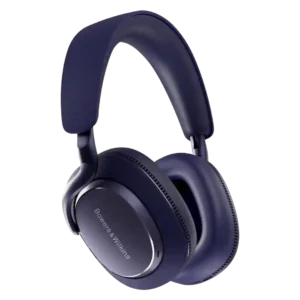
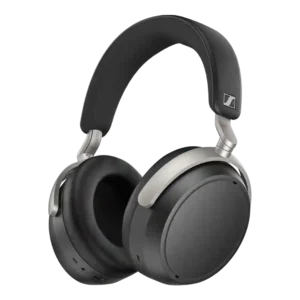
Average score
P1
Product 1: Bowers & Wilkins PX7 S3...
4.2
P2
Product 2: Sennheiser HDB 630 Wireless Over-Ear...
4.0
Active noise cancellation
P1
Product 1: Bowers & Wilkins PX7 S3...
4.1
ANC is repeatedly described as a meaningful improvement for B&W and effective for commuting and travel, but many reviews still place it behind Sony and Bose at the top end. Wind and higher-frequency voices can be weak spots in some scenarios. ANC mode control is straightforward (on, off, pass-through) and can be mapped to a quick-action button in some setups. Reviewers note fewer adjustment options than Sony-style multi-mode systems.
P2
Product 2: Sennheiser HDB 630 Wireless Over-Ear...
3.8
ANC performance is generally rated good to very good, especially for low-frequency rumble, but usually a step behind the strongest Sony/Bose/Apple implementations. A minority of takes place it closer to the leaders, while others call it only average for the price. ANC is highly adjustable through the app, with adaptive and manual control plus optional wind-related processing, making it easy to tune for different environments.
Android compatibility
P1
Product 1: Bowers & Wilkins PX7 S3...
4.7
Android compatibility is strong, especially thanks to codec breadth and aptX options. Several reviews contrast this with iOS being limited to AAC.
P2Product 2: Sennheiser HDB 630 Wireless Over-Ear...
No score yetApp
P1
Product 1: Bowers & Wilkins PX7 S3...
4.0
The companion app is generally considered clean and functional, offering key controls and some ecosystem integration. Multiple reviewers still call it simpler than Sony-style apps and note missing power-user features.
P2
Product 2: Sennheiser HDB 630 Wireless Over-Ear...
4.6
The Smart Control Plus app is repeatedly called a standout, bundling EQ, ANC, connection management, firmware updates, and extras like sound zones and find features. A few reviewers mention occasional glitches, especially when the dongle is connected.
aptX
P1
Product 1: Bowers & Wilkins PX7 S3...
4.8
aptX support is repeatedly highlighted, including higher-end variants such as Adaptive and Lossless, making it particularly attractive for compatible Android and Snapdragon Sound devices.
P2
Product 2: Sennheiser HDB 630 Wireless Over-Ear...
4.4
aptX family support is frequently cited as a major advantage, and the included dongle helps enable higher-quality aptX links on devices that otherwise lack them.
Audio-video sync accuracy
P1
Product 1: Bowers & Wilkins PX7 S3...
4.6
Reviewers generally report good sync for video use, with latency described as not an issue for typical phone or laptop watching.
P2
Product 2: Sennheiser HDB 630 Wireless Over-Ear...
3.7
Latency varies by device and mode. With the dongle, it is often good for movies and casual gaming, but several reviews note it is not truly esports-grade and real-world results may sit closer to typical Bluetooth latency.
Bass performance
P1
Product 1: Bowers & Wilkins PX7 S3...
4.5
Bass is consistently described as impactful and controlled rather than boomy, with strong definition. Some listeners find it bass-forward at higher volumes, while others want a bit more sub-bass weight.
P2
Product 2: Sennheiser HDB 630 Wireless Over-Ear...
4.0
Bass is typically tight and controlled rather than boosted. Some call it punchy and physical, while others describe sub-bass quantity as lean; bass boost and EQ can add weight, but pushing hard can thicken or muddy the presentation.
Battery
P1
Product 1: Bowers & Wilkins PX7 S3...
4.3
Battery life is consistently cited around 30 hours with ANC on, which is solid but not a class leader versus marathon models. Real-world tests generally align with the rating. Multiple reviews note the battery is not user-replaceable, which limits long-term serviceability compared to fully repair-friendly designs.
P2
Product 2: Sennheiser HDB 630 Wireless Over-Ear...
4.7
Battery life is consistently excellent: many quote around 60 hours with ANC, and measured tests still land in the low-to-mid 50s. Hi-res modes and dongle use can reduce runtime but remain strong for the class.
Bluetooth
P1
Product 1: Bowers & Wilkins PX7 S3...
4.5
Bluetooth performance is described as stable and reliable in most reviews, including in congested environments. A small number of users report occasional skipping or hiccups, suggesting rare environment or device-specific issues.
P2
Product 2: Sennheiser HDB 630 Wireless Over-Ear...
4.3
Bluetooth connectivity is mostly stable once paired, with occasional quirks around device switching and initial dongle pairing on some setups.
Build quality
P1
Product 1: Bowers & Wilkins PX7 S3...
4.6
Build quality is consistently described as top-tier for the price, with premium materials, refined finish, and sturdy mechanisms.
P2
Product 2: Sennheiser HDB 630 Wireless Over-Ear...
3.9
Build quality is generally solid, but multiple reviews note that materials feel more plastic than premium for the price, and a few mention creaks or rattle.
Button control usability
P1
Product 1: Bowers & Wilkins PX7 S3...
4.2
Physical buttons are a plus for many, with tactile, clicky controls that work with gloves. A few reviews call the buttons small or the control layout limited compared to feature-heavy rivals.
P2
Product 2: Sennheiser HDB 630 Wireless Over-Ear...
4.2
Physical controls are minimal and straightforward, with most interaction handled by touch. Some reviewers wish the lone button were mapped to a different shortcut.
Cable quality
P1
Product 1: Bowers & Wilkins PX7 S3...
4.3
Included cables (USB-C to USB-C and USB-C to 3.5mm) are generally seen as premium and practical. A couple of reviewers suggest buying longer cables for desk or airplane use.
P2
Product 2: Sennheiser HDB 630 Wireless Over-Ear...
3.9
Included cables are generally considered useful and of decent length and quality, though a few nitpick terminations or the lack of inline mic support on analog.
Carry case quality
P1
Product 1: Bowers & Wilkins PX7 S3...
4.5
The hard case is repeatedly called excellent, with premium materials, good protection, and a useful magnetic compartment for cables.
P2
Product 2: Sennheiser HDB 630 Wireless Over-Ear...
4.6
The carry case is widely praised as sturdy and well-organized with pockets for cables and the dongle; size is the primary drawback.
Charging
P1
Product 1: Bowers & Wilkins PX7 S3...
4.6
Fast charging is a standout, with many references to short top-ups delivering multiple hours of playback.
P2
Product 2: Sennheiser HDB 630 Wireless Over-Ear...
4.6
Charging is frequently praised for speed, with several reviews citing around 7 hours of playback from a 10-minute top-up and roughly 1.5-2 hours for a full charge.
Clamping force comfort
P1
Product 1: Bowers & Wilkins PX7 S3...
4.0
Clamp is commonly described as moderate-to-firm, helping stability when walking. For some heads it can create pressure points, while others find it secure and comfortable after break-in.
P2
Product 2: Sennheiser HDB 630 Wireless Over-Ear...
4.3
Clamping force is usually described as moderate and improved versus Momentum 4, helping stability without feeling overly tight. Fit-dependent seal changes can still affect comfort and tonality.
Codec support
P1
Product 1: Bowers & Wilkins PX7 S3...
4.7
Codec support is a major strength, with broad compatibility (including aptX variants) plus wired USB-C audio options. Several reviews also mention upcoming firmware features like LE Audio, Auracast, and spatial audio depending on region and timing.
P2
Product 2: Sennheiser HDB 630 Wireless Over-Ear...
4.4
Codec and input support are broad: Bluetooth 5.2 with modern aptX options plus wired USB-C and analog. Not every premium codec is supported everywhere, but overall flexibility is a key selling point.
Comfort during long use
P1
Product 1: Bowers & Wilkins PX7 S3...
4.3
Comfort is a consistent highlight, with many reviewers wearing them for hours without fatigue. However, some report firm clamp, earcup heat, or fit variability, especially for glasses wearers or outdoor use.
P2
Product 2: Sennheiser HDB 630 Wireless Over-Ear...
4.2
Long-session comfort is generally strong thanks to thick padding and moderate clamp, but people with larger ears, heat sensitivity, or shallow-pad discomfort may fatigue sooner.
Design and Aesthetics
P1
Product 1: Bowers & Wilkins PX7 S3...
4.6
Design is frequently praised as sleek, understated, and premium, with a slimmer profile than prior generations and strong pride-of-ownership appeal.
P2
Product 2: Sennheiser HDB 630 Wireless Over-Ear...
3.8
Design is understated and professional with matte black and subtle accents. Some appreciate the minimalist look, while others find it plain or less premium-looking than similarly priced rivals.
Detachable cable convenience
P1
Product 1: Bowers & Wilkins PX7 S3...
4.2
Detachable cables and USB-C audio add flexibility for laptops and in-flight systems, even without a native 3.5mm jack on the earcup. Most reviews note the headphones typically need to be powered on for wired listening.
P2Product 2: Sennheiser HDB 630 Wireless Over-Ear...
No score yetDongle
P1Product 1: Bowers & Wilkins PX7 S3...
No score yet
P2
Product 2: Sennheiser HDB 630 Wireless Over-Ear...
4.2
The BTD 700 dongle is valued for enabling better codecs (especially for iOS), improving perceived resolution, and offering lower-latency modes. Setup can be finicky, the protruding plug raises durability concerns for some, and calls or app behavior may worsen in dongle mode on certain devices.
Ear cup padding quality
P1
Product 1: Bowers & Wilkins PX7 S3...
4.3
Earpads are usually described as plush and premium with good sealing. A few reviews suggest padding feels slightly less supportive than prior models and can get warm over time.
P2
Product 2: Sennheiser HDB 630 Wireless Over-Ear...
4.5
Earpads are frequently described as thick, soft, and good at sealing for isolation. The tradeoff is increased heat retention during longer sessions.
Ear cup swivel/rotation range
P1
Product 1: Bowers & Wilkins PX7 S3...
4.5
Swivel and rotation range are frequently noted as generous, helping the cups seal and sit flatter against the head for comfort and stability.
P2
Product 2: Sennheiser HDB 630 Wireless Over-Ear...
3.8
Swivel range helps the cups lay flat for storage, but one reviewer notes the rotation can be so free that small asymmetries in fit may affect tonal balance.
Equalizer customization
P1
Product 1: Bowers & Wilkins PX7 S3...
3.9
The 5-band EQ is widely welcomed as a major improvement over earlier B&W EQ options and is enough to correct stock tuning. Several reviews still consider it limited versus more granular 10-band systems.
P2
Product 2: Sennheiser HDB 630 Wireless Over-Ear...
4.7
Equalizer tools are a highlight: a five-band parametric EQ with A/B bypass enables precise tuning that can meaningfully tailor bass and treble without third-party apps.
Frequency response accuracy
P1
Product 1: Bowers & Wilkins PX7 S3...
4.0
Tonal balance is described as neutral-with-warmth by several outlets, while others report noticeable swings and a more consumer-friendly curve. Overall, it is closer to balanced than purely V-shaped, but not a strict reference-flat tuning.
P2
Product 2: Sennheiser HDB 630 Wireless Over-Ear...
4.7
Several reviewers highlight target-curve or reference-leaning balance and good tonal accuracy. Fit and seal still matter, with small positioning changes affecting bass and lower-mid response.
Headband adjustability
P1
Product 1: Bowers & Wilkins PX7 S3...
4.4
Headband adjustment is smooth and easy to dial in, and padding is generally praised. Some users note mild top-of-head pressure depending on head shape and fit.
P2
Product 2: Sennheiser HDB 630 Wireless Over-Ear...
4.2
Headband adjustability is typically smooth and offers enough range to dial in fit, contributing to stable wear.
Hinge durability
P1
Product 1: Bowers & Wilkins PX7 S3...
4.6
Arms and hinge mechanisms are described as sturdy, with premium-feeling movement and good resistance. Long-term durability is generally expected to be strong based on materials.
P2Product 2: Sennheiser HDB 630 Wireless Over-Ear...
No score yetIncluded accessories
P1
Product 1: Bowers & Wilkins PX7 S3...
4.4
Included accessories are viewed as generous for the segment, typically including a premium case and multiple cables for charging and wired playback.
P2
Product 2: Sennheiser HDB 630 Wireless Over-Ear...
4.6
Included accessories are unusually generous for the category: the dongle, multiple cables, adapters, and a robust case are common value-add callouts.
Instrument separation
P1
Product 1: Bowers & Wilkins PX7 S3...
4.5
Instrument separation and layering are a standout, with reviewers repeatedly noting strong clarity in busy mixes and easy-to-track placement of vocals and instruments.
P2
Product 2: Sennheiser HDB 630 Wireless Over-Ear...
4.6
Instrument separation and layering are recurring strengths, helping dense mixes stay intelligible and improving localization, especially with higher-quality sources.
LDAC
P1
Product 1: Bowers & Wilkins PX7 S3...
1.8
Multiple reviews point out LDAC is not supported, so LDAC-first Android users may need to choose a different model or use wired playback.
P2Product 2: Sennheiser HDB 630 Wireless Over-Ear...
No score yetMaximum volume clarity
P1
Product 1: Bowers & Wilkins PX7 S3...
4.6
Even at higher volumes, the presentation stays largely clean and controlled, with low distortion noted in multiple reviews. The main caveat is that bass and treble emphasis can become more prominent if you listen loud.
P2
Product 2: Sennheiser HDB 630 Wireless Over-Ear...
4.2
At higher listening levels, most impressions suggest the sound stays composed and low in audible distortion. A major caveat is that hands-free call modes on some platforms can drop audio bandwidth and make music sound noticeably worse.
Microphone noise reduction
P1
Product 1: Bowers & Wilkins PX7 S3...
4.0
Noise reduction on calls is effective at suppressing background noise, especially wind and street ambience in some demos. The tradeoff is occasional aggressive gating that can alter vocal tone.
P2
Product 2: Sennheiser HDB 630 Wireless Over-Ear...
4.1
Noise reduction for calls is generally competent, keeping speech intelligible in moderate noise. Very loud environments and mode changes can still reduce clarity.
Microphone quality for calls
P1
Product 1: Bowers & Wilkins PX7 S3...
4.1
Call quality is generally solid, with clear voice pickup and good intelligibility. In very noisy or windy conditions, some tests report the voice can sound a bit muffled or less natural than top performers like Sony or AirPods Max.
P2
Product 2: Sennheiser HDB 630 Wireless Over-Ear...
4.1
On standard Bluetooth, most reviewers report clear voice pickup suitable for work calls. Using the dongle or triggering hands-free profiles on certain platforms can degrade call audio or music quality, so results depend heavily on device and mode.
Midrange clarity
P1
Product 1: Bowers & Wilkins PX7 S3...
4.2
Midrange is generally clean and detailed, but multiple reviewers describe it as slightly recessed in the stock tuning; EQ can bring vocals forward. Others highlight the mids as a core strength for clarity and realism.
P2
Product 2: Sennheiser HDB 630 Wireless Over-Ear...
4.6
Midrange performance is consistently praised for clean, realistic vocals and strong detail retrieval. A couple reviewers note a bit of forwardness around 1-2 kHz that can sound slightly shouty depending on fit and seal.
Multi-platform compatibility
P1Product 1: Bowers & Wilkins PX7 S3...
No score yet
P2
Product 2: Sennheiser HDB 630 Wireless Over-Ear...
4.6
Multi-platform use is a core strength thanks to Bluetooth plus USB-C and analog options, with the dongle helping iOS users access higher-quality codecs.
Multipoint connectivity reliability
P1
Product 1: Bowers & Wilkins PX7 S3...
4.7
Multipoint is frequently praised as quick and seamless, with fast take-over when switching between phone and computer playback.
P2
Product 2: Sennheiser HDB 630 Wireless Over-Ear...
4.1
Multipoint use (two devices) is supported and often works well, but there are limitations when mixing the dongle with other connections and occasional reports of source confusion.
Noise isolation (passive)
P1
Product 1: Bowers & Wilkins PX7 S3...
4.2
Passive isolation benefits from an easy-to-achieve seal and helps overall noise reduction. A few notes suggest fit, glasses, or positioning can change results noticeably.
P2
Product 2: Sennheiser HDB 630 Wireless Over-Ear...
4.5
Passive isolation is above average thanks to thicker pads and a strong seal, helping even before ANC is engaged.
Portability/foldability
P1
Product 1: Bowers & Wilkins PX7 S3...
3.3
Portability is mixed: the headphones lie flat and the case is slimmer than before, but they do not fully fold and can take more bag space than foldable rivals.
P2
Product 2: Sennheiser HDB 630 Wireless Over-Ear...
3.5
Portability is mixed: cups lay flat but the headphone does not fold inward, so it takes more space than some travel rivals. The case is protective yet can be bulky.
Preset EQ profile quality
P1
Product 1: Bowers & Wilkins PX7 S3...
3.4
True Sound and other presets are appreciated for a quick, consistent baseline, but reviewers note the preset lineup is not extensive and serious tuning relies on the manual EQ.
P2
Product 2: Sennheiser HDB 630 Wireless Over-Ear...
4.2
Preset EQ profiles and quick toggles like bass boost are generally effective and easy to use. Power users still prefer the parametric EQ for more surgical control.
Replaceable earpads
P1
Product 1: Bowers & Wilkins PX7 S3...
4.1
Replaceable earpads are a notable plus for longevity, though some reviewers note replacement may require service or specific procedures.
P2Product 2: Sennheiser HDB 630 Wireless Over-Ear...
No score yetSensors
P1
Product 1: Bowers & Wilkins PX7 S3...
4.1
Wear-detect and related sensors are commonly mentioned, with adjustability in the app and improved reliability versus older generations in some reports.
P2
Product 2: Sennheiser HDB 630 Wireless Over-Ear...
3.6
Wear sensors add convenience (auto play/pause, auto-on), but sensitivity can cause accidental wake-ups for some; most note these features can be disabled.
Smudge resistance
P1Product 1: Bowers & Wilkins PX7 S3...
No score yet
P2
Product 2: Sennheiser HDB 630 Wireless Over-Ear...
3.8
Smudge handling is mixed: matte cups are often described as fingerprint-resistant, but some materials (notably the headband on some units) can pick up grease and grime easily.
Software/setup simplicity
P1
Product 1: Bowers & Wilkins PX7 S3...
4.3
Setup is generally easy, with quick pairing and a straightforward app experience. Firmware updates and feature rollouts are occasionally cited as timing-dependent.
P2
Product 2: Sennheiser HDB 630 Wireless Over-Ear...
3.8
Setup is usually straightforward, but dongle pairing steps and occasional app quirks can add friction. Some advanced features require extra steps (like enabling specific audio modes) depending on device.
Sound quality
P1
Product 1: Bowers & Wilkins PX7 S3...
4.6
Across reviews, the PX7 S3 is praised as one of the best-sounding wireless ANC over-ears in its price range, with an engaging, high-end presentation. A minority note the tuning can feel unconventional until you EQ it. Wired listening via USB-C is supported and often described as clearer or more detailed than Bluetooth, though some reviewers hear only modest gains. A few notes mention wired operation may require power and can be finicky depending on source and cable.
P2
Product 2: Sennheiser HDB 630 Wireless Over-Ear...
4.7
Across reviews, sound quality is the headline: balanced, highly detailed, audiophile-leaning tuning that competes with top wireless flagships and scales up with the dongle or USB-C. A few reviewers find it less instantly exciting than bass-boosted rivals, but overall fidelity is widely praised. Wired playback (especially via USB-C) is often cited as the cleanest, most resolving path. Analog input works too, but the headphone typically still relies on internal DSP and battery power.
Soundstage width
P1
Product 1: Bowers & Wilkins PX7 S3...
4.3
Soundstage is described as spacious and well-layered for a closed-back ANC headphone, though not the widest in class. Several reviews frame it as more focused or intimate than some rivals, with strong depth and imaging.
P2
Product 2: Sennheiser HDB 630 Wireless Over-Ear...
4.4
Soundstage is considered roomy for a closed-back wireless, with better depth and separation than Momentum 4; crossfeed and the dongle can change the sense of space. It still cannot match open-backs, and a few listeners describe it as more in-head than speaker-like.
Spatial audio
P1
Product 1: Bowers & Wilkins PX7 S3...
2.7
Spatial audio is mentioned as a planned or coming-soon feature in several reviews, but availability at launch is inconsistent. In current form, it is not a primary reason to buy.
P2
Product 2: Sennheiser HDB 630 Wireless Over-Ear...
1.5
Spatial audio as a dedicated virtualized mode is often noted as absent; instead, Sennheiser emphasizes EQ and crossfeed-style processing for older mixes.
Sustainability materials
P1
Product 1: Bowers & Wilkins PX7 S3...
4.1
Materials and serviceable parts (like pads and headband components) are positioned as more sustainable than fully disposable designs. Some reviews also emphasize vegan or leatherette options and longer-term repairability.
P2Product 2: Sennheiser HDB 630 Wireless Over-Ear...
No score yetTouch control responsiveness
P1Product 1: Bowers & Wilkins PX7 S3...
No score yet
P2
Product 2: Sennheiser HDB 630 Wireless Over-Ear...
3.7
Touch controls are feature-rich, but experiences vary widely: some find them refined and responsive, while others report misreads or frustration with pinch-based ANC gestures.
Transparency mode quality
P1
Product 1: Bowers & Wilkins PX7 S3...
4.2
Transparency mode is often called natural and usable for announcements and quick conversations. Several comparisons say it is not the most open or bright in class, with some upper-frequency muffling.
P2
Product 2: Sennheiser HDB 630 Wireless Over-Ear...
3.8
Transparency mode is typically described as usable and convenient, with adjustable levels and quick toggles. It is rarely considered best-in-class for naturalness, and some reviewers rate it merely adequate.
Treble clarity
P1
Product 1: Bowers & Wilkins PX7 S3...
4.5
Treble is widely called airy and detailed with good sparkle. At louder listening levels, a few reviews mention sibilance or sharpness, so treble-sensitive listeners may prefer a mild EQ cut.
P2
Product 2: Sennheiser HDB 630 Wireless Over-Ear...
4.3
Treble is often described as detailed and generally well-controlled. Opinions diverge: some hear extra energy up top or a dip in the mid-treble that can make the presentation feel a touch closed-in, and sensitivity varies by listener and fit.
USB-C
P1
Product 1: Bowers & Wilkins PX7 S3...
4.6
USB-C implementation is strong, covering charging and audio, and enabling high-resolution wired playback with compatible sources.
P2
Product 2: Sennheiser HDB 630 Wireless Over-Ear...
4.5
USB-C is a versatility highlight for both charging and wired digital audio, and is frequently cited as the cleanest connection option.
Voice assistant integration
P1Product 1: Bowers & Wilkins PX7 S3...
No score yet
P2
Product 2: Sennheiser HDB 630 Wireless Over-Ear...
3.8
Voice assistant integration is supported and typically works as expected via a dedicated button or gesture.
Volume output
P1
Product 1: Bowers & Wilkins PX7 S3...
4.7
Volume output is strong, with several comparisons calling it louder than key competitors at the same device volume settings.
P2
Product 2: Sennheiser HDB 630 Wireless Over-Ear...
4.3
Volume output offers solid headroom and gets loud enough to help overcome moderate ambient noise. Heavy EQ boosts can reduce available peak volume due to protective preamp behavior in the app.
Water/sweat resistance rating
P1Product 1: Bowers & Wilkins PX7 S3...
No score yet
P2
Product 2: Sennheiser HDB 630 Wireless Over-Ear...
1.5
No official water or sweat rating is typically noted, so these are better treated as commute and travel headphones rather than workout gear.
Weight comfort
P1
Product 1: Bowers & Wilkins PX7 S3...
3.9
At roughly 300g, weight is acceptable for the materials and feels lighter than some heavy flagships, but heavier than the lightest Sony/Bose options. A few reviewers notice shifting while moving.
P2
Product 2: Sennheiser HDB 630 Wireless Over-Ear...
4.1
At roughly 311g, weight is noticeable but often well-distributed. Some still prefer lighter competitors for all-day travel comfort.
Xbox compatibility
P1Product 1: Bowers & Wilkins PX7 S3...
No score yet
P2
Product 2: Sennheiser HDB 630 Wireless Over-Ear...
1.0
Xbox support is commonly described as limited, with at least one review noting the dongle route does not work on Xbox.