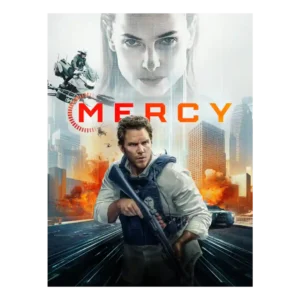
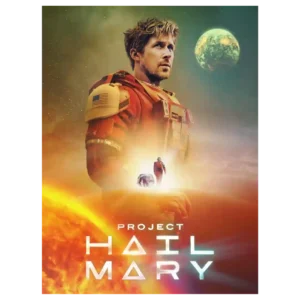
Mercy
Where It Has the Edge
- runtime is 4.0 vs 2.6. Runtime is mostly discussed through the 90- to 100-minute setup. Some liked the brisk clock, while others thought...
Quick verdict
Choose Mercy for runtime.
Choose Project Hail Mary for critic appeal and family friendliness.
Professional critics leaned negative overall, frequently calling the film generic, strained, or underwritten despite occasional praise for its concept and tech staging.
The broader critical response cited in the reviews is described as about as positive as a major studio release gets.
Family fit is weak for more cautious households because reviews mention profanity and intense violence.
The movie is repeatedly described as clean, wholesome and family-friendly, with restrained profanity and only limited sexual or frightening material.
Production design gets some negative notes for looking cheap, though the high-tech courtroom concept still intrigued several viewers.
The Hail Mary ship and practical environments draw exceptional praise for functional hard-sci-fi detail, tactile construction and large-screen immersion.
The score and music were rarely discussed, but when they were, the reaction was lukewarm to negative: one viewer found it subtle, another called it awkward and heightened.
Daniel Pemberton’s score is a major strength, frequently described as sweeping, unusual, emotional and integral to the film. One dissent finds the constant grandeur overbearing and tension-flattening.
One customer criticized the movie’s racial representation and casting patterns, wanting broader Hispanic presence and objecting to how villain roles were handled.
The cross-species friendship is praised for taking language, biology and cultural assumptions seriously enough to make cooperation feel meaningful.
Emotional impact is limited for many reviewers, especially around Chris’s grief and family relationships. A few viewers still felt pulled into his fear and desperation.
Many reviewers report tearing up or crying, especially around Grace and Rocky’s bond and the closing stretch. Even some mixed reviews admit the film lands a few powerful emotional moments.
World-building is one of the weaker sci-fi pieces. Reviewers questioned the near-future justice system, social collapse setup, and rules behind the AI court.
The Tau Ceti material and alien design give the adventure convincing scale, with space sequences praised as stunning and the science-world detail easy to buy into.
The screenplay is a major pain point. Critics repeatedly call out weak writing, contrivances, exposition, and ideas that are raised without enough nuance.
The script is mostly praised for making dense science approachable and organizing the nonlinear mystery cleanly, though negative reviews call parts shallow, contrived or over-explanatory.
Realism is a frequent weak spot. Reviewers questioned the AI court rules, the 90-minute process, surveillance access, and whether the system would work for anyone but a detective.
The grounded science, practical engineering and tangible sets make much of the film feel believable. Dissenters question character reactions and a handful of convenient scientific or mechanical solutions.
Language is a concern in the few reviews that discuss content, with profanity and f-word usage specifically called out.
Language is considered restrained for a PG-13 blockbuster: reviewers note little or no conventional profanity, though substitute swears and uses of God’s name remain.
Violence is present enough to matter for family viewers, including intense deaths and vehicular harm mentioned in content-focused reviews.
A family-focused review describes the movie as comparatively tame, with a couple of corpses but less harsh content than the earlier Weir adaptation.
Visual effects and CGI are uneven. Some liked the futuristic tech blend, while others called the generated-looking scenes cheap, game-like, or lackluster.
CGI is usually praised for disappearing into the practical sets and Rocky puppetry, adding polish without making the world feel synthetic.
Value is strongest as a streaming or rental watch. Reviewers were less convinced it justified theaters, IMAX, or a paid purchase.
The 4K review finds the collector’s SteelBook worth seeking out for buyers who want a more complete edition.
The message about AI, surveillance, and justice is the film’s biggest argument point. Supporters found it timely and thought-provoking, while critics said it was shallow, confused, or too friendly to AI power.
The film’s optimism, pro-science cooperation, friendship and sacrifice resonate strongly with most reviewers. A dissenting critic finds that hope too frictionless and another objects to how the film handles Stratt’s coercion.
The visual style is distinctive and immersive when the screenlife interface works. It also becomes exhausting for reviewers who disliked the popups, digital sheen, and surveillance-camera overload.
The film’s look is one of its strongest consensus wins: colorful space vistas, tactile sets, aspect-ratio shifts and adventurous camera choices make it feel built for a large screen.
Editing is busy and divisive. Some liked the speed and clarity of the screenlife mechanics, while others found the cuts and camera movement excessive.
Timeline shifts and aspect-ratio transitions are often praised for clarity and momentum; one negative review finds the flashback cutting disorienting and over-explanatory.
Chris Pratt’s lead performance is polarizing. Some viewers thought he sold the panic and carried the film, while others felt the chair-bound role exposed his limits.
Gosling is one of the strongest consensus positives, repeatedly praised for carrying solo stretches with charm, physical comedy and vulnerability. A small minority find the familiar goofy persona strained or tiring.
As a sci-fi thriller, the movie works best as a disposable streaming-style watch. Some call it serviceable and tense, while others see it as generic screenlife clutter.
Science-fiction fans are the clearest target: reviewers praise the hard-science problem solving, big-screen wonder and optimistic space-adventure tone, with one major dissent calling it flat and derivative.
Character work is one of the weaker areas. Critics often found the leads thinly written, with emotional turns that felt forced or underdeveloped.
Grace’s growth and Rocky’s characterization work for many reviewers, but this is notably mixed: critics of the adaptation say Grace’s arc is thinner, underexplored, or too unchanged from start to finish.
Dialogue drew criticism when mentioned. Reviewers called it corny, over-explanatory, or artificial rather than sharp.
Dialogue reactions are mixed: some praise crisp delivery and clear exchanges, while a harsh dissent calls the jokes and feel-good dialogue dated and shallow.
Runtime is mostly discussed through the 90- to 100-minute setup. Some liked the brisk clock, while others thought the movie still felt stretched or tiring.
At roughly two and a half hours, length is the most repeated complaint; many reviewers feel the second half or ending runs long. A few counter that the problem-solving keeps the runtime lively.
Special effects impressed some viewers in the immersive tech sequences, but others felt the spectacle was not strong enough for a big-screen release.
Visual effects work is consistently praised, especially where digital enhancement blends with practical sets and puppetry rather than replacing them.
Direction is mixed: Bekmambetov’s screenlife instincts and momentum earn some credit, but many reviewers felt the film lacks control, nuance, or payoff.
Lord and Miller are mostly praised for turning dense science into lively blockbuster filmmaking, though critics who resist the goofy tone find the direction over-insistent or too silly.
Story quality is the central split. Many liked the hook and mystery, but critics and some customers thought the story became silly, thin, or badly resolved.
Most reviewers see a smart, heartfelt survival-and-friendship story with strong problem-solving momentum. Negative outliers criticize formula, shallow characterization and convenient plotting.
Performances split viewers. Supporters liked the cast’s energy and commitment, while detractors felt the acting could not overcome the thin or awkward material.
The ensemble is widely praised, with Gosling carrying long solo stretches and supporting players giving the Earth scenes personality. One strongly negative take finds the lead’s familiar comic mannerisms tiring.
Humor is not a major selling point. When it came up, reviewers mostly described accidental laughs, goofiness, or subpar jokes.
Comedy is a genuine strength for many, particularly Gosling’s physical timing and Grace-Rocky misunderstandings. But the jokes are also polarizing, with some reviewers calling them repetitive, cheesy or tonally disruptive.
Sound design is barely discussed, with one positive customer noting it did not distract and one video reviewer objecting to an audio choice.
Atmos and sound design receive unanimous praise in the scored sources, from precise spatial cues to Rocky’s sonic language and high-impact action.
Plot clarity is shaky. Reviewers often mention predictable twists, contrivances, and logic gaps, even when they still enjoyed following the mystery.
Dense science is generally presented clearly, with multiple reviewers praising how digestible the technical problem solving remains. A few say some concepts are difficult, overly explained or too convenient.
The themes have timely potential but uneven depth. Reviews repeatedly say the movie raises AI, privacy, justice, and surveillance questions without always exploring them well.
Friendship, sacrifice, optimism, science and cooperation give the film more thematic weight than a simple adventure for many reviewers. Critics of the adaptation argue those ideas are softened or over-sentimentalized.
Entertainment value depends heavily on expectations. Customers often enjoyed it as a popcorn thriller, while many critics found it forgettable, dumb, or not worth the time.
Most reviewers find the film extremely watchable and crowd-friendly despite its length, mixing science puzzles, humor and spectacle into an easy theatrical ride.
Rebecca Ferguson is the most consistently praised performer, with several reviews calling her the highlight. Supporting roles beyond her receive less consistent enthusiasm.
Sandra Hüller is the standout supporting performer, with Lionel Boyce also drawing consistent praise for dry humor and grounded rapport. The Earth scenes benefit from their contrast with Gosling.
The Chris Raven and AI Judge Maddox dynamic worked for some viewers as a tense human-digital pairing. Others found the relationship strange or limited by the screenlife format.
Grace and Rocky are the movie’s emotional engine; most reviewers call their odd-couple friendship warm, funny and genuinely moving. A few find later interactions repetitive or overly sweet.
Pacing gets both praise and criticism. The ticking clock keeps many viewers engaged, but others found the start slow, the runtime stretched, or the development tiring.
Pacing is mixed: some say the long runtime flies by or benefits from deliberate science detail, while others flag a slow opening, second-act drag, flashback friction and late-act sputter.
Audience response is sharply divided: critics were often cold, but many customer reviewers found it more entertaining than expected.
The film is repeatedly described as a crowd-pleaser, with reports of applause and strong theatergoing enthusiasm. A dissenting review sees that accessibility as calculated and artificial.
The action lands best for viewers who enjoy the movie as a glossy tech thriller. Several reviewers liked the chase and finale energy, though some thought the spectacle was silly or overblown.
Action is used selectively but lands hard when it arrives, especially the late space set pieces; reviewers call them grounded, tense and visually impressive rather than nonstop spectacle.
Rewatch value is mixed but generally modest. A few customers would watch again, while others said it was a one-time streaming movie or low on rewatchability.
Several reviewers expect repeat viewings to hold up well, whether for small production details, emotional impact or the sheer pleasure of revisiting Grace and Rocky.
Suspense is one of the film’s stronger traits for fans. The ticking clock, mystery, and digital investigation kept many viewers engaged even when they questioned the logic.
Problem-solving and late space hazards generate strong tension for most reviewers, but a few feel the optimistic tone telegraphs success and drains danger.
The ending is one of the most repeated complaints. Many felt the finale became contrived, absurd, rushed, or less satisfying than the setup promised.
The ending is the clearest recurring weakness: multiple reviewers say the final act keeps finding new conclusions, feels rushed or structurally overextended after an earlier emotional peak.
Originality gets partial credit. Reviewers liked the screenlife twist and AI-court hook, but many also saw heavy echoes of Minority Report and other tech thrillers.
Reviewers appreciate a standalone non-franchise sci-fi blockbuster and often call it fresh, while detractors hear echoes of better space classics and find parts derivative.
The core premise attracts interest: an AI court giving a suspect 90 minutes to prove innocence. The complaint is that the idea often feels derivative or better than the execution.
The core concept is often praised as fresh, but predictability and familiar genre DNA keep this from being a universal win.
Several reviewers see this as unusually accessible sci-fi for families and older kids, with most-ages appeal and mild content by PG-13 standards.
Space imagery, IMAX scale, framing and texture earn near-universal praise, with Greig Fraser’s work repeatedly called stunning, sublime or top-tier.
Grace’s nerdy T-shirt choices are praised as character-driven wardrobe that feels natural for his personality rather than planted references.
The film usually earns its high stakes through character and problem-solving, but several critics think the bright tone softens danger and emotional weight.
Book readers largely see this as a strong, faithful adaptation that preserves the novel’s heart and major beats. The strongest dissent argues that departures from the book flatten its moral and philosophical complexity.
The long-hair-and-beard look sells Grace’s extended sleep, though one reviewer jokingly calls out his suspiciously maintained highlights.
Rocky’s puppetry and the physical sets are among the highest-consensus technical strengths, repeatedly praised for giving the alien and spacecraft convincing weight and presence.
One reviewer notes that Grace’s lack of romantic or family attachments reduces the sense of personal sacrifice compared with more emotionally anchored space dramas.
The movie includes some existentially frightening moments, but one family-oriented review still considers them manageable within an overwhelmingly hopeful adventure.
Sexual material is limited to light verbal references and a few suggestive jokes; family-focused reviewers describe it as comparatively tame.
The song selections are praised for warmth, nostalgia and tonal contrast, complementing the orchestral score without overwhelming scenes.
Tone is the most divisive creative choice: many like the balance of humor, tension and sincerity, while detractors say the comedy undercuts danger and the optimism can feel overly insistent.