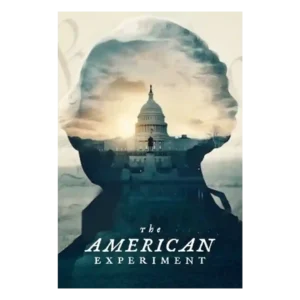
The American Experiment, Season 1
World War II with Tom Hanks, Season 1
Average score
The American Experiment, Season 1
3.9
World War II with Tom Hanks, Season 1
4.3
episode pacing
The American Experiment, Season 1
4.2
The episode-by-episode movement can be both nimble and substantive. The series covers a lot without losing the thread when its historical sections are doing the work.
World War II with Tom Hanks, Season 1
2.2
Episode pacing draws criticism from The Guardian, which says major events can zip by too quickly. Viewers wanting deep treatment of every turning point may feel some sections move in broad strokes.
cinematography
The American Experiment, Season 1
4.2
The smooth gallery-like movement through images and paintings gives the series a curated feel. That visual handling keeps the documentary from becoming static.
World War II with Tom Hanks, Season 1
2.4
The original talking-head footage is one of the weaker visual elements, with a critic calling it plainly filmed and lit. The show’s visual power comes much more from archive material than studio presentation.
modern political framing
The American Experiment, Season 1
3.1
The present-day political framing is the most debated recurring trait. It can give the founding story urgency, but it can also feel aggressive, heavy-handed, distracting, or too reliant on contemporary politicians.
World War II with Tom Hanks, Season 1
4.7
Modern relevance is one of the show’s defining choices. Reviewers and interviews repeatedly connect the war to present-day moral choices, political fragility, and the danger of forgetting.
plot originality
The American Experiment, Season 1
3.2
Much of the material will feel familiar beside other American Revolution documentaries, but the series gains freshness through personal details and modern civic questions. Viewers already steeped in the era may find fewer surprises.
World War II with Tom Hanks, Season 1
4.6
Freshness is one of the more debated strengths. Some writers say the series gives a new perspective on an over-covered war, while others value how it widens the lens beyond famous battles.
episode structure
The American Experiment, Season 1
3.9
The structure is strongest when it links the founding era to later democratic fault lines in a coherent way. Its point of view can arrive late, and some modern parallels interrupt the historical flow.
World War II with Tom Hanks, Season 1
2.6
The episode format is mixed: one critic finds the clip-narration-talking-head rhythm monotonous, while another calls the outline standard but serviceable. The structure is clear, but not always distinctive.
season pacing
The American Experiment, Season 1
3.4
The overall pace is mixed: the five-plus hours can feel nimble and dense in a good way, but also heavy or rushed through major ideas. It is informative, but not always light viewing.
World War II with Tom Hanks, Season 1
2.3
One critic feels the season cannot fully contain the war’s scale, making the overall arc feel compressed. The concern is less about slowness than about a subject too vast for even 20 episodes.
entertainment value
The American Experiment, Season 1
3.4
Entertainment value is mixed: the series is thoughtful and often highly watchable, but some stretches feel more educational than fun. It is better as active viewing than casual background TV.
World War II with Tom Hanks, Season 1
4.5
Most positive reviewers find the series engaging, informative, and worth streaming. Even when the subject is grim, the stronger reviews describe it as compelling television rather than dry history.
audience appeal
The American Experiment, Season 1
3.6
The strongest audience is history-curious viewers who want a clear, accessible, polished account of the founding and its modern echoes. Casual viewers may find it too cerebral, too long, or less immediately entertaining.
World War II with Tom Hanks, Season 1
4.4
Audience fit is clear: this is especially appealing to newcomers, younger viewers, at-home historians, and anyone wanting the war in one accessible package. Several sources also point to growing interest and strong viewing appeal.
realism
The American Experiment, Season 1
4.0
The series treats national mythology as something full of contradictions rather than a clean heroic tale. Its view of freedom is admiring but not naive.
World War II with Tom Hanks, Season 1
4.8
The documentary earns praise for factual grounding, especially its no-reenactment approach and use of a documentary format over dramatization. It aims for authenticity rather than cinematic invention.
genre satisfaction
The American Experiment, Season 1
3.9
As a historical documentary, the series is accessible, balanced, informative, and watchable. It works best as a polished civics-history overview rather than a radical reinterpretation.
World War II with Tom Hanks, Season 1
4.7
As a WWII documentary, it satisfies viewers looking for a broad, serious, modern treatment of the conflict. Its global scope and comprehensive structure are repeatedly presented as reasons to watch.
visual style
The American Experiment, Season 1
4.3
The polished museum-display look, clean visual rhythm, staged reenactments, and approachable documentary movement are major strengths. The same gloss can sometimes soften the messier tensions.
World War II with Tom Hanks, Season 1
4.8
Visual presentation is one of the strongest areas. Reviewers praise the restored footage, colorized stills, and unusually vivid use of video and imagery to make WWII feel immediate.
cultural representation
The American Experiment, Season 1
4.2
The series widens the founding story beyond the familiar leaders by bringing in Native, Black, and broader inequality contexts. Slavery, Indigenous exclusion, and racial contradiction are treated as part of the core story.
World War II with Tom Hanks, Season 1
4.5
The series is praised for broadening WWII beyond a narrow battlefield or American-only lens. Its attention to civilians, continents, home fronts, and the war’s human cost gives the history a wider cultural frame.
accountability handling
The American Experiment, Season 1
4.3
The series faces the contradictions in America’s founding instead of treating the anniversary as simple celebration. Slavery, exclusion, hypocrisy, and democratic fragility are central to how it frames the story.
World War II with Tom Hanks, Season 1
4.6
The series is framed around moral responsibility rather than detached chronology. Hanks’s comments emphasize that viewers should not treat past atrocities as safely distant from present choices.
main cast performance
The American Experiment, Season 1
4.0
Martin Sheen’s Washington readings and the non-celebrity voice choices add gravity and human texture. The performances support the reenactments without turning them into star showcases.
World War II with Tom Hanks, Season 1
4.2
Hanks’s narration is repeatedly treated as a major asset: grave, authoritative, humanizing, and backed by a long personal connection to WWII stories. One critic notes his presence is not overwhelming, which may be a plus or minus depending on expectations.
plot clarity
The American Experiment, Season 1
4.4
Dense Revolutionary War and constitutional history stays easy to follow. Maps, visual breaks, and a clear narrative help turn complicated events into an accessible timeline.
World War II with Tom Hanks, Season 1
4.6
The series is easy to follow even when it covers massive events and shifting alliances. Reviewers especially recommend it for viewers who want WWII history explained without getting tangled in specialist detail.
story quality
The American Experiment, Season 1
4.2
The founding story comes across as thorough, serious, and historically consequential. Its main weakness is that the present-day connections do not always land with the same force as the past-tense storytelling.
World War II with Tom Hanks, Season 1
4.3
The storytelling is generally praised for organizing huge wartime events into a coherent, serious narrative. A few writers call it familiar rather than groundbreaking, but most still find the retelling clear and purposeful.
interview and source material quality
The American Experiment, Season 1
4.1
The talking-head roster gives the series authority and range, with historians, authors, scholars, and politicians shaping the argument. The bipartisan breadth is a draw, though famous political faces can sometimes crowd the history.
World War II with Tom Hanks, Season 1
4.2
Archive footage, expert commentary, and historical accounts are the most consistently praised ingredients. The main caveat is that some critics miss the irreplaceable force of veteran testimony and first-hand witnesses.
theme depth
The American Experiment, Season 1
4.1
Theme depth is the show’s signature strength, especially its argument that America is unfinished, contradictory, and still testing itself. The caveat is that some stretches feel either too tidy or not deep enough.
World War II with Tom Hanks, Season 1
4.1
Theme depth is the central tradeoff: supporters praise the moral urgency, civilian focus, and links to modern responsibility, while skeptics say the analysis can stay basic. It is strongest as a broad ethical framing of the war.
emotional impact
The American Experiment, Season 1
3.8
The emotional register is sober rather than triumphant, built around anxiety, fragility, and the sense that democracy could still break. Some stretches are powerful, though the series is not always as piercing as it could be.
World War II with Tom Hanks, Season 1
3.8
The emotional response is mixed but meaningful. Some critics wanted a grander sense of awe, while others say the veteran accounts and personal perspectives make the war’s human cost land.
bingeability
The American Experiment, Season 1
4.5
The series can work as a concentrated history binge for viewers already interested in the subject. Its six-hour scale is demanding, but engaged history fans may move through it quickly.
World War II with Tom Hanks, Season 1No score yet
character development
The American Experiment, Season 1
4.0
The documentary makes founders feel like flawed people rather than marble monuments. Personal stories about figures like Washington and Adams help humanize the history.
World War II with Tom Hanks, Season 1No score yet
critic appeal
The American Experiment, Season 1
4.5
The show has clear critical momentum, including a reported 100% Rotten Tomatoes score at the time of one article. The overall reception leans positive while still carrying caveats about depth and framing.
World War II with Tom Hanks, Season 1No score yet
directing quality
The American Experiment, Season 1
3.5
Brian Knappenberger’s historical storytelling is controlled and consistently crafted. The weaker moments come when the direction leans too hard on contemporary framing instead of letting the history speak.
World War II with Tom Hanks, Season 1No score yet
drama quality
The American Experiment, Season 1
4.0
The series finds drama in revolutionary violence, personal contradictions, and the human side of political history. It is not built like a thriller, but the best moments keep the stakes alive.
World War II with Tom Hanks, Season 1No score yet
editing quality
The American Experiment, Season 1No score yet
World War II with Tom Hanks, Season 1
4.2
The editing has at least one clever strength: cycling through propaganda responses from different sides of the conflict. Even a skeptical review credits that technique with giving events a wider snapshot.
educational value
The American Experiment, Season 1No score yet
World War II with Tom Hanks, Season 1
4.7
Several writers say the series works as a learning tool, with even seasoned WWII followers finding surprises. It is strongest when turning familiar history into a clear, teachable overview.
pilot episode quality
The American Experiment, Season 1No score yet
World War II with Tom Hanks, Season 1
4.6
The opening episode made a strong impression in at least one review, with praise for its visceral storytelling and historical insight. It appears to set up the series’ tone effectively.
production design
The American Experiment, Season 1
4.5
The reenactments and reconstructions look high quality, especially the battle scenes. They give the historical material texture without feeling cheap or overly artificial.
World War II with Tom Hanks, Season 1No score yet
score quality
The American Experiment, Season 1No score yet
World War II with Tom Hanks, Season 1
4.5
The score is praised for reinforcing the wartime narrative with force. The music is treated as part of the show’s epic, dramatic presentation.
season length
The American Experiment, Season 1No score yet
World War II with Tom Hanks, Season 1
4.3
The 20-episode length divides critics. Some say it still is not enough for the war’s scale, but more positive reviews say the length finally lets the series go deep across campaigns, fronts, and consequences.
sound design
The American Experiment, Season 1No score yet
World War II with Tom Hanks, Season 1
4.7
One reviewer singles out the combination of video, audio, and imagery as unusually effective. The sound contributes to the show’s visual storytelling rather than standing apart as a flashy element.
violence level
The American Experiment, Season 1No score yet
World War II with Tom Hanks, Season 1
4.2
The series includes graphic images of death and destruction. That realism may be appropriate for the subject, but it is not positioned as soft viewing.