button label visibility
Turtle Beach Rematch
5.0
Lettering on the Advanced wired model is clear and easy to read.
Asus ROG Raikiri II
1.5
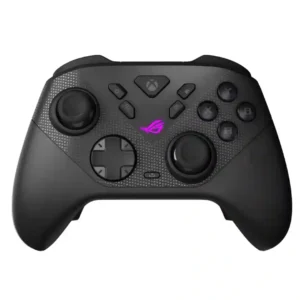
The face-button lettering is difficult to read in low light because there is no backlighting behind the labels, a recurring usability complaint.
haptic feedback quality
Turtle Beach Rematch
5.0
On the Core wired model with impulse triggers and dual rumble, tactile feedback feels immersive and well judged.
Asus ROG Raikiri II
2.0
Haptic immersion is limited; the light rumble was described as understated and less textured than stronger first-party feedback systems.
onboard audio controls
Turtle Beach Rematch
5.0
The Xbox/PC Core models earn strong praise for quick volume, game/chat balance, and mic-mute adjustments without leaving the game.
Asus ROG Raikiri II
2.0
Dedicated headset control has regressed because the former mute function is no longer clearly available from a hardware button.
thumbstick grip
Turtle Beach Rematch
4.8
Thumbstick tops are a major strength, with concave wells, raised lips, and textured surfaces repeatedly praised for control and security.
Asus ROG Raikiri II
2.0
The removable stick-cap system is convenient, but one reviewer found the plastic connection fragile and insufficiently secure for frequent swapping.
analog stick tension
Turtle Beach Rematch
5.0
Stick resistance is well judged where discussed, with reviewers praising a taut, springy feel rather than loose movement.
Asus ROG Raikiri II
2.5
Stick tension is divisive: some testers found the TMR sticks unusually light or too loose, especially if they prefer firmer resistance.
travel friendliness
Turtle Beach Rematch
2.5
One reviewer prefers using a separate controller at home because carrying the Switch plus controller feels cumbersome on the go.
Asus ROG Raikiri II
5.0
The protective case, in-case charging and integrated dongle storage make the controller particularly practical for tournaments and trips.
bumper quality
Turtle Beach Rematch
2.3
Shoulder-button quality is a weak spot in the harsher reviews, with complaints about awkward shape or spongy feedback.
Asus ROG Raikiri II
4.7
The bumpers feel strong and well implemented, with micro-switch construction giving them a crisp, premium character.
fighting game suitability
Turtle Beach Rematch
5.0
A clearly defined, tactile D-pad earned specific praise for fighting games because each directional point is easy to feel.
Asus ROG Raikiri II
2.8
Fighting-game performance is inconsistent. Some testers liked the fast buttons and one praised the rotating D-pad, while others found diagonal sequences and circular motions unreliable.
accessibility features
Turtle Beach Rematch
4.5
Programmable rear buttons can simplify complicated inputs for players who want easier access to frequently used actions.
Asus ROG Raikiri II
2.5
Vibration adjustment can help players who are sensitive to strong rumble, but the lack of illuminated face-button labels was called out as a real accessibility problem in dark rooms.
paddle quality
Turtle Beach Rematch
3.0
The Advanced model’s rear paddles work, but one reviewer found them a little rickety compared with premium controls.
Asus ROG Raikiri II
5.0
The rear paddle-style controls respond quickly and click crisply, reinforcing the controller’s fast mechanical feel.
casual gaming suitability
Turtle Beach Rematch
4.9
The Rematch line is especially well suited to casual players, kids, families, and anyone who wants a capable spare without paying premium-controller prices.
Asus ROG Raikiri II
3.0
Casual and single-player suitability is mixed. The shape is comfortable, but the aggressive micro-switch feel and competitive focus can make softer controllers more appealing for long, relaxed sessions.
face button travel
Turtle Beach Rematch
3.3
Face-button travel splits reviewers: one likes the comfortable amount of throw, while another finds the buttons too tall and firm.
Asus ROG Raikiri II
5.0
Face-button travel is exceptionally short, creating near-instant actuation. That speed is a competitive advantage but contributes to the harder, less cushioned feel some testers dislike.
grip texture
Turtle Beach Rematch
3.3
Grip quality is inconsistent across the range: some textures and stick surfaces feel secure, while smooth or lightly textured handles can feel slippery or sweaty.
Asus ROG Raikiri II
4.9
The textured and rubberized grip surfaces are repeatedly praised for staying secure without feeling overly rough or sticky.
Bluetooth performance
Turtle Beach Rematch
5.0
Bluetooth stayed stable in testing even with several other wireless devices active in the same room.
Asus ROG Raikiri II
3.5
Bluetooth is useful for quick pairing and mobile-style use, but several testers preferred the 2.4GHz dongle because it delivers lower latency and higher polling performance.
premium feel
Turtle Beach Rematch
3.2
Premium feel is mixed. Some reviewers think the Rematch approaches first-party quality, while others notice plasticky materials, lightness, or noisy inputs that make the price feel harder to justify.
Asus ROG Raikiri II
4.6
The controller usually feels convincingly premium through its solid shell, finish, controls and presentation. A few testers think the light weight or cheaper dock materials weaken that impression.
hand fatigue over long sessions
Turtle Beach Rematch
4.8
Light weight and comfortable shaping make the Rematch easy to use for long sessions, with multiple reviewers specifically noting reduced fatigue.
Asus ROG Raikiri II
3.4
The shell itself handles long sessions well, but button fatigue divides testers. Some report hours without discomfort, while others found the hard micro-switch impacts tiring on fingers and joints.
audio jack quality
Turtle Beach Rematch
3.8
The wired Advanced model gets praise for clean, high-quality headset output, while some Switch versions lose points for omitting a 3.5mm jack entirely.
Asus ROG Raikiri II
5.0
The 3.5mm headset jack performs very well, with strong volume and very low audio latency even over the wireless dongle.
analog stick precision
Turtle Beach Rematch
5.0
Reviewers who tested stick accuracy found the controls precise, with TMR-equipped versions singled out for strong responsiveness.
Asus ROG Raikiri II
3.8
Fine stick control can be excellent after tuning, with strong praise for tiny aiming and steering adjustments. Several testers found the stock deadzones or wide stick wells caused over-correction or weak micro-aiming.
compatibility with Xbox
Turtle Beach Rematch
5.0
Xbox-oriented Rematch models work seamlessly and are officially licensed, giving reviewers few compatibility concerns.
Asus ROG Raikiri II
3.8
Xbox support works well at the hardware level, including wireless dongle connectivity, but console-only users face more software and profile-management friction than PC players.
d-pad feel
Turtle Beach Rematch
3.2
D-pad feel is one of the most variant-dependent traits, ranging from tactile and well defined to soft, spongy, or less premium.
Asus ROG Raikiri II
4.3
The D-pad generally feels springy, crisp and satisfying, although a few testers describe it as spongy or less refined in certain directions.
face button responsiveness
Turtle Beach Rematch
3.8
Responsiveness is generally good, but a few variants use buttons that are too firm or tall, making them feel slower than premium alternatives.
Asus ROG Raikiri II
4.8
Face buttons register exceptionally quickly, with immediate micro-switch actuation that suits fast play. Extremely rapid repeated presses can occasionally expose reset behavior on some units.
onboard profile storage
Turtle Beach Rematch
5.0
The Advanced model can reliably store genre-specific profiles, making its software tuning useful beyond one session.
Asus ROG Raikiri II
4.0
Five onboard profiles are useful for storing different game setups, but profile switching and identification are not equally convenient in every environment, especially on Xbox.
button noise
Turtle Beach Rematch
2.1
Noise is a recurring drawback: multiple reviewers describe clacky, loud inputs, with one calling the face-button racket especially distracting.
Asus ROG Raikiri II
3.0
The mechanical buttons deliver a pronounced click that some testers enjoy, but others find noticeably loud during rapid play. Noise tolerance will matter here.
ease of setup
Turtle Beach Rematch
4.5
Setup is usually quick and straightforward, especially on wired Xbox/PC models; a few wireless or PC configurations require extra pairing or mapping steps.
Asus ROG Raikiri II
3.7
Basic mode switching can be simple, but setup quality depends heavily on software. One tester encountered a long sequence of installs and updates that turned setup into a major frustration.
size suitability for different hand sizes
Turtle Beach Rematch
4.8
Fit is strong across reported hand sizes, from small hands to broad claims of comfort for nearly everyone, though large hands may hit rear buttons accidentally on some models.
Asus ROG Raikiri II
4.0
Medium and larger hands are generally well served by the grip shape, while smaller hands may find the trigger reach and overall span less natural.
customization depth
Turtle Beach Rematch
4.0
The Core’s app provides a useful layer of control over dead zones, vibration, and remapping without turning the controller into an overly complex pro pad.
Asus ROG Raikiri II
4.8
Customization is deep, covering stick curves and deadzones, trigger ranges, vibration, lighting, mappings and profiles. Testers repeatedly describe the tuning range as one of the controller’s premium strengths.
value for money
Turtle Beach Rematch
4.3
Value is generally strong, especially on the Core and Advanced wired models, but some Switch versions sit too close to first-party pricing or better-equipped rivals at full price.
Asus ROG Raikiri II
3.5
Value depends heavily on priorities. Many reviewers think the $190-class package earns its price through TMR hardware and accessories, while others see cheaper alternatives or setup flaws as reasons to spend less.
back button usefulness
Turtle Beach Rematch
4.1
The rear controls are broadly useful for remapping and competitive play, though several Switch reviewers found limited need for them in typical Nintendo games.
Asus ROG Raikiri II
4.9
The rear buttons can keep thumbs on the sticks and move common actions under the fingers, which testers found genuinely useful for faster play.
cable length and quality
Turtle Beach Rematch
3.6
The detachable 2.5 m cable is generally well made and secure, but several living-room setups needed something longer.
Asus ROG Raikiri II
4.3
The included braided cable feels strong and premium, and its generous length is useful. One tester found it stiff enough to prefer a more flexible third-party cable.
companion app quality
Turtle Beach Rematch
4.2
Control Hub is generally simple and useful for dead zones, vibration, diagnostics, and remapping, though it is not described as unusually deep.
Asus ROG Raikiri II
3.5
Gear Link offers strong control without a heavy desktop app, and many testers like the browser-based approach. Others strongly dislike the internet requirement, PC dependence or setup friction, making the software experience one of the most divisive areas.
Start and Select button design
Turtle Beach Rematch
2.0
Rearranged Home, Capture, plus, and minus controls are a recurring annoyance on Switch models, causing repeated accidental presses until muscle memory adjusts.
Asus ROG Raikiri II
1.3
The extra ROG Ally shortcut keys repeatedly interfere with the usual Start/View layout. Several testers hit the wrong button or found the real menu controls awkward to reach.
FPS performance
Turtle Beach Rematch
4.7
Rear buttons and fast trigger stops are especially useful in shooters, with reviewers calling them a genuine advantage for faster inputs.
Asus ROG Raikiri II
4.0
The controller is a strong FPS fit once the sticks are tuned, thanks to rapid triggers and responsive inputs. Default deadzones or game-specific trigger behavior can make fine aiming less convincing for some players.
programmable button support
Turtle Beach Rematch
4.4
Programmable rear controls are a meaningful extra across several variants, giving faster access to actions and more flexibility than basic first-party layouts.
Asus ROG Raikiri II
5.0
Programmable rear controls are genuinely useful because they can be assigned quickly and moved to important in-game actions without taking a thumb off the sticks.
vibration quality
Turtle Beach Rematch
2.3
Vibration is the biggest cross-variant inconsistency: Xbox/PC models can have solid rumble and impulse feedback, while many Switch versions omit rumble entirely or lack Nintendo’s richer HD Rumble.
Asus ROG Raikiri II
2.9
Vibration is serviceable rather than a standout. Some testers find it controlled and precise, but others call it weak or too understated for immersive single-player play.
button remapping options
Turtle Beach Rematch
4.5
Remapping is flexible on models with rear controls, letting players assign alternate actions for different games.
Asus ROG Raikiri II
4.0
Remapping is flexible for controller inputs and can be very quick, including on-the-fly changes. The main limitation is that several buttons can only mirror existing controller commands rather than keyboard keys or combos.
brand software support
Turtle Beach Rematch
4.5
The Control Hub software is easy to navigate and adds useful configuration support on Xbox and Windows.
Asus ROG Raikiri II
5.0
ASUS responded to early software and dongle issues with firmware fixes, and those updates resolved problems in follow-up testing.
bumper responsiveness
Turtle Beach Rematch
4.0
One reviewer found the shoulder buttons responsive across their full length, making them easy to activate from different finger positions.
Asus ROG Raikiri II
4.5
Bumpers actuate quickly and with very little force. That speed is useful, though the light touch may require a short adjustment period.
button quality
Turtle Beach Rematch
4.1
Buttons are usually crisp, firm, and satisfying, but a minority of reviews criticize excessive stiffness or sponginess on specific variants.
Asus ROG Raikiri II
4.6
Micro-switch buttons are one of the most consistently praised parts of the controller, offering crisp, tactile and very fast presses. Some testers find the rigid click harsh over long sessions.
ergonomics
Turtle Beach Rematch
4.9
Ergonomics are consistently strong, with familiar shapes, comfortable grips, and good fit across long sessions and several hand sizes.
Asus ROG Raikiri II
4.4
The Xbox-style shape is generally comfortable and natural, with thoughtful grip contours. Fit becomes more personal around the trigger reach and rear-button layout.
d-pad accuracy
Turtle Beach Rematch
3.0
D-pad accuracy varies sharply by model: some Switch versions handle diagonals cleanly, while Core wired reviews repeatedly report sponginess that hurts precise direction changes.
Asus ROG Raikiri II
3.4
D-pad accuracy is mixed: it works well for menus and simpler directional play, but complex diagonals and fighting-game motions expose inconsistency for several testers.
build quality
Turtle Beach Rematch
4.5
Most Rematch variants feel solid and dependable for their price, though some Switch models still come across lighter or more plasticky than Nintendo’s premium controller.
Asus ROG Raikiri II
4.9
The controller itself is overwhelmingly described as solid, rigid and well assembled, with tight seams and very little flex or creaking.
material quality
Turtle Beach Rematch
2.9
Materials are serviceable for the price but rarely luxurious; plasticky shells, slippery surfaces, and inconsistent top/bottom finishes are recurring criticisms.
Asus ROG Raikiri II
3.3
Materials are mixed by component. The controller shell and grips usually feel high quality, while the charging dock and some removable plastic parts attract criticism for feeling cheap or fragile.
stick drift resistance
Turtle Beach Rematch
4.3
Magnetic TMR/Hall-effect versions inspire strong confidence against drift, while a non-magnetic Rematch version is criticized for using older, wear-prone stick technology.
Asus ROG Raikiri II
4.6
Stick-drift resistance is a major reason reviewers favor the TMR hardware, with repeated confidence that it avoids the wear problem of traditional potentiometers. One test unit did show drift-like calibration behavior, tempering the otherwise strong consensus.
RGB lighting usefulness
Turtle Beach Rematch
3.5
RGB can look subtle, classy, and highly customizable, but brighter animated effects distract some reviewers and noticeably reduce battery life.
Asus ROG Raikiri II
3.9
The RGB is generally seen as tasteful and highly customizable, and the battery-status lighting can be genuinely useful. A few testers felt grip lighting was wasted power because it is hidden under the hands.
racing game suitability
Turtle Beach Rematch
4.5
The Core wired model stayed responsive during Forza Horizon 5, supporting smooth use in racing as well as action games.
Asus ROG Raikiri II
4.9
Racing games are a strong fit because the full-travel analog triggers allow fine throttle and brake control, while the precise sticks help with steering.
included accessories
Turtle Beach Rematch
4.5
The Advanced wired model’s included detachable USB-C cable fits securely and feels flexible and well made.
Asus ROG Raikiri II
4.8
The accessory bundle is a standout, typically including a protective case, charging stand, cable, dongle storage and alternate stick caps. It makes the premium package feel complete and travel-ready.
trigger responsiveness
Turtle Beach Rematch
4.7
Triggers are usually a strong point, with responsive actuation and curved shapes that keep fingers planted during intense play.
Asus ROG Raikiri II
5.0
Trigger response is outstanding in short mode, with near-instant mouse-like clicks that repeatedly impress shooter-focused testers.
input lag
Turtle Beach Rematch
5.0
Input response is a strength wherever tested directly, from latency-free USB operation to ultra-low-latency wireless and no-lag casual testing.
Asus ROG Raikiri II
4.7
Input lag is consistently low in testing, especially over wired and 2.4GHz connections. A small number of measurements found stick latency less impressive, but gameplay usually felt immediate.
analog trigger precision
Turtle Beach Rematch
5.0
The Advanced wired model offers full trigger travel for controlled, precise metering before switching into its shorter hair-trigger mode.
Asus ROG Raikiri II
4.7
The full-range TMR triggers are excellent for nuanced analog control, especially throttle and braking in racing games. One tester found the feel less subtle than expected.
analog stick smoothness
Turtle Beach Rematch
5.0
Stick movement is consistently praised, from silky-smooth TMR implementations to well-tuned analogue sticks with quick recentering.
Asus ROG Raikiri II
4.8
Stick movement is consistently described as smooth, springy and controlled, with anti-friction rings helping the sticks glide cleanly.
competitive gaming suitability
Turtle Beach Rematch
4.8
Low-latency wired play, rear buttons, and trigger stops make the Advanced/Core variants credible entry-level competitive options.
Asus ROG Raikiri II
5.0
Competitive play is the controller’s clearest use case. Fast micro-switches, trigger stops, rear controls and low-latency connectivity repeatedly earn praise for shooters and other reaction-heavy games.
durability
Turtle Beach Rematch
4.5
Where durability is discussed, the controllers feel sturdy enough for everyday use, while magnetic stick technology is credited with reducing wear.
Asus ROG Raikiri II
4.3
Early durability impressions are mostly strong, helped by TMR sticks and micro-switch construction. Concerns center on smaller plastic parts such as removable stick caps rather than the main shell.
TMR stick performance
Turtle Beach Rematch
4.9
TMR-equipped models are among the best-reviewed versions, combining smooth movement, precision, responsiveness, and lower drift risk.
Asus ROG Raikiri II
4.7
TMR is one of the controller’s headline strengths, delivering crisp, smooth and highly precise stick behavior in most testing. A minority found the default deadzones or tuning disappointing until adjusted.
back button placement
Turtle Beach Rematch
4.1
Rear-button placement is often excellent and easy to find, but some reviewers with larger hands or less familiarity report accidental presses.
Asus ROG Raikiri II
4.3
Rear-button placement is usually a highlight, sitting naturally under the middle and ring fingers. Some hand positions cause accidental presses, so the layout is not universal.
compatibility with PC
Turtle Beach Rematch
4.8
PC support is consistently positive, ranging from seamless wired plug-and-play to strong Bluetooth/USB performance after manual mapping on Switch-oriented models.
Asus ROG Raikiri II
5.0
PC is where the controller feels most complete, with full customization, 1,000Hz operation and flexible wired, Bluetooth and 2.4GHz use.
platformer control precision
Turtle Beach Rematch
4.5
One reviewer found the Switch model precise enough for platforming without accidental movement sending the character off course.
Asus ROG Raikiri II
4.7
Platformers generally benefit from the quick buttons and precise directional response, though the D-pad is less convincing for more complex motion-heavy play.
overall satisfaction
Turtle Beach Rematch
4.5
The overall consensus is positive: reviewers see the Rematch as a dependable, attractive controller family with strong fundamentals, tempered by variant-specific omissions and cheaper-feeling details.
Asus ROG Raikiri II
4.4
Overall sentiment is strongly positive: most testers see this as a high-performance premium controller with standout precision and speed. The main dissent centers on setup, price, harsh buttons and a few awkward design choices.
weight balance
Turtle Beach Rematch
4.5
Reviewers usually like the Rematch’s light weight and balance, though a few need time to adjust or associate the lightness with a cheaper feel.
Asus ROG Raikiri II
4.4
Weight is usually praised as light yet balanced and substantial enough to feel premium. One reviewer preferred a heavier controller and thought the lighter feel reduced perceived quality.
overall comfort
Turtle Beach Rematch
4.5
Comfort is a consistent strength across the line, helped by familiar controller shapes, low weight, and well-sized grips.
Asus ROG Raikiri II
4.6
Comfort is a broad strength thanks to the familiar Xbox-style shape, textured grips and balanced shell. The main caveat is that rear-button placement and hard micro-switch presses can reduce comfort for some hands.
software customization
Turtle Beach Rematch
4.7
Control Hub offers useful remapping, dead-zone, sensitivity, and trigger adjustments, giving budget wired models more tuning depth than their price suggests.
Asus ROG Raikiri II
4.6
Software tuning is extensive, with detailed control over curves, deadzones, triggers, vibration, lighting and profiles. The settings are powerful even when the delivery method is divisive.
design and aesthetics
Turtle Beach Rematch
5.0
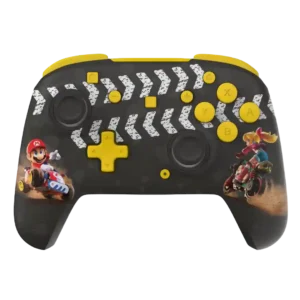
Visual design is the line’s standout strength. Reviewers repeatedly praise the Mario artwork, glow effects, translucent finishes, RGB, and bolder colorways over plain first-party pads.
Asus ROG Raikiri II
5.0
The design is widely praised as sleek, restrained and recognizably ROG without becoming overly flashy. Subtle lighting and varied textures add to the premium look.
learning curve
Turtle Beach Rematch
3.4
Most functions are easy to learn, but rear-button programming, unfamiliar system-button layouts, and some onboard controls can take adjustment.
Asus ROG Raikiri II
3.4
The controller has a modest learning curve around ultra-short buttons, deadzone tuning, profile controls and unusual menu-key placement. Most testers adapted after some use.
battery life
Turtle Beach Rematch
4.7
Battery life is one of the clearest strengths on wireless models, with roughly 30-40 hours repeatedly confirmed; RGB lighting can cut endurance substantially.
Asus ROG Raikiri II
4.8
Battery life is a major strength, commonly landing around 30–50 hours depending on RGB, vibration and audio settings. Testers rarely felt pressured to recharge during normal use.
trigger stop effectiveness
Turtle Beach Rematch
5.0
The Advanced model’s two-stage trigger stops are a standout feature, delivering very fast inputs and a real benefit in shooters and action games.
Asus ROG Raikiri II
5.0
Trigger stops are one of the most consistently praised features, switching quickly into a firm, extremely short micro-switch action that suits shooters.
consistency across sessions
Turtle Beach Rematch
5.0
Longer testing produced reliable performance, with reviewers reporting no stick issues and solid behavior across repeated play.
Asus ROG Raikiri II
5.0
Across longer tests and multiple genres, the controller stayed consistent, with reliable connections, stable controls and strong day-to-day behavior.
trigger smoothness
Turtle Beach Rematch
3.5
Trigger feel is acceptable but not uniformly premium; some reviewers notice extra resistance or weaker tactile refinement.
Asus ROG Raikiri II
3.5
Trigger feel is mixed: the full-range mode can be buttery smooth, while another tester found the short-pull triggers less satisfying than rival implementations.
connection reliability
Turtle Beach Rematch
5.0
Wireless connection testing showed no dropouts or problems even in a room crowded with other Bluetooth devices.
Asus ROG Raikiri II
5.0
Connection reliability is excellent across the tested modes, with repeated reports of seamless switching, stable RF performance and no meaningful dropouts.
portability
Turtle Beach Rematch
5.0
The lightweight Core wired model is considered a practical option for kids and on-the-go gaming.
Asus ROG Raikiri II
5.0
The compact case and integrated dongle storage make the controller easy to carry, with strong protection for travel.
screenshot button usefulness
Turtle Beach Rematch
2.0
On one Switch 2 version, the relocated screenshot control contributes to muscle-memory mistakes because the system buttons are rearranged.
Asus ROG Raikiri II
2.0
The share/screenshot control sits lower than ideal, making its placement a minor usability complaint.
USB-C convenience
Turtle Beach Rematch
5.0
USB-C charging is easy to live with because the controller can be plugged in and used while charging.
Asus ROG Raikiri II
5.0
USB-C play-and-charge keeps the controller usable when the battery runs low, avoiding downtime during longer sessions.
wired performance
Turtle Beach Rematch
5.0
The Advanced wired model impressed with a latency-free USB connection suited to responsive competitive play.
Asus ROG Raikiri II
5.0
Wired USB-C performance is excellent, delivering the lowest latency and stable high polling while remaining available for play-and-charge.
wireless latency
Turtle Beach Rematch
5.0
Wireless latency is excellent in the direct test that measured it, with the controller described as ultra-low latency.
Asus ROG Raikiri II
5.0
Wireless latency over 2.4GHz is exceptionally low in most testing, often feeling nearly indistinguishable from wired play.
wireless stability
Turtle Beach Rematch
5.0
Bluetooth testing found stable wireless operation without connection problems.
Asus ROG Raikiri II
5.0
The 2.4GHz connection stays stable under testing, with no obvious dropouts and polling behavior that closely matches wired mode.
2.4GHz dongle performance
Turtle Beach RematchNo score yet
Asus ROG Raikiri II
4.8
The 2.4GHz link is repeatedly praised for low latency and dependable response, with the compact dongle also earning points for practical storage and positioning.
Amiibo/NFC support
Turtle Beach Rematch
1.6
Several Switch-focused reviews flag missing NFC/Amiibo scanning as a limitation, especially for collectors and players who regularly use Amiibo features.
Asus ROG Raikiri IINo score yet
battery replaceability
Turtle Beach RematchNo score yet
Asus ROG Raikiri II
2.0
The integrated battery cannot be replaced easily, which was specifically called out as a repairability drawback.
charging dock support
Turtle Beach RematchNo score yet
Asus ROG Raikiri II
3.0
The charging dock is convenient and can keep the pad topped up, especially when paired with the case and dongle port. Build quality varies sharply by reviewer, with several calling the stand cheap, light or flimsy.
compatibility with Nintendo Switch
Turtle Beach Rematch
4.5
Switch-focused models work across the original Switch and Switch 2, but exact Switch 2 features vary by version and some omit newer functions.
Asus ROG Raikiri IINo score yet
firmware update support
Turtle Beach RematchNo score yet
Asus ROG Raikiri II
4.4
Firmware support has been responsive enough to fix early connectivity or tuning problems, though one setup-heavy experience still found the update process frustrating.
GameChat C button usefulness
Turtle Beach Rematch
3.3
A dedicated C button is appreciated on newer Switch 2 versions for quick GameChat access, while older releases are criticized for launching without it.
Asus ROG Raikiri IINo score yet
gyro aiming performance
Turtle Beach Rematch
4.5
The Switch version preserves the core gyro-aiming experience, making motion-based aiming feel complete rather than compromised.
Asus ROG Raikiri IINo score yet
Hall effect stick performance
Turtle Beach Rematch
5.0
On the Advanced wired model, Hall-effect stick technology is praised mainly for its expected resistance to stick drift.
Asus ROG Raikiri IINo score yet
macro support
Turtle Beach RematchNo score yet
Asus ROG Raikiri II
2.0
Macro support is a clear limitation: complex macros, turbo and button-combination programming are unavailable or non-functional in the tested software.
microphone passthrough quality
Turtle Beach RematchNo score yet
Asus ROG Raikiri II
5.0
Headset passthrough is strong, with solid audio quality and low latency through the controller’s 3.5mm connection.
mobile compatibility
Turtle Beach RematchNo score yet
Asus ROG Raikiri II
2.3
Mobile support is inconsistent. Some Windows-handheld use works well, but smartphone recognition is incomplete and one tester explicitly advises iOS and Android users to avoid it.
motion control accuracy
Turtle Beach Rematch
4.2
Motion controls work well across Switch versions, with some reviewers finding them surprisingly accurate and others simply solid enough for regular play.
Asus ROG Raikiri IINo score yet
polling rate
Turtle Beach RematchNo score yet
Asus ROG Raikiri II
4.8
The 1,000Hz polling mode on PC is a major performance selling point, giving the controller a fast, immediate feel over both wired and 2.4GHz connections.
repairability
Turtle Beach RematchNo score yet
Asus ROG Raikiri II
2.0
Repairability takes a hit from the sealed, integrated battery, which is not designed for straightforward user replacement.
retro gaming suitability
Turtle Beach RematchNo score yet
Asus ROG Raikiri II
5.0
Retro games work cleanly in the tested use case, with no input problems reported when using the controller for older-style play.
steering precision
Turtle Beach RematchNo score yet
Asus ROG Raikiri II
5.0
Fine steering adjustments are a strong point; small stick movements translated into precise directional changes in racing tests.
Switch wake support
Turtle Beach Rematch
1.3
The inability of several Switch 2 versions to wake the console is one of the line’s most repeated complaints and a frequent convenience tradeoff versus Nintendo’s controller.
Asus ROG Raikiri IINo score yet
upgrade value
Turtle Beach RematchNo score yet
Asus ROG Raikiri II
5.0
As an upgrade from earlier Raikiri models, the II is widely seen as a substantial step forward in responsiveness, wireless capability, controls, accessories and overall execution.