Average score
P1
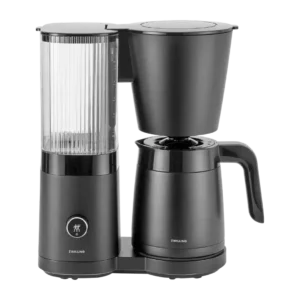
Product 1: Zwilling Enfinigy Drip Coffee Maker
3.5
P2
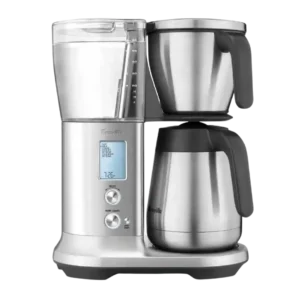
Product 2: Breville Precision Brewer
4.1
Accessories
P1
Product 1: Zwilling Enfinigy Drip Coffee Maker
2.5
Included accessories disappointed reviewers because starter filters, a scoop, test strip or descaler were missing depending on the review context.
P2
Product 2: Breville Precision Brewer
3.4
Included baskets and attachments are useful, but several reviewers disliked that the pour-over adapter or conversion kit was not included by default.
Accuracy of marketing claims
P1
Product 1: Zwilling Enfinigy Drip Coffee Maker
2.0
One comparison review found the brewer’s advertised cup capacity misleading because the tested maximum came out lower than claimed.
P2
Product 2: Breville Precision Brewer
3.3
Marketing accuracy is mixed: one reviewer said the brewer lives up to the hype, another called cold and iced modes marketing-driven, and one timed a full brew slower than Breville's claim.
Assembly and Setup
P1
Product 1: Zwilling Enfinigy Drip Coffee Maker
4.5
Setup was repeatedly described as quick and straightforward, usually requiring only water-hardness selection and an initial rinse cycle.
P2
Product 2: Breville Precision Brewer
3.5
Setup was understandable but time-consuming in the hands-on review that covered the initial cleaning, water-hardness setting, and first cycles.
Automation and sensors
P1
Product 1: Zwilling Enfinigy Drip Coffee Maker
4.5
Automation was praised mainly for the simple programmable timer and clear timer indicator, useful for morning routines.
P2
Product 2: Breville Precision Brewer
4.6
Automation is a major strength, with praise for auto-start, programmable brew settings, flow and bloom controls, and batch brewing convenience.
Brewing performance and consistency
P1
Product 1: Zwilling Enfinigy Drip Coffee Maker
4.5
Reviewers consistently praised the brewer’s extraction and flavor consistency, especially for simple push-button coffee, while noting some batch-size tradeoffs.
P2
Product 2: Breville Precision Brewer
4.7
Brewing performance is one of the strongest themes, with reviewers praising consistent extraction, precise brewing, and control, while a few disliked some presets or larger flat-bottom batches.
Build quality and durability
P1
Product 1: Zwilling Enfinigy Drip Coffee Maker
2.7
Build feedback was mixed to negative overall: one reviewer called it solid, but others repeatedly criticized plasticky, flimsy or less robust parts.
P2
Product 2: Breville Precision Brewer
4.7
Build quality is generally praised as sturdy, premium, and reliable, especially the metal construction and plastics, though support and long-term repairability concerns remain.
Capacity
P1
Product 1: Zwilling Enfinigy Drip Coffee Maker
2.9
Capacity drew caveats because cup markings did not equal everyday mugs, and one reviewer found the claimed maximum lower than expected.
P2
Product 2: Breville Precision Brewer
4.7
Capacity is consistently useful, with reviewers valuing the 60-ounce or 12-cup output for families, guests, teams, offices, or small cafe-style service.
Capsules, pods and consumables
P1
Product 1: Zwilling Enfinigy Drip Coffee Maker
2.5
Consumables were a drawback because the machine requires single-use paper filters, which reviewers framed as less eco-friendly or wasteful.
P2Product 2: Breville Precision Brewer
No score yetCup, tray and carafe handling
P1
Product 1: Zwilling Enfinigy Drip Coffee Maker
3.1
Carafe handling was mixed: pouring could be clean, but multiple reviewers complained that the lid flips or falls open near the end.
P2
Product 2: Breville Precision Brewer
4.0
Carafe handling is mostly positive thanks to heat retention and drip-lock behavior, but reviewers note hand-washing, weight, leftover liquid, and some heat-retention limits.
Design, ergonomics and footprint
P1
Product 1: Zwilling Enfinigy Drip Coffee Maker
4.6
Reviewers strongly liked the compact, sleek counter presence and simple physical experience, with the design often treated as a main strength.
P2
Product 2: Breville Precision Brewer
3.8
Design impressions are split: reviewers like the premium look and kitchen appeal, but repeatedly describe the brewer as large, tall, and demanding of counter space.
Design flaws
P1
Product 1: Zwilling Enfinigy Drip Coffee Maker
2.5
Design flaws centered on the short hotplate duration, hard-to-see display in bright rooms and small handling quirks.
P2
Product 2: Breville Precision Brewer
2.9
Common flaws include weak or harsh preset modes, a fixed water tank, backsplash, extra accessory needs, an imprecise beep, and overkill complexity for casual users.
Environmental packaging sustainability
P1
Product 1: Zwilling Enfinigy Drip Coffee Maker
4.5
Packaging sustainability was praised for recyclable cardboard and minimal plastic, even as the machine itself used plenty of plastic.
P2Product 2: Breville Precision Brewer
No score yetEspresso and beverage quality
P1
Product 1: Zwilling Enfinigy Drip Coffee Maker
4.6
Taste was one of the strongest positives, with reviewers describing coffee that was flavorful, drinkable and free from sour, bitter or burnt notes.
P2
Product 2: Breville Precision Brewer
4.6
Beverage quality is widely praised, especially after tuning settings, though one lab review called the cups not quite top-tier and CNET found default extraction could taste bitter.
Filter
P1
Product 1: Zwilling Enfinigy Drip Coffee Maker
3.0
Filter experience was mixed: the cone setup was praised for flavor, but reviewers disliked unclear filter guidance and missing starter filters.
P2
Product 2: Breville Precision Brewer
4.1
Filter flexibility is valued, especially cone and flat basket options, but reviewers also note that some filter modes or inserts add cleanup and setup complexity.
Grinder, hopper and dosing system
P1
Product 1: Zwilling Enfinigy Drip Coffee Maker
2.5
Dosing guidance was weak because multiple reviewers had to guess coffee amounts or rely on the coffee bag rather than the manual.
P2Product 2: Breville Precision Brewer
No score yetHeating-element power
P1
Product 1: Zwilling Enfinigy Drip Coffee Maker
3.7
Heating performance was mixed: one comparison found correct brew temperatures, while hands-on reviews saw serving temperature vary with smaller batches.
P2
Product 2: Breville Precision Brewer
5.0
Temperature and heating control receive very strong praise, with reviewers highlighting accurate SCA-range brewing, adjustable temperature, and stable heat levels.
Iced / cold-brew function quality
P1Product 1: Zwilling Enfinigy Drip Coffee Maker
No score yet
P2
Product 2: Breville Precision Brewer
4.0
Cold brew and iced performance are split: several reviewers liked the automated cold brew results, while one reviewer dismissed those modes as marketing clutter.
Mess-free used-puck disposal
P1
Product 1: Zwilling Enfinigy Drip Coffee Maker
5.0
Used-ground cleanup was consistently praised because paper filters and a removable funnel made disposal quick, easy and relatively mess-free.
P2Product 2: Breville Precision Brewer
No score yetOverall user experience
P1
Product 1: Zwilling Enfinigy Drip Coffee Maker
4.1
The overall experience was judged simple and pleasant, though one reviewer found the interface less intuitive at first.
P2
Product 2: Breville Precision Brewer
4.3
Overall experience is positive for coffee enthusiasts who enjoy flexibility and control, though the machine is less ideal as a purely simple one-touch brewer.
Popularity
P1Product 1: Zwilling Enfinigy Drip Coffee Maker
No score yet
P2
Product 2: Breville Precision Brewer
5.0
Popularity evidence is strong but limited, with one reviewer reporting very positive feedback from users and pros and another calling it a recurring lab favorite.
Pot function
P1
Product 1: Zwilling Enfinigy Drip Coffee Maker
2.2
The pot and warming function were a recurring weakness because the hotplate only stays active briefly and coffee cools after that.
P2
Product 2: Breville Precision Brewer
4.6
Pot and batch brewing are praised for making larger quantities efficiently, including full pots, multiple serving sizes, and reliable batch use in homes or small workplaces.
Recognition and certifications
P1
Product 1: Zwilling Enfinigy Drip Coffee Maker
4.9
Reviewers treated SCA/Golden Cup recognition as a meaningful quality signal and a reason to trust the brewer’s cup performance.
P2
Product 2: Breville Precision Brewer
4.5
Recognition evidence is limited but positive, with testing-focused coverage tying the brewer's precision reputation to its performance against established brewing standards.
Speed and time-to-cup
P1
Product 1: Zwilling Enfinigy Drip Coffee Maker
4.5
One hands-on review praised full-carafe brewing speed, describing the seven-minute cycle as pretty speedy.
P2
Product 2: Breville Precision Brewer
4.2
Speed is generally strong for a large-capacity brewer, with several tests around six to ten-and-a-half minutes and praise for fast, consistent brewing.
Value and Price
P1
Product 1: Zwilling Enfinigy Drip Coffee Maker
3.4
Value was mixed: reviewers liked the results and style, but several saw the price as a major barrier given the plastic build and limits.
P2
Product 2: Breville Precision Brewer
3.8
Value depends on the buyer: reviewers call it expensive for a drip machine, but worth it for users who will use the customization, capacity, and coffee quality.
Warranty and Customer support
P1
Product 1: Zwilling Enfinigy Drip Coffee Maker
1.8
Support and parts availability were a major concern because reviewers noted missing replacement carafes or parts that are hard to get.
P2
Product 2: Breville Precision Brewer
3.3
Warranty and support are mixed: one review treated the two-year warranty as a plus, while others raised concerns about support, replacement parts, and longevity versus rivals.
Water system, maintenance and descaling
P1
Product 1: Zwilling Enfinigy Drip Coffee Maker
4.1
Maintenance was mostly praised for easy cleaning and automatic descaling, though the fixed reservoir made filling less convenient.
P2
Product 2: Breville Precision Brewer
3.4
Water and maintenance are manageable but imperfect, with praise for descaling guidance and cleaning access balanced by a fixed tank, precise filling, and basket/carafe cleanup annoyances.