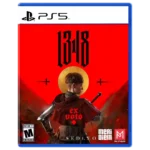
1348 Ex Voto Feature Scores
Explore all 72 feature scores for 1348 Ex Voto, organized into pros and cons.
Scores by Feature
Summary
72 reviewed features-
Very positive 4.5-5.03 (4%)
-
Positive 3.5-4.45 (7%)
-
Neutral 2.5-3.48 (11%)
-
Negative 1.5-2.438 (53%)
-
Very negative below 1.518 (25%)
Pros
Sort
-
The environments are the most universally praised part of the package, with detailed villages, forests, mountains, ruins, chapels, vineyards, and lighting that frequently look far beyond the game's small-team scale.
-
Voice acting is the clearest non-visual strength. Alby Baldwin and Jennifer English are repeatedly praised for giving conviction and emotional credibility to material that many reviewers otherwise find underwritten.
-
The medieval Italian aesthetic is one of the clearest strengths, with striking lighting, countryside vistas, chapels, ruins, and period-inspired architecture giving the game a distinctive visual identity.
-
The best stretches create a convincing plague-era mood through lighting, scenery, sound, and bleak environmental cues. Technical problems and repetitive combat can puncture that atmosphere at key moments.
-
Visual quality is split between gorgeous environments and much rougher close-up character work. The scenery can be striking, but texture issues, clipping, facial problems, and performance compromises keep the package from looking consistently polished.
-
The orchestral score is generally well received and helps sell the somber period atmosphere, even if repetitive combat cues or mixing occasionally compete with dialogue.
-
Lighting and fire effects receive strong praise, adding drama and texture to chapels, burning buildings, landscapes, and other period environments.
-
One review strongly praises the quiet dread of the plague-stricken world, where sound and lighting make the setting feel like a grounded medieval tragedy rather than fantasy.
Cons
Sort
-
Across launch and pre-release builds, reviewers repeatedly describe the game as underbaked or unfinished. Glitches, rough transitions, animation problems, and inconsistent systems make the lack of final refinement hard to ignore.
-
Optimization is one of the strongest negative patterns, especially on PC where capable hardware can still stutter badly. Console coverage also reports a restrictive frame-rate target and heavy drops in demanding scenes.
-
The camera and lock-on system are repeatedly blamed for combat frustration, especially in groups where focus snaps unpredictably or the close field of view hides incoming threats.
-
Frame-rate problems are widespread in the reviewed builds, including severe PC drops and a 30 FPS console cap with additional dips during busy scenes or effects-heavy boss fights.
-
Input feel is a recurring problem, with delayed attacks, unreliable dodges and parries, finicky traversal prompts, and occasional moments where Aeta simply does not respond as expected.
-
Most reviewers found the experience more frustrating than enjoyable, chiefly because combat and technical friction dominate the short campaign. Positive moments usually come from scenery, atmosphere, or brief one-on-one combat flow.
-
Facial animation is a prominent visual weakness, with uncanny mouths, stiff expressions, lip-sync issues, and distorted faces repeatedly distracting from otherwise strong dramatic performances.
-
Boss fights are one of the most consistent complaints, with regenerating guard or health, spammy attacks, strange hitboxes, and difficulty spikes that feel more aggravating than satisfying.
-
Bugs are common across the reviewed builds, ranging from broken interaction prompts and clipping to stuck characters, missing assets, glitched bosses, and other issues that sometimes force a restart.
-
The world looks richer than it plays: many props are set dressing, NPCs are scarce, and interaction often comes down to supplies, collectibles, boxes, and narrow traversal prompts.
-
Aeta is often described as heavy in an unflattering way, with stiff turning, awkward climbing, and sluggish movement that can make simple navigation feel more cumbersome than grounded.
-
Sword fighting is the central point of disagreement. A few reviewers enjoy its one-on-one parry-and-guard rhythm, but the dominant view is that shallow tactics, broken targeting, unreliable dodges, and group encounters undermine it.
-
The game is deliberately linear, but many reviewers feel the boundaries are too restrictive, with obvious side paths, invisible walls, and little freedom to explore the attractive scenery.
-
The low asking price and short runtime appeal to a few reviewers, but most still recommend waiting for a discount because the combat and technical state make even the budget price hard to justify.
-
Most coverage finds the enemy pool too repetitive, often describing only a handful of recognizable types and attack patterns. A few reviewers saw enough weapon variety to keep encounters interesting.
-
Levels can be visually impressive but are often criticized as narrow, repetitive corridors with confusing landmarks, invisible boundaries, and traversal solutions that are easy to miss.
-
Enemy behavior often feels artificial rather than tactical: groups may wait their turn, spawn awkwardly, or repeat predictable patterns instead of coordinating naturally.
-
The writing draws praise from a minority for its earnest themes and performances, but most reviewers criticize blunt exposition, thin character work, abandoned ideas, and a late twist that feels poorly earned.
-
Exploration is limited by strongly linear spaces and sparse interaction. Hidden paths and collectibles can reward curiosity, but many reviewers wanted more freedom and more meaningful reasons to leave the main route.
-
Crashes appear in both PC and console coverage, including startup or save-loading failures in earlier builds. Patches improved some experiences, but stability remained a recurring concern.
-
Puzzles rarely rise beyond moving boxes, cutting ropes, or finding a simple traversal route. Reviewers generally see them as filler rather than a meaningful second pillar beside combat.
-
The opening rescue premise earns interest, but the broader consensus is that the second half becomes disjointed or underdeveloped and the climax does not earn its twists. A notable minority loved the story.
-
Difficulty can swing for the wrong reasons: some bosses feel punishing because of hitboxes and regeneration, while certain upgrades or later familiarity can make ordinary encounters trivial.
-
Console reviewers are particularly disappointed by the lack of a 60 FPS option, including on PS5 Pro, making the platform feature set feel unusually limited for a 2026 release.
-
Basic climbing and ledge traversal are frequently finicky, with missed prompts, unclear climbable surfaces, and simple platforming sequences that can require repeated inputs.
-
Aeta and Bianca begin with an appealing premise, but many reviewers wanted substantially more time and depth for their bond, motivations, and personal growth before the late-game revelations.
-
The mechanical foundation is viewed as underdeveloped: a few workable ideas are present, but multiple reviews describe the overall play experience as clunky, shallow, or insufficiently refined.
-
Target selection is a major weak point. Reviewers describe lock-on jumping to the wrong opponent mid-combo, making attacks miss the enemy they intended to pressure.
-
The campaign leans heavily on the same basic rhythm of walking, fighting small groups, and light traversal. Several reviewers felt the limited enemy, puzzle, and activity mix became repetitive quickly.
-
The absence of a map or minimap becomes frustrating in similar-looking spaces, where poorly distinguished routes and subtle interactable ledges can make the intended path harder to read than it should be.
-
Combat motion capture can look authentic in motion, but the broader animation package is inconsistent, with glitches, stiffness, odd hair physics, and rough transitions frequently breaking the presentation.
-
Accessibility support is repeatedly called thin, with limited settings and no difficulty options in some builds; one PC review also struggled with fixed keybinds.
-
The skill tree adds parries, dodges, combo extensions, and stat boosts, but most reviewers consider it shallow or poorly explained. A few specific unlocks are powerful and genuinely improve combat.
-
The performances often elevate the spoken material, but the dialogue itself is frequently criticized for repetitive combat lines, overexplaining, blunt exposition, and Aeta narrating obvious environmental details.
-
Aeta divides reviewers: some find her resolve, vulnerability, and knightly idealism compelling, while others call her flat, repetitive, or difficult to invest in as the story progresses.
-
Menus receive direct criticism for sluggish or unresponsive behavior and for doing too little to explain the game's systems clearly.
-
The few apparent choices near the ending have little weight; two reviewers specifically say the final outcome is unchanged even when the player refuses the prompted action.
-
Mission structure changes very little across the campaign, with reviewers describing repeated travel, skirmishes, and simple traversal rather than meaningfully different objectives.
-
Several reviewers see the game borrowing prestige-action conventions without adding enough mechanical depth of its own, making the design feel more imitative than inventive.
-
Weapon and combat upgrades can skew balance sharply, with stronger parts or instant-kill effects reducing experimentation and making ordinary encounters easier than the broader combat system suggests.
-
The premise aims for grief, devotion, betrayal, and forbidden love, yet most reviewers felt the relationship was too underdeveloped for the climax to land. A smaller group found the story genuinely moving.
-
The short runtime keeps the campaign compact, but pacing inside that span can still drag because of long travel, repetitive combat, exposition, and abrupt jumps between story beats.
-
The setting hints at rich medieval history, religion, plague, and social upheaval, but reviewers often felt those ideas were only gestured at rather than explored in depth.
-
Early guidance does not do enough to make the combat and upgrade systems understandable, leaving some players unsure how newly unlocked mechanics are meant to work.
-
The tutorial covers basic inputs but does not adequately explain timing, upgrades, or how later mechanics should be used, leaving some reviewers confused after the introductory section.
-
The linear walk-fight-walk structure wears thin for many reviewers because combat carries most of the interaction while the quieter stretches offer little beyond movement and collecting supplies.
-
Chapters tend to funnel Aeta toward a distant objective through walking and combat arenas, creating a rigid structure that several reviewers found stale well before the ending.
-
Autosaving can be inconvenient when it records progress before difficult encounters with poor supplies, and some reviewers had to reload saves to escape bugs or failed interactions.
-
Interface complaints focus on overlapping subtitles, awkward presentation, and other rough UI details that do not match the cinematic ambitions of the rest of the game.
-
Scroll-based progression provides health, guard, food, and combat upgrades, but many reviewers find the growth shallow or low-impact. A few enjoy the straightforward additions and useful combat abilities.
-
One long-form playthrough criticizes the supporting cast as so thinly established that even recurring side characters fail to leave a memorable identity.
-
One reviewer specifically criticizes the lack of stealth or alternate approaches, reinforcing how narrowly the game funnels players into direct combat.
-
Trinkets and sword parts can offer useful bonuses, but reviewers disagree on how meaningful the hunt feels. Some collectibles reward exploration, while others feel low-impact or like filler.
-
One review describes the practical grind not as leveling but as repeating the same fight patterns until timing and resource use finally line up, turning progress into repetition.
-
Combat is difficult to read for the wrong reasons in early play, with one reviewer still unable to make sense of parry and dodge timing well after the tutorial.
-
One reviewer notes there is no level selection and little reason to revisit completed stages, limiting the appeal of going back for missed collectibles.
-
Sword components, trinkets, and skill upgrades provide some useful customization, but their impact is uneven: certain bonuses feel negligible while a few powerful effects can trivialize encounters.
-
The plague-era female-knight premise feels distinctive, yet some reviewers say the actual structure follows familiar cinematic action-adventure formulas too closely.
-
Reviewers admire the medieval Italian setting and plague-era concept, but many feel the game underuses its history, religion, class tensions, and social collapse instead of making the world feel fully lived in.
-
Checkpoint experiences vary: some reviewers praise generous respawns close to encounters, while others describe autosaves that can send them back through frustrating fights or lock them into poor resource states.
-
The setting can be absorbing, but rough animations, technical glitches, and interface choices repeatedly remind players of the machinery underneath and pull them out of the historical fantasy.
-
Food and provisions can add useful attrition to fights, but limited supplies combined with autosaves can also make retries harsher than intended. One reviewer liked the scarcity and decision-making it created.
-
The minimal interface can complement the cinematic presentation, but another reviewer found the bright enemy health bars visually jarring and immersion-breaking.
-
Ambient audio, weapon clashes, and the broader soundscape often strengthen the medieval mood, though several reviews flag uneven mixing, repeated combat lines, or volume shifts that distract.