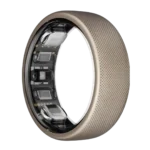
Amazfit Helio Ring Feature Scores
Explore all 51 feature scores for Amazfit Helio Ring, organized into pros and cons.
Scores by Feature
Summary
51 reviewed features-
Very positive 4.5-5.04 (8%)
-
Positive 3.5-4.425 (49%)
-
Neutral 2.5-3.415 (29%)
-
Negative 1.5-2.47 (14%)
Pros
Sort
-
Comfort was a major strength, with many reviewers finding the ring lightweight, unobtrusive, comfortable for sleep, and easy to forget during daily wear.
-
Water resistance was a strong point, with reviewers repeatedly using the ring for showers, swimming, washing up, or general water exposure without issues.
-
Design and appearance were widely praised for the titanium look, subtle pattern, minimalist style, and wearable jewelry-like profile.
-
Weight was widely praised; reviewers repeatedly described the ring as light, low-profile, or easy to wear overnight.
-
Durability was mostly positive for scratches and everyday wear, though several reviewers still warned about surface marks or removing it for rough activities.
-
Build quality was broadly strong, with titanium construction and well-made hardware praised across multiple reviews.
-
Sleep tracking was usually considered a strength for duration, scores, naps, and overnight insights, though a few reviewers found overestimation or weaker detail.
-
Resting heart-rate and HRV tracking were consistently praised or found close to comparison devices, making this one of the more reliable health metrics.
-
Subscription value was generally favorable after free or non-required services, but some reviewers disliked upsells or earlier premium feature confusion.
-
Data syncing ranged from seamless multi-device aggregation to unpredictable Apple Health, Garmin, Strava, or Bluetooth-related failures.
-
Sleep apnea monitoring was viewed as a useful or interesting sleep-breathing feature, though several mentions framed it as beta or risk insight rather than diagnosis.
-
Recovery insights were often useful for sleep-and-recovery focused users, but some reviewers criticized weak sensitivity or confusing recovery/readiness signals.
-
Step counting was often close to watches or competing rings, though one reviewer reported inaccurate step tracking and another treated it as only approximate.
-
Value for money was mixed but often positive at discounted prices or in bundles; negative reviews argued the feature set and reliability did not justify the price.
-
Companion app quality was one of the most divided areas, with praise for clean layouts and easy navigation but criticism of clutter, upsells, confusion, and lack of polish.
-
Charging speed was generally acceptable, with reviewers describing roughly 1.4 hours to under two hours as relatively quick or reasonable.
-
Pairing and connection reliability had limited positive evidence from reviewers who found connection or syncing solid once set up.
-
Health trend insights were useful when presented clearly and actionably, but some reviewers wanted deeper guidance or found AI insights too basic.
-
Blood oxygen tracking was viewed as broadly in line with expectations or comparable devices where reviewers discussed it with sentiment.
-
The app user interface was generally considered easy to navigate or clean, though one reviewer noted its design borrowed heavily from another app.
-
Readiness scores were helpful for some reviewers but inconsistent for others, especially when compared with Garmin, Oura, Samsung, or Whoop-style readiness metrics.
-
Third-party app compatibility was useful when syncing worked, but one review reported unpredictable integrations across Apple Health, Garmin, and Strava.
-
Distance tracking received a single positive accuracy assessment during walking and biking tests against established fitness trackers.
-
Menstrual cycle tracking was treated as a useful inclusion, though one review noted limited sharing with popular women’s health apps.
-
Breathing exercises had limited but positive-to-mixed evidence, with one reviewer liking free guided breathing and another saying it helped them unwind.
-
Customization options had limited positive evidence from the app layout being customizable to the reviewer's preferences.
-
Google Fit compatibility had limited but positive evidence through easy syncing with popular third-party fitness apps.
-
Strava compatibility was mixed, with one reviewer reporting failed registration and others noting useful linking or export to Strava-like platforms.
-
The ring locating feature had limited evidence and was judged as potentially useful but not proven, essentially better than having no locator.
Cons
Sort
-
Automatic workout detection was consistently criticized or absent, with reviewers repeatedly noting that workouts must be started manually.
-
Size options were a major weakness, with reviewers repeatedly calling the limited size range restrictive or excluding smaller and larger hands.
-
Workout mode variety was a repeated weakness because the ring supports only a handful of modes and often pushes users toward an Amazfit watch for broader tracking.
-
Charging convenience was mostly criticized because the puck or dock required precise alignment, lacked a case-style approach, or was easy to disturb.
-
Battery life was the most repeated concern, commonly landing around two to four days and often falling short of competitors or reviewer expectations.
-
Fitness coaching was not valued highly; reviewers questioned what the paid coaching added or found the advice trivial.
-
Sleep-stage tracking was less trusted than overall sleep tracking, with several reviewers warning that stages were overestimated, unreliable, or hard to trust.
-
Activity reminders were weakly supported because one reviewer noted the ring would not prompt users to stand up.
-
Connected GPS reliability was limited by phone dependence and connection issues, including one review that lost ring connection during a ride.
-
App alerts were inconsistent: emotional and battery alerts could be useful, but multiple reviewers complained about missing or inadequate notifications.
-
Overall reliability was mixed to weak, with good performance in some tests but repeated concerns about beta feel, faulty units, app dependence, and inconsistent operation.
-
Workout tracking accuracy was mixed to weak overall, with good results in some running or supported-workout tests but significant gaps, dropouts, and limited exercise support.
-
GPS accuracy had one mixed assessment, where the phone-based GPS was considered usable but not great.
-
Bluetooth reliability was mixed: one reviewer praised reliable connection, but others reported disconnections or poor phone-to-ring connectivity.
-
Calorie tracking drew qualified feedback, with one reviewer seeing higher calorie burn than Apple Watch and another finding passive calorie estimates modest unless workouts were recorded.
-
Pace tracking received a single mixed note, with pace reported slightly faster than the Apple Watch.
-
Route tracking was useful only when the phone was present, and one reviewer explicitly complained that forgetting the phone means no map.
-
Apple Health compatibility was mixed because one reviewer saw Apple Health integration fail to register activity while another praised easy syncing with popular apps.
-
Heart-rate accuracy split sharply by use case: resting or running data could be strong, but several reviewers found intensive workouts, cycling, or spikes unreliable.
-
Fit depended heavily on finger size: reviewers with a good size liked the fit, but others struggled with looseness, tightness, orientation, or lack of sizing kit.
-
Stress tracking was divisive: some reviewers found emotional-response detection accurate or useful, while others found it confusing, unhelpful, or poorly aligned.
-
General activity tracking was mixed: some reviewers found useful or accurate daily health data, while others said daytime activity tracking was basic, incomplete, or not a standalone fitness-tracker replacement.