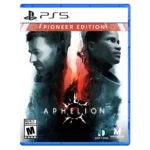
Aphelion Feature Scores
Explore all 65 feature scores for Aphelion, organized into pros and cons.
Scores by Feature
Summary
65 reviewed features-
Very positive 4.5-5.07 (11%)
-
Positive 3.5-4.416 (25%)
-
Neutral 2.5-3.416 (25%)
-
Negative 1.5-2.425 (38%)
-
Very negative below 1.51 (2%)
Pros
Sort
-
Persephone is the clearest success: icy vistas, lighting, character models, and cinematic composition look superb across nearly every account.
-
The orchestral and synth-inflected score is a standout, balancing melancholy, isolation, and bursts of cinematic urgency.
-
The lonely ice planet, harsh weather, and ominous soundscape create a persuasive sci-fi mood, even when the mechanics weaken the tension.
-
Cracking ice, wind, breathing, distant impacts, and Nemesis cues make Persephone feel tangible and often heighten danger better than the gameplay does.
-
The two leads receive broad praise for grounded, emotional performances, with only a few critics finding the delivery stiff or uneven.
-
Snow, ice deformation, lighting, reflections, weather, and distant terrain give Persephone an unusually rich sense of scale and texture.
-
Grounded science, ESA details, abandoned facilities, and Persephone’s mysteries create a believable setting, even when some lore feels underdeveloped.
-
Persephone’s ice, rock, alien light, and cinematic framing give the game a distinctive and consistently striking visual identity.
-
Close-up facial work is frequently praised for subtle emotion and lifelike detail, though one critic found the expressions uncanny.
-
Ariane and Thomas are often likable, grounded, and well performed, but a sizable group found them bland or difficult to connect with.
-
The intimate survival romance is the main reason to continue for many players, though others found it safe, hollow, overexplained, or short on payoff.
-
Nemesis has a memorable sound-driven concept and unsettling presentation, but its behavior and limited personality do not always sustain the initial fear.
-
The minimal or absent HUD helps the frozen world feel immediate and cinematic without obscuring the action.
-
Adjustable ledge catches, balance assistance, oxygen settings, and visual guidance make the adventure easier to tailor to different needs.
-
The relationship and scientific mystery can be thoughtful and sincere, but heavy exposition, repetition, and thin characterization divide opinion.
-
The crash sequence introduces movement and stakes quickly, creating an energetic opening that teaches the basics without a long delay.
-
Electromagnetic waves, glowing glyphs, ice fractures, and atmospheric lighting add welcome color and spectacle to the frozen setting.
-
Persephone’s earlier expedition, electromagnetic mysteries, and collectibles are intriguing, though several critics wished the world and backstory went deeper.
-
Wide scenic shots showcase Persephone beautifully, but occasional locked angles, close-ups, and awkward framing can interfere with movement.
-
PS5 haptics add physical tension during stealth, giving the controller feedback a meaningful role in the atmosphere.
-
Ariane’s chapters mix climbing, scanning, storms, sliding, chases, and hazards more effectively than the game’s simple core suggests.
-
One console playthrough was completely stable, while a preview build suffered a crash, leaving platform and build quality somewhat inconsistent.
-
Performance can remain steady, but the PS5 version’s 30 fps cap and lack of a higher-frame-rate mode disappointed some players.
Cons
Sort
-
Walking, climbing, scanning, and sneaking are stretched thin; even supportive critics say the loop rarely develops enough to match the story.
-
Most puzzles amount to simple scanning, passcodes, or ordered interactions and rarely demand much thought.
-
Nemesis can feel unpredictable in the wrong ways: detection sometimes seems inconsistent, while other encounters become too easy once its patrol logic is understood.
-
Ledge grabs, grapple transitions, and jumps can fail despite seemingly correct input, making traversal deaths feel arbitrary rather than skill-based.
-
Inputs often feel sluggish or unreliable, especially when grabbing ledges, aiming the grapple, descending, or escaping late-game hazards.
-
Repeated deaths, oxygen refills, long climbs, and recycled stealth encounters can make this short adventure feel more laborious than it should.
-
Routes are highly linear and often padded with obvious ledges, narrow corridors, and invisible walls, leaving little room for discovery or improvisation.
-
The dual-character structure has good ideas, yet the mechanics are widely seen as shallow, conventional, or unable to carry the full adventure.
-
Sound-based stealth begins with promise but becomes overused, simplistic, inconsistent, or unfair as the game leans on it more heavily.
-
Glitches are a recurring concern, including clipping, invisible barriers, missed prompts, stuck animations, and inconsistent late-game behavior.
-
Ariane and Thomas are easy to understand, but many critics wanted more history, nuance, and growth to make their relationship fully convincing.
-
Beautiful presentation cannot hide unfinished-feeling traversal, clipping, prompt failures, and late-game jank in several versions.
-
Challenge is uneven: many sections are mechanically easy, while imprecise jumps, instant failures, and late spikes create frustration rather than fair difficulty.
-
The story and spectacle can be enjoyable, but repetitive climbing, tedious stealth, and control friction make the act of playing far less consistent.
-
Frequent autosaves can soften failure, yet distant or poorly placed checkpoints make repeated climbing and stealth deaths more aggravating.
-
The grounded ice-planet premise has appeal, but familiar sci-fi beats and well-worn Uncharted-style traversal keep the game from feeling truly new.
-
Objective tools can point the way, but unclear climbable surfaces and vague progression paths regularly leave players guessing.
-
The linear story, single ending, limited optional content, and low mechanical depth make this largely a one-and-done experience.
-
The mechanics and routes change very little, so forward progress often feels like more of the same rather than meaningful development.
-
Nemesis is essentially the only hostile creature, so threats can feel repetitive despite environmental hazards around it.
-
Repeated grab prompts quickly become busywork, and several critics say they interrupt climbing rather than adding meaningful danger.
-
The PS5 version misses obvious DualSense and PS5 Pro opportunities, with limited use of adaptive triggers, speakers, gyroscope, or enhanced modes.
-
Climbing and grappling sometimes deliver cinematic momentum, but sluggish responses, awkward aiming, and repetitive ledge work are widespread complaints.
-
Some conversations and monologues sell the central bond, but constant self-talk and obvious exposition frequently undercut quiet or tense scenes.
-
The compact structure works when chapters alternate cleanly, but slow openings, repetitive midsections, and stealth-heavy finales frequently drag.
-
Delayed prompts and interactions can make the interface feel unresponsive, particularly when the game waits for dialogue or animations to finish.
-
Thomas’s leaking oxygen supply can create quiet pressure, yet frequent refill points and repeated backtracking often turn the resource mechanic into busywork.
-
Collectibles and environmental mysteries reward curiosity in places, but strict paths, invisible walls, and weak navigation limit genuine exploration.
-
Audio logs that only play inside menus discourage listening and interrupt the flow of exploration.
-
Hidden loading passages and squeeze-through gaps were noticeable enough to make the design feel dated to one critic.
-
Late stealth-heavy sections are frequently described as drawn out and poorly structured, weakening the story’s momentum.
-
Experiences range from stable console play to stutter, pop-in, hitching, and technical roughness, especially in previews and later chapters.
-
The absence of combat keeps attention on survival and the relationship, though players seeking action may find the experience too passive.
-
Early Nemesis encounters and environmental audio can be genuinely unnerving, but predictable or inconsistent detection causes the fear to fade.
-
Alternating protagonists and occasional storms, chases, puzzles, and stealth add variety, but climbing and slow traversal still dominate the runtime.
-
The intimate sci-fi framing feels fresh to some, but the underlying climbing and stealth borrow heavily from familiar action-adventure formulas.
-
Autosaving is generally dependable, but some reload points still force players to repeat frustrating sections.
-
Narrative-focused sci-fi fans may find the journey worthwhile, but weak mechanics and limited replayability make full-price recommendations cautious or divided.
-
Electromagnetic tools can reshape paths and make the planet feel responsive, but much of the scenery remains decorative and tightly scripted.
-
Visual scale, minimal interface, grounded science, and detailed audio pull players in, while glitches, artificial rules, and clunky interaction can break the spell.
-
Cutscenes and facial work are often impressive, but traversal animations can clip, hover, stiffen, or break during jumps.
-
The separated lovers’ struggle moved many critics, although others found the limited backstory and repetitive longing too thin for the intended payoff.