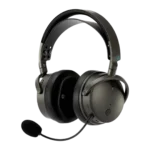
Audeze Maxwell Feature Scores
Explore all 62 feature scores for Audeze Maxwell, organized into pros and cons.
Scores by Feature
Summary
62 reviewed features-
Very positive 4.5-5.023 (37%)
-
Positive 3.5-4.421 (34%)
-
Neutral 2.5-3.410 (16%)
-
Negative 1.5-2.46 (10%)
-
Very negative below 1.52 (3%)
Pros
Sort
-
Reviewers consistently frame sound quality as the Maxwell's core strength, often calling it best-in-class or audiophile-grade for a wireless gaming headset.
-
Battery life receives near-universal praise, with reviewers repeatedly describing the 80-hour class endurance as impressive or exceptional.
-
Bass is usually praised as punchy, detailed, and controlled, though a few reviewers note it is not a boomy basshead tuning without EQ.
-
Microphone noise reduction is one of the most praised non-audio features, repeatedly removing keyboard, fan, vacuum, and ambient noise effectively.
-
Value for money is strongly positive overall: many reviewers call the price justified despite acknowledging the upfront cost.
-
Instrument separation and detail retrieval are repeatedly praised, with reviewers noting clear layering in music, games, and busy mixes.
-
Build quality is mostly praised as sturdy, premium, or tank-like, but early-unit failures and cosmetic wear create some caution.
-
Earpad replacement is praised as easy, with several reviewers noting twist-off or easily removable pads.
-
Charging is praised because short top-ups provide many hours or a full day of additional use.
-
Connectivity versatility is a major strength because reviewers value Bluetooth, dongle, USB-C, analog, and broad platform support, despite switching caveats.
-
Positional audio is often excellent for gaming, but competitive-focused reviewers note weaker verticality or pinpoint footstep accuracy than some rivals.
-
Microphone performance is mixed: the boom mic can be clear or strong, but some reviewers call it muffled, merely serviceable, or not creator-grade.
-
Stability is mostly strong for wireless range or physical fit, though Bluetooth distance artifacts appear in one review.
-
Game/chat balance control is repeatedly praised for quickly adjusting game and voice levels without heavy software dependence.
-
Midrange clarity is mostly described as clear, natural, or accurate, with occasional criticism that gaming tuning can make vocals sound thin or recessed.
-
EQ customization is valued because the headset responds well to EQ, though reviewers criticize clunky interfaces and occasional access limitations.
-
Spatial audio is usually a useful immersion bonus, especially on PS5 Tempest or Dolby, but some reviewers avoid it for competitive play.
-
Maximum-volume clarity is praised because highs remain clean and the headset avoids harshness or distortion when turned up.
-
Treble is generally controlled and clear, but some reviewers hear too much brightness or less openness depending on EQ and use case.
-
Design and aesthetics are mostly praised as understated, premium, sleek, and non-gamer-looking, though one reviewer finds it clunky.
-
Long-session comfort is mostly positive despite heat and weight caveats; many reviewers could wear it for hours after adjusting.
-
Earpad padding is often plush and comfortable, but repeated caveats mention heat, sweat, thinness, or firmness.
-
Wireless latency is generally low enough for gaming, though reviewers occasionally report small lag or system-specific issues.
-
Physical controls are often appreciated, but reviewers also mention a learning curve, confusing multifunction wheels, or poor placement.
-
Passive isolation is mostly praised thanks to the closed cups and pads, though one reviewer found outside sound cut through more than expected.
-
Soundstage earns strong praise from several gaming-focused reviews, while audiophile and competitive reviewers describe it as merely adequate or narrower than some rivals.
-
Codec support is well regarded because reviewers value LDAC, LE Audio, LC3/LC3plus, and other higher-quality or future-facing options.
-
Clamping force is generally viewed positively because it seals without feeling overly tight in most reports.
-
Frequency response evidence is highly positive, with reviewers highlighting target matching, linearity, and controlled tuning.
-
Volume output is considered ample, with reviewers describing the headset as plenty loud or unusually powerful.
-
Xbox compatibility favors the Xbox version for broader platform support and Dolby Atmos, but PlayStation support may carry risk or limitations.
-
Audio-video sync evidence is positive where tested, with no noticeable lags or delays during games and movies.
-
LDAC receives positive evidence, with one reviewer saying audio quality remained exceptional in LDAC testing.
-
Multi-platform compatibility is a strength where discussed, with reviewers emphasizing broad support across common gaming and media devices.
-
Packaging quality has limited but positive evidence, with one reviewer calling the packaging luxurious.
-
Replaceable earpads receive positive evidence because reviewers describe the pads as easy to remove, replace, or swap.
-
Transparency-style passthrough is strongly praised in one review for realism and lack of harshness.
-
Built-in DAC and hi-res playback evidence is positive but limited, centered on high-bitrate decoding without external gear.
-
The detachable microphone is valued because it makes the headset easier to use as headphones for music or travel.
-
Ear cup swivel evidence is positive, with one reviewer noting the cups rested comfortably around the neck.
-
Included accessories are praised for quality and usefulness, especially the included adapter and cables.
-
Preset EQ profiles are context-dependent: some gaming presets help, while music performance can suffer and some profiles sound poor.
-
The wired option is valued as a useful fallback or flexibility feature, even though the headset still needs power.
-
Fit and seal reliability are praised where discussed, especially for maintaining passive isolation.
Cons
Sort
-
Sidetone is the most consistently criticized feature, with noise, feedback, static, and bugs outweighing one positive report about loud monitoring.
-
Active noise cancellation is absent, and reviewers who care about ANC treat that omission as a real limitation.
-
Integrated microphone evidence is mostly negative, with several reviewers calling the built-in mics bad, compressed, or inferior to the boom mic.
-
Multipoint and wireless source handling are mixed: Bluetooth multipoint can help, but lack of simultaneous Bluetooth plus dongle playback frustrates several reviewers.
-
Carry case quality is effectively poor because one reviewer explicitly criticized the absence of any case or bag.
-
Hinge durability evidence is negative due to a reported early unit breaking during normal use.
-
Headband adjustability is one of the clearest weaknesses, with reviewers criticizing the limited notches, awkward strap, and imperfect fit granularity.
-
The app/software experience is mixed-to-negative overall, ranging from stable but basic to buggy, clunky, incomplete, or unreliable.
-
Bluetooth performance has limited scored evidence here, with one reviewer reporting annoying stutter at distance.
-
Smudge resistance is weak in the one scored review, which says the cups show oil after handling.
-
Console compatibility has real caveats around buying the correct version and uncertain cross-platform wireless behavior.
-
Cable quality has limited scored evidence; one reviewer calls the included USB-C cable very basic.
-
Portability is limited by the large, heavy cups, even when they fold flat.
-
The footsteps-focused feature is useful but not universally ideal; one reviewer preferred more custom EQ control for competitive FPS use.
-
Call and chat microphone evidence is adequate rather than studio-grade, with the boom mic considered good enough for work calls or gaming.
-
Dongle impressions are mixed, with praise for range or form factor offset by artifacting, connection failures, or USB-controller sensitivity.
-
Setup simplicity is mostly positive for plug-and-play use and firmware guidance, though some reviewers criticize broader UX/app friction.
-
Weight comfort is the main ergonomic tradeoff: reviewers call it heavy, but many say the distribution keeps it usable for long sessions.