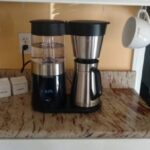
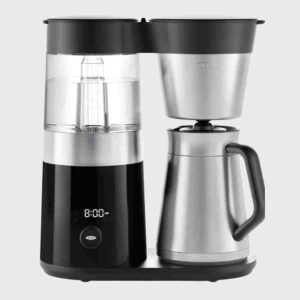
Review: OXO Brew 9 Cup Coffee Maker
Updated: 1 month ago
4.2
Based on methodology below
140
Insights analyzed
21
Grouped by key features
11
From expert reviews
Scores below reflect consolidated expert coverage across these features.
Bottom Line
Choose the OXO Brew 9-Cup for fast, consistent drip coffee with a reliable auto-brew timer and heat-holding thermal carafe; Skip it if you need a compact brewer or want easy, dishwasher-friendly cleaning.
Best for
Busy households that want SCA-grade drip results with set-it-and-forget-it scheduling, plus a thermal carafe that stays hot for hours. Best when you regularly brew mid-to-full pots and value convenience over tinkering.
Not for
Small kitchens with tight counter space or low overhead cabinets, and anyone who hates hand-washing narrow carafes and small parts. Also not ideal if you prioritize best-in-class small-batch or single-cup performance, or want an audible done beep.
Verdict
OXO Brew 9-Cup is a Gold Cup-style drip brewer that repeatedly earns high marks for flavor, temperature control, and repeatable results, while adding real daily convenience with auto-brew scheduling, bloom-style pre-infusion, pause-and-pour, and clear status indicators. The thermal carafe keeps coffee hot for hours without a hot plate scorching it. The tradeoff is usability and upkeep: the footprint can feel big, programming is not instantly obvious, there is no finished-brew beep, and the narrow carafe opening and lid or mixing tube can be annoying to clean. Small batches improve via the 2-4 cup mode but still trail the best single-serve-focused brewers.
Pros
-
4.7based on 8 reviewsRecognition and certifications: 4.7, based on 8 reviewsSCA or Gold Cup-style certification is repeatedly cited as a key credibility signal, alongside mention of meeting standard safety expectations. Reviewers often treat certification as a shorthand for proper temperature and brew-time behavior.
-
4.5based on 10 reviewsPot function: 4.5, based on 10 reviewsIt avoids a hot plate and instead relies on a thermal carafe to keep coffee hot for hours, reducing risk of scorched flavors. A freshness timer is commonly used as the cue for how recently coffee was brewed.
-
4.5based on 11 reviewsAutomation and sensors: 4.5, based on 11 reviewsA standout strength: auto-brew scheduling, automatic bloom or pre-infusion behavior, batch-size logic (2-4 vs 5-9), pause-and-pour with carafe detection, no-water warnings, freshness timer, and descale reminders are repeatedly praised.
-
4.4based on 1 reviewCable management convenience: 4.4, based on 1 reviewCable routing options help placement in different layouts, though at least one owner notes the cord can feel short depending on outlet location.
-
4.4based on 5 reviewsBuild quality and durability: 4.4, based on 5 reviewsBuild quality is often described as premium and well-made, including long-term owner reports of solid performance years later. Some note cosmetic annoyances like fingerprints on stainless surfaces.
-
4.3based on 7 reviewsFilter: 4.3, based on 7 reviewsIt uses #4 cone paper filters and a cone basket. Some reviewers like the cone approach for smaller batches, while comparisons note flat-bed designs can be more consistently bold across batch sizes.
-
4.3based on 8 reviewsSpeed and time-to-cup: 4.3, based on 8 reviewsSpeed is commonly described as fast for a premium brewer: many tests land around 6 to 8 minutes for a full pot, while some real-world demos show closer to about 9 minutes at maximum volume.
-
4.3based on 10 reviewsBrewing performance and consistency: 4.3, based on 10 reviewsAcross sources, it produces consistently strong drip coffee with generally even saturation and good temperature management. A common nuance is that top-tier competitors may produce more complexity, and small batches can be less impressive than the best single-serve-focused designs.
-
4.3based on 2 reviewsHeating-element power: 4.3, based on 2 reviewsPower and heat performance are generally strong, with multiple measurements indicating hot water delivery in the proper brewing range, though some lab testing reports average brew temperatures that can run slightly below ideal depending on method and batch size.
-
4.3based on 6 reviewsCapacity: 4.3, based on 6 reviewsNominal 9-cup capacity is commonly framed as around 45 ounces of brewed coffee, which aligns more with about 4 to 5 large mugs. Reviews also highlight workable brewing from roughly 2 cups up through a full carafe.
-
4.2based on 11 reviewsOverall user experience: 4.2, based on 11 reviewsOnce dialed in, owners and testers frequently describe a low-effort, high-reward routine: prep the night before, wake to coffee, and rely on clear indicators. The biggest user-experience costs are cleaning, counter-space demands, and the initial learning curve for controls and ratio.
-
4.2based on 4 reviewsWarranty and Customer support: 4.2, based on 4 reviewsWarranty is commonly cited as two years. Some sources highlight a strong service reputation, including responsive help and replacement parts, though it is still shorter than the longest-warranty competitors.
-
4.1based on 9 reviewsCup, tray and carafe handling: 4.1, based on 9 reviewsThermal carafe heat retention and generally clean pouring are frequent positives. Common drawbacks include a narrow opening that complicates hand-cleaning and mixed experiences with the final pour or occasional splashing depending on technique and lid design.
-
4.1based on 5 reviewsAssembly and Setup: 4.1, based on 5 reviewsSetup is generally quick: wash removable parts, run a water-only cycle, set the clock, and brew. The main friction point is learning the dial-and-button interface for auto-brew programming the first time.
-
4.1based on 7 reviewsWater system, maintenance and descaling: 4.1, based on 7 reviewsMaintenance is usually considered manageable: removable parts are rinsed regularly, a descale reminder appears around every 90 cycles, and the cycle itself is largely guided. The most consistent complaint is that the thermal carafe often needs a bottle brush and careful lid cleaning.
-
3.9based on 5 reviewsAccessories: 3.9, based on 5 reviewsIncluded extras are modest but useful: reviewers commonly mention an included measuring scoop, some paper filters, and a manual, with few or no additional accessories.
-
3.8based on 1 reviewAccuracy of marketing claims: 3.8, based on 1 reviewMost claims around precision-style brewing, convenience features, and heat retention are supported by hands-on testing, but ultra-strong claims like perfect results for everyone depend heavily on dialing in ratio and taste preference.
-
3.8based on 1 reviewPopularity: 3.8, based on 1 reviewThe model is repeatedly featured as a top pick in major buying guides and review roundups, though comparisons sometimes note the 8-cup sibling enjoys broader popularity for consistency and better small-batch or single-cup behavior.
-
3.8based on 8 reviewsValue and Price: 3.8, based on 8 reviewsPricing is premium for drip, and several reviewers call it expensive. Most still justify the cost when buyers value SCA-style performance plus programmability and a thermal carafe, but it is a tougher sell for budget shoppers or minimal-cleaning priorities.
-
3.7based on 11 reviewsDesign, ergonomics and footprint: 3.7, based on 11 reviewsAesthetics are widely praised as sleek and modern with a simple dial control, but usability is impacted by size: it can feel wide or tall and may require extra headroom to fill the reservoir in tight cabinet setups.
-
3.6based on 10 reviewsDesign flaws: 3.6, based on 10 reviewsRecurring pain points: larger or taller footprint, no end-of-brew beep, programming not instantly intuitive, and carafe-lid or mixing-tube drips. A few reports mention dribbling that may resolve with cleaning the stop valve area.
FAQ
Does it have an auto-brew timer?
Yes. Multiple reviews highlight programmable auto-brew or delay-brew scheduling, plus a clock-based interface to set a start time.
Does it use a hot plate to keep coffee warm?
No. It relies on a thermal carafe to retain heat for hours, avoiding the burnt flavors that can come from hot plates.
How fast does it brew a full pot?
Most testing-based reviews report roughly 6 to 8 minutes for a full carafe, though some user demos show closer to about 9 minutes for the maximum fill.
Is it good for smaller batches (2 to 4 cups)?
It has a dedicated 2-4 cup mode that slows and adjusts the cycle to improve extraction, but reviewers still note it can lag behind brewers designed to excel at single servings.
How often do you need to descale it?
Several sources mention a built-in reminder that appears around every 90 brew cycles, and the process is generally described as straightforward once prompted.
Reviews we analyzed
Video Reviews
Article Reviews
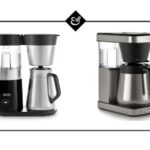
Homesandgardens
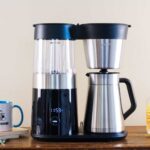
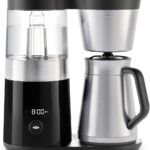
Tech Gear Lab
Best Coffee Machines
#1
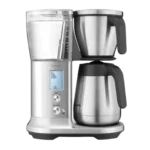
4.4
Choose it if you want a large, highly customizable batch brewer that can make excellent coffee consistently. Skip it if you mostly brew...
Pros: Popularity, Recognition and certifications, App, connectivity and smart control, Heating-element power, Build quality and durability, Brewing performance and consistency, Capacity
Cons: Design flaws, Warranty and Customer support
#2
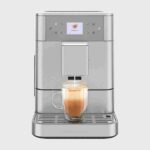
4.4
Choose the KF6 if you want excellent espresso and notably quiet operation from a super-automatic. Skip it if you want dense cappuccino foam...
Pros: Recognition and certifications, Grinder, hopper and dosing system, Water system, maintenance and descaling, Assembly and Setup, Automation and sensors, Build quality and durability,...
Cons: Accuracy of marketing claims
#3
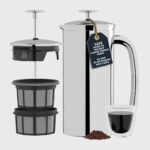
4.3
Choose the Espro P7 for a premium, insulated French press that noticeably cuts grit; Skip if you want a bargain brewer or expect...
Pros: Recognition & certifications, Popularity, Build quality & durability, Cup, tray & carafe handling, Filter, Brewing performance & consistency, Overall user experience
Cons: None
#4
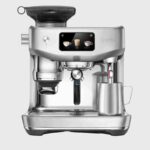
4.3
Choose the Oracle Jet if you want fast, guided espresso that feels almost hands-off. Skip if you need true brew-and-steam-at-once dual-boiler performance or...
Pros: Speed & time-to-cup, Heating-element power, Automation & sensors, Assembly & Setup, Espresso & beverage quality, Guided tamper convenience, Overall user experience
Cons: Value & Price