Review: Breville Bambino Plus Espresso Machine
Updated: 2 months ago
4.1
Based on methodology below
282
Insights analyzed
21
Grouped by key features
17
From expert reviews
Scores below reflect consolidated expert coverage across these features.
Bottom Line
Choose the Bambino Plus for lightning-fast heat-up and hands-off milk frothing in a tiny footprint; Skip it if you need an integrated grinder or a bigger, sturdier machine for heavier daily use.
Best for
Small-space beginners (and busy households) who want fast, repeatable espresso and lots of milk drinks, especially if we already own a good grinder or plan to buy one.
Not for
Anyone who wants an all-in-one espresso station with a built-in grinder, heavier commercial-style build, or deeper manual control and expandability.
Verdict
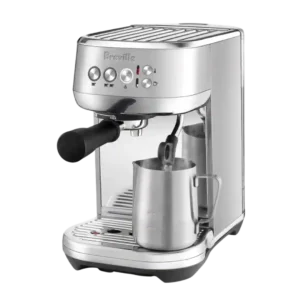
Breville's Bambino Plus is one of the quickest ways into real espresso at home: the ThermoJet system heats in seconds, the PID and 9-bar setup deliver repeatable extractions once dialed, and the automatic steam wand makes reliable microfoam with minimal practice. It shines in small kitchens and for milk-drink routines. The tradeoff is that it's a lightweight, compact platform with a tiny drip tray and no built-in grinder, so the total investment rises when we add a capable grinder and upgrades. For beginners who want speed and consistent lattes without a bulky machine, it's a standout.
Pros
-
4.8based on 15 reviewsDesign, ergonomics and footprint: 4.8, based on 15 reviewsA tiny footprint is one of the most consistent themes, with reviewers highlighting how narrow and counter-friendly it is. Ergonomics are generally simple, though some mention quirks like control behavior or a small working area around the tray.
-
4.8based on 15 reviewsSpeed and time-to-cup: 4.8, based on 15 reviewsSpeed is a headline strength: multiple reviews call out near-instant warmup (often described as about 3 seconds) and quick recovery between brewing and steaming. That makes it well-suited to fast morning workflows.
-
4.7based on 13 reviewsHeating-element power: 4.7, based on 13 reviewsThe ThermoJet heating system is repeatedly praised for fast readiness and quick transitions between brewing and steaming. Reviewers generally find it delivers plenty of steam capability for milk drinks given the machine's size.
-
4.5based on 16 reviewsAutomation and sensors: 4.5, based on 16 reviewsAutomation is a major reason people like it: programmable shot buttons, automatic milk steaming, temperature sensing, and auto purging simplify routine drinks. The automation reduces skill demands, with only occasional gripes about how the controls are implemented.
-
4.5based on 4 reviewsAssembly and Setup: 4.5, based on 4 reviewsSetup is typically described as beginner-friendly and quick, with minimal assembly and clear first-use steps. The learning curve shows up more in dialing espresso and interpreting button behaviors than in initial installation.
-
4.5based on 16 reviewsMilk, steam and frothing: 4.5, based on 16 reviewsAutomatic milk steaming is a standout feature, with adjustable temperature and foam texture delivering reliable microfoam with little practice. A few reviews note foam can run too thick or that residual milk water can end up in the tray, but overall frothing performance is praised.
-
4.4based on 16 reviewsOverall user experience: 4.4, based on 16 reviewsOverall experience is described as approachable and fast, with automatic steaming doing a lot of the heavy lifting for milk drinks. The main friction points are the drip tray upkeep and the need to source a grinder and, sometimes, preferred baskets.
-
4.3based on 14 reviewsCapacity: 4.3, based on 14 reviewsThe water tank capacity is commonly described as generous for the footprint (often around 1.9 L or about 64 oz). That supports multiple drinks before refills, which is especially helpful for milk-drink routines.
-
4.3based on 6 reviewsMess-free used-puck disposal: 4.3, based on 6 reviewsWhen discussed, the three-way solenoid is credited with drier pucks and less mess after shots, improving cleanup compared with machines that leave soupy pucks.
-
4.2based on 16 reviewsEspresso and beverage quality: 4.2, based on 16 reviewsReviews say it can produce cafe-style espresso once we dial in grind and dose, with better results when paired with a capable grinder. Expectations stay realistic: it is not a prosumer platform, but it regularly delivers satisfying shots for the price and size.
-
4.2based on 15 reviewsBrewing performance and consistency: 4.2, based on 15 reviewsThe PID-driven brew temperature, low-pressure pre-infusion, and 9-bar style setup help make extractions repeatable after dialing in. Consistency is strong for a compact machine, but there is limited fine-tuning compared with higher-end gear.
-
4.2based on 7 reviewsPump pressure consistency: 4.2, based on 7 reviewsSeveral reviews reference a 9-bar pump/OPV approach that supports even extractions and reduced channeling. There is no built-in pressure gauge, so feedback comes from shot behavior and taste rather than instrumentation.
-
4.2based on 12 reviewsBoiler type (single vs dual): 4.2, based on 12 reviewsIt is discussed as a single ThermoJet/thermoblock-style system rather than a dual-boiler machine. The benefit is speed; the tradeoff is fewer simultaneous capabilities and less thermal mass than higher-end dual-boiler platforms.
-
4.1based on 16 reviewsValue and Price: 4.1, based on 16 reviewsValue is usually framed as strong for what we get in speed and milk-drink convenience, especially around the sub-500 price tier. The tradeoff is that the total spend can rise after adding a grinder and optional basket or portafilter upgrades.
-
4.1based on 15 reviewsWater system, maintenance and descaling: 4.1, based on 15 reviewsMaintenance is generally straightforward thanks to auto steam-wand purging and simple cleaning routines, with tools like a cleaning pin and razor tool often mentioned. The main annoyance is the small drip tray that needs frequent emptying and periodic descaling.
-
4.1based on 11 reviewsAccessories: 4.1, based on 11 reviewsMany reviews mention a useful accessory set (portafilter, baskets, milk jug, tamper, and cleaning tools). Basket types can vary by market or reviewer preference, and upgrades (like a better basket) are sometimes recommended for enthusiasts.
-
3.9based on 14 reviewsFilter: 3.9, based on 14 reviewsReviews mention both pressurized and non-pressurized basket options, with pressurized baskets helping beginners and pre-ground use. Non-pressurized baskets are preferred for flavor once we have a good grinder, and some recommend upgrading the basket for performance.
-
3.8based on 16 reviewsBuild quality and durability: 3.8, based on 16 reviewsBuild impressions are mixed: the compact body feels lighter and more plastic-forward than heavier machines, yet long-term owners still report solid reliability over years. It is not tank-like, but it holds up well for home use when treated reasonably.
-
3.5based on 16 reviewsDesign flaws: 3.5, based on 16 reviewsCommon complaints include a very small drip tray, a lightweight feel, and a 54 mm ecosystem that may limit accessory choices compared with 58 mm setups. Some users mention minor workflow quirks such as foam preferences, tray mess, or control/power behavior.
Cons
-
3.4based on 14 reviewsCup, tray and carafe handling: 3.4, based on 14 reviewsThe drip tray is widely described as small and quick to fill, though features like a float indicator help. Cup handling is fine for typical mugs and small cups, but heavy use means more frequent emptying and wiping.
-
2.2based on 15 reviewsGrinder, hopper and dosing system: 2.2, based on 15 reviewsThe machine does not include a built-in grinder, and reviewers repeatedly emphasize pairing it with a decent grinder for best results. Pressurized baskets can work with pre-ground coffee, but they trade away some flavor and control.
FAQ
Does the Breville Bambino Plus have a built-in grinder?
No. Reviews consistently note we need a separate grinder for the best results, though pressurized baskets can work with pre-ground coffee in a pinch.
How fast does it heat up?
Multiple reviews describe near-instant warmup, often around 3 seconds, which keeps the brew-to-steam workflow very fast.
Is the milk frothing automatic or manual?
Both. The Bambino Plus is praised for automatic steaming with adjustable temperature and foam texture, and we can still steam manually if we prefer.
Are non-pressurized baskets included?
Many reviews mention both pressurized and non-pressurized baskets, but a few note basket availability can vary by region or package. Several reviewers recommend upgrading the basket if we want to push quality further.
What maintenance should we expect?
Routine cleanup is described as straightforward thanks to auto steam-wand purging and simple cleaning tools, but the drip tray is small and needs frequent emptying plus periodic descaling.
Reviews we analyzed
Video Reviews

Article Reviews
![Breville Bambino Plus Espresso Maker Review [Updated 2025]](https://servicedig.com/wp-content/uploads/2025/12/TOH-we-tried-social-breville-espresso-nicole-doster-JVedit-150x150.jpg "Breville Bambino Plus Espresso Maker Review [Updated 2025]")

Coffee Chronicler
Best Coffee Machines
#1
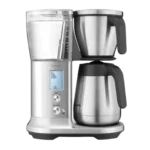
4.4
Choose it if you want a large, highly customizable batch brewer that can make excellent coffee consistently. Skip it if you mostly brew...
Pros: Popularity, Recognition and certifications, App, connectivity and smart control, Heating-element power, Build quality and durability, Brewing performance and consistency, Capacity
Cons: Design flaws, Warranty and Customer support
#2
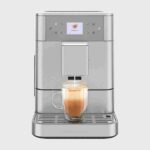
4.4
Choose the KF6 if you want excellent espresso and notably quiet operation from a super-automatic. Skip it if you want dense cappuccino foam...
Pros: Recognition and certifications, Grinder, hopper and dosing system, Water system, maintenance and descaling, Assembly and Setup, Automation and sensors, Build quality and durability,...
Cons: Accuracy of marketing claims
#3
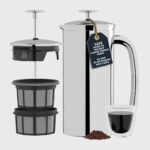
4.3
Choose the Espro P7 for a premium, insulated French press that noticeably cuts grit; Skip if you want a bargain brewer or expect...
Pros: Recognition & certifications, Popularity, Build quality & durability, Cup, tray & carafe handling, Filter, Brewing performance & consistency, Overall user experience
Cons: None
#4
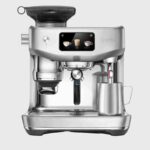
4.3
Choose the Oracle Jet if you want fast, guided espresso that feels almost hands-off. Skip if you need true brew-and-steam-at-once dual-boiler performance or...
Pros: Speed & time-to-cup, Heating-element power, Automation & sensors, Assembly & Setup, Espresso & beverage quality, Guided tamper convenience, Overall user experience
Cons: Value & Price