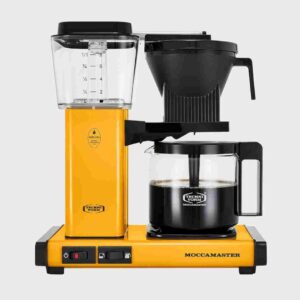
Technivorm Moccamaster KBT Coffee Brewer Review
Bottom Line
Choose the Moccamaster KBT if you want fast, nuanced drip coffee and a thermal carafe that stays hot for hours. Skip it if you need programmable scheduling or a budget-friendly brewer.
Coffee drinkers who buy decent beans and want reliably excellent, well-extracted drip coffee fast, plus a thermal carafe that keeps it hot for extended sipping.
Anyone who wants a wake-up-ready auto-brew timer, lots of automation, or a lower-cost machine that prioritizes features over peak brew nuance.
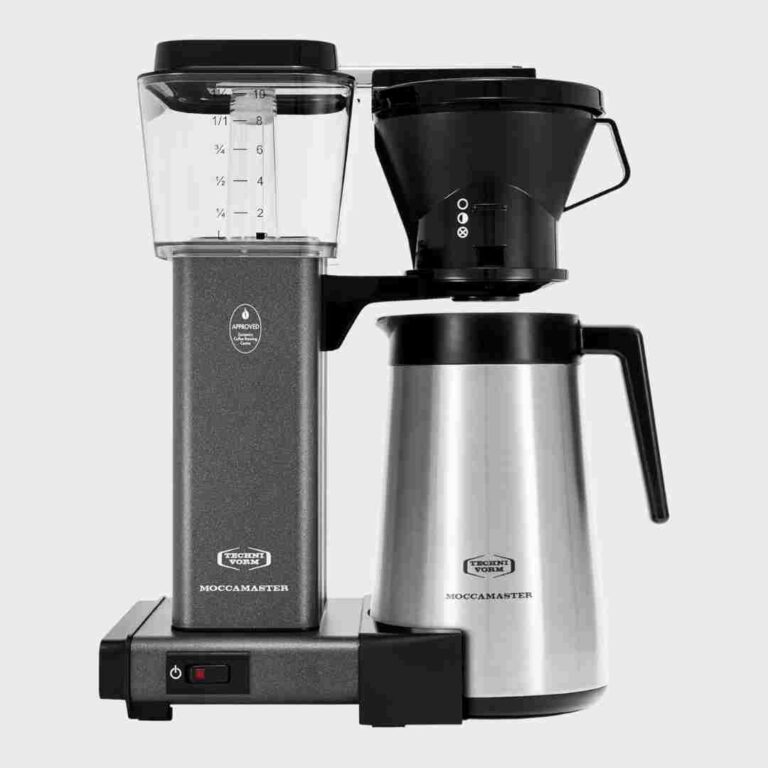
The Technivorm Moccamaster KBT is built for people who care most about brew quality: multiple test-focused reviews praise its balanced, nuanced cups and consistently hot, SCA-range brewing temperatures, delivered in a quick full-pot cycle. The thermal carafe is a standout for holding heat for hours without the flavor degradation of a hot plate. The tradeoff is convenience: there is no programmable timer or app control, and maintenance is more manual than many modern competitors (notably descaling tracking and hand-washing the carafe). If you value longevity, a long warranty, and excellent drip results over automation and price, this brewer earns its reputation.
Scored Features
Pros
-
4.6based on 3 reviewsWarranty and Customer support: 4.6, based on 3 reviewsSeveral reviews highlight a five-year warranty as a standout advantage relative to many competitors. Support reputation is generally positive in the context of longevity-focused purchasing.
-
4.6based on 9 reviewsBrewing performance and consistency: 4.6, based on 9 reviewsAcross reviews, brew quality is the headline: tasters describe balanced, nuanced, flavorful coffee with strong extraction fundamentals, often comparing results favorably to other premium drip machines and even pour-over style flavor. A few note the spray or brew head is not perfectly even, but the cup quality remains consistently praised.
-
4.6based on 7 reviewsPot function: 4.6, based on 7 reviewsThe thermal carafe is widely described as a major strength, keeping coffee hot for hours without the flavor damage associated with hot plates. Heat retention tests and anecdotes commonly support extended warmth during slow, multi-cup mornings.
-
4.6based on 7 reviewsHeating-element power: 4.6, based on 7 reviewsMultiple reviews call out the copper heating element or coil for quickly bringing water to target brewing temperatures and holding that heat through the cycle. Temperature performance is frequently cited as a core reason the coffee tastes well-extracted and clean.
-
4.6based on 4 reviewsBuild quality and durability: 4.6, based on 4 reviewsBuild quality is repeatedly framed as premium and long-lived, with references to hand assembly and a reputation for durability. Some critiques focus on smaller plastic components or bases that can feel less robust than the rest of the machine.
-
4.5based on 7 reviewsSpeed and time-to-cup: 4.5, based on 7 reviewsMost sources emphasize speed, typically placing a full-pot cycle under the 8-minute target with several reports in the 4 to 6 minute range. Fast brewing is repeatedly framed as a key advantage, especially given the lack of scheduling features.
-
4.5based on 5 reviewsRecognition and certifications: 4.5, based on 5 reviewsRecognition frequently centers on Specialty Coffee Association certification and repeated top-pick placements or awards from testing outlets. Certification and measured temperature performance are used as credibility markers for brew quality claims.
-
4.5based on 6 reviewsAccuracy of marketing claims: 4.5, based on 6 reviewsClaims around temperature, speed, and cup quality are broadly supported by third-party measurements and taste tests in the provided reviews, including SCA-range temperatures and sub-8-minute brew times. Heat retention expectations for the thermal carafe are also commonly corroborated by multi-hour holding results.
-
4.4based on 3 reviewsFilter: 4.4, based on 3 reviewsReviews note compatibility with standard #4 cone paper filters, and several mention the option to use a permanent gold-tone filter. This is generally treated as a convenience win because it avoids proprietary consumables.
-
4.4based on 2 reviewsPopularity: 4.4, based on 2 reviewsThe brewer is repeatedly framed as a well-known, widely recommended choice with a strong enthusiast following and long-standing brand reputation. Some sources explicitly reference devoted fans and broad recognition in specialty coffee circles.
-
4.3based on 4 reviewsAccessories: 4.3, based on 4 reviewsIncluded and discussed extras commonly include measuring spoons/scoops, multiple carafe lids (including brew-through styles), mixing or destratification components, and a manual drip-stop mechanism for bloom control. Some sources also mention availability of branded filters and cleaning/descaling products.
-
4.3based on 4 reviewsOverall user experience: 4.3, based on 4 reviewsOverall experience is usually described as simple, fast, and satisfying for daily coffee, especially for users who just want excellent drip results with minimal fuss. The main friction points are the premium price and the deliberate absence of convenience features like timers, reminders, or app control.
-
4.1based on 1 reviewAssembly and Setup: 4.1, based on 1 reviewSetup and daily use are usually described as straightforward: fill the tank, add a filter and grounds, position the carafe, and flip the switch. A small learning point is ensuring the carafe and lids are seated properly to avoid drips or interlock issues.
-
4.1based on 1 reviewEnvironmental packaging sustainability: 4.1, based on 1 reviewA few sources reference sustainability-leaning positioning, such as repairable, long-lived construction and responsibly sourced filter paper claims, alongside material safety notes like BPA/BPS-related messaging. Packaging-specific details are limited, but the long-life focus is repeatedly emphasized.
-
4.1based on 7 reviewsCup, tray and carafe handling: 4.1, based on 7 reviewsCarafe handling is generally praised for stability and pouring convenience in some accounts, including designs that pour at multiple angles and brew-through lids. However, repeated drawbacks include a narrow opening that needs a brush, occasional drips or messy pours in certain designs, and carafe seating requirements tied to safety interlocks.
-
4.0based on 5 reviewsCapacity: 4.0, based on 5 reviews
-
3.9based on 5 reviewsDesign, ergonomics and footprint: 3.9, based on 5 reviewsAesthetics are consistently described as stylish and premium, but the tall profile and counter footprint can be limiting under cabinets or in smaller kitchens. The overall layout may look imposing at first, yet operation is typically described as simple once familiar.
-
3.8based on 5 reviewsWater system, maintenance and descaling: 3.8, based on 5 reviewsMaintenance is described as manageable but manual: removable parts help, and some water tanks are easy to access for cleaning. Common caveats include hand-washing the thermal carafe, needing a bottle brush due to narrow openings, and tracking descaling intervals without consistent machine reminders.
-
3.6based on 7 reviewsValue and Price: 3.6, based on 7 reviewsPrice is consistently labeled high for a drip machine, often positioned as a premium or splurge purchase. The value case is typically justified by brew quality, durability, long warranty, and carafe heat retention, while skeptics focus on missing automation at this price point.
Cons
-
3.4based on 4 reviewsDesign flaws: 3.4, based on 4 reviewsRecurring critiques include the lack of programmability, tall fit under cabinets, and cleaning annoyances (narrow carafe openings, hand-wash requirements). Some reviewers also mention smaller build quirks like flimsy bases, drip risks if the manual basket is left closed too long, or occasional messy pouring behavior.
-
2.7based on 5 reviewsAutomation and sensors: 2.7, based on 5 reviewsAutomation is intentionally minimal: the core workflow is a basic on/off brew with optional manual control (drip-stop for bloom or slowing). Reviews regularly note the absence of programmable scheduling, limited alerts, and no consistent built-in descaling reminders, though some versions include safety interlocks and auto shutoff.
FAQ
Does the Moccamaster KBT have a programmable timer or auto-brew?
No. Multiple reviews note it is a simple on/off brewer with manual control options, not a programmable schedule-ahead machine.
How fast does it brew a full pot?
Testing-focused reviews commonly report a full pot in well under 8 minutes, with some measurements around the 4 to 6 minute range depending on method and reporting.
How well does the thermal carafe keep coffee hot?
Several sources report the thermal carafe holding drinkably hot temperatures for hours, including long heat-retention tests lasting roughly 4 to 6 hours.
Can you control bloom or slow the brew for smaller batches?
Yes. The brew basket includes a manual drip-stop style control that can be closed briefly to bloom the grounds or partially closed to slow flow for smaller volumes.
What maintenance should you expect?
Cleaning is mostly straightforward with removable parts, but the thermal carafe typically needs hand-washing and a brush, and descaling is periodic without a built-in reminder on many versions.