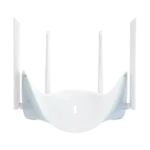
D-Link Aquila Pro AI R95 Feature Scores
Explore all 72 feature scores for D-Link Aquila Pro AI R95, organized into pros and cons.
Scores by Feature
Summary
72 reviewed features-
Very positive 4.5-5.068 (94%)
-
Positive 3.5-4.43 (4%)
-
Negative 1.5-2.41 (1%)
Pros
Sort
-
Wi-Fi 7 is the heart of the R95’s appeal, delivering high capacity, low latency, and strong performance for compatible devices.
-
Its 9.5Gbps-class capacity is repeatedly described as exceptionally fast, easily covering gaming, streaming, and demanding household traffic.
-
From creating suitable networks to changing channels and optimizing settings, the R95 handles much of the tuning automatically.
-
Low latency, ample speed, and stable multi-device operation make the R95 especially strong for online gaming.
-
Most coverage praises the 2.5Gb WAN connection, while one source describes a 10Gbps WAN port as ready for future ultra-fast fiber.
-
Connections remained consistent during testing, while MLO and heavy-use results showed a major improvement over older ISP equipment.
-
Gaming lag was nearly absent, ping times improved, and MLO was credited with keeping interactive traffic highly responsive.
-
Dozens of clients and mixed household workloads stayed stable, with reviewers reporting smooth service across screens, consoles, calls, and smart-home gear.
-
MLO is one of the clearest practical advantages: it lowers lag, strengthens reliability, and makes wireless gaming feel close to Ethernet.
-
Reviewers saw steady speeds, near-elimination of dropouts, and stable service even when the network extended across the home.
-
Homes full of streaming, gaming, calls, and smart devices ran smoothly without hiccups, making heavy simultaneous use a standout strength.
-
The 2.4GHz, 5GHz, and dedicated 6GHz arrangement earns praise for combining legacy-device support with high-end Wi-Fi 7 speed.
-
Across office tests and busy-home use, the R95 delivers fast, responsive wireless service that reviewers place among the product’s biggest strengths.
-
A 2.5Gb WAN port plus multiple 2.5Gb LAN ports gives the R95 a strong, current wired foundation.
-
The winged shape is consistently described as striking, sleek, and closer to modern art than a conventional router.
-
The router is built for device-heavy homes; reviewers praised its ability to handle demanding users, though that capacity can be excessive for a small flat.
-
Multiple 2.5Gb connections keep the wired side modern and suitable for fast broadband, gaming systems, and storage.
-
High-speed Ethernet ports are expected to provide lag-free, top-speed connections for gaming PCs, consoles, TVs, and NAS devices.
-
Smart lights, plugs, cameras, and other connected devices integrate smoothly and continue working during demanding household traffic.
-
Smart-home devices continued running smoothly under load, while dedicated IoT zones and Matter-related efficiency strengthen connected-home use.
-
Reviewers connect the 320MHz channels directly to the R95’s impressive bandwidth and real-world responsiveness.
-
Concurrent smart devices, streams, calls, and games remained smooth, while OFDMA and related technologies kept many-client performance stable.
-
The AI Wi-Fi Optimiser continuously looks for less crowded channels, keeping interference management out of the user’s hands.
-
The R95 automatically chooses cleaner channels and can shift frequencies quietly when neighboring Wi-Fi causes interference.
-
Ultra-wide channels are credited with turning the Wi-Fi 7 specification into performance users can actually notice.
-
Automatic interference detection and channel changes helped the R95 avoid neighboring-network congestion without requiring user intervention.
-
The 2.5Gb LAN ports are praised for delivering top-speed wired connections to demanding local devices.
-
The R95 reached a previously troublesome back office and pushed through two thick brick walls into a garden.
-
MLO and stable performance reduce interruptions and improve responsiveness during video calls.
-
Mesh claims and real-world range testing both point to broad coverage, including difficult rooms and outdoor space.
-
The app is well designed for onboarding and offers a useful collection of family, guest, and network-reporting tools.
-
The Aquila app earns consistent praise for making network creation and first-time configuration painless.
-
The installation flow is app-based and simple, with reviewers highlighting the speed and clarity of getting online.
-
WPA3, Enhanced Open, and dedicated IoT zones create a security package reviewers describe as reassuring and broadly protective.
-
QR-led onboarding and the Aquila app make initial setup quick and refreshingly straightforward.
-
WPA3 encryption is repeatedly highlighted as an important source of confidence for home-network security.
-
Guest-network options are considered useful for family homes and are easy to reach through the app.
-
Dedicated IoT zones give smart-home devices their own space and add a reassuring layer of separation.
-
Separating IoT equipment from the main network is viewed as an effective way to integrate smart devices more securely.
-
One reviewer reports a 10Gbps WAN port and presents it as future-ready for ultra-fast fiber service.
-
The combined 2.4GHz/5GHz network immediately reached the full 150Mbps available in the office test.
-
The legacy-device network, which includes 5GHz, delivered the full broadband rate both nearby and in the rear office.
-
The dedicated 6GHz network immediately reached 150Mbps and maintained full speed throughout testing.
-
The AI Traffic Optimiser directs bandwidth where it is needed most, reducing the need for manual tuning.
-
Beamforming is cited alongside OFDMA and MU-MIMO as a reason the network remains stable with dozens of devices.
-
Nearby devices reached the full 150Mbps available from the test connection in both download and speed tests.
-
The Smart Mesh setup is presented as capable of removing dead spots and maintaining a stable connection throughout the home.
-
Steam downloads reached the full available connection speed and stayed there consistently.
-
Three 2.5Gb LAN ports provide enough high-speed wired connections for devices such as a gaming PC and NAS.
-
The system can grow by linking additional AQUILA PRO AI routers into a broader mesh network.
-
The move to the R95 produced better ping behavior and almost completely eliminated the random dropouts previously affecting the household.
-
Even in a difficult rear office, the R95 reached full broadband speed after the previous router could not provide a reliable signal.
-
Adding compatible units is intended to create comprehensive coverage with no dead spots.
-
Smart Mesh is described as providing stable connectivity across the home rather than merely extending a weak signal.
-
Multiple AQUILA PRO AI routers can be connected easily, giving the system room to grow with a larger home.
-
MIMO-based operation helps the router stay stable with dozens of connected devices.
-
MU-MIMO is part of the technology mix credited with preserving performance in crowded, device-heavy networks.
-
Compatible AQUILA PRO AI units are described as easy to connect into a larger mesh.
-
OFDMA contributes to stable service when many clients are active at the same time.
-
The signal extended into the garden after crossing two thick brick walls, a route the ISP-provided router usually failed to cover.
-
Automatic QoS behavior intelligently prioritizes bandwidth for the traffic that needs it most.
-
The AI Traffic Optimiser receives strong praise for directing bandwidth to the most important activity automatically.
-
A test signal passed through two thick brick walls and still reached the garden, outperforming the reviewer’s standard ISP hub.
-
Family access features are useful in some households, but the limited filtering system keeps them from feeling fully developed.
-
Opinions split sharply: one reviewer found the controls basic and the filtering manual, while others called the family options useful or advanced.
-
AI-supported network reports add useful visibility through the Aquila Pro AI app.
-
Matter is presented as helping lights, plugs, and cameras communicate more efficiently while reducing strain on the wider network.
-
Continuous network analysis lets the router adjust settings proactively rather than waiting for the user to diagnose performance problems.
-
Owners of Wi-Fi 5 and Wi-Fi 6 devices can still use the secondary 2.4GHz/5GHz network without giving up strong performance.
-
Alongside its Wi-Fi 7 network, the R95 is praised for accommodating older computers and mobile devices on legacy bands.
-
The R95 offers high-end performance at a competitive or mid-range price for its class, but its premium capacity is hard to justify in a lightly connected small home.
Cons
-
The filtering tools are a weak point because unsuitable sites must be entered manually and there are no preset category filters.