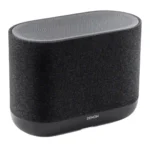
Denon Home 400 Feature Scores
Explore all 47 feature scores for Denon Home 400, organized into pros and cons.
Scores by Feature
Summary
47 reviewed features-
Very positive 4.5-5.018 (38%)
-
Positive 3.5-4.417 (36%)
-
Neutral 2.5-3.46 (13%)
-
Negative 1.5-2.44 (9%)
-
Very negative below 1.52 (4%)
Pros
Sort
-
Music performance is the Home 400’s core strength: it sounds smooth, articulate, immersive, spacious, and fun to listen to. It performs well across many genres, especially when sound quality matters more than smart-home tricks.
-
Vocal clarity is a consistent positive, with centered, natural, lifelike, or precisely placed voices. The speaker is especially good when vocals and speech need to stay intelligible.
-
The Home 400 plays big for its size, filling rooms and even large spaces with ease. It has enough volume for parties and everyday home listening.
-
Height and width are standout qualities, creating a bigger, taller, more spacious soundstage than the cabinet suggests. The effect is best when the controls are used with restraint.
-
Design is a clear positive: the Home 400 looks premium, elegant, refined, and easy to place in a living space. Its fabric finish and soft shape help it blend in without looking cheap.
-
Imaging and separation are repeated strengths, from center-locked vocals to instruments that are easy to locate. The stereo image can be surprisingly convincing from one speaker.
-
HEOS system building is a recurring strength, with support for multi-room groups, stereo pairs, and broader Denon/Marantz setups. Grouping and expansion come across as dependable and easy.
-
Setup is usually quick and easy through HEOS, with the speaker getting online in minutes. The setup flow is a highlight even where the broader app experience is criticized.
-
The spatial presentation is a major reason to buy the Home 400, especially with well-mixed Dolby Atmos Music. It can sound immersive and convincing, though track quality and extreme settings change the result.
-
Hi-res and format support are major strengths, including 24-bit/192kHz playback and USB or HEOS options. The main caveat is that some advanced Bluetooth codecs are missing or difficult to use in practice.
-
Detail is strong, from instrument layers and micro-details to clear timbres and frequency-range clarity. A few warmer tuning choices soften the top end, but detail remains a major selling point.
-
Wi-Fi and HEOS streaming reliability are generally strong, with comments about no hiccups, effective dropout avoidance, and solid built-in services. App usability can frustrate, but streaming stability itself is mostly praised.
-
Sound customization is one of the Home 400’s strongest practical features, with bass, treble, width, height, placement, Auto, and Pure options. The flexibility is useful, but extreme width or height settings can thin or muddle tracks.
-
Multi-speaker use was described positively, including seamless two-location playback and dependable grouping. HEOS appears strong for multi-room expansion when the app behavior itself cooperates.
-
The Home 400 generally sounds balanced, musical, and easy to enjoy, especially in Pure mode or at sensible listening levels. Some processing and bass behavior can disrupt that cohesion when pushed too far.
-
Build quality comes across as solid, premium, rugged, and reassuringly well made. The sturdy base and fabric-wrapped body help it feel more upscale than basic smart speakers.
-
Wired flexibility is a plus thanks to AUX and USB-C for local playback or adapters. The options are useful, though the lack of built-in Ethernet and HDMI limits some setups.
-
Home theater expansion is useful within Denon’s ecosystem, especially using Home 400 units as wireless surrounds with a compatible Denon soundbar. The flexibility is helpful, though HDMI limitations still matter.
-
Physical controls are practical and generally well received, with side buttons for playback, volume, presets, Bluetooth, and voice-related functions. They make the speaker easier to use without digging through HEOS for every action.
-
The Home 400 generally comes across as balanced, warm, clear, and smooth across the range. The main tonal caveat is bass control, which can feel a little too strong or lingering.
-
Bass is one of the Home 400’s more debated traits: it can sound strong and room-filling, but also less tight or weighty than some listeners may want. It suits everyday listening well, while bass-heads may want more authority.
-
The microphone hardware earns points because it includes a physical mute switch. A tangible shutoff is useful when voice features are not in use.
-
Value depends on what you prioritize: performance, design, and features are strong, but the Home 400 costs more than key rivals in some markets. It makes the most sense for buyers who will use its hi-res and spatial strengths.
-
The hard microphone mute is a privacy plus. The physical off control makes voice features easier to trust because it does not depend only on software.
-
Spotify Connect comes across as smooth in day-to-day use, with easy linking and practical playback. The praise is narrower than the broader HEOS discussion, but the comments are positive.
-
AirPlay 2 is a useful part of the streaming toolkit, especially for Apple Music users. It is convenient, though built-in streaming may sound more detailed.
-
The Home 400 has plenty of energy for normal listening and was described as dynamic, lively, and unstrained at sensible levels. Its limits appear with more aggressive material or when chasing very deep bass.
-
Bluetooth is useful and easy to access, with a dedicated button and broad connectivity. Sound quality over Bluetooth was described as warmer and less detailed than Wi-Fi or built-in streaming.
-
HEOS draws split reactions: setup and streaming can be smooth, but lag, confusing menus, freezes, or slow volume behavior can get in the way. The app works, but it is not universally loved.
-
Status indicators are useful and discreet, including a front LED for network feedback. Brightness control helps keep the indicator from distracting in a living space.
-
Speech reproduction was singled out as especially impressive, making the speaker appealing for radio, podcasts, and audiobooks. This praise does not turn it into a TV soundbar replacement, but voices are a strength.
-
The side controls are easy to understand and use. Physical access to volume, playback, quick selects, and voice control helps reduce dependence on the app.
-
The refreshed speaker keeps working with first-generation Denon Home models, which makes system expansion feel straightforward for existing HEOS owners.
-
High-volume behavior is mixed. The speaker can stay clear when played loudly, but pushed settings may make vocals recede or add raspy, brittle edges.
-
The status light can bother the look a little, but its brightness can be lowered or turned off. It is functional rather than decorative.
Cons
Sort
-
The Home 400 is not built as a portable speaker, and the lack of a built-in battery is a clear limitation. It is meant to stay plugged in at home.
-
Water resistance is not a strength: the Home 400 is described as not waterproof at all. It is better suited to dry indoor rooms than bathrooms or exposed porches.
-
Google Assistant support is a weak spot because Google and Alexa are not available natively. Buyers wanting Google-centered smart-speaker control should look elsewhere.
-
The missing remote is a recurring annoyance for anyone who likes simple hardware controls for volume or inputs. Denon expects buyers to use the app and side buttons instead.
-
Smart-assistant support is one of the clearest compromises. Siri can work through a HomePod setup, but native Alexa, Google, and first-party assistant features are missing.
-
The lack of HDMI means the Home 400 is not ideal as a TV audio upgrade. It is framed more as a music-first speaker than a soundbar substitute.
-
Bluetooth codec support disappoints if you want higher-end wireless formats. One test stayed stuck on SBC, and LDAC, aptX HD, aptX Adaptive, and Auracast are absent.
-
The Home 400 behaves more like a premium Wi-Fi music speaker than a full smart speaker. Buyers who care most about timers, voice commands, and smart-home control may find it limited.
-
The Home 400 has enough size and weight to feel substantial, but that hurts portability. It is a speaker you place and leave there, not one you carry around.
-
At lower volumes, the Home 400 can work well as a background speaker, but it may lose some energy when turned down. This is not its most thoroughly praised listening mode.
-
Siri handling can work fairly well when the required HomePod setup is available. That praise is narrow because voice control is not a headline feature here.
-
The Home 400 sits in a middle ground: compact enough for many living spaces, but still large and powerful enough that very small rooms may be better served by the Home 200. It is more living-room speaker than tiny shelf gadget.