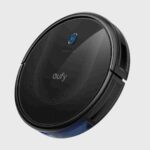
eufy 11S Max Robot Vacuum Feature Scores
Explore all 56 feature scores for eufy 11S Max Robot Vacuum, organized into pros and cons.
Scores by Feature
Summary
56 reviewed features-
Very positive 4.5-5.025 (45%)
-
Positive 3.5-4.412 (21%)
-
Neutral 2.5-3.49 (16%)
-
Negative 1.5-2.48 (14%)
-
Very negative below 1.52 (4%)
Pros
Sort
-
The exceptionally low profile is one of the product’s most consistent strengths. It reaches under furniture that many taller, sensor-equipped robots cannot access.
-
Under-furniture reach is exceptional. At under three inches tall, it consistently cleans beneath couches, cabinets, tables, and sideboards that taller mapping robots cannot access.
-
The vacuum is consistently described as unusually quiet. Its low, steady sound is easy to ignore and often quiet enough for conversation or television.
-
Setup is exceptionally simple: attach the side brushes, plug in the dock, add remote batteries, and charge. No account, Wi-Fi pairing, or map creation is required.
-
Suction is a clear strength for the price, with strong pickup on both hard floors and carpet. Several testers noted that the raw power does not always translate into deep-clean or crevice performance.
-
Fine dust and sand pickup on hard floors is one of its strongest abilities. Multiple tests found it removed most or nearly all fine debris after enough passes.
-
Battery life is consistently strong, commonly lasting around 90 minutes to two hours. Runtime is ample for a small apartment or several connected rooms.
-
Basic operation is simple and approachable, with no app setup or mapping process. The remote makes starting, stopping, scheduling, and changing suction easy.
-
Edge and baseboard cleaning is generally strong, helped by repeated wall-following and side-brush passes. Some high-traffic debris can remain where the random path fails to revisit an area.
-
Most testers see strong value when the price is near the budget end, especially for hard-floor cleaning. At roughly $150 to $250, some felt newer mapping robots were a better buy.
-
Short pet hair pickup on carpet is very good, and some tests collected nearly all of it. Longer fur may be lifted from the carpet but remain wrapped around the brushes.
-
The overall consensus is positive for simple maintenance cleaning, particularly on hard floors. Enthusiasm drops when buyers expect smart navigation, reliable whole-home coverage, or advanced automation.
-
Wall-following is a standout behavior. The robot can hug edges closely and repeatedly approach them head-on for effective perimeter cleaning.
-
The vacuum has a reputation for reliability, and replacement parts are easy to find. That makes the basic design easier to keep running over time.
-
It works across hardwood, tile, carpet, and small rugs, making it a flexible basic cleaner for mixed-floor homes.
-
Crumbs and other visible debris are handled well, often with repeated passes. Testers repeatedly found the bin filled with substantial dirt and food debris.
-
The remote is straightforward and covers suction, modes, scheduling, steering, and docking. Infrared line-of-sight control and the lack of phone access make it less convenient across multiple rooms.
-
It moves onto area rugs smoothly and can increase power when needed. Rug cleaning is strongest when the space is open enough for repeated passes.
-
Dog hair on hard floors was collected effectively during routine cleaning. This is a practical strength for everyday pet shedding.
-
For buyers prioritizing basic pickup over smart features, the cleaning performance is excellent for the money. The value is strongest when it is discounted below newer mapping alternatives.
-
Surface pickup on low-pile carpet and rugs is solid, particularly after repeated passes. It transitions onto low rugs without difficulty.
-
The 0.6-liter dustbin is generous for a budget robot and usually lasts multiple runs. It still requires manual emptying and has no self-emptying system.
-
The low height and simple bounce pattern work best in small apartments or one or two uncluttered rooms. Larger, multi-room layouts expose its navigation and docking limitations.
-
It efficiently collected larger hard-floor debris such as crumbs. Repeated movement helps compensate when a single pass does not capture everything.
-
It can meaningfully reduce routine sweeping and vacuuming, especially on hard floors. Convenience falls when the room needs pre-cleaning, the bin needs checking, or the robot gets lost.
-
Its slim, glossy body looks cleaner and less imposing than many robot vacuums. The compact design was specifically praised as attractive.
-
The quiet, nonthreatening design was gentle enough not to scare a young child in one home.
-
Because it has no Wi-Fi, app, or account requirement, it avoids cloud connections and data-sharing concerns entirely.
-
Drop sensing worked well in the tested home, turning the robot away from a step instead of letting it fall.
-
Brush components are simple to remove, clean, and reinstall. The snap-on side brush and accessible roller make routine servicing straightforward.
-
Routine parts are easy to remove and clean, but hair buildup can make maintenance frequent. Experiences range from easy occasional upkeep to hands-on brush cleaning every few runs.
-
The wheels moved smoothly across different surfaces, and the slim body maneuvered around ordinary furniture with little trouble.
-
The vacuum was described as a reliable, durable workhorse despite its basic feature set.
-
The compact, lightweight body is easy to move and remains surprisingly capable for its size.
-
BoostIQ and strong suction make it reasonably effective on dog-hairy, higher-pile carpet, though navigation can leave untouched areas.
-
The 0.6-liter bin reduces how often it needs attention, often lasting several runs. Emptying remains fully manual because there is no self-emptying dock.
-
Corner results are mixed. One home reported good corner reach, while another found the circular body and short side brushes unable to clean square corners thoroughly.
Cons
Sort
-
There is no full-bin alert. Owners must check the dustbin manually, which is easy to forget during scheduled cleaning.
-
The cleaning hardware remains competitive, but the navigation system feels dated. Affordable LiDAR and mapping rivals now offer more precise coverage and better automation.
-
Random bounce navigation is the defining compromise. It can eventually cover a small room, but it is slower, less predictable, and more likely to miss spots than mapped robots.
-
Long hair often fails to travel cleanly into the dustbin, instead collecting around the roller and side brushes and requiring manual removal.
-
Docking is reliable in some open, compact rooms but frequently problematic across larger layouts. The robot may wander, lose power away from the base, or require manual return.
-
No boundary strips or compatible virtual barriers are included or available, making it harder to keep the robot out of selected areas.
-
Crevice pickup is poor. Even at maximum power and after extended runtime, much of the debris remained trapped in the test groove.
-
Pet hair pickup is capable, but the lack of reliable object recognition makes this a poor choice for homes where pets may leave accidents or become startled by bumping.
-
The app-free design is refreshingly simple and private for some users. Others found the lack of mapping, no-go zones, flexible scheduling, and remote phone control too limiting.
-
Obstacle avoidance is basic and highly dependent on a tidy room. It handles ordinary furniture reasonably well but can hit cords, socks, chair bases, pet waste, and other low objects.
-
Deep carpet cleaning is a weakness. In an embedded-fine-debris test, it removed only a small fraction of the material after several passes.
-
The dock takes up little space, but its light construction can slide or shift unless it is braced against a wall or secured.
-
Tangle resistance is inconsistent. One home saw little long-hair wrapping, while controlled tests found severe buildup around the roller and side brushes.
-
The main cleaning path is narrow, so it depends on side brushes and repeated passes to cover a wider area.
-
This is best used for daily upkeep and quick touch-ups, not deep cleaning. Testers still kept an upright or stick vacuum for more demanding jobs.
-
Stuck resistance varies sharply with room preparation. It may run smoothly in open spaces, but cords, chair bases, clutter, and tight gaps can require rescue.
-
Runtime is strong, but charging convenience is inconsistent. It can return to the dock in simple layouts, yet several testers found it unable to locate the base from distant rooms.
-
Build impressions are mixed: the vacuum itself was called reliable, but one brush deformed after heavy testing and the lightweight dock felt cheap.
-
Against similarly priced basic robots, its cleaning is competitive and sometimes excellent. Against newer mapping models, it loses on coverage, automation, and whole-home efficiency.