Fitbit Air Feature Scores
Explore all 61 feature scores for Fitbit Air, organized into pros and cons.
Scores by Feature
Summary
61 reviewed features-
Very positive 4.5-5.010 (16%)
-
Positive 3.5-4.421 (34%)
-
Neutral 2.5-3.414 (23%)
-
Negative 1.5-2.416 (26%)
Pros
Sort
-
Comfort is the most consistent strength, with reviewers repeatedly saying the Air is light, unobtrusive, and easy to wear overnight.
-
Value for money is strongly positive because the $99 price and no required subscription make it accessible against screenless-tracker rivals.
-
Battery life is a major strength overall, commonly meeting or beating the seven-day claim, though one reviewer found it short for a screenless device.
-
Weight is widely praised, with reviewers emphasizing the tiny, light, barely-there form factor.
-
Design and appearance are praised for minimalism, slimness, and jewelry-like or discreet styling.
-
Sleep tracking accuracy is one of the strongest areas, especially for sleep timing, wakeups, and broad trend reliability, with a few comparative caveats.
-
Charging speed is generally praised for quick top-ups, though one reviewer wished it matched a faster smartwatch charger.
-
Step counting is consistently praised, with manual step tests and cross-device comparisons showing very small differences.
-
Companion app quality is generally positive for layout and approachability, but bugs, redesign concerns, and AI-heavy screens create friction.
-
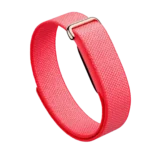
Band quality is mostly positive for comfort, looks, and drying or durability, though moisture retention is a repeated caveat.
-
Customization options are generally positive for dashboards, colorways, and easy band swapping, though some want more data fields.
-
Alarm functionality is praised, especially Smart Wake and vibration alarms.
-
Fit is generally good and secure, though some reviewers reported sleeve catching or minor band awkwardness.
-
Fitness coaching is one of the most divisive attributes: several reviewers praised Google Health Coach, while others complained about hallucinations, verbosity, and weak value.
-
Smartphone notifications are intentionally absent; reviewers often liked the calmer experience, though it is not useful for people wanting alerts.
-
Build quality has limited but positive support, with reviewers praising the first-generation hardware and secure pod/band execution.
-
Durability evidence is positive but limited, mostly around protected hardware and bands showing no wear.
-
Subscription value is mixed: the free tier is meaningful and Premium can add value, but some reviewers question whether AI-heavy features justify paying.
-
Calorie and food logging is generally useful, especially through AI/photo logging, though one reviewer disliked the hydration/logging interface.
-
Guided workouts and plans can be helpful and approachable, but some reviewers found AI-generated routines awkward or lower quality than alternatives.
-
Heart-rate accuracy is mixed: steady or moderate sessions often look good, but intervals, rowing, lifting, swimming, and peak efforts expose misses.
-
Habit tracking evidence is positive but limited, mainly around nap detection and sleep/behavior routines.
-
Automatic workout detection is good for runs and walks in several reviews, but misses gym, strength, Pilates, and other non-cardio sessions.
-
Bluetooth/multi-device reliability is viewed positively in limited evidence, especially Pixel Watch pairing and shared data behavior.
-
App alerts are useful in limited evidence, staying helpful without becoming overbearing.
-
Goal tracking is mixed: AI planning and cardio load can adapt usefully, but one reviewer could not successfully set goals.
-
Apple Health compatibility is useful and newly appreciated, though one detailed review notes one-way sync at launch.
-
General activity tracking is viewed as good for casual, passive use, with several reviewers saying core sensor data aligned well; one detailed review raises a serious data-sampling concern.
-
Pairing reliability is positive in the available evidence, with setup described as quick and easy.
-
Water resistance is praised in the limited opinionated evidence, especially versus a named competitor.
-
Stress-related insights can be useful when tied to sleep and routine changes, but the evidence is limited.
Cons
Sort
-
Find-my-phone support is absent and criticized by reviewers who expected smartwatch-like utility.
-
Distance tracking is a repeated weakness when relying on phone or sensor estimates, with multiple reviewers reporting meaningful overestimates.
-
Connected GPS reliability is weak in demanding scenarios, with missed maps, lost workouts, and phone-dependence repeatedly noted.
-
GPS accuracy is a weak point in the stricter evidence: phone-derived GPS estimates can be rough or significantly off.
-
Route tracking is limited, with reviewers noting missing route maps when signal or app-started tracking is unavailable.
-
Cadence-related evidence is negative because one review observed cadence-locked heart-rate behavior rather than useful cadence tracking.
-
Elevation tracking is criticized as missing or broken in the detailed sports review.
-
Menstrual cycle tracking is a major miss in the one review that evaluated it, because temperature data did not improve fertile-window prediction.
-
Text alerts are a weak point for smartwatch-style users because the Air cannot surface texts.
-
Data syncing reliability is a concern in several reviews, with slow syncs and delayed nap or workout visibility.
-
Workout mode variety is a limitation, especially for strength, swimming, and non-cardio workouts, despite decent basic coverage.
-
Swimming tracking evidence is negative in one detailed test, where swim-specific heart-rate accuracy was rated poor.
-
Music controls are a limitation for users who want to manage playlists from the wrist.
-
Pace tracking has limited scored evidence, but one 10 km comparison found a meaningful overestimate.
-
Timer functionality is a weakness for smartwatch users who rely on wrist-based voice timers.
-
Button/control feedback is mixed to negative, with double-tap and LED battery checks described as unreliable or unintuitive.
-
Display-related experience is mixed because the screenless design is refreshing for some but not a smartwatch replacement.
-
Call alert evidence is limited and negative: one reviewer wished haptics could be enabled for calls.
-
Blood oxygen tracking has limited opinionated evidence, including one notable complaint about a missing SpO2 reading.
-
Reliability is mixed due to bugs, hallucinations, and app issues, though some reviewers reported no glaring problems.
-
Sleep stage tracking is treated cautiously, with conflicting device comparisons and broader doubts about stage-analysis precision.
-
Data privacy is a recurring concern where reviewers discuss medical data, AI processing, and insurer or ecosystem leverage.
-
User interface opinions are mixed: some found Google Health clear, while others called sections disorganized, overloaded, or too wordy.
-
Readiness score opinions are split: some found it predictive or reasonable, while others called it inaccurate or contradictory.
-
Strava compatibility is mixed, with one review seeing missing maps and another saying Strava sync improved.
-
Health trend insights are useful when they connect sleep, activity, recovery, and context, but AI mistakes and vague summaries reduce confidence.
-
Recovery insights are helpful for sleep efficiency and readiness context, but some reviewers found contradictory or imperfect recommendations.
-
Third-party app compatibility is mixed: cross-platform support is broad, but HR broadcast and full workout ingest remain limited.
-
Workout tracking ranges from seamless and accurate for casual use to unreliable for demanding sports, GPS sessions, or fragmented workouts.
-
Charging convenience is mixed: quick charging helps, but proprietary cables and removal from the wrist are recurring annoyances.