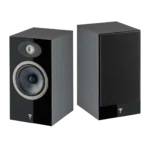
Focal Theva N.1 Speakers Feature Scores
Explore all 24 feature scores for Focal Theva N.1 Speakers, organized into pros and cons.
Scores by Feature
Summary
24 reviewed features-
Very positive 4.5-5.05 (21%)
-
Positive 3.5-4.416 (67%)
-
Neutral 2.5-3.42 (8%)
-
Negative 1.5-2.41 (4%)
Pros
Sort
-
Stereo imaging is one of the clearest strengths, with repeated praise for focused layering, center imaging, soundstage width/depth, and precise placement.
-
Dynamic performance is a major strength: reviewers describe strong dynamic reach, unconstrained crescendos, punchy delivery, and lively movie impact.
-
Value sentiment is positive overall, with reviewers saying the speakers earn their price, offer strong performance near $1,000, and compare well against pricier alternatives.
-
Detail retrieval is a consistent strength, with reviewers hearing crisp percussion, clear treble, pronounced shifts, and detailed musical textures without consistently calling it ultra-revealing.
-
The speaker earns strong marks for loudness, with reviewers saying it plays loud, fills rooms easily, and can hit high peaks without obvious strain.
-
Tonal balance is usually described as smooth, full, and even, but treble exposure and brightness with poor recordings keep it from being universally neutral.
-
Setup is generally easy and not especially fussy, though the rear port means the speaker benefits from space behind it and careful toe-in.
-
Design feedback is mostly positive, with tasteful finishes, elegant looks, and a clean form factor, although several reviews describe the design as budget-conscious rather than premium.
-
Reviewers praised the speaker’s organized, coherent, fluid, and relaxed presentation across music, with the main character leaning smooth rather than aggressively analytical.
-
Dialogue clarity is strongly praised in movie and TV use, with reviewers describing dialogue as clear, intelligible, and terrific.
-
Most reviewers found the Theva No.1 easy to drive, with benign amplifier demands, though one noted it benefits from an amplifier with extra grunt and another heard gains with better amplification.
-
The Theva No.1 is viewed as a strong home theater option, especially as part of a surround setup, provided users add subwoofer support for deeper movie effects.
-
Vocal clarity is praised, with reviewers describing vocals as clear, articulate, commanding, and textured, though one notes room energy can rise at high volume.
-
High-volume behavior is mostly composed and low in audible distortion, though reviewers noted low-frequency compression and some vocal energy or cabinet coloration at higher levels.
-
Magnetic grille attachment is praised for a cleaner, more understated look, even though reviewers discuss it as grille integration rather than speaker wall mounting.
-
Weight convenience is lightly but positively supported, with reviewers describing the speaker as lightweight and not too heavy.
-
Finish and styling reactions are mixed: reviewers praised color choices, elegance, and convincing vinyl, but also called the finish merely OK or less premium than rivals.
-
Price reactions are mixed but lean positive: several reviewers call the performance attractive around $1,000, while others warn the price is competitive or potentially off-putting.
-
Cabinet impressions are generally solid but not luxurious; reviewers cited sturdy materials and reasonable solidity, while noting budget feel or slight cabinet-related coloration.
-
Wide horizontal coverage is praised in one technical review, which says the speaker offers broad, balanced listening coverage without many bad seats.
-
Sustainability is supported by one reviewer who specifically appreciated the recycled carbon fiber cone material as a reason to like the speaker.
Cons
Sort
-
Wired input usability has one clear complaint: a reviewer using banana plugs could not remove the binding-post caps and had to switch cables.
-
Low-volume performance is mixed: one review says it loses balance when played quietly, another calls it average, while a third finds it engaging at virtually all volumes.
-
Bass is respectable for a bookshelf speaker, but reviewers repeatedly recommend a subwoofer for deep bass, home theater impact, larger rooms, or bass-heavy music.