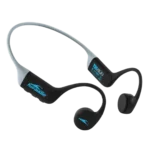
H2O Audio Tri Run Feature Scores
Explore all 37 feature scores for H2O Audio Tri Run, organized into pros and cons.
Scores by Feature
Summary
37 reviewed features-
Very positive 4.5-5.012 (32%)
-
Positive 3.5-4.47 (19%)
-
Neutral 2.5-3.46 (16%)
-
Negative 1.5-2.48 (22%)
-
Very negative below 1.54 (11%)
Pros
Sort
-
Open-ear awareness is a standout strength. Traffic, other people, and surrounding activity remain audible, making the headset especially suitable for outdoor running and cycling.
-
IPX8 protection is one of the strongest features, giving broad confidence against heavy sweat, rain, and rinsing. The rating does not make Bluetooth playback usable underwater.
-
The low weight is a major advantage, with several wearers barely noticing the headset once it was on. Evenly distributed weight helps it stay comfortable during extended exercise.
-
Stability is excellent for most runners and cyclists, including uneven trails and intense sessions. Head shape and high collars can still affect how securely the neckband sits.
-
Most wearers found the headset extremely light and comfortable for long runs, rides, and hour-plus sessions. The neckband and cheek transducers remain subjective, especially with certain head shapes, hair, collars, or piercings.
-
The flexible silicone and rubberized construction feels light yet sturdy rather than cheap. Coatings held up during testing, and the frame was repeatedly described as dependable for active use.
-
Pairing is usually quick and reliable across everyday devices. One tester found the two-button connection process unintuitive, but the others reported seamless or trouble-free Bluetooth use.
-
The slim wraparound form is familiar, flexible, and unobtrusive during exercise. It creates a secure athletic fit, but the neckband style itself remains a matter of personal preference.
-
Daily use is mostly simple: power on, connect, and start the workout. One reviewer found the initial two-button pairing method confusing, but most considered setup effortless.
-
The frame generally rests gently without pinching or excessive pressure. The cheek drivers also avoid pressing hard enough to cause normal-use discomfort.
-
The wraparound frame works comfortably with glasses, hats, helmet straps, and eyewear arms. These accessories did not make the fit feel crowded in the tests that covered them.
-
Vocals, podcasts, and other mid-focused content are a consistent strength. Voices sit forward and remain easy to understand even when the rest of the mix sounds clouded.
-
Physical buttons are widely preferred for workouts and are often easy to reach without breaking stride. Experiences were not uniform: some volume controls felt finicky or sticky, and one wearer could not find a reliable track-skip command.
-
High frequencies drew conflicting reactions, ranging from clear and distortion-free to grainy. Simpler pop and spoken content fare better than demanding music.
-
Pairing with a Samsung Galaxy phone worked without issues in the available Android test. No broader Android-specific problems were reported.
-
One intensive sweat test produced no connection dropouts. Audio stayed stable even as moisture ran down the wearer’s head and face.
-
The headset paired successfully with iPhone, Samsung, Garmin, and Amazfit devices. That broad compatibility makes it practical across phones and fitness watches.
-
The silicone tightening band can transform the fit for a smaller head, but it did not solve the problem for everyone. Fit adjustment is useful yet not universally effective.
-
A silicone tightening accessory is included for smaller heads. It produced a perfect fit for one wearer but failed to resolve another wearer’s fit concerns.
Cons
Sort
-
Standard USB-C charging is missing. The proprietary cable and USB-A end feel dated and add another accessory to keep track of.
-
Low-end performance is the clearest audio weakness: bass is usually described as light, muddy, or missing impact. A few tracks retained audible bass lines, but dense music and windy conditions exposed the limitation.
-
There is no onboard storage, so playback depends on a phone or connected watch. That prevents underwater listening and true phone-free use, though it matters less for athletes who already carry a connected device.
-
The sound is fixed out of the box because no EQ tools are provided. Listeners who dislike the stock tuning have no way to correct the weak bass or grainy treble.
-
Charging works, but the proprietary four-pin cable, USB-A connection, and lack of quick charging are frequent frustrations. Losing the cable can create an inconvenient replacement problem.
-
Call performance is inconsistent and often poor outdoors. Two callers heard fuzzy, distant, or underwater-sounding speech, although another listener considered the headset suitable for calls and spoken voices.
-
High volume can create the characteristic bone-conduction tickle along the cheeks or jaw. For some it stays mild, but others found the vibration distracting or intense enough to stop listening.
-
Replacement support can become expensive outside the home market. One UK tester found the shipping cost for a low-priced replacement charging cable unreasonably high.
-
Wind handling is weak. Outdoor callers may hear wind and footstep noise more clearly than the wearer’s voice.
-
There is no companion app. That keeps operation refreshingly simple, but it also removes control remapping, extra features, and software-based personalization.
-
Simultaneous connection to two devices could not be established. One tester viewed the missing multipoint function as a minor limitation rather than a deal-breaker.
-
Layered guitars and rhythm sections can collapse into a cloudy mix. The headphones struggle to keep instruments distinct when tracks become dense.
-
Real-world battery life centers on roughly five to six hours, and the product generally meets that rating. Several competitors run substantially longer, though one tester considered six hours reasonable for such a light headset.
-
Spoken audio, vocals, and lighter pop can sound clear enough, but most listeners found music quality only average for the price. Bass-heavy and layered tracks often turn muddy or thin, while one assessment was far more positive about clarity.
-
Maximum-volume performance varies sharply. Some upper frequencies stay clear without distortion, while another listener encountered tinny rattling and severe vibration at full output.
-
Output is adequate on quiet paths and can sound loud indoors, but wind and traffic often overpower it. One account found it capable of cutting through ambient noise, making this strongly environment-dependent.
-
Overall opinion is split between a capable, simple entry-level workout headset and an underperforming alternative to stronger rivals. Secure fit and awareness earn praise, but sound, calls, battery, and charging keep enthusiasm in check.
-
Value depends heavily on a firm $99 budget ceiling. Some see a strong entry point with excellent weather protection, while others argue that spending only a little more brings much better sound, battery life, controls, and fit options.