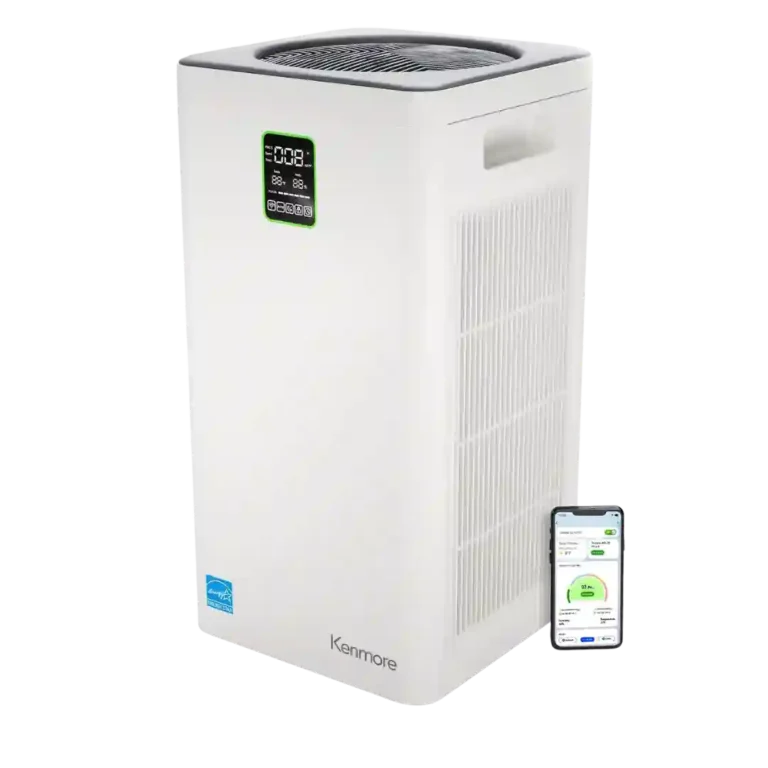
Choose the Kenmore PM4030 for strong airflow, quiet low-speed cleaning, and quick odor or dust improvement. Skip it if long-term reliability, dependable Wi-Fi/app control, or low filter costs matter most.
Best for
Best for buyers who want strong airflow and noticeable cleaning in living rooms, kitchens, or open first-floor areas, and who are comfortable using physical controls if the app fails.
Not for
Not ideal for buyers who need dependable smart control, long-term electronics reliability, low replacement-filter costs, or responsive warranty and customer support.
Verdict
The Kenmore PM4030 earns real praise for air-cleaning strength: owners report faster-clearing cooking odors, less dust, useful air-quality numbers, strong airflow, and quiet operation at lower speeds. The problem is that the positive experience often depends on the unit staying healthy. A large cluster of customer reviews describes touch controls becoming unresponsive, fan speeds getting stuck on high, Wi-Fi/app control failing, displays dimming, and units dying within months to two years. Filters are also often described as expensive. The result is a purifier with convincing short-term cleaning performance but a major long-term ownership tradeoff around electronics, support, and durability.
Compared in Reviews
Products reviewers directly compared with this model, grouped into quick takeaways.
15 year old Kenmore air purifier
More expensive: filter replacement costThe PM4030’s replacement filters were cheaper than the reviewer’s older Kenmore purifier filters.
Coway
Better: smart feature optionsThe PM4030 was seen as having fewer options than Coway-style smart purifier controls.
IoCare
Better: smart feature optionsThe PM4030 was criticized for lacking options compared with IoCare-style controls.
particle removal effectiveness: 5.0, based on 1 review
Particle removal gets its clearest praise from a user who felt it handled dust and irritating airborne allergens well enough to be their best purifier purchase.
air purification performance: 4.4, based on 18 reviews
When the unit is working, owners often notice cleaner air quickly, especially in kitchens, living areas, and dusty homes. A smaller group says performance fades into disappointment once failures start.
Dust feedback is mostly positive, with several owners noticing less dust or visible debris on the filters. One user, however, felt dust still accumulated around the house.
Odor control is a bright spot for cooking and general household freshness, with multiple owners saying smells cleared faster or the house smelled clean. Weed-smell removal is a clear miss for at least one buyer.
Airflow is a strength when the unit is healthy, with owners praising max-fan airflow and air movement. A negative review complained it only blew air weakly near a fireplace.
The footprint is usually liked because the unit feels smaller than expected and has good airflow for its size. One failed-unit owner still found it gigantic once it became unusable.
Build quality starts strong for some owners, who call it sturdy, well made, or well built. A harsh long-term review blames faulty internal electronics.
Coverage works well for open first-floor spaces in some homes, including large floor plans. A dissatisfied owner did not believe it cleaned the whole house.
Filter life is generally seen as decent, with owners saying filters lasted a long time or about a year. One out-of-box complaint involved filters already showing reduced life.
Noise is pleasant at low speeds for many owners, often compared with a fan or white noise. The problem appears when failing units get stuck on high and become loud.
Breathing-related comments are mixed. One caregiver uses the purifier to judge when a room is safer for a child with asthma, while another owner felt a failure affected their health.
Basic use can be simple when the controls work, and setup gets positive marks from some owners. App dependence and touch-control quirks make it frustrating for others.
air quality sensor accuracy: 3.0, based on 5 reviews
The air-quality reading is useful for some owners, reacting to cooking, doors opening, and fireplace use. Others doubt the sensor after low readings around dust, smoke, or VOC-like odors.
Value depends heavily on lifespan. Happy owners call it worth the money or a good fit for their budget, while failed-unit owners describe it as an expensive waste.
Auto mode can work impressively when cooking or air quality changes, raising fan speed on its own. Several failed units later ran high even in clean air or lost auto adjustment completely.
Cleaning the filters can show the machine is catching debris, but maintenance can also trigger problems. Some owners say unplugging or changing filters led to startup and button issues.
Replacement filters are a recurring cost complaint, with owners calling them expensive and quoting prices around $50 to $65. One buyer still saw the cost as lower than an older Kenmore unit’s filters.
Overall satisfaction is sharply divided. Happy owners love the clean-air results, but many disappointed buyers say they would not purchase another Kenmore purifier.
Display impressions are polarized. One buyer liked the designed screen, while several others reported dimming LEDs, failed LCD behavior, or an unusable screen.
Fan control starts out useful, with owners using specific speeds and auto adjustments, but many later report the fan getting stuck on high or ignoring speed settings.
Settings retention is weak in app-related complaints, including a unit clinging to an old Wi-Fi network and another running faster than the chosen setting.
Smart features are a weak spot. Owners complain about app incompatibility, missing options, and fewer controls than competing smart purifier ecosystems.
Reliability is a serious weakness after the early ownership period. Units are described as powering off, refusing to restart, getting stuck on high, or behaving unpredictably.
Replacement and return experiences are poor. Owners describe multiple failed units, a daunting return process, and a replacement that did not solve the problem.
Durability is the dominant concern. Many owners report failures between a few months and about two years, often involving controls, fans, screens, or total power loss.
Customer support is repeatedly criticized, with owners describing long holds, full voicemail boxes, unanswered emails, and little practical technical help.
touch control responsiveness: 1.1, based on 18 reviews
The touch-style controls are the most repeated pain point. Many owners say buttons become unresponsive, require repeated taps, or stop controlling the purifier entirely.
Wi-Fi reliability is poor in negative reviews, with repeated reports of failed setup, lost connections, old networks sticking, and app connection errors.
Indicator lights show up mainly in failure stories, including faded LEDs, blinking lights, and a standby light staying on while the unit would not start.
VOC sensing drew a negative report from a buyer who said the purifier would not detect harmful paint-related scents.
Compared With Category Average
Compared with other Air Purifiers, this product is below average in sleep mode, fan speed options, indicator lights.
Summary
8 compared features
Above average0.4+ pts higher0%
0 features
Same as averagewithin 0.3 pts0%
0 features
Below average0.4+ pts lower100%
8 features
Attribute
This product
Category average
Difference
sleep mode
1.0
4.2
-3.2
fan speed options
1.4
4.1
-2.7
indicator lights
1.0
3.9
-2.9
overall satisfaction
2.1
4.3
-2.1
durability
1.1
3.3
-2.2
Wi-Fi reliability
1.0
3.5
-2.5
VOC reduction
1.0
3.5
-2.5
warranty coverage
1.5
3.8
-2.3
FAQ
Does the Kenmore PM4030 clean air well?
Yes, many owners say it noticeably improves air quality, reduces dust, moves air strongly, and clears cooking odors quickly when the unit is working properly.
Is it quiet enough for daily use?
At low speeds, owners often describe it as quiet, soothing, or similar to gentle fan noise. Noise becomes a major issue when failing units get stuck on high speed.
How reliable is the app and Wi-Fi?
App and Wi-Fi feedback is mostly negative. Many owners could not connect, lost control after setup, saw bugs, or had the purifier cling to an old Wi-Fi network.
Are replacement filters expensive?
Several owners call the filters expensive, with reported replacement costs around $50 to $65. A few still felt filter life was decent, often lasting a long time or about a year.
Does it help with smoke and odors?
Cooking odors and general household freshness get strong praise. Weed smoke, smoke smell from neighbors, and VOC-like paint odors drew negative feedback from some owners.
What is the biggest concern?
Long-term electronics reliability is the main concern. Reviews repeatedly mention failing touch controls, stuck fan speeds, dim displays, app problems, and units dying within months to two years.
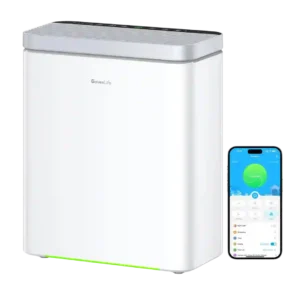
Choose the H7124 if you want a quiet smart purifier for odors, dust, pets, and app control. Skip it if you need foolproof Wi-Fi, wall-facing intake, UV light, or strong...
Best for quiet, smart large-room cleaning and strong odor control. Skip it if $99 filters, true-HEPA wording, or occasional sensor/fan reliability complaints are dealbreakers.
Pros: air purification performance, allergen reduction
Best for large rooms, strong particle cleanup, quiet everyday running, and easy rolling. Skip it if you need app control, compact placement, automatic restart after outages, or low filter costs.
Best for compact rooms, strong particle removal, quiet sleep use, and useful app controls. Skip it for large spaces, heavy odors, or exact PM2.5 readings.